189: Redefining Strength and Confidence with Fitness Coach Tara LaFerrara
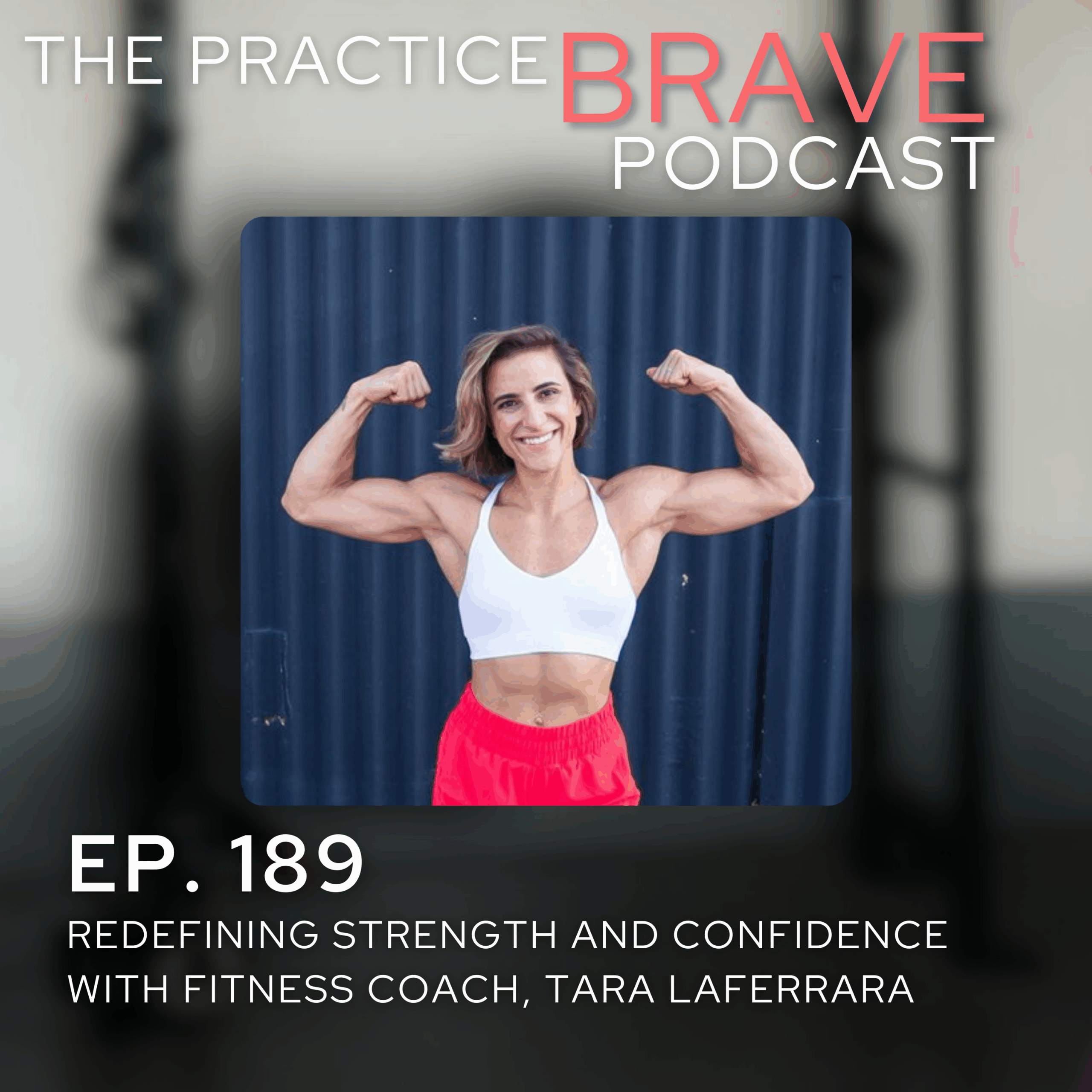
I’m so excited to have Tara LaFerrara join me today as we dive deep into coaching women, navigating fitness through different life stages, and redefining what it means to be strong and confident. Tara and I connected recently, and we quickly realized how much overlap we have in our coaching philosophies and the women we serve. She’s been in the fitness industry for years, coaching both in-person and online, and she recently launched her app, Broads, which is all about helping women take up space and feel strong in their bodies. The discussion also touches on the challenges of body image, the acceptance of aging, and the importance of movement as a baseline for well-being. Tara shares insights on entrepreneurship, the trust required to navigate it, and the impact of her business on women’s lives.
Resources and Links:
📲 Download Tara’s app Broads on the App Store and Google Play
🌐 Visit Tara’s website: TaraLaFerrara.com
📩 Connect with Tara on Instagram: @taralaferrara
Join My Upcoming Workshop!
📅 The No-BS Guide to Coaching Pregnant & Postpartum Athletes: What Every Coach + Athlete Needs to Know
🗓️ When: Thursday, April 24, 8 PM EDT
🔗 Register here: briannabattles.com/workshop
EXPAND FOR EPISODE TRANSCRIPT
AUTO-GENERATED TRANSCRIPT
Brianna Battles 00:01
Welcome to the practice brave podcast. I am the host Brianna battles, founder of pregnancy and postpartum athleticism, and CEO of everyday battles. I’m a career strength and conditioning coach, entrepreneur, mom of two wild little boys and a lifelong athlete. I believe that athleticism does not end when motherhood begins, and this podcast is dedicated to coaching you by providing meaningful conversations, insights and interview topics related to fitness, mindset, parenting and of course, all the nuances of pregnancy and postpartum, from expert interviews to engaging conversations and reflections. This podcast is your trustworthy, relatable resource for learning how to practice brave through every season in your life. Hey everyone, welcome back to the practice brave Podcast. Today, I’m here with Tara la Fiera, and we’re going to be talking all about coaching women and her work in this industry. I’m really excited. We actually just recently connected. She reached out to me, and we’re gonna be doing a little podcast swap. But we have a lot of crossover in who we work with, who we help, and our missions in the fitness industry, so I’m so excited to bring her on as a guest today. Tara, thank you for being here.
Tara LaFerrara 01:17
Thank you so much for having me. I’m excited to be
Brianna Battles 01:19
here absolutely. So tell us a little bit about your background and how you got into you got into coaching.
Tara LaFerrara 01:24
Yeah. So long story short as possible, I grew up as an athlete. I was a track runner. I was a sprinter, so run fast, turn left was all I knew how to do, and I was really good at it. I went to school for four track and then I battled with some binge eating and drinking and mental health issues actually left the school. Had a pretty bad loss of identity after that. And beautiful thing happened where I got invited to this boot camp at the park, and I was like, Oh, you can be competitive and have fun and work out at the same time. And that was kind of the beginning of my journey, I became a group fitness instructor. I co owned a studio, and now I’ve been online for about eight years. I have my own fitness app called broads. I help women strength train, feel confident in their body and take up space in and out
Brianna Battles 02:14
of the gym. That’s amazing. I want to talk a little bit about being an athlete in college and that huge identity shift, I was also a college athlete. And we get a lot of people that are now like athlete moms or, you know, like athletic into their 30s, but there is a huge part of their identity that maybe struggled and still struggle with. Am I still an athlete? Do I call myself that? Or when they left the maybe high school or collegiate scene, they went through that identity crisis. So tell me what that was like for you. Like to bow out and then sort of rediscover or redefine what it meant to be an athlete for you.
Tara LaFerrara 02:55
Yeah, and I will say first and foremost, if you move your body and do it in a way that feels good to you, you are absolutely an athlete. I think consider all of my clients an athlete, two three times a week, if you work out and it feels good you are, however, being in a sport for a really long time, and then you lose sense of that, which means you lose your routine, you lose a huge piece of who you are. And I don’t know about you, but I was an athlete before a student, so it was everything to me. And so when you leave that behind and you move on, it’s like you’re constantly searching for things. And so I ran track, or I ran marathons, like several, and I was like, I don’t like this. I’m a sprinter. I’m totally different. So then when I, you know, went to this, the class where I was like, box jumps and kettlebell swings, and it was like, very powerful, explosive movements, I got that feeling again. So really it’s finding what makes you feel like that bad ass athlete version of yourself. And for me, it’s power. For a lot of people, it’s endurance. So like, if you’re a soccer player, you like more of endurance kind of thing, because you’re used to that. Maybe you are playing pickleball, if you played tennis in high school and college. That’s a big thing that’s happening right now. So finding something that is constantly reaching new goals, but also doing it in a community, which is obviously a huge piece of the athletes, kind of world that we used to live in, it makes you a better version of yourself, and also keeps you coming back, because then you get that routine that you had in in high school and college as well.
Brianna Battles 04:25
Yeah, absolutely. Did you like? I found myself like, trying to fill a void. I was like, Okay, I’m used to like, being in the weight room, but then I’m also used to being in a pool three hours a day, so that means I need to be trying to work out for four hours a day if I’m, like, just not going to get fat. Like, that was my thought process when I graduated. Was like, how am I going to replace that much volume? Because, oh my god, I’m going to get fat, like, and there’s that weird mindset shift, and we don’t even know how to approach training when all you’ve ever done is maybe that one sport or participated, like, when you mentioned, like, eating and drinking and all that, like, that’s definitely. What my college experience was like, too. And I look back and I’m like, Man, I wonder, like, how much better I could have been if I, like, didn’t eat like, shit and like, maybe didn’t drink all the time, and like, could have actually leveraged being athletic when I was a division one athlete. Yes, wild concept.
Tara LaFerrara 05:16
So you were a swimmer then water polo. Oh, cool. Oh my gosh, that’s such a tough sport. It was fun.
Brianna Battles 05:23
It was, it’s, I mean, it’s a very California based sport, so, but, I mean, it is infiltrating in other places, for sure, but, uh, yeah, it was super fun. It was fun. And also, at the same time, like, it lost a lot of its fun too. So I was very ready to be done by the time I was a senior. I mean, like, honestly, I have no desire to, like, be near or in a pool at all anymore, unless it’s, like, chilling, yeah, yeah, but I don’t want to swim laps. Absolutely. No. It’s funny though, that you
Tara LaFerrara 05:51
say I need this volume, or I need to do so much in order to not get fat. I don’t know exactly when you grew up, but if you’re a millennial like myself, yeah, we were always taught to be smaller. A huge part of my journey of becoming a coach was and leaving the school was because I did actually gain weight. My coach was like, you have to lose the weight or I’m gonna take a huge chunk of your scholarship away. Yeah, and I was so embarrassed that I literally left because I felt like smaller was better, and if I just would stick with my diet, and if I was just this, the weight that I came into school at, like, everything would be better for me, and I was chasing this number, I was chasing this smallness that I knew wasn’t feasible for myself and my body type. And older I got, the more I realized, like, smaller was never a better thing for me, or for any of the women on my team or who I work with. And so it was a huge like, for years afterwards, I was like, I gotta work out twice a day. I have to, you know, I was still in these really bad like, binge eating cycles and dieting and not and and it would be this constant ebb and flow. And now I finally, you know, realize that, like, strength means taking up space. It’s confident in your body. And that does not have to do with the number on the scale.
Brianna Battles 07:05
Yeah, it’s so true. Like, I just definitely like millennial culture was small, like, all through the 2000s was like, smaller, but then, you know, in the 2010s it was, like, really infiltrated by a lot of dogmatic thoughts in relationship and belief systems in relationship to, this is the best diet. This is the best exercise routine. You’re either this or you’re nothing. So whether it was like CrossFit and paleo, or it was like, hold 30, or if it was like, if you track your macros, or whatever, like, there was just like, these different dogmatic pools. And when you’re like, coming out of maybe the college scene, and you’re trying to find your new identity of, like, how do I stay healthy and fit? But then there’s just so much noise, even if your background is in that, like, my background was in exercise science, but it was still like, okay, but like, what does that look like, practically? And what does that mean for me if I’m this athlete, but now trying to find my new way of of existing and, like, how do I even exercise? How do I eat? And again, to, like, be smaller, because, especially as a college athlete, like, you get like, stronger and bulkier and all these things. And like, we wanted to be thinner. Like, I remember, like, group of water polo girls. They’re usually like, six feet tall, like very strong girls, but they all wanted to be small. So desperately wanted to be small. And now we’ve obviously seen a shift in a lot of the messaging out there, but for I think those of us in our 30s ish, that’s a huge mental barrier to overcome. And I know you do a lot of work
Tara LaFerrara 08:29
around that, yeah, and I will say, like, fitness in general is always going to have these, like trends of even now, there’s a lot of things out there that, you know, I don’t even want to say them, but it’s all about finding what works best for you. It’s so much about how it makes you feel without society telling you what you should or shouldn’t look like, or what you should or shouldn’t do, and truly, it’s never, and has never been about being smaller. It’s about feeling confident and feeling like you belong in your own body. And that’s really what I try to tell a lot of my clients, is like, get rid of the scale and fuel your body and do the work that makes you feel really good
Brianna Battles 09:11
in your body. Yeah. So like, what are some like, I guess, tactical ways that you help some of your athletes overcome that because, or you’re just your clients in general, that they want to feel good, but maybe they’re coming with baggage from doing a lot of different diets, or they’ve done a lot of different types of fitness, and they just they they want something different, but they don’t even know what that how to go about that process. So how do you help guide to that? The first thing I
Tara LaFerrara 09:35
would suggest for anyone is to take inventory of who you’re around because you are really a product of like, the five closest people around you. So the five closest people around you are talking about, oh, I want to doing this because I don’t want to get fat, or I’m on this new diet because of this reason or another. It’s probably not people that you want to be around. If people are always negative around you, and they’re not, like, super supportive on on some goals that you. I’d have, obviously it’s going to be a lot harder to do, so inventory of the people around you first, and then I would always suggest finding one or two things based on a goal that you have, an outcome based goal that you can add into your daily life. As far as habits go, I’m a big fan of habit zacking. You’re already brushing your teeth. You’re already drinking coffee. What could I potentially do before or after that to make it so that you make sure that you get those habits done absolutely
Brianna Battles 10:29
so you’ve been able to scale your coaching quite a bit. You said you you found group fitness. You felt really good in your own body doing that, and then you pivoted your, I guess, your life’s work into the fitness industry. So what did that look like initially, and then, how did you get to where you are now, with growing a following, having this app really kind of narrowing your niche?
Tara LaFerrara 10:51
Gosh, yeah, it’s a long, long journey, long story.
Brianna Battles 10:54
Yeah, let’s talk about it.
Tara LaFerrara 10:57
Yeah. You know, I first got on Instagram. How long have you been on? I’ve been on there for like, my first post was, like, 12
Brianna Battles 11:02
years ago at this point, yeah, I would say 2013
Tara LaFerrara 11:06
Yeah, yeah, yeah, 2013 and I really got on because I was like, I want, I want to start running long distance, and I ran a few marathons, and I was like, I’m gonna do this for, like, accountability for myself. And then I got into yoga, and I wanted to, like, showcase some yoga and flexibility. And then I was like, oh, mobility. And then I just, like, wanted to educate because I knew how, how, like, great. It made me feel all the while, I actually got laid off from my job, and I was teaching Group Fitness on the side, and then I got another job to teach Group Fitness on the side. And then finally, like, got laid off from all of it. And I was like, this is the universe giving me a sign to, like, make fitness full time thing. But I was in this very scarcity mindset. I was teaching fitness, I was doing personal training, I was doing marketing consulting, like all the things to try and make ends meet. Because I thought having a 401, K and a salary meant all the good things, of course, and then all the while, I just was like, I got to lean into making this fitness a full time, but it’s hard to make it an actual thing when you’re coaching classes all day. Like, people don’t understand how hard it is to teach a group fitness class and then teach 15 to 20 of them a week. Is just a lot. It’s a lot.
Brianna Battles 12:17
It is like so much energy, like, of having to be high. I call, like, I just having to be high. Like, constantly high with my people. And then, like, after, it’s like, that crash of like, I know I’m dead, yes.
Tara LaFerrara 12:29
And then on top of it, I don’t know if you were doing this too, but I would, like, work out before, and then after, like, my energy and my I was just sleeping so poorly, like, I was trying to do way too much. But that’s when I started really doing my online business. So I started my online business in 2018 and then realized that I could be flexible, and I could make actual money by doing the things I love, reaching more people, but also having that aspect of like being in person too. So I was coat owner of a studio. I launched my online program in 2018 and then just recently, I launched my app, just because I was just kind of saving up to build it from the ground up, from the web app that I was creating. And now I have a team of a couple coaches, and we have this successful app in the App Store, and it’s strength and mobility focused, but took a lot of time, and honestly, there’s a roller coaster every other day, but absolutely worth it, in my opinion.
Brianna Battles 13:23
I hear you, so I think it’s interesting because we kind of like came up at around the same time within this industry with sharing online, getting our stuff out there, and then pivoting in like, slightly different directions. But I think what a lot of people maybe like a lot of new coaches, or people that are maybe like new to like the online side of things here, especially with coaching and business, is like there was no guidance. Yeah, then, like when we were both starting our businesses, using Instagram and social media to help with that, it was not common to have an online fitness business that was not part of any pathway that was ever spelled out for any of us back then, and there was just sort of, like, this organic, say, like group that just sort of started forming slowly over time, but it was not intuitive. So to do anything like, you had to be in person first, and then, I don’t know about you, but like, then the demand started to be online, okay. Well, how can I, like, spin this, what I’m doing in person and make it more accessible. And like, have that be like, the driving factor. And I feel like that’s honestly, the iteration of so much of this business, taking you now down the pathway of an app. But I think a lot of people don’t really know the very recent history of, like, what we’re able to do now as business owners and working within the fitness industry,
Tara LaFerrara 14:38
yes, oh my gosh, it’s crazy. Actually. Now I feel like there’s so much information out there that it can be information overload, and there’s so many ways to go, digital courses, membership descriptions, like, there’s zoom, it’s actually like, I feel more overwhelming Now, if you’re getting into the fitness industry than it was for us. Oh yeah, because we were like, we just have to make it work. Work.
Brianna Battles 15:00
We bootstrapping everything exactly.
Tara LaFerrara 15:02
We I’m sure you can relate to this. I was just like, I cannot work from 6am to 7pm every day. Like, I just can’t do this to my body anymore. And as I was getting older, I was like, No, this is not sustainable, and not how I want to live my life. And so now it is super accessible, and there are so many coaches out there, good and bad, but so many ways to reach people and really truly. At the heart of what I do is that I want to reach more women to show that you can feel confident in your body. And the foundation of how I coach that is through strength training, whether that’s at home or at the gym, it’s feasible to you?
Brianna Battles 15:43
Yeah, absolutely. And so what do you feel like? What have you seen with your clients that you’re working with? Obviously, you’ve coached a lot in person. Now. It’s all primarily online, right?
Tara LaFerrara 15:52
Yeah, I don’t do anything in person anymore. Yeah, pretty much same sometimes, yeah, I miss it. Honestly. Sometimes though I’m like, if I could just have, like, one thing a week, maybe. But then you’re on a schedule, you know? Yeah, yes,
Brianna Battles 16:04
well, right? Because then you get the taste of, like, actual autonomy, of being able to, like, not have a super, like, rigid schedule when you, yeah, when it’s been, like, I don’t know, when you’ve been held to a schedule, like you’re literally your whole life, yes, and it’s nice to, like, have an open Tuesday morning, you’re like, Man, I can kind of do what I need to do right now. Exactly. Yeah, yeah. I mean, so you’ve scaled over time. But do you feel that, like, what is the benefit to coaching in person, especially if you’re a new coach, starting out, really trying to make impact and get reps with coaching women?
Tara LaFerrara 16:35
Yeah, a 100% please do this in person. We have been doing this for a really long time, I would say, like, I would not be the coach I am today without the eight plus years that I was in person and highly, highly recommend working with all different bodies, all different levels, to with yourself, with your clients, with coaches, friends, family, like the more you get to know a Body, the better you will be a coach online. I would, like, I literally don’t even love when coaches are, like, I’ve never worked with anyone on in person before. I’m like, how, like, how are you doing? Well, I
Brianna Battles 17:13
like, I’m like, using as an opportunity sort of back, like, I mean, I talked about this all the time. It’s like a hill that I will die on. Is like, you are not credible unless you have actually worked with people in real life, like you said, different bodies, you know? But I obviously like work with a lot of pregnant and postpartum athletes, and I’m like that is such a specific population, very common population, but so specific that, like, there is no one set like formula for coaching people, and you don’t know that until you’ve had to create your own formula on the spot with people, and then delivering that online is a whole different beast. So for any like, we have a lot of different fitness professionals that listen to this. I just want to, like, harp on that, like, you’ve scaled your business, you’ve scaled your impact. You’re working with so many women seeing success and seeing results, and it’s because you have like, a decade worth of, like, reps of in person
Tara LaFerrara 18:03
prior Absolutely. And like I said, I do miss it, because I feel like every time I’m with a new person, I’m like, Oh, I’ve actually learned a lot, yeah. And anytime I say one cue to one person, it doesn’t hit, and then I say it to another, and they’re like, oh, it makes sense now. And sometimes they need it several times for you to look for it to land. But yeah, highly, highly recommend doing stuff in person, especially if, even if you’re like, a few years in, like, it’s been a couple years since I’ve been, like, fully online, but I do coach retreats a couple times a year, and I’m always with people there. And it’s nice to, like, be around bodies again. But yeah, I mean, it could literally just be like your friends or family, just to see how it actually works. And then always recommend, when you write a program for someone, trying it out yourself beforehand. I see a lot of coaches out there just throwing out workouts and programs, and they haven’t actually like done it themselves or felt it in their body to know what it feels like for other people,
Brianna Battles 19:01
yeah, I feel like that’s like, part of, like, your inner group fitness, girly talking right now, where it’s like, so used to like doing it like, with them, or sort of like being in that environment with them. I think there, yeah, there’s absolutely a ton of value to know, like, what they’re feeling experience, and even to know like, does this workout make sense? Like, does it like? Do they feel good? Does this like? Is this contradictory? Or is there, like, grip shot. Are there quads dead? Like, okay, then, like, maybe I need to, like, finagle this slightly differently, because I know that, because I just felt it. And sometimes what looks good on the whiteboard or on the computer doesn’t necessarily translate well to, like, real life.
Tara LaFerrara 19:33
Yeah, I mean, and maybe this is like, such a group fitness background, because, like, even when I program now, and program design is one of my favorite things to do, and I’ve been doing it for so long, but I will write down the program and then actually do it in my office before I, like, send it out and get it ready for my clients.
Brianna Battles 19:48
Yeah, and guys, I want you to hear like, that is, like, an uncommon thing, but like, that’s a thing that, like, makes her very good at what she does, because that’s it’s taking that extra time and intention to really. Really make sure that you’re delivering a good product. And like the product is exercise and helping women feel good in their bodies, and you don’t really know that unless you’re kind of walking the talk to it. Yeah, absolutely. I know wild concept. So tell me, like, what is the main avatar of person that you’re working with? Who would you say is, like, your main client type of client?
Tara LaFerrara 20:21
Yeah, I have two, I will say. And I know, I don’t know if you relate to this, but I always have a version of myself. So I always have a woman in their 30s. Used to be an athlete, maybe they have a couple kids, or super busy working and they don’t have a ton of time. So that’s where I come in. That’s my I call them either they have kids and they’re like, busy mom, or they’re the rich auntie, like maybe myself, where I don’t have kids and I come in and just busy, right? And I also have perimenopause menopausal women, late 40s, early 50s, kind of going through early to mid stages of perimenopause, and really just don’t know their body at all anymore. And as we were talking briefly before this, I don’t have a ton of knowledge in the pre and postnatal, but I feel I have a couple certifications and specializations in menopause, and feel so much that it is similar in the sense that you just don’t know your body anymore. And every body is so unique with their experience that they go through. However, every woman will go through that stage of their life at some point. So that’s actually the the woman that I am just so grateful to work with at this point in my life, because I feel for them. I feel for this huge change in their life, and want to help as much as I possibly
Brianna Battles 21:39
can, absolutely and I think that, like, thankfully, social media is, I feel like, for the most part, being used really powerfully for that population, for perimenopausal women, for menopausal women, where, like, it’s becoming more common knowledge of, like, how important it is to have muscle and to work out and whether they’re on HRT or not. But just like, having a lifestyle that supports the natural aging process. Because, like you said, every woman will experience that, and then just like, having the support for that. So like, there’s been a lot of positive PR around it, but still so much overwhelming information that it’s like, you got to do this and you got to do that, and then you go to sleep, and you got to have HRD, and you got to, like, do all like this. And as if perimenopausal or menopausal woman is not overwhelmed enough with, like, her mental load of stuff. So then we really complicate the health and fitness side of things for that population in particular, even though, like, they know they need to be prioritizing their health and fitness. It’s also like information overload, because we’ve had such positive PR and information come out within the last few years for this population, yeah, which I’m
Tara LaFerrara 22:44
so grateful for. And there’s finally actual, real studies behind a lot of this information, yeah, but I think that there is still a lot more information to be out there, and it’s really just making sure that you go with the person that knows what they’re talking about, because I’m sure you’ve seen in your world, there’s a lot of people that don’t know much about pre and post natal, and they post all the things they’re weight loss, you know, like, oh, yeah, this is just going back to working with the clients, and everybody is going through something very unique in the process. Yeah, absolutely.
Brianna Battles 23:16
So when you’re working with someone who’s perimenopausal and they’re coming to you, since this is, like, a really main, like, demographic that you’re working with, what is like, the first thing you you talk to them about, like, just forgetting inventory, and then the like, what’s the next right step for them?
Tara LaFerrara 23:31
Lifestyle always, always look at lifestyle before anything else, and just figure out what they’ve been doing already. And because a lot of people come to me and they’re like, Well, what I was doing before isn’t working anymore. Yeah. And I’m like, Okay, well, what exactly were you doing beforehand, and why isn’t it working? And they go through like, what they’ve actually done, and it’s like, okay, how can we potentially add in some small lifestyle changes that can make that feel even better than what you thought was working isn’t working anymore. Then we’ll get into fitness, and then we’ll get into nutrition, but it’s like, I’m talking very simple, like, sleep, water, steps, that kind of stuff, before we’re even like, diving into workout routine, because a lot of times it’s more of those Vassar motor symptoms like hot flashes and night sweats. And then we’re like, okay, let’s step back look at the morning evening routine first, yeah, and then we can kind of shift into some other things, but that’s where it gets to be that overwhelming. Oh God, here’s my checklist of things to do. Let’s just look at it first,
Brianna Battles 24:33
right, right? Because, I mean, I think that generation too is coming. They also grew up in very much like diet culture and their own mothers, reinforcing a lot of certain belief systems around like body size or what’s healthy, low fat, no fat, like whatever, just different, like belief systems around their fitness and nutrition. So I find that a lot of that is just like a basic re education for what. Your body needs while it’s in this transitional period. Like, this is not the body that maybe you had in your early 30s when it was when it was different. So like, what do we need to do now to support your health? And, like, maybe what you’re doing then actually, like, wasn’t even that beneficial. We just didn’t, like, fully know it, and now it’s being more exposed. And that’s that same conversation with pregnancy and postpartum, like, motherhood kind of exposes all your bullshit. And I feel like perimenopause definitely
Tara LaFerrara 25:27
will, yeah, absolutely a lot of times too. I again, don’t know if you get something like this, but they’ll show me a picture or something of like, you know, I want to look like this, or I wish of themselves. Yeah, they’ll say, I want to, I wish I was pre baby or 30s or 41 or whatever that specific age or that thing was for them. And I’ll always ask them, How did you actually feel? And they’ll say, you know, I find I think, whatever. And then I’m like, What’s going through your brain? What was happening in that moment? Oh, well, I was grieving a loss or whatever. Like, there’s so much more than just a picture. It’s why I never do before and after photos, and why I never am like. Here’s the photo that you should look like, because you are in a totally different body. Every year is a different body for you. And so what worked before may not actually have worked, and it may not actually have made you feel good, and that’s really, really what matters
Brianna Battles 26:23
the most. Absolutely, definitely agree, and I know that we’re certainly in alignment in how we go about coaching, just women in general. But I want to, like, flip it a little bit, to talk about you, because you’ve been in the fitness industry for a while. You’re a woman in your 30s. You’ve navigated different aspects of what fitness looks like for you, potentially, what your nutrition looks like throughout different seasons of life. And you’ve you’ve scaled the business. So what does your life look like like? How do you like to train? How do you like to eat? How are you staying healthy as you get older?
Tara LaFerrara 26:57
Yeah, great question. How am I staying healthy? I lift three to four times a week, and I do some sort of cardio or conditioning that for me, that I really enjoy is sprint kind of style, so more of those explosive movements I used to do in track every time I try and go for a run, I hate it, so I usually don’t and just focus on my step count. I hit about 12,000 to 15,000 steps a day, and that is me in my office right here. You can’t see it, but I have an under desk treadmill I’m on all the time, and I have a dog I like to take out a couple times a day. Nutrition wise, has been for the past eight to 10 years. I’ve been very much on the intuitive eating side of things. I focus on protein and fiber intake, but that’s pretty much it. I have ice cream almost every night. I definitely have desserts at the coffee shop when they come up. But most of the time, I eat pretty much the same every day, unless I’m going out to dinner or something like that. I know at this point what makes me feel really good and what doesn’t, and so I just have to decide if I want to not feel that great the next day. And for me, that’s pizza. I’m just very gassy for like, you know, TMI, but that’s it. I sleep eight hours, and I don’t have any kids, so I’m thankful that I can sleep through the night and focus on water. But it’s like, it’s so basic, really, in the grand scheme of things, I think people are always looking for some sort of protocol or thing they should do, or thing to follow. But I’ve been doing the same thing. I’ve weighed the same. I’ve looked really fairly the same for eight years, and my body composition has changed just because I’ve gained a lot of muscle, but the weight has really stayed the same, and I feel better now in my mid 30s than I ever did in my mid 20s.
Brianna Battles 28:42
Yeah, I say that all the time, like, I feel better now after like, two kids and an entire life that’s been, like, flipped upside down quite a few times. But overall, like, I’m a better athlete now than I was in my early to mid 20s. And that’s because I think we develop so much athletic maturity. We have so much perspective on like, Okay, this is actually the food and the activity, like, level and style that makes me feel best. And so many people want to get to this point, right? They want to go, like, from where they are to like, yeah, I just like, want to basically maintain my weight and have muscle and be able to, like, eat and not feel so afraid of, like, getting fat. But it’s the honestly, it’s years of establishing these habits and having fluctuations in what your lifestyle looks like, because nothing is going to be like. It’s just never linear. There’s always going to be interruptions and bombs in your life that just like, kind of rock your foundation. But overall, like, it can be so intimidating for women to learn how to surf that to kind of like ride those different waves throughout time, to get to this point of where it seems like you’ve kind of found a nice homeostasis
Tara LaFerrara 29:49
with your body. Yeah, I think for me personally, every obstacle or every stress or everything that has come my way movement has always been my baseline. So no matter. Comes up, I’m still going to move my body in some capacity. And because I know, I know for sure that I’m going to feel good during and after the movement, I’m always going to do it, no matter what it is, even if it’s a 10 minute walk around the block or a heavy strength session. And I my to do list is endless, and I have to do a million things, or I’m traveling or what, I’m gonna still move my body. And I think that when women get to that point, it’s such a light switch, because if you have that ability to say, movement is always there for me and my body’s always there for me, it gives you the ability to get through a lot of these obstacles, run around the house with two kids and run a business and have a better relationship with yourself and husband and whoever. So it just allows you the ability to truly feel like what you’re doing matters for your body.
Brianna Battles 30:55
Yeah, absolutely. And like, how do you suggest somebody going about that, knowing that it’s a long game. It can be really hard to, like, commit to something that feels really far away. You know, I even still like, I’ve had to redefine what my relationship with food and my body and my weight and all these things look like, even like as recently as a few years ago, and just now, I’m like, Okay, I’m finding, like, a steady homeostasis where my weight is holding I feel like I feel strong in my sports, I look the way that I want to look, mostly and like that’s a lifetime of like, being an athlete and being a coach, and it’s still that overwhelming to figure out what’s actually healthy. You know, we’ve seen that swing from like, either like, really diet culture or like body positivity, and then there’s also, like, there’s a middle area, there’s a gray area, and, like, where we can find some nuance in in, like, having the best of both, but people kind of want to camp out in the extremes.
Tara LaFerrara 31:53
Yeah, this is really good conversation to have, because I live in the gray, but I totally understand where you’re coming from. I have really good body days, and I have, like, just the other day, I was like, why don’t what is I just didn’t feel good in my body. And sometimes that can be just like hormone fluctuations, or just like what you eat the day before, or just like not feeling great about yourself, and that’s okay. I think the thing that I would tell every woman that’s listening to this is, it’s okay to want to change your body, it’s okay to have shitty days. It’s also okay to love yourself and your body. We have to have those like ebb and flows, because there’s never going to be a day or a time where everything feels perfect. Everything goes perfectly to plan. So just like I was saying, like a movement is always there for me, so is my body, and so is my heart and my mind, and it’s okay for my fixed mindset. I call him Tiny Tim. He comes up every once in a while. It’s okay for him to be there every once in a while, but it’s also cool to, like, have a very empowering growth mindset. So know that those fluctuations will always be there for you, and it’s okay to have these feelings about yourself, but I would highly recommend just going back to like what feels best and intuitively good for you. A lot of times, myself included, I’ll see someone online. I’ll see some I’ll compare myself to someone I’ve seen and I haven’t seen in a while, or something like that. And it’s like, do I actually want that? Do I want to look like them? Do I want to feel like them, or do I actually just want to feel like the best version of myself, and so then it’s like, really stepping back and being like, okay, like, Who do Terrell offered want to be not, who does this random person online, and you don’t even know them too, that’s so hard.
Brianna Battles 33:35
And I mean again, and it takes so much, I like to refer to it as an athletic maturity, but just overall, like maturity and also understanding, like being able to zoom out and say, like, my body does not look like it did at 16, because I’m older now, and I’ve lived a whole life, right? Yeah, just like, I’m not going to expect my body to look the same 20 years from now as it does right now. Because if we’re lucky, we’re going to age, you know, if we’re lucky, and that’s like, we have to keep that in mind we’re not if we’re gonna live a high quality of life this lifetime of athleticism, then there’s going to be variables that we just cannot control. We can’t control, like our skin is going to change our face is going to change our our muscles, every things are just going to change again, and that’s if we’re lucky, and it’s kind of like keeping that in mind, but that’s so hard to do in a culture that has prioritized like, either being really skinny or even, like, I think more recently, being like, really fit, like muscle mommy vibe, like, that’s really like glorified right now too. And then obviously the whole anti aging extremes that people go to to like, not look like they’re getting older, and I’m for whatever, like, autonomy, like you, do you. But ultimately, I think that’s a lot of pressure to have these expectations of like, staying the same when we don’t expect to look like we did at 16. But for some reason, we expect to age and like, stay the same.
Tara LaFerrara 34:59
Yeah. Look the same, stay the same, feel the same. It’s like, Hey, I don’t want to look or feel the same as I did when I was 20 years old and binge drinking and eating. Like, I think that’s the thing we have to think about. Is like, I sometimes I’ll see online and be like, Oh yeah, you look your age. And I’m like, Cool. I want to look my age. Like, why would I want to be any different than what I am right now? And then I’ll say I don’t want to be who I was at 25 because I’m 35 like, that’s just not who I want to be. So I would always suggest, like, removing yourself from the social media or the society or what you think you should do, and, like, really setting into like, what is your why and what is your purpose? If it is anti aging, great, okay, if it’s getting down on the ground and playing with your kids and being able to stand up easily, awesome. If it’s dead lifting three times your body weight, awesome. But you have to, like, it’s autonomy, right? You got to just figure out what is going to like, light you up. So to answer your original question is, like, how do you get to where we are today? Of like, feeling good in our body. I don’t really love the word motivation, but I do appreciate the fact that there’s intrinsic and extrinsic. Intrinsic is what we have. We move because it makes us feel good. We have a purpose and we love it. A lot of people are searching for that extrinsic, external motivation. So I always say, what is some sort of reward or some sort of goal or some sort of easy thing that you can accomplish to get you closer to, like, having this feeling long term. And so, for example, if someone’s like, just starting out in the first couple weeks, I’ll be like, All right, let’s test your like a forearm plank, something basic and like a squat, and then we just test it again, and maybe we get two push ups, and maybe we get a lower squats, or maybe we add weight the next week, and you’re like, oh shit. Like, I just was able to increase that. And so having these, like, really small wins, just even in within a week or two is going to get you and push you further to keep you going. Because really results drive motivation, which drives action, which drives the whole cycle to keep going.
Brianna Battles 37:01
Yeah, it’s like, small wins in every capacity. That’s like, kind of our good coaching, 101, but that can be applied to so many different things. Like, it’s just truly kind of progressively overloading your life. Like that principle isn’t just, like, set aside for exercise. I think we can do that in so many different ways. Like, you’ve done it with your own lifestyle in terms of fitness and nutrition, is creating a foundation that, like, really serves you well, and it’s created a healthy homeostasis doing that and teaching that with your clients, and then even, like, progressively overloading your business. And I think that there’s so much to be said for some of those lessons we’re able to instill as coaches, because it gives people the tools to be able to, like, look at their own life and not get so derailed by setbacks. A lot of people just haven’t been taught how to slowly do more over time. Like, it’s not always intuitive.
Tara LaFerrara 37:51
I just like related to anything that you love to do, whether it’s like work and you get a promotion, you’re like, Okay, well, that was an extrinsic. You’re making more money now, cool. Let’s turn that into fitness and nutrition, you see your savings go up, or your investments or something like money, okay, you were able to do it there. You’re compounding interest over time, compounding reps in the gym. You’re getting stronger, you’re you’re feeling more fit, like so many of these analogies can come into play, but that is where, as good coaches, we can just meet people where they’re at and make it work with their own words. They try to just use, like, my clients, words back at them. It’s like, Oh, you did that. That’s so awesome. And you also did this at the gym. And like, look how far you’ve come from. From there absolutely.
Brianna Battles 38:33
And so when, you know, you said something earlier in our conversation about, like, you know, venturing into entrepreneurship. There was no roadmap back then. There weren’t a lot of people for us to like, how to like, have as mentors or like model after at all. It was sort of like that natural progression. But the one thing that stood out to me was you were like, you know, like giving up that the security of what a job provided, and like, you kept kind of seeking a job to give you this external source of security. But I think for so many entrepreneurs like learning to trust yourself and that like we can provide our own sense of security, even if it’s so freaking scary that’s very powerful and very hard to learn because we have not been, most of us anyway, taught to pursue like entrepreneurship. We’ve been taught to pursue the security of being employed, and that works for so many people. There’s literally nothing wrong with that. So I hope everyone on this podcast hears that, and for those that have pivoted in entrepreneurship, or maybe they’re doing a little bit of both, what was that like and like? How did you get over the hurdle of being like, okay, like, I trust myself to figure it out. I love
Tara LaFerrara 39:37
that you said that though, because my husband works in corporate, and I have a lot of friends that do and they it works really well for them, and they’re structured, and that’s great. I would never want to say, like, go this route, because it’s hard. Yeah, it’s rewarding in different ways, right? How did I know to trust myself? Great question. I work at all. Yeah. I mean, honestly, work. So hard, and even now, I work a lot and work on weekends and at nights, but I think that I just truly trust and believe so much in what I do and how powerful it is, and how many women I’m able to reach and help, that I know that I can always come back to that, and now I have years of experience and clients to help actually feel like that decision is the right decision for me. Sometimes you need some clients or testimonials to be like, Oh yeah, what I’m doing is, is right?
Brianna Battles 40:35
I know. And that like feeling like, I can’t say it like, totally goes away. It’ll always just kind of like, poke up. I’m like, When am I when is this all gonna end? When is it all just gonna, like, go away? And I’m like, why am I trolling myself like this? There’s like, you said, like, we have evidence. We have evidence that, like, it’s working. It’s been working. It’s only gotten better and, like, more impactful over time yet. Like, that troll just never goes away. It’s just like, when is it all going to end? Like, yeah, it’s
Tara LaFerrara 41:06
just, I don’t, I don’t know if I feel exactly like, when is it going to end, but sometimes I’ll be like, well, I could just get a regular job, or, yeah, regular job. I’ll be like, I’ll just work for a boss instead of being my own boss. But then I’m like, but then I would hate it. Yeah, I have worked for several companies before. I know I have a lot of entrepreneur friends that have always done the same like this, so I know both sides of it, and they might not know what that feels like. And I’m just like, well, I’m able to create my own life and flexibility in what I can do with with my business? So, yeah, it is a lot of trust, but it is a lot of reps and a lot of data, like, going back to what you said about having that evidence of what you’ve created and what you’ve done is making a difference in this world, and that’s all that matters.
Brianna Battles 41:55
Yeah, absolutely. So tell us a little bit more about, like your business, what your services currently are and where people can learn more about it. Yeah. So I have
Tara LaFerrara 42:04
an app called broads. Broads, meaning that hot broad over there, but also broads taking up more space in and out of the gym. So that’s kind of where the name came from. It’s all about strength and mobility for women all ages, really. But again, I work with more of the 30 to 40s to 50s. It’s group programming, so you have home or gym availability, accessibility. But then we also have one on one training, personal training as well. With I have two coaches that work for me as well, and we do custom programming, guidance and coaches for clients. You can find all the information on my website, terralaugher.com, or broad app in the App Store, Google and iPhone and, yeah, you can reach out to me over DM all the time. Again, I’ve been on Instagram for so long, but I just love communicating and connecting with with people. So absolutely, send them a message.
Brianna Battles 42:51
Well, congratulations on scaling your business, and over this time period, I know, I know the work that went into that, and it’s incredible you’ve been able to have this kind of impact and do something that you love and that you’re good at, and it’s helping so many people. So make sure you follow her. We’ll have everything linked in the show notes and Tara, thank you for sharing your time and your knowledge and your heart. We really appreciate you. Thank you so much. Appreciate it. On April 24 at 8pm Eastern, I’m hosting a free masterclass for coaches, practitioners, athletes, honestly, anybody who wants to learn more about better coaching and supporting pregnant and postpartum athletes. So I only do a masterclass a couple times a year, and I’m really excited for this particular conversation. In this workshop, I’m going to be teaching the no BS guide to coaching pregnant postpartum athletes, going over what every coach and athlete needs to know about training during these seasons. So the first thing I’ll be covering in this workshop are the three core truths every coach needs to know. Then I will be going into practical coaching strategies and giving real life case studies, so that it’s actually relatable and practical, and then how to ultimately apply this to your coaching or your own training today. So make sure you check out the link in the show notes where you can register, and I cannot wait to teach you and answer all of your questions. Make sure you stay to the end, because I will be doing a live Q and A and I just, I love connecting with you that way. So thank you so much for coming. I’m excited to talk with you. Thank you so much for listening to this episode of the practice brave podcast. If you enjoyed the show, please leave a review and help us spread the work we are doing to improve the overall information and messaging in the fitness industry and beyond. Now, if you are pregnant and you are looking for a trustworthy exercise program to follow, I have you covered. The pregnant athlete training program is a well rounded program for pregnancy with workouts for each week that are appropriate for your changing body. That’s 36 Tweaks of workouts, three to four workouts each week, and tons of guidance on exercise strategy. We also have an at home version of that program. If you are postpartum and you’re looking for an exercise program to follow. The eight week postpartum athlete training program would be a really great way to help bridge the gap between rehab and the fitness you actually want to do. From there, we have the practice brave fitness program, which is an ongoing strength conditioning program where you get new workouts each week and have a lot of guidance for myself and my co coach, Heather Osby, this is the only way that I’m really offering ongoing coaching at this point in time. If you have ever considered becoming a certified pregnancy and postpartum athleticism coach, I would love to have you join us. Pregnancy and postpartum athleticism is a self paced online certification course that will up level your coaching skills and help connect the dots between pelvic health and long term athletic performance, especially during pregnancy and postpartum, become who you needed, and become who your online and local community needs by becoming a certified pregnancy and postpartum athleticism Coach, thank you again for listening to the practice brave podcast. I appreciate you, and please help me continue spreading this messaging, this information on this work.
MORE ABOUT THE SHOW:
The Practice Brave podcast brings you the relatable, trustworthy and transparent health & fitness information you’re looking for when it comes to coaching, being coached and transitioning through the variables of motherhood and womanhood.
You will learn from athletes and experts in the women’s health and coaching/performance realm as they share their knowledge and experience on all things Pregnancy & Postpartum Athleticism.
Whether you’re a newly pregnant athlete or postpartum athlete, knowing how to adjust your workouts, mental approach and coaching can be confusing.
Each week we’ll be tackling questions around adjusting your workouts and mindset, diastasis recti, pelvic health, mental health, identity, and beyond. Through compelling interviews and solo shows, Brianna speaks directly to where you’re at because she’s been there too!
Tune in every other week and share the show with your athlete friends!
This post may contain affiliate links, which means we receive a small commission from the seller if you decide to purchase (at no additional cost to you!) We only share products and services we have used, tested, and love ourselves!

