191: A Lifetime of Athleticism & Midlife Empowerment with Alicia Erickson
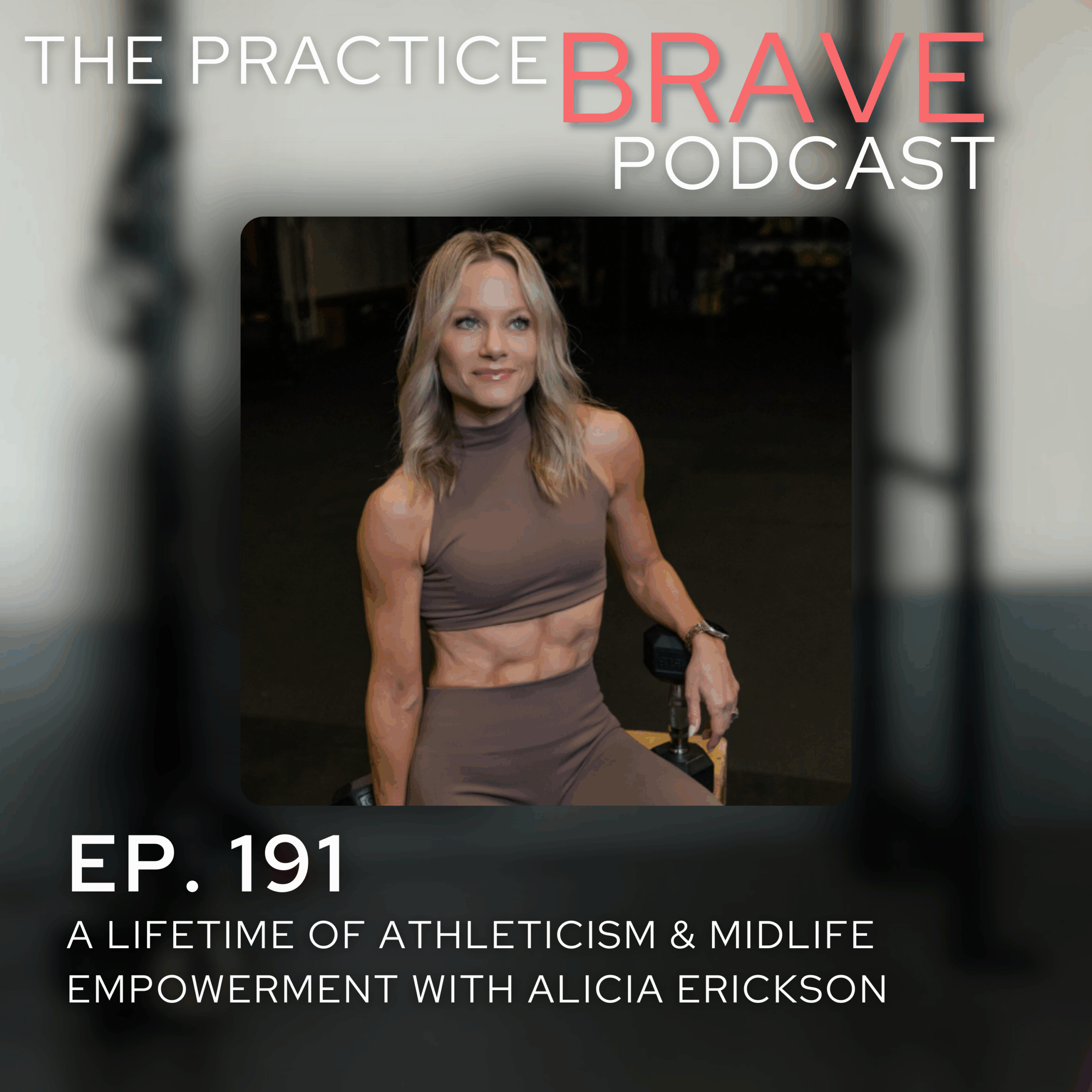
In today’s episode, I sat down with the amazing Alicia Erickson, and wow — what a powerhouse of wisdom, grit, and light. Alicia is 51, vibrant, incredibly strong, and living proof that aging doesn’t mean slowing down — it means evolving. We talked all about how she’s embraced fitness, mindset, motherhood, and midlife with passion and intentionality.
👋 Connect with Alicia:
Instagram: @aliciae
Website: themidlife-maven.com
Coaching + App: aliciaericksonapp.com
Thanks so much for tuning in! If you’re navigating motherhood, fitness, or finding yourself in the midlife shift, this one’s a must-listen. You’re not alone — and it’s never too late to level up.
Want to learn more about coaching female athletes? Check out the Pregnancy & Postpartum Athleticism Certification here: http://briannabattles.com/ppacoach
If you’re a pregnant or postpartum athlete looking for resources, I can help:
The Pregnancy Cheat Sheet Free E-Book:
https://go.briannabattles.com/adjust-cheatsheet
The 8-Week Postpartum Athlete Training Program:
https://go.briannabattles.com/8-week-postpartum-athlete-training-program
EXPAND FOR EPISODE TRANSCRIPT
AUTO-GENERATED TRANSCRIPT
Brianna Battles 00:01
Welcome to the practice brave podcast. I am the host Brianna battles, founder of pregnancy and postpartum athleticism, and CEO of everyday battles. I’m a career strength and conditioning coach, entrepreneur, mom of two wild little boys and a lifelong athlete. I believe that athleticism does not end when motherhood begins, and this podcast is dedicated to coaching you by providing meaningful conversations, insights and interview topics related to fitness, mindset, parenting and of course, all the nuances of pregnancy and postpartum, from expert interviews to engaging conversations and reflections. This podcast is your trustworthy, relatable resource for learning how to practice brave through every season in your life. Everyone, welcome back to the practice brave podcast today. I’m so excited to have Alicia Erickson on and we’re going to be talking all things, pursuing a lifetime of athleticism. And you know, one thing I talk about a lot is, is learning from the women who are a little bit ahead of us, where it’s still very relatable, but also, like, goals. And I feel like, Alicia, you do such a great job of sharing what it looks like to truly be on the other side of like, raising kids. Your kids are a little bit older, you’re still very fit. You’ve evolved your fitness and nutrition and lifestyle approach over time, and you are now in your 50s, I believe, yep, 51 and so buff, so energetic, you just bring so much light. And I think it’s truly important to highlight what your life looks like, where it was, and just how you got here. So thank you for being here.
Alicia Erickson 01:43
Of course, I’m so excited. Thank you for having me. Yeah, and, like,
Brianna Battles 01:46
ironically, you know Miranda Granger, who’s like, one of, like, my soul mates, and love you, Miranda. Shout out, Miranda, and that’s how we got connected. I mean, I’d been following you prior, and then I think I sent her a reel, and she’s like, you know, I know her right? All of my like, maternity pictures. And I’m like, what so anyway, I love when things happen like that, just so organically and very grateful to have you here.
Alicia Erickson 02:14
Thank you. Thank you so much. I’m excited.
Brianna Battles 02:17
Yeah. So tell us a little bit about yourself. Like, what does your life look like? How did you get here? Give us some context, oh, boy.
Alicia Erickson 02:24
Well, I mean, where do I even start? Oh, my gosh, as far as like, where I’m at in just my life journey. So I’ve been married to my husband Greg, for almost 27 years. We have two daughters, ages 23 and then turning 21 this weekend. Oh my gosh, crazy. The oldest graduated last year from college. She’s living in New York City, following her theater dreams. And then our youngest daughter, who’s turning 21 is at Arizona State. And they have been just a joy. They’re wonderful girls. They’re amazing. We dedicated years to raising them, and they left finest two and a half years ago. That’s kind of when this most recent chapter started that really catapulted me to where I am now. But I’ve always been very consistent with who I am, with my health and fitness, a small business owner. I actually was a portrait photographer. Why I know Miranda. I did that for about 13 years, and when I became an empty nester two and a half years ago was really when I decided that some things needed to change with my health and fitness. Things were just not the needle wasn’t moving and I needed to switch up. I was really in the thick of perimenopause and feeling that big time, and I really had a big switch up. And I just started sharing on social media. I started sharing what I was doing, how I was doing it, my methods. And it was like, Matt, my it was like, my body needed this change so bad, and it responded so well. And it was like, magical, like, how crazy. And I was just, I’m very, very consistent person. I’m very laser focused on what I do and what I set my mind to. And I just got really laser focused on what I wanted to do, and the results just were speaking for themselves, and everything just kind of took off with it on social media. It’s kind of crazy, and here I am today.
Brianna Battles 04:10
No and like your content, I think it’s just really relatable, because it’s direct, but it’s also like it just showcases what is still possible. And that’s where like, our efforts are so aligned is showing like it’s not over when you become a mom. It’s not over when you’re in your 40s or your 50s or whatever, and like we just have to evolve our approach our life, to our health, to our fitness, and kind of roll with the punches as they present themselves. And you’ve done a great job of that in so many different capacities. Thank you. Yeah. So I want to talk about some of those changes that you made, what was worked or what wasn’t working, what you did for it to work. But I actually want to talk like, about some maybe like, more vulnerable and personal things before we dive into the perimenopause, menopause, fitness stuff. Okay, you said you’ve been married 27 years. Yeah, that’s a really big deal, especially in 2025 Yeah, there are a lot of us who are, I’d say, like in the trenches of motherhood, of marriage, of going through just like, really hard changes in maybe our marriages, our family dynamics and figuring out our identity as a unit. Can you give them insight on, like, what worked really well to have a marriage that has, like, withstood 27 years?
Alicia Erickson 05:28
Oh my gosh. There’s so many things I will say, Gosh, I’m like, trying to think of
Brianna Battles 05:34
like, what feel for this honestly.
Alicia Erickson 05:39
You know, when we say for better or for worse, we don’t always anticipate how much like, how things would look like if the worse and the better, and and there are times like, obviously, raising kids, you’re in the trenches like it’s super stressful, and going through just stressful times, and you know, you have a sick parent, or whatever it might be, just things that you might be arguing about or things that you’re working through, and it’s like, this is what it means for better for worse. Like that is what it means, like you’re going to stick through it and you’re going to work together. That doesn’t mean you just accept bad behavior or anything. Like, I’m not saying that, but I’m saying that you are willing to have those difficult conversations with your spouse, uncomfortable conversations. You are willing to set boundaries with each other. You are willing to, like, go deep and not brush things under the rug and deal with things and address situations that are difficult and that are hard. You’re like, you’re talking every day, you’re working through things together. And also, like, humor. I mean, we’re big on like, just making light of things too, and being funny and being silly and laughing at each other, and always just, you know, finding new ways to connect with each other. Even as we came into empty nesting, we really connected through hiking together. Like, that’s our activity that we do together as we hike. We just love it. It’s been so much fun. But just really, just seeing through those difficult times and when you’re in the trenches, understanding that this is what it means when, when it’s for better, for worse. Like, it’s not just like what you think in your head is for better, like it’s going to be something that’s more challenging that you can imagine. But again, like I said, it’s not just it’s dealing with and being honest about things that are bothering you, or you know that you need to work through and working through those things together and as a unit, as a team, working together. If that makes sense,
Brianna Battles 07:21
that absolutely makes sense. And I do. I like that perspective of, like, you don’t always know, like, what the worst actually means, and that that will keep changing and evolving over the years.
Alicia Erickson 07:30
And there might be months and years we had a period of, like, a few years that was things just there was just, like, things happening and happening. I’m like, Oh my gosh, what? This is so hard, this is so hard, but we are committed to each other. We’re committed to working through that. And it’s like, you’re like, This is lasting longer than I thought. Well, that’s life totally
Brianna Battles 07:52
and I think it’s just so frustrating when you’re like, okay, all of these things have changed in my life, like you both grow up together and now you start this family where you’re raising kids, and it’s just like, yeah, there’s just so many different life variables that come up. So I just feel like there’s always, there’s something to be said when people have been able to make it work that long, happily, which is the key
Alicia Erickson 08:15
brush, step under the rug, deal with it, difficult conversations. I love that.
Brianna Battles 08:21
So you have two girls that are clearly like kind of doing along the pathway that I’m sure you like hoped and dreamed of being in New York, being at ASU, pursuing their dreams. What was your favorite season of life when they were at home with you? And then what was the hardest season of life for you when they were at home.
Alicia Erickson 08:41
Well, I always call the elementary school years the honeymoon years, yeah, because when they’re little, they’re very physically and emotionally demanding. It takes a lot, right? When they’re little, and you have to do a lot physically for them, and then they’re learning, you know, they’re having tantrums, and they’re, you know, so then that’s also emotionally taxing. But then they kind of enter this honeymoon stage in the elementary school, years before they hit puberty in adolescence, that is kind of like, oh, this is, this is nice. This is fun. We’re having so much fun together. This is, I love it. And then all of a sudden they start, you know, puberty starts hitting your like, what the heck? What happened to my kid? Where is she? I don’t know, because this is not her. And it gets crazy in those teen years. I think maybe more so a little bit for girls, I don’t know. Maybe the boys too. I have two girls, so I can only speak from that perspective, but the teen years were pretty intense and pretty tough, and you feel very unqualified as a mother. You feel very like this is on the job training. I don’t know what I’m doing. I’m just figuring this out as I go. I mean, that’s all parenting, right? But really, the teen years are hard because that’s when they’re preparing to go out and be in the world. And they think they know it all, and they’re you want them, you want to equip them in the right ways, but they’re not quite yet ready, so it’s just a little intense. Intense. So I would say, Yeah, honeymoon years or elementary school, and then really the hard, or the beginning, and then teen years might have been the hardest.
Brianna Battles 10:09
Yeah, I mean, I can imagine that. I remember my own I have a sister, and my mom was just like, say, literally. Said, the same thing was, You guys are so great, and then you were teenagers, and we hardly survived. Oh, my God, it was Rocky.
Alicia Erickson 10:25
Lots of prayers when they’re teenagers. Yes, I know.
Brianna Battles 10:29
I think she, she really got deep in her faith when we were like, We were truly like, Good kids too. We weren’t even to like, a bunch of crazy but I think just the intensity of attitude and the hormone and like you said,
Alicia Erickson 10:45
roller coaster that you’re on. You’re on a roller coaster ride with your kids, because they’re just figuring it out too, you know, they don’t know what the heck they’re doing. And then their hormones are crazy. Like you said, it’s just
Brianna Battles 10:54
yeah, yeah. I’m in those honeymoon years right now. My boys are in elementary school, fifth grade and first grade, and I felt like it was survival mode for so long when they were little, like, because you’re, you know, you’re like, needed so intensely, like, they’re in your body, they’re on your body. They’re dependent on your boobs for life. Then you’re like, having the spoon feed, like, everything, the whiny and then all of a sudden they get a little bit older and a little bit more independent, like, you said, like, Oh, this is kind of nice now, like, they’re in school, I have, like, freedom, like, like, This is so nice. But ultimately, every there are seasons of motherhood, it just ebbs and flows. And that’s, I think, the hard part when you’re an independent woman who has a lot going on to be having, like, no predictability, really?
Alicia Erickson 11:43
Yeah, I will say my girls are just freaking amazing people. You’re just the time. It’s kind of like marriage, like the time and effort you put into your family and you put into your kids, and like disciplining them too, and like making sure that you’re keeping them straight on with, you know, like calling them out and staying on them, but also like being their confidant. It’s like finding that sweet spot. It can be a little bit tricky, but if you can find that spot, like, they turn out to be awesome people. And I’m very proud to say my girls are awesome. They’re just amazing people. You know, they’re care who they are as far as their character. They’re just good people.
Brianna Battles 12:19
I mean, I love that, and I just congratulations, like, on you, like, made it through. Yes, having them under your roof, you got them off to college. I feel like that’s like, such a parenting win, or it’s like, as celebrated or not, but it’s a big deal 100% my mom got a tattoo, and she got my sister and I got to college, because she was like, I’m so proud. Because she was a single mom, and so she was just, she always said, like, like, I want to raise these girls to be strong, independent, so that they, like, don’t have to count on anyone. And like, her main goal was to figure out how to just, like, get us off and into college so that we basically had this chance and this opportunity to be okay, you know, so tattoo. It’s like two roses for like, mom and for my sister. But she just was like, This is my proudest thing. Like you guys graduating college. It was my personal proudest moment. And but I think, like, as a mom, you know, you pour into your kids and you want the best for them. And I assume that’s probably truly the most rewarding thing is to see them come into their own and find their pathway and, you know, cheer them along. It’s pretty awesome. It is awesome. So let’s see. I wanted to kind of like, still talk a little bit about, like, motherhood. What did your your years of raising kids through all of those different seasons, what did like your relationship with your body and training look like?
Alicia Erickson 13:49
So I mean, it’s always, honestly been a priority for me. And I knew from a very young age, my dad took me to my very first ever Fun Run, think maybe like second or third grade or something like that. And I remember getting that rush and thinking, Yeah, this is something. This is going to stick. And it really, I mean, for more than anything, for my mental health, is why. Obviously, the benefits are numerous, but my mental health was kind of first and foremost, just all throughout my life, and even right after having the girls, I remember just thinking, I got to get back to movement and activity, because I’m going to go absolutely insane, because I could see myself kind of going down that that road, and I knew that this was going to be like, like, catalyst, like, huge for me. And so as they were growing up, I is, again, always still a priority for me. But sometimes it can look different when with different seasons of life and the ebbs and flows of life and having kids and their schedules. Well, it might, obviously, now I have more time and space, and I can dictate my own schedule, and so it’s different. But even if it was only 20 minutes that I was getting in, I was doing that, but it was always, always a priority for me. But I did have. A period of time, probably in my 30s, mid 30s, where I really had to work on my mindset around my body image, and everything that I had been kind of groomed to think throughout my life, and just my generation X, and all the things that we’ve been led to believe. And I really had to work on how I spoke to myself, because I recognized and I caught myself speaking to myself in certain ways, and I just thought, I need to correct this now, because I’m leading by example for my girls too. And so really just saying, Alicia, you know, waking up every day and saying, even if, like, my physique wasn’t necessarily where I wanted it to be, saying, Alicia, you are able to move your body today. What a gift, yeah, like, what a freaking gift, that you can actually go and go out for a run or go and lift weights. Like, what a freaking gift is that that so many people don’t have, and that you just take for granted? Like, how amazing is your body, that you can do this? And just kind of really things like that, that just speak over myself to really empower myself for a new mindset, as opposed to, oh, well, you’ll never look like this, or, Oh, you don’t look like this. Or really just learning how to speak to myself in a specific way that was empowering, that just negated all of that self talk that was not good and not beneficial in any way. So that became a real big priority for me, really, as I coming into motherhood and just how I saw myself. But, and again, you know, like, movement always being a priority, right?
Brianna Battles 16:26
And so, like, your generation specifically was, like, inundated with, like, the 90s, skinny, right? Oh, big, thin. Very, very thin. I was a kid then, so I don’t feel like it like I didn’t absorb it as much. But then, yeah, growing up like muscle was never celebrated. And I just like, always had really strong shoulders and a back from swimming, and my mom would, like, really empower that. But I hated it because it was still, like, inundated with, like, cute and small is better for girls. And I just never felt like that. And my mom was naturally pretty cute and small, and my sister and I just felt like giants around her, like it was still so hard to navigate being young with that messaging. But I would imagine growing up and coming into like your teenage and early womanhood, I guess, of really being hit with that where it truly matters is a whole different ball game.
Alicia Erickson 17:22
Yeah, it’s like, all this programming that you have to undo, yeah, and reprogram, right from,
Brianna Battles 17:29
like, under eating, like, I don’t know, just like, we’ll have these shakes and then, like, that’s literally all for, no, I
Alicia Erickson 17:35
did all that is Slim Fast and all that stuff.
Brianna Battles 17:37
Yeah? So tell people, like, what was the messaging like? Because I talk a lot about the fitness culture and now within social media, having to navigate a lot of the noise out there and find, like, I guess, what’s actually healthy. So tell us a little bit about like, what was the messaging like back then in our fitness culture?
Alicia Erickson 17:55
Well, I mean, yeah, just exactly what you’re saying. We had what? Jenny Craig, Nutrisystem, slim, fast, the cabbage soup diet is always it’s like a literal forever calorie deficit. You know, the snack wells the no fat and all these things. It’s like, No, you know, that’s what we knew back then, right? Or that’s what we taught back then and marketed to, yeah,
Brianna Battles 18:19
and so growing up with, like, smaller, thinner, less, calorie, less is better. How did you even as a mom, like, I know, like, a lot of the self talk, but how did you quiet some of that noise against it? Yeah, again,
Alicia Erickson 18:35
just kind of really, I mean, I think just over time, evolving and understanding that that was not healthy. Yeah, I always have wanted to model good nutrition. I’ve always wanted to do that. And that’s, I think that’s like, always, like a work in Pro that can be a work in progress too. I think just as time has gone on and over time, as I’ve educated myself and looked more deeply into things, I’ve understood more deeply. And then you realize what all that advertising actually is and what all that marketing actually is as you learn for yourself and as you dig deeper for yourself to learn more. Yeah, if that makes sense, yep,
Brianna Battles 19:10
no, that definitely makes sense. So did you always lift weights? Or was that more of a like, semi recent
Alicia Erickson 19:19
thing for you? Yeah, so I actually, I remember looking back, I started hitting the gym when the girls were little. I started, I remember, I started at the YMCA, but I would do, like, the boot camp classes, and then I actually did my first ever progressive overload program in my early 30s. I did, do you remember Jamie Eason? Yes, I totally did a Jamie Eason program.
Brianna Battles 19:40
Yeah. Her name is so long, and she’s like, Isn’t
Alicia Erickson 19:43
that crazy? And I actually think she might live in Boise, but she’s been off the radar, because I think she’s in the midst. I feel like she’s an Idaho maybe I’m wrong, but she’s in the midst of motherhood right now, so I think that’s why we haven’t heard from her. But she was such an inspiration to me. And I remember doing the program, and I was like, This is amazing, but I also remember thinking. I’m not seeing results as fast as I want to, which I think another thing is we’re programmed to like with muscle. It takes a long it’s a long game, but I remember I did that program, but I kind of would always kind of vacillate and go back to, like, the boot camp type classes. But then around age 40 is when I started CrossFit, and I really got into CrossFit for a good eight years, which I honestly, I love that, and I loved how it challenged me. I would walk in each day wondering, okay, what am I going to be challenged to do today that I’ve never done? And it honestly was such a great time, because I learned we were really good and real sticklers at my gym about moving well and moving properly and having coaches watch your form and making sure that you were doing things in the right way to not get injured. But I feel like I learned so much during that period of time, and it really challenged myself in new ways, which was amazing. But as I was hitting that perimenopause time, it just was not just kind of the more hit type workout wasn’t serving me anymore, and I just realized I needed to start moving my body in a different way. And I was watching some other women in my age group, and I thought they’re doing that progressive overload. I’m going to go back to the gym and I’m going to start doing that, because that’s, I think what my body needs. I need to slow it down. I need to be more slow in control. I need to focus on putting muscle on my body, with my nutrition and with how I’m lifting and how I’m moving. And that’s when I changed to this more traditional strength training, focusing on progressive overload in the last two and a half years.
Brianna Battles 21:27
Yeah. So that’s interesting. So you were in your 40s doing CrossFit, and what were some signs that you’re like, you know, like, this isn’t serving me. Like, were you getting injured? Were you getting tired? Was your body composition? Like? What were like, I guess yellow and red flags where you’re like, something’s got to change. Yeah, definitely,
Alicia Erickson 21:45
there was a couple of injuries in there. I mean, I think that just kind of happens with CrossFit. I mean, you’re moving so fast, but it’s also my body I feel, I like, just feeling more fatigued and more exhausted and just wanting a different type of movement, just needing, like needing and feeling more inflamed. Yeah, you see photos, I’m more puffy and I just My body was just wanting something so different. But I definitely feel like that was it was just not moving the needle. It was more puffy, just more stressed, more fatigue, more feeling more exhausted, for sure. So I never want to, it’s like, I never want to say anything bad about any specific type of thing. But just for me, and what I’ve seen with a lot of women coming into this phase of life is just, it’s not really what our bodies need. And I always say, like, if somebody still wants to keep doing CrossFit, that’s great. Maybe just hybrid it. Maybe do CrossFit, like, a couple days a week, and then do your strength training, your regular strength training for another three or four days a week, you know, something like that, and hybrid, if you really because I know that CrossFit is a lot about community too, but I just know that once I changed my body was like, thank you.
Brianna Battles 22:57
Yeah. I think it’s really important. Like, my mom found CrossFit in her 50s, and it’s been super positive for her. But like you said, like she naturally has, like, a hybrid approach, because she also skis, like four days a week during the winter, and then she, like, walks a lot, and she It’s like she does, like, a lot of other activity. So it kind of like counter balances a lot of the intensity that she gets from CrossFit. But I feel like everyone at some point, like, if you’re like, in your 30s, 40s or 50s, you’ve probably dabbled in CrossFit at least a little bit, you know, so, like, it’s very much part of every a lot of people’s stories, our fitness stories, I should say. But when did you start feeling like, perimenopausal symptoms? Was it then, like, when you were in your CrossFit era that you started to
Alicia Erickson 23:41
like, feel probably more like as I came into my I’m sure it started happening before this, but as I was coming more into my mid 40s, and that’s when I quit alcohol, which was a big deal for me, because I quit at age 45 okay, and it was a, like a 20 plus year relationship with alcohol that I didn’t like. And I always say like, I was never an alcoholic. Nobody ever said anything to me like Alicia, you’re drinking too much, Alicia, you need to, you know, maybe check this out, because this seems to be a little excessive. Nobody ever said it was me, my own personal relationship with it, that I didn’t like it. I didn’t like that. It seemed like a habit I couldn’t shake. And then I was just like the next morning, feeling like crap and feeling like trash after having a few glasses of wine the night before, but then I would keep doing it. I’m like, why am I continuing to do this? And so finally, as I was coming into perimenopause, you know, our bodies just don’t metabolize it the same way anymore. Our bodies were changing. Things are changing, and my body was just not having it. And I just finally said, I’m done. I am done. This is we are done. I’m moving on. I’m breaking up with you. You aren’t serving me anymore. But I definitely felt that in my mid 40s, and I felt like that’s when really things started to change with my body.
Brianna Battles 24:47
Yeah, we just, like, hungover, more like, when you say, like, it wasn’t metabolizing it, where that sort of gave you the Yellow Flag. Was that, like,
Alicia Erickson 24:55
like, just making me feel worse and worse and worse? Yeah, yeah.
Brianna Battles 24:59
And was. Your relationship with alcohol, like, more of, like, end of the night, pour a glass of wine, have some champagne, or whatever it might be, and, like, kind of, like a night cap. Yep, definitely, very part of your team. So how did you go about breaking a 20 year ish routine of that? I had
Alicia Erickson 25:17
cut it out a couple times before, maybe, like, with a silver October or dry January, giving it up for Lent, type of thing. It always came back. Yeah, I think I finally just got to a place where I was sick and tired of feeling sick and tired, and I was tired of my excuses, and I was just, I was just pissed. I was kind of pissed in a way. I was like, This is making me feel like absolute trash. I am so done. So I think just mentally, I came to a place where I am just over this. I also read a book called this naked mind by Annie grace, and it completely shifted everything for me. And she uses an approach. It’s more of like, it’s a really, it’s a mindset approach, and it’s about, it’s, you know, she talks a lot about your subconscious brain and your conscious brain, and we don’t talk about this a lot in the health and fitness industry, which I think is something needs to be addressed. Because addressed, because we, a lot of us, have limiting beliefs that we don’t even realize are there, and we literally have ruts in our brains that have us stuck in our old thoughts and our old patterns. And we need to create new ruts for new patterns. And so that’s what I had to do. It was a complete mindset shift. It was bringing my subconscious brain and my conscious brain into alignment with each other and moving forward with that. And it was, it was hard at first. I mean, that first year was difficult and but it’s, it’s like, we need to learn to also do difficult things. Not everything’s going to be easy. It’s not like, and we need to learn to sit in those difficult moments we’re so like, into like. We have to find that next dopamine hit to make us feel better and to get us over. You know, I don’t feel like a good right now, this, this is uncomfortable. Well, it’s okay, that’s okay. You can feel uncomfortable. It can be hard. That’s okay. That’s how you grow. That’s how you’re going to get better. And so it was like that was hard at first, but I can’t even express to you what quitting alcohol has done for my life, like I can’t even express the ways that it’s made my life 5000 times better. I would not be sitting here with you on this podcast if I would have not put alcohol. It was holding me back in more ways than one, powerful
Brianna Battles 27:11
especially saying, like, I wasn’t even an alcoholic, but, like, it just was a consistent part of your life and a habit that was no longer serving you. And sometimes I think it’s hard for us to even recognize, like, what our own version of toxic is, and like, whether it’s alcohol or some other vice, like, until it’s removed, and then you’re like, Oh my God. Like, there’s their freedom on the other side of removing whatever your version of a toxic vice
Alicia Erickson 27:35
is, yep. And we think that our happiness is in that vice, and that’s not it’s a lie. That’s a total lie. And we think that, how can anything be better than this? And that’s the lie that we believe. You’re not going to know until you get out on the other side, it’s going to be like, exponentially better without it.
Brianna Battles 27:50
Yeah, absolutely. So you got alcohol out, you started feeling better. But still, talk to me about, like, some of the signs that you’re like, oh, maybe, like, yes, my body’s changing. Maybe, is this menopause and my perimenopausal what were some of those symptoms and things that you had to, like, get a grasp on in terms of approaching your health differently in accompanying like, obviously cutting alcohol out was a big one. But what else?
Alicia Erickson 28:11
Yeah, well, I mean, and also, just to be honest, I kind of started develop a little bit of a sugar habit after cutting out alcohol. So that was another thing that was like, Oh my gosh. Really, this is okay.
Brianna Battles 28:22
That makes sense, you know, like a replacement therapy
Alicia Erickson 28:25
kind of thing. Yeah, it’s very common too for that to happen. So I that was actually another thing two and a half years ago on this most recent chapter that I had to come to terms with. And I just was like, I just need to cut that. I need to cut the refined processed sugars. And that’s what I actually did. I applied the same principles from cutting out alcohol to cutting out sugar. But I just, you know, as far as like, perimenopause and those symptoms go, I think I just was kind of feeling like I was having almost like an outer like I just wasn’t really myself. I was kind of having like an outer body experience, because, like, my body is changing, and I don’t know what’s going on, and this feels and like what’s happening. Because really, in perimenopause, your hormones are still, are still going up and down and up and down and up and down. And so you’re, you’re kind of all over the place. But I remember just having also, like little bouts of anxiety, having, like random anxiety. There’s so many symptoms associated with perimenopause, it’s crazy. But just really feeling does not just not really like myself, but when things really kicked in, I think with kind of kicking me more into that kind of perimenopause to menopause, yeah? For more of my hot flashes, that’s definitely like, the more marked one is the hot flashes that’s that have been insane, yeah, yeah,
Brianna Battles 29:34
so fun, yeah, you’re like, funny ish. Core memory for me is, like, my like, going home and my mom would be taking her shirt off in the kitchen, and just like, laying on the counter, like the granite on her top, just like boobs down on the counter, because she was, like, having a crazy hot flash. And she says, like, overall, like, her her symptoms through perimenopause and menopause weren’t crazy. But like, that one, she was like, That was That was wild. She was like, I just had to, like, take everything off. Like.
Alicia Erickson 30:00
Immediately you feel like you can’t get outside of your body, because your body is just, like, heating up, but it’s just and you feel like a little buzz before it happens. You’re like, oh gosh, it’s coming. I started having those, I think, at age 48 and then they kind of would come and go, and come and go, and then this last year, they got so bad. That’s when I started going on hormone replacement therapy. Was in July when I turned 51 because I was having multiple every hour, on the hour through the night, not able to sleep, waking up, staying awake from like 3am for the rest of the I mean, just Yeah, Miss I was like, I cannot live like this. I cannot do this. And that’s when I started hormone replacement. And, like the best,
Brianna Battles 30:45
my gosh, okay, I feel like I have so many questions. And also, like, HRT feels so confusing, until, like, I guess you find a provider who can really make it accessible. But there’s we’re finally getting more information on perimenopause, menopause, HRT, and some approaches to essentially, like, age well and like, more enjoyable, let’s say if you’re highly symptomatic. So what does HRT actually look like? What does it mean for somebody to say, like, I started HRT? What does that look like? That means that,
Alicia Erickson 31:19
so as you’re going through perimenopause, menopause, obviously your hormones are starting to tank. So these are the hormones that your body normally has, and you’re just, you’re bringing them back in to keep things nice and even because, well, and I mean, when you you look at the history of how long women have lived, we have not, or, you know, we’ve only lived past the menopausal stage for such a short period of time, and so women weren’t living that long before to understand that we actually need these back. And so basically it’s just replacing the hormones that were there and putting them back into your body. And the way I take them, I take a progesterone pill, and then I take an estrogen cream, and I do this every night. I just added testosterone to my cream in the last couple of months, and it’s been amazing. Like me. I feel me again,
Brianna Battles 32:09
yeah, so you just like mixing those creams together, then the actually,
Alicia Erickson 32:13
the cream is compounded, okay, no compounding pharmacy, and so the cream is compounded. And I just do my wrists. I’ll do behind my knees. I’ll do kind of my lower abdomen, in my inner thighs, kind of the more thinner skinned areas, okay, don’t absorb as well. And I do that every single night, and it’s been amazing.
Brianna Battles 32:31
And how do you know, like, how much to put on?
Alicia Erickson 32:33
So I started actually doing labs with my functional medicine doctor. Before I started any of this for a few years, we had take my labs and just see where my hormones are at. It’s kind of get a baseline. And I was honestly resistant to start hormone replacement therapy, because I’m the kind of person where I’m like, this, rub some dirt and it will be good, you know, fine, right? And finally, I was like, This is not okay. I can’t live like this. I am absolutely miserable, which I don’t think anybody should be miserable. And so looking at my labs, I mean, everything, my hormones were really starting to tank. And so we definitely went off of that.
Brianna Battles 33:09
Yeah, so, I mean, I think it’s really helpful to hear because I think there’s a lot of us, especially if you’re maybe more health and holistic minded, you’re like, I don’t want to take medicine. I don’t want to have to be on this, but ultimately, this is a way to live healthier and feel better. And it’s not for everyone, but it was an option. And I think that’s the beautiful part of like getting more information out there, is we can actually make informed decisions. Since I think HRT was so like, controversial, like, 10 ish years ago. I mean, even
Alicia Erickson 33:43
with a study that came out that was actually, there’s been so many things debunked about that since that time. But that’s just what stuck, yeah, so many Right?
Brianna Battles 33:53
Like, oh, it will cause breast cancer. And so then everyone, like, freaked out about it,
Alicia Erickson 33:57
yep, right? Which is not true, yeah.
Brianna Battles 33:59
And I remember my mom was, like, really resistant to that too, because she was like, no, like, I don’t want to take anything, because of that study that came out, because of the lot of the messaging her doctors had given her, so she didn’t take anything. And then it wasn’t until, I think, this past year that she started, she got on HRT, and she’s 66 good.
Alicia Erickson 34:17
I’m not I’m so glad. Is she feeling better?
Brianna Battles 34:19
She is feeling better, like, and you know, she’s like, I did wasn’t feeling horrible, because she’s, like, very much menopausal, like her, her period stopped forever ago, but to she just wasn’t even sure at that point. Like, is, am I still going to experience benefits at 66 when, like, I have been in menopause for years? And yeah, she does feel good. And I think ultimately, it’s like she’s taking it for more of like, the aging benefits of like dementia, because my grandma has dementia, and we know that, like, there’s just, we’re starting to see evidence of HRT helping with things that go so far beyond like symptoms.
Alicia Erickson 34:56
Yeah, agree, and she didn’t
Brianna Battles 34:58
have any. Like, respect yourself. We were just like, okay, like, Mom, just like, try it and like, you can always stop if you don’t feel good on it, you know. So, yeah, she’s been doing it’s been interesting, and I’d certainly on my radar when that time comes. But do you feel like, do you wish you would have started earlier, like, now that you’re on hormones? Or do you feel like it was the timing is right for you. I feel
Alicia Erickson 35:22
like the timing was right. I feel like it’s good. I could have started maybe a little bit earlier, but I feel like my timing is right. Yeah, I just get
Brianna Battles 35:29
to know. I feel like, you know, having this conversation is like having, again, learning from women who are a little bit ahead of you, and like sharing some of these things, because it’s not necessarily easy to weed through what we’re seeing online, even like what our doctor saw. It’s a lot of doctors aren’t even fully up to speed on HRT
Alicia Erickson 35:49
because they don’t receive any education really around this at all. Right? And that’s why, like, this movement has gotten so big. I mean, you see, yeah, on social media, how we’re getting around this age group is getting real loud, because we haven’t. We’ve been so underserved.
Brianna Battles 36:04
Totally, yeah, yeah, yeah. And I mean, that’s why, like, I feel like we have so many parallels with like, trying to bring more awareness for in my world, like pregnancy and post partum and like, ways to approach that in a way that sets you up for this lifetime of athleticism, not just about how you’re training during those specific seasons, but how you’re training on behalf of everything else, and then where the season you’re in is, like, how are we navigating our symptoms and changes in our body, through exercise, through nutrition, through HRT, on behalf of how we want to feel in our 70s, 80s and beyond? Like we’re living longer? How can we live better age? Yeah, that quality, it’s huge. Yeah, agree. So what advice would you have for, say, woman, a mom in her 30s, navigating her fitness and nutrition, maybe not feeling 100% like herself, but ultimately it is a high priority in her life. What advice do you have on just how to navigate what, yes, your health and fitness looks like.
Alicia Erickson 37:03
I mean, honestly, just always being your own best advocate. Sometimes you have to do some the research yourself to figure out what’s best for you and tweak things for yourself to figure out what’s best for you. Give yourself a lot of grace, but also just continue to work on yourself every day and make it a priority, like when you make yourself a priority, and when you pour into yourself you are going to be better for everybody else around you. It’s a ripple effect. So when you, you know, take the time, even if it’s just a short about, you know, 2030, minutes, to get movement in during your day, to put foods in your body that are going to be nourishing to you, to hydrate, to try to try to prioritize sleep. And I know that can be challenging when you’re a mom and you’ve got so many things going on, but when you make yourself a priority, and you make these things non negotiable for yourself, and you hit that every day, you are going to feel better. You’re going to feel more confident, you’re going to have more respect for yourself, and you’re going to pour into your family. You’re going to your family, your spouse, your community is going to feel the ripple effect of you pouring into yourself. It’s going to be a positive impact for everybody else around you. Because I think there’s a misconception that, oh, that’s being selfish, or that’s being self absorbed, or, gosh, you’re so selfish for taking that time. No, that’s not that’s putting time and energy into you and making yourself the best possible version of you so that you can show up the best for everybody else in your life.
Brianna Battles 38:23
That’s so true. The more we pour into ourselves, the more we’re able to have reserves to then pour into others. You cannot just be running on empty in the name of motherhood and that. I mean, yes, we sacrifice a lot, but also we have to, like, somehow, replenish, somehow. And little doses, like,
Alicia Erickson 38:41
small doses do find a way, find a way to make it happen, because otherwise you’re going to be bitter and angry and feel like crap, and you don’t want that.
Brianna Battles 38:49
No, no, we don’t want that. We don’t want that. So tell me what your favorite part of being an empty nester is. Like, like, have you were you sad? Were you like, woo hoo. Like, where were you on that spectrum? It’s so bittersweet.
Alicia Erickson 39:01
It’s so bittersweet because you can’t even imagine, like, your kids leaving and being gone and, oh my gosh, I love them so much. And I’m really close with my girls. I mean, they tell me everything, almost too much. No, I’m kidding, but we’re very close. And so I just kind of thought, how is this gonna this is so weird, but now it’s like, love you, but I love the house. To myself, so funny, because once you get used to them being gone and you have, you have, like, it’s like, you can kind of figure out who you are again, because you’ve just been momming so hard that you actually get to go back to figuring out who you are and what you want and what you’re passionate about. And it’s like a whole new chapter. And it’s freaking amazing. Like, I love it. Love it so like, I am able to, now, coming into this stage of my life I’m having, I’m able to impact so many people with the work that I’m doing, and what is better than that, and having a positive impact on the world and on women like, what. Could be better than that, and they have more bandwidth and more space to do that now that they’re gone, and they think it’s freaking awesome. It is so great to mom hard and to, like, pour into them, but then once you get that time to you to pour into what you want to do and who you want to be, it’s like the sky’s the limit. It’s a it’s like a whole new life chapter.
Brianna Battles 40:20
It’s awesome. And I think I would assume anyway, that feeling good and looking good is a huge part of what makes being 50 feel like it’s not over, like, oh my god, we have, like, you said, this is a whole new life, like it’s you’re not like, it’s not all downhill, actually, like you have,
Alicia Erickson 40:39
I literally have, like, as far as like, how I feel, my confidence, my energy, my physique, I feel better now than I ever have in my entire life. And I can say that with whole 100% honesty, yeah, like, from everything from my mindset to my physique, everything, yeah, I feel leveled up to a level I have never been in my entire life.
Brianna Battles 41:00
Yeah, and, I mean, I think there’s such an element too, of like, you really know yourself now. I feel like I don’t know. I feel like it wasn’t until I was 35 that I was, like, my brain wasn’t fully developed. I know what it like was, but like, I don’t know. It’s just there’s so much learning and unlearning and redefining, and you just sort of are, like, who even am I? And I would hope and imagine that by the time you know you’re 50, you’re like, I really confident in who I am and what I believe and who my people are, and whatever it might be. And because that can be such a steep learning curve, I think when you are you’re in you’re becoming as a mother, as a woman, you’ve had so many changes, but that like little girl inside of you, like, she never dies, she’s still there, right? It’s just weird. It’s a weird evolution,
Alicia Erickson 41:47
yeah, and I think I see you as this kind of woman that you’re obviously, you’re always working on yourself, you’re always working towards that. And I think as long as you’re always working on yourself and you’re always being self reflective and wanting to just continue to get better and better you’re you will, like, it’ll just get it, and it just gets you just evolve and get better and better as you get older, if you continue to work
Brianna Battles 42:07
on yourself. Yeah, I mean, and that’s, like, mentally, physically, emotionally, spiritually, like, there’s so much that goes into it, and it is so worth it, and you’re such a great example of that. And what life can actually look like when you’re on the other side of, like, raising babies, and when they’re out and they’re you’ve kind of like you’ve done your work with your kids, they’re free, and obviously you’re still very much supportive and involved in their lives. But it’s just different than the 24/7 you’re responsible for them
Alicia Erickson 42:35
exactly. It’s the best.
Brianna Battles 42:37
Yeah, I imagine. So what exciting things do you have coming up. You know, you’re, I feel like your exposure has absolutely exploded over the last, like you said, like a couple years, you’re like, getting in with all of the awesome menopause influencers and just really making a name for yourself, making an image for yourself. And it’s really cool to see. What do you got?
Alicia Erickson 42:57
Super exciting? Well, the next thing I have that I’m super excited about is an event called Camp be more, yeah, and if you know who Shaleen Johnson is, she’s amazing, and she’s invited me to come speak, and so I will be speaking at that event. It’s in Las Vegas at the end of April, and I’m just so pumped, because I know that so many women are going to be there that I’m going to get to meet and hang out with and have fun with and I’m super excited to come to the stage and share talk about building a strong body, building a strong mind in our 50s and beyond. And I’m just like, can’t wait. Can’t wait. I just did a campaign with buff bunny. Actually, it launches on Saturday. I’m really excited and really honored that they chose me to do this campaign. So I really wanted to work with a brand that would highlight women in their in this time of life, you know, 40 cities and beyond, a lot of times you see just the younger girls represented. I’m like, we need to see the older women represented too. So I’m really proud of that and really excited about that. I’ve been rolling out group coaching, which I’m really excited about, and that’s continuing to go really well as well.
Brianna Battles 44:02
So, yeah, that’s so cool. Like, you said, like, you like, unlocked a whole new level of yourself and the possibilities stages that you’re on in, like, literally and figuratively. Like, it’s really cool to see and amongst great women that are doing amazing things in this space and really empowering your generation, but also the generations that are going to be following and learning from those of you who were willing to, like, speak up and say, like, we are not washed up. It’s not over like, and you’re such a great example of showcasing that. Thank you. Yeah, absolutely. So where can people learn more about you your group coaching, maybe get in contact with you. Where are you at? Where can they find you?
Alicia Erickson 44:45
So you can find me at Alicia E, on Instagram, a, l, i, c, I, A, E. I also have a website, the midlife dash maven.com and I have lots of blog posts and information there. And then you can also find me. On my app. It’s Alicia Erickson app.com and that’s all the information about my lifting programs I’m coaching. All that is at the app. So yeah,
Brianna Battles 45:11
well, thank you so much for sharing your time, your wisdom, all of it we I’m certain, like so many of us, learned from you today. So thank you. Thank you for
Alicia Erickson 45:18
having me. This was amazing. I love talking to you.
Brianna Battles 45:21
That’s awesome. Thank you. Thank you so much for listening to this episode of the practice brave podcast. If you enjoyed the show, please leave a review and help us spread the work we are doing to improve the overall information and messaging in the fitness industry and beyond. Now, if you are pregnant and you are looking for a trustworthy exercise program to follow, I have you covered. The pregnant athlete training program is a well rounded program for pregnancy with workouts for each week that are appropriate for your changing body. That’s 36 weeks of workouts, three to four workouts each week, and tons of guidance on exercise strategy. We also have an at home version of that program if you are postpartum and you’re looking for an exercise program to follow. The eight week postpartum athlete training program would be a really great way to help bridge the gap between rehab and the fitness you actually want to do from there, we have the practice brave fitness program, which is an ongoing strength conditioning program where you get new workouts each week and have a lot of guidance for myself and my co coach, Heather Osby, this is the only way that I’m really offering ongoing coaching at this point in time. If you have ever considered becoming a certified pregnancy and postpartum athleticism coach, I would love to have you join us. Pregnancy and postpartum athleticism is a self paced online certification course that will up level your coaching skills and help connect the dots between pelvic health and long term athletic performance, especially during pregnancy and postpartum, become who you needed and become who your online and local community needs by becoming a certified pregnancy and postpartum athleticism Coach, thank you again for listening to the practice brave podcast. I appreciate you, and please help me continue spreading this messaging, this information and this work.
MORE ABOUT THE SHOW:
The Practice Brave podcast brings you the relatable, trustworthy and transparent health & fitness information you’re looking for when it comes to coaching, being coached and transitioning through the variables of motherhood and womanhood.
You will learn from athletes and experts in the women’s health and coaching/performance realm as they share their knowledge and experience on all things Pregnancy & Postpartum Athleticism.
Whether you’re a newly pregnant athlete or postpartum athlete, knowing how to adjust your workouts, mental approach and coaching can be confusing.
Each week we’ll be tackling questions around adjusting your workouts and mindset, diastasis recti, pelvic health, mental health, identity, and beyond. Through compelling interviews and solo shows, Brianna speaks directly to where you’re at because she’s been there too!
Tune in every other week and share the show with your athlete friends!
This post may contain affiliate links, which means we receive a small commission from the seller if you decide to purchase (at no additional cost to you!) We only share products and services we have used, tested, and love ourselves!

