192: Jiu-Jitsu and Motherhood: A Journey of Resilience with Rose El-Sharouni
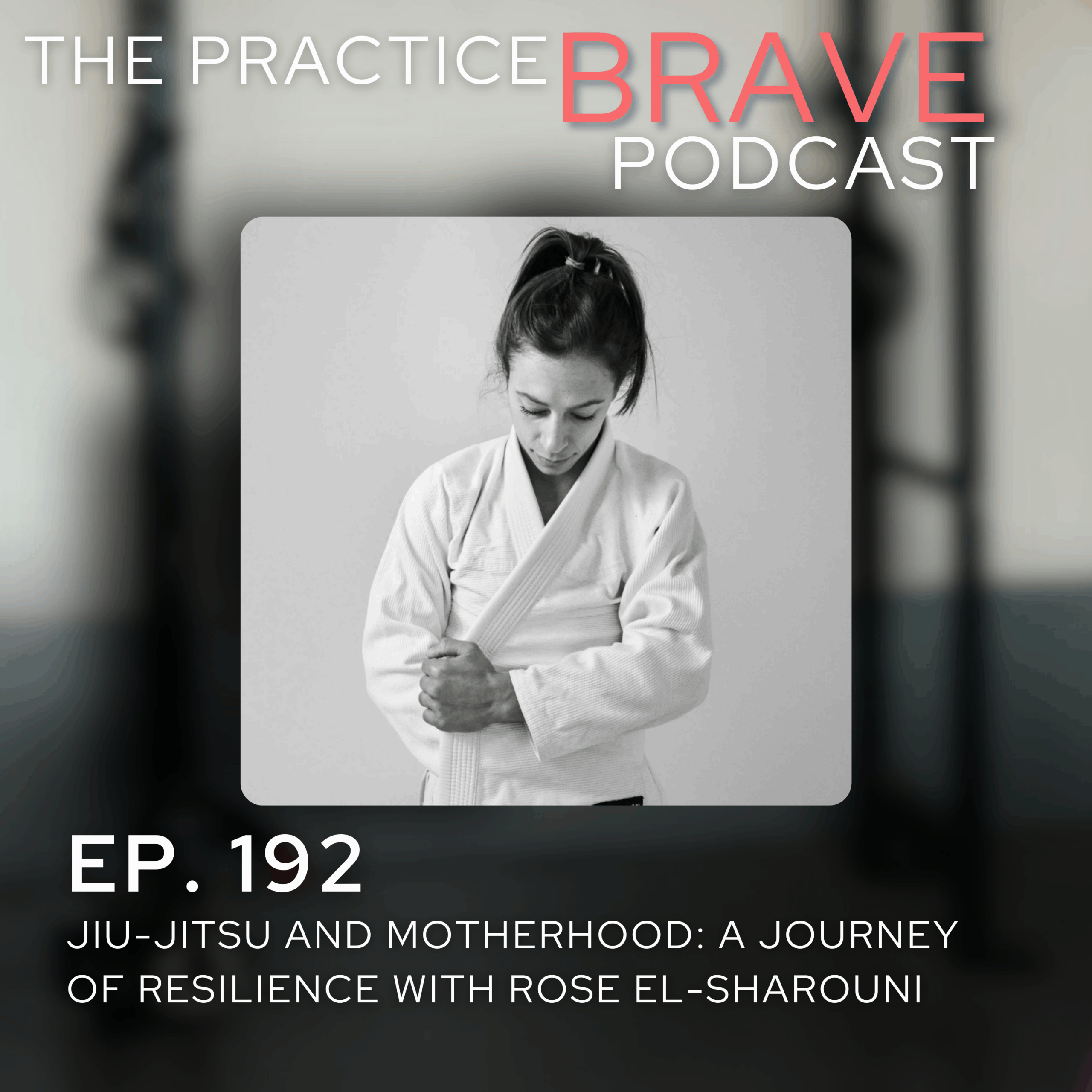
In this episode, I had the pleasure of speaking with Rose El-Sharouni, a Jiu-Jitsu black belt, about her powerful journey through pregnancy and postpartum as an athlete. We dove into how women’s roles in Jiu-Jitsu have evolved, the critical importance of community support, and how training needs to adapt during pregnancy.
From physical and emotional adjustments to reconnecting with your body, Rose and I talked about the importance of gradual training, the link between breath and movement, and how to navigate the unique demands of competing postpartum.
We also addressed the common misconceptions about age and athleticism, and encouraged women to fully embrace their strength, capabilities, and evolution through motherhood and sport.
Connect with Rose:
IG: @rose.jiujitsu
Website: https://www.jiujitsuqueenz.com/rose-el-sharouni/
Want to learn more about Jiu Jitsu?
BJJ Free Ebook: https://go.briannabattles.com/bjj-freeguide
BJJ Workshop: https://go.briannabattles.com/combat-workshop-registration
EXPAND FOR EPISODE TRANSCRIPT
AUTO-GENERATED TRANSCRIPT
Brianna Battles 00:01
Welcome to the practice brave podcast. I am the host Brianna battles, founder of pregnancy and postpartum athleticism, and CEO of everyday battles. I’m a career strength and conditioning coach, entrepreneur, mom of two wild little boys and a lifelong athlete. I believe that athleticism does not end when motherhood begins, and this podcast is dedicated to coaching you by providing meaningful conversations, insights and interview topics related to fitness, mindset, parenting and of course, all the nuances of pregnancy and postpartum, from expert interviews to engaging conversations and reflections. This podcast is your trustworthy, relatable resource for learning how to practice brave through every season in your life. Everyone, welcome back to the practice brave Podcast. Today, I’m here with Rose al SharonI, and I just asked her how exactly to pronounce her last name, and I basically just did the white girl version of it. So rose, thank you for being here. She is a incredible jiu jitsu athlete that I’ve had the opportunity to work with through pregnancy and postpartum, and it’s been really cool just being part of this process and helping guide this return to competing at a really high level. Rose is a black belt. And from here, I’m going to let you introduce yourself, and you can say your last name the right way. Thank you.
Rose El-Sharouni 01:27
Okay, so my name is Rose el SharonI, so it sounds weird to pronounce it in English, but anyway, I choose a black belt from Amsterdam, the Netherlands, and I’ve been training since 2008 2009 and I just had my baby last October. Oh, yeah. So tell
Brianna Battles 01:45
us a little bit more about like your time spent as a black belt and competing at this level. What does your like pre getting pregnant? What did your training and your lifestyle and everything as it relates to jiu jitsu
Rose El-Sharouni 01:57
look like? Yeah, so I’ve been competing like quite seriously saying blue belt since 2015 I did Europeans for the first time. And after that, I really started getting serious with my training and driven a lot of competitions. So before getting pregnant, I was mostly active in the IGF and AGP circuit. So that would mean I’ve Europeans, Pan Ams and worlds and AGP. I would do World Pro and then, like, for both the local tournaments. So I would probably do a competition every month or every six weeks, and training would be twice a day, sometimes once a day, sometimes I have rest day, but pretty much like doing jiu jitsu between six and eight sessions a week, and then strength training as well, like twice a week, strength training.
Brianna Battles 02:50
Yeah, yeah. So let’s rewind like you started jiu jitsu before it was super cool and mainstream and before a lot of other women were involved. So what made you start Jiu Jitsu?
Rose El-Sharouni 03:05
So I did Japanese jiu jitsu for quite a long time, and then one day we had a seminar, and we had a seminar of Brazilian Jiu Jitsu, and I really liked it, and then it was just added to the schedule of the gym where I trained. So it kind of naturally, like came to me and I started doing that too, and then I liked it so much that I quit Japanese jutsu and just did Brazilian Jiu Jitsu. So yeah, that’s how I kind of got into it. But how
Brianna Battles 03:30
did you even get started in Japanese jujitsu?
Rose El-Sharouni 03:33
Oh, my parents kind of told me to do a martial art to learn how to defend myself and undo that. So when I was younger, I did judo. Think in the Netherlands, it’s very common to do judo, at least for like, a year or two, just to, like, get some body awareness and know how to fall. So it’s super, super common to do that. So I did that too, and then I continued with Japanese Jiu Jitsu. So kind of started martial arts from a young age, and changed a few times, and now stuck with Jiu Jitsu.
Brianna Battles 04:03
Yeah, I feel like that creates such an incredible foundation to have found any martial art at a young age, and then just how transferable it can be as you grow up in different variations of martial arts. And obviously a judo background in jiu jitsu is very beneficial.
Rose El-Sharouni 04:19
Yeah, well, I mean, my Judo wasn’t, I wouldn’t call it very beneficial, like I didn’t really like being in judo. I kind of had to do it. So I was mostly there waiting for class to be over. I would cry if you push me. So I’m not sure how much it helped, but kind of it did make me get familiar with just complex sports in general. Yeah, so good
Brianna Battles 04:41
exposure, but you didn’t quite enjoy any thrown or doing throws, but fair, that’s okay, and that’s probably why you’re like, why you play a lot of guard, right?
Rose El-Sharouni 04:53
Little did I know that take downs are very trending, yes.
Brianna Battles 04:57
So Drew, so you you got involved. Than Jiu Jitsu, and what was it like? Did you train with a lot of women, or were you usually like the only woman in class? Like? What was that like, especially in the Netherlands, very
Rose El-Sharouni 05:13
small scale. So the gym where I trained, there was one girl, she was, when I started, a purple belt. So I was a white belt, she was purple belt, and she was similar size to me. So that was very, very lucky, actually. But other than her, and like, after a few years, she moved because she, like, went to, like, travel and work, so I didn’t get to train with her as much. And then I was the only girl for a very long time. And just to give you an idea, when I did, like, the National Championships in the Netherlands, there was one other girl like, that was it? Not even weight class wise, there was just one other girl, yeah. And this was like 2008 so, yeah, yeah. I think this is
Brianna Battles 05:53
just, I love asking women this, especially women that have been in jiu jitsu a really long time, just to kind of showcase, like, what it was like then and then showcase how much it’s grown over the last decade or more, like for women. You know, while we’re still usually outnumbered by men in classes, ultimately, there’s so much more exposure and support and women involved in the sport. And it’s cool to see that short history of IT. Yeah, definitely. So what’s it like now at your gym, in terms of, like, your training environment, the women that you train with, because you’re you’re involved in a lot of different capacities, like, before we dive into, like, talking about pregnancy and postpartum and mom life, like, just tell us, like, an overview of, like, what your training has been like now at Black Belt, then community, the gym that you’re at, stuff
Rose El-Sharouni 06:38
like that. Yeah, so the gym where I train now, I’ve been training there since 2015, so almost 10 years. So the gym where I train now, it’s owned by my boyfriend and a friend of his. They run it together. And training wise, there’s like, we have, like, evening classes, a few like, it’s not like, how to say it. It’s still like a rather small size gym, I would say. But we definitely have way more women than when I started. So I run the women’s class, and I teach the advanced class as well. And then training wise, it really like that’s a start from a small group as well. So when I joined, there were like three or four girls, blue belts, and I always feel like you have this like core group of women, right? Like people will come and join, and then, like, some of them will stay, and many of them will go. I don’t think that’s actually like specific to women, but just like people trying on Jiu Jitsu, but you can definitely see that with the women’s group that we started as a small group, and then like, few of them left, got a different job, moved away, that sort of stuff. And then like, few of them came. And now we definitely have this core group that I mentioned that is, like, I would say, eight to 10 girls that are really, like training consistently. And that’s really, really cool to see. But it that took a while as well, because I’ve been training at the gym for almost 10 years. So yeah, it just takes time to build that it
Brianna Battles 08:03
does, does take a long time then having, like, just women in leadership positions at the gym. So I think it’s awesome that you’re so involved in teaching, and that you’ve been there a long time to kind of help bring
Rose El-Sharouni 08:14
them in, for sure. Yeah, I also like, so I teach a women’s class, but I also run jitsu queens. I don’t know if you want me to talk about that, but if that was like part of the question, yeah. But I also run jitsu queens, which is started also as, like a women only training weekend, just for girls to get together. But now it’s growing into like three events a year, with, like, a lot of women coming to train together from all over Europe, basically. And usually we have like, 6070, 80 girls come to the weekend to train. And it’s really, really cool to see. So, yeah, all good things take time. Yes, well, and I just love it
Brianna Battles 08:53
because you again, you have that perspective and that experience of being involved in jiu jitsu and competing at a really high level, being a black belt, like you’ve just had a lot of exposure, and you know what it takes to keep women in Jiu Jitsu, empower them in the sport, and just like, help scale it and grow it, especially like all throughout Europe. And I think it’s so awesome that you’re doing that, we’ll link more information about jiu jitsu queens in the show notes. So let’s talk a little bit about pregnancy, because that’s when you and I first connected. You reached out because you found out you were pregnant. I have no idea how we actually like, how you found me, or how any of that worked, but we got connected to help kind of guide your pregnancy training, because there’s just not a lot of information about training jiu jitsu during pregnancy and postpartum. So the default is, well, what did this other mom do? What did this other black belt do? What did this other person in jujitsu do? And we just sort of compare, but that’s not really helpful, especially in combat sports. So tell us a little bit about your pregnancy, finding out and. Figuring out how to go about your training approach.
Rose El-Sharouni 10:03
Yeah, I think I found you by just Googling Jiu Jitsu, pregnant training. Let the SEO do the work, I guess. Okay, well, it’s gonna say so. But yeah, training and pregnancy, I knew that I wanted to keep training in a safe way, but I did know that I didn’t want to stop training during pregnancy. How to do it was another question, because I wasn’t really sure. I don’t think I couldn’t even think that much ahead before being pregnant, because you just don’t know what it’s like. But I did reach out to a gynecologist in the Netherlands, there’s like, this network of gynecologists who are very involved in sports, but they reach out to one of them, and with the question of, like, Okay, how, how can I keep training? So I already got some good advice on how to lift weights, because there’s been some, like, not a lot of research, but there is some like, research on, like, training during pregnancy and like that, all the old Yeah, like, the old fashioned advice is, like, Don’t live heavier than five kgs and stuff like that. It’s really backwards. But yeah, then when it came to the part of training Jiu Jitsu, she couldn’t really advise me on that, because she doesn’t even know the sport, what it is. And yeah, I feel like I hear this a lot in your podcast, that people say, like, yeah, just do what feels good. Or like, listen to your body, and it’s, I think, as an athlete, or if you’ve been training for a long time, you know what your body feels like, but not when it’s pregnant, because that’s new it’s new body, right?
Brianna Battles 11:36
Especially in this poorly Jiu Jitsu. Like, it’s not just, like, can I keep doing this? Like, you can modify some things, but there’s other variables that, like, you’re engaging with another person. So it’s not just your own body’s modifications, it’s the different people that you’re rolling with and their different styles and the different looks that you’re gonna get that are you have to be reactive. It’s not as controlled as, say, lifting or going out on a walk or a run, like you can control that in Jiu Jitsu, you’re a lot of times reacting, even if you’re the one kind of dictating the pace or the cadence or how the round is going, you’re still having to manipulate your body based on what somebody else’s body is doing.
Rose El-Sharouni 12:19
Yeah, yeah. I feel like that’s a really big part of it. And then also, there’s definitely things that like you should like that you shouldn’t be doing. I mean, it’s hard to like speak in rules like that, but I like your pelvic floor and your abs, those are also things to take into consideration. And you don’t want to be playing guard in your third trimester going at very high intensity, because that’s probably not a good idea, and I kind of knew those things, but I didn’t know the nuances. And also, as you say, like I didn’t know what specifically would apply to me, because I can ask other people, I can see what other people are doing, but then it’s my pregnancy, my body, it’s different for everyone. So that was very, very happy to reach out to you and get some guidance on that that is so, so important.
Brianna Battles 13:07
Yeah, we started having like, the nerdiest jiu jitsu conversations, in a way that I’m like, No one like, this is such a unique jiu jitsu conversation that, like, I feel like the normal pregnancy world would not understand, but the jiu jitsu world also wouldn’t understand. So it was so it was so fun to talk with you about it and just get an idea of like, okay, what is your like? You’re a pretty small human. You have a really dynamic game. You like to play a lot of guard, a lot of open guard sequences and movements like, that’s what you love to do. And at a certain point in pregnancy, really had to shift that focus into being drilling, a lot more top game stuff, more passing, so that we’re not having as much pressure. And it’s, is it because that you couldn’t play guard? No, like you could still play guard. That is absolutely part of how you move, how your body and your brain think in Jiu Jitsu. But there’s a point of almost, like, diminishing returns, where now we’re taking into account those positions on your back, where there is more spinal flexion, there’s a lot of reaction Your hips are having to be involved lifting your hips off the floor. That dynamic guard plate is really hard on the core and pelvic floor when you’re pregnant. So it’s not a matter of like, can you physically do it? It’s just like, is it actually serving the body that you’re in currently? So then just kind of shifting your style of game as your pregnancy continued, was kind of fun to help troubleshoot.
Rose El-Sharouni 14:31
Yeah, definitely, getting back to what you asked. Like I did reach out to because I’ve been training for a long time, so some of my friends are black belts too, and they had babies. So I did reach out within my own network, which was also super, super helpful. And I’m very lucky to, like, have friends who went through the same because, as you say, it’s like, such a specific like, jiu jitsu is such a new board, and then finding women who train during their pregnancy is also niche. So it’s like, like those two. You just overlap each other, and there’s not a lot of people left to to go to for advice. So I, based on the advice that the gynecologist gave me, I really wasn’t concerned about training until week 12 to 14, because I was like, okay, the baby is, like, safely tucked behind the pubic bone, or, like, below that, so there’s like, no risk of me like injuring it with like, bone trauma. I wasn’t doing takedowns because I pull guard anyway, I don’t know, but I wasn’t, like, doing that kind of impact anyway and but I was training at like, pretty normal intensity, but then, like, I think especially after week 14, I really needed to adjust things and also have more guidance on how to do it.
Brianna Battles 15:41
No, absolutely. And that’s like, kind of when things start to get real, when you’re like, Okay, I’m starting to have a little bump that maybe only you notice, but it ultimately is something that you start to be a lot more aware of in your training with just where pressure is distributed in your training, other somebody else’s pressure, and where their body is, you just become a lot more aware as your pregnancy continues, whereas the first trimester, it’s a little bit more, I guess, like, just hidden, yeah.
Rose El-Sharouni 16:12
I mean, I was nauseous in the first trimester, but I felt like if I trained, at least I could forget about it for a little bit. So it kind of helped sometimes.
Brianna Battles 16:20
Yeah, that nausea and fatigue initially, which is hard in a sport like Jiu Jitsu, because I feel like it’s also one of those sports where on the days where you’re just sort of smoked, like, it’s hard to have the oomph to fight back, you know, like, even just when you’re not pregnant, like, there’s a sport that does require a lot of, like, energy output, you can’t just, like, take it easy, really, in this kind of sport. So it’s hard when you’re, you know, at different points in pregnancy where you feel like you don’t have a lot of energy output to give to your rounds or to your drilling.
Rose El-Sharouni 16:53
Yeah, I think, like, for me, I didn’t really have that in the first trimester. I just, like, I had energy. I was just nauseous, but the energy was fine. I guess I just expected, because everyone was saying, like, wait for the second trimester, you’re gonna feel awesome. And I was like, I feel the same. So it kind of was like, I did have energy, but I was kind of hoping to follow the follow by the book, I guess. And then that didn’t really happen the second trimester. I just felt kind of the same, but less nauseous,
Brianna Battles 17:21
I know. Let’s talk about that. So like, by the time you’re in your SEC the second trimester, you’ve told more people that you’re pregnant, you’re a little bit more aware of your training. What was the biggest struggle for you at that point in pregnancy, when you were trying to drill and train? How were you feeling? What was it all like?
Rose El-Sharouni 17:38
The biggest struggle was probably, well, not being able to compete, because that was definitely off the table, but that was hard, because I really like to train with a goal in mind, and I knew that there would still be a goal after but that was very far away from me, so that was kind of a mindset shift, I’d say. And then the other thing was, I think connected to that was like feeling that I wasn’t really making any progress, which isn’t true, because I I just had to continuously adjust my goals with every, not every week, but like with every period of time within pregnancy, and that’s kind of a it really requires you to be a little bit more flexible. So I had to change, yeah,
Brianna Battles 18:28
which is really hard, I think, when you’re when you’re an athlete, and you’re used to training with a goal in mind, when you’re used to making progress, when you have a lot of purpose behind your training, then when you get pregnant. Sometimes it feels like, what’s even the point? Like, why am I even doing this now, if it’s not training for a competition, or training to get better, or working on improving this or that, like it’s hard to be in maintenance mode, and even harder to start going into more of a D load, where you’re scaling back a lot of variables, it can just feel like, why should I even go to practice? Why should I even do this? And like a lot of athletes I work with, kind of get into a training slump, into more of a depression. They just because exercise was such an outlet for them, because there was purpose behind it. And then when they’re pregnant and it feels like such a different relationship with exercise and their body than what they typically have, it’s really challenging mentally and emotionally to navigate.
Rose El-Sharouni 19:22
Yeah, definitely, because I did change, like, my mindset in second trimester, and be like, okay, so I can’t, I mean, I’m not going to play a lot of guard, and I can’t go like 100% intensity, but I can work on my back takes, or I can work on my passing, because those are areas I need to improve on. So I was, like, watching some instructionals and other stuff, and like, trying to apply that in training. But at the same time I knew, like, okay, it’s kind of more like very active drilling, because I can’t really test it against, like, actual resistance. So how does that help? Me, and then what you’re saying, especially, like, in the third trimester, I felt like there was a point where it was like, Okay, this is not making sense anymore, because I really had a belly. I couldn’t, couldn’t take anyone’s back because, like, my baby was in the way. So I was like, Okay. And like, I can pass, but it would more be like shuffling from side to side. And then there came a point where I was like, Okay, this is like, I might as well just be in the gym doing cardio, because this is not really adding anything to my jitsu. And I think that’s fair to say, like, it’s really, yeah, like, you say, like, you go maintenance mode. And then there’s definitely a time where you’re where you’re not improving, not staying the same, but you’re actually going backwards. It sounds very, very like, I don’t know. Well, it’s true again, especially
Brianna Battles 20:46
in a sport like jujitsu, where you control what you can control, but ultimately they’re just there starts to be a lot more limitations as pregnancy continues. And for so many, honestly, so many people in combat sports in general, we get so hyper focused on training Jiu Jitsu or striking or MMA or whatever, that we actually don’t incorporate a ton of strength training or conditioning outside of being on the mat. And so for because of that, because we typically like prioritize more of our our drilling and our sparring over like lifting, pregnancy can really be a great time to incorporate more lifting, less sparring, maybe more conditioning outside of being on the mat. And it’s like it’s all still beneficial. You’re still able to do some Jiu Jitsu, but you’ve just shifted where that volume is, where you’re putting more energy into as pregnancy continues. So especially in a sport like Jiu Jitsu, it can be such a positive time to just like shift, shift, where you’re putting a lot of your
Rose El-Sharouni 21:50
training focus. Yeah, yeah. I felt that sometimes it was like, not like being injured, but kind of like having to change your approach, because, yeah, you’re there’s just some limitations, and
Brianna Battles 22:03
I think that’s okay to say. And I mean, you have a lot of maturity, especially, I think if you, if you get to black belt, you’ve acquired a lot of life experience in terms of jiu jitsu and different setbacks, different times that have been just, we’ve had to learn how to navigate the waves that come as life goes on throughout your time, getting the black belt. So I think it is hard feeling a little bit sidelined during pregnancy. But ultimately, we are all kind of in this for the long game of it, even though there’s different seasons where you want to peak and you don’t want to be set back and held, you just have a lot more perspective and maturity, I think, than a lot of people that are maybe more of your average exercisers and not competing in this kind of sport. Your jiu jitsu wisdom, my friend,
Rose El-Sharouni 22:50
yeah, I think it was really helpful for me to get connected to you, because I knew beforehand that I wouldn’t like, like, some periods of pregnancy as much because of it. And it was really helpful for me to first of all, to see like other I’m not the first woman interested to get pregnant and get back. So it was really helpful for me to see other women do it and be like, okay, they got back into it. And only now I realize how amazing and incredible and impressive that is, but it was really helpful you too, because you just, like, you keep hammering with this message, like, it’s not over, it’s not over. And sometimes you just need someone to say it more than once, to keep going, yeah,
Brianna Battles 23:34
yeah, it’s not over. And I think beyond just talking from a personal perspective, like we see this over, I’ve been able to see this over and over and over, across a spectrum of athletes, like the highest level to like very hobbyist and recreational. Like, there’s still so much potential to be unlocked, and I think, and we can talk about this as the podcast goes on, but like, you just start to learn so much more about yourself as an athlete, about your body like you, gain a lot of insight that I think ultimately helps you become a better athlete in your sport, and then, just in general, like you, you have so much more wisdom on the other side of motherhood than you did prior.
Rose El-Sharouni 24:15
Yeah, I think maybe we’re getting ahead of things now, because that now it’s like post pregnancy, obviously, but I think the thing that that is like is the one of the most positive changes is like being more flexible. Because I think before I would be very like, almost rigid. And like, I have to train then, and I have to do this, and I have to do that, and I need all of that in order to, like, do X, Y and Z, and have, like, these kind of outcomes. And now it’s like, Well, every day is different, and sometimes I can’t do X, but I can do y, and then I can do half of z, and I can still get where I want to be. I mean, I’m still post, like, it’s very early post for. Them. So, like, the book’s not finished yet, so I don’t know what’s gonna happen, but I do feel like there’s definitely a way, but it does require you to be way more flexible than before, and I think that’s like a very good asset to have as an athlete as well, because things aren’t always gonna go your way. Yeah, I feel like pregnancy throws and like postpartum throws so many things at your head, you kind of get a little more resilient,
Brianna Battles 25:24
so much more resilient. And I think it just makes like the almost like the struggles that you had prior. Like, it doesn’t dismiss them, but it just gives you perspective on like, okay, like, now I really need to be efficient with my time. Or instead of knowing that I have the opportunity to have volume of training, I need to make my, like, quality of training really high, because maybe my quantity isn’t what it used to be, or it’s more limited and whatnot. So then when you are able to get to class, when you are able to be there, you can just really focus on the quality of your training experience, versus knowing, well, I’ll get in like eight other classes this week or 10 other classes this week. We just don’t always have that opportunity, especially when you’re, you know, on the in the trenches of postpartum, yeah, no time
Rose El-Sharouni 26:05
to be lazy or be like, yeah, absolutely.
Brianna Battles 26:09
So we’ll wrap up the pregnancy. So as pregnancy continued, you basically started to scale back a lot from Jiu Jitsu. You’re still in the gym, but then sort of just kind of get ready for delivery. Can you talk to us about what the end of project? Pregnancy looked like into delivery and then maybe, like your first couple weeks postpartum?
Rose El-Sharouni 26:27
Oh, well, the end of pregnancy was also us moving to a new house when it was 38 weeks. Oh, that was fun.
Brianna Battles 26:37
Why do we all do that? I feel like moving at the in the third trimester is so common. I also did, it’s fine.
Rose El-Sharouni 26:44
Do you still have boxes unpacked in the shed? Yeah, my garage? Yes. So that was the end of of the pregnancy, like in third trimester? Uh, why we moved? Because it just happened. So I just had to. It’s much better now though, like, we have more space. I’m super happy. But yeah, towards the end of pregnancy, I was still lifting. I was still going to the gym a little bit more than I would normally. So I think I was lifting like three or four times a week. I was doing jiu jitsu like once or twice. But like, I really got to this point where I was like, This doesn’t make any sense, and I still feel like I have this, like, I want to make progress. I want to make progress. I want to make progress in my brain. So I was like, Okay, if I can’t, like, duty is not giving me that in any kind of way, then it doesn’t make me happy to go. I think I was like, 34 weeks when I when I just really was like, Okay, this is it?
Brianna Battles 27:41
Yeah, and I’m so glad you said that, because I think a lot of people sometimes need permission that it’s okay to, like, I just need to pause training, or maybe I’ll come to class and watch, maybe I’ll help coach, or maybe, like, I don’t need to go right now because it feels more depressing to go and not be able to participate, then I think everyone has a different experience with how they feel when it comes to whether it’s managing an injury and you’re sidelined, or being later in your pregnancy where it just feels like there’s no point to it. So I’m really glad that you
Rose El-Sharouni 28:09
said that, yeah, yeah, where you felt like that?
Brianna Battles 28:12
Yeah. So then you went into labor, and what was your birth like? Was it an overall, like, pretty positive experience for you? Or how did
Rose El-Sharouni 28:20
you feel? Yeah. I mean, I’ve seen a few births because I studied medicine, so I’ve been, like, in the hospital on the other side. But I mean, it’s still weird if a human comes out of your body. Yeah. I mean, it was a good experience. And, like, the very first few days, I guess I didn’t expect to feel so correct, which is obvious, of course, but I think it was just so focused on, like, these nine months, these nine months, these nine months being pregnant. Then I was like, I see you nodding. Like, am I I’m probably not the first person to underestimate postpartum.
Brianna Battles 28:58
No. I mean, I think that we have been told, like, you’re made for this, and if you’re like, so we just, we go in thinking, okay, like, this is fine. And then you, especially when you’re athletic, you’re like, I will, like, recover. It’s fine. Like, it’s no big deal. And of course, like, having a solid baseline of fitness is like, that’s always a positive, but ultimately, it’s a really big deal to have a baby. No matter how the baby comes out. It’s a big deal. It takes a toll on your body, physically, mentally, emotionally, spiritually, literally, all of it.
Rose El-Sharouni 29:30
Yeah, I feel it’s like this narrative, though, that people also would tell me, like, oh, but you’re fit, so you’re gonna be fine, like you’ll and I think it’s one in one of your last podcasts, or one of them, I was listening to them where you said, and I agree with this, like there’s no correlation between fitness level and how easy birth is no but people would tell me it’s like, oh, you’re gonna be fine because you’re very fit. I was like, I don’t think it matters.
Brianna Battles 29:57
Fitness is never going to be a bad thing. Like, your fitness is always. A benefit across all different health considerations. You know, that’s great. And we just there’s so many variables attached to labor, delivery, birth, postpartum, that like we just don’t have control of. So you can have be the fittest person and still struggle in just different ways. You know, you could have a C section or a vaginal birth and like, both can be amazing. Both can be really challenging. There’s just no best or right way. It’s just kind of a toss up and it’s hard, and it’s hard no matter who you are. It’s a hard, like, life event and physiological event to adapt to. And again, even if it’s, like, really positive, it’s still a new life to
Rose El-Sharouni 30:47
adjust to. Definitely, yeah, and then so again, I think I really underestimated that, like, whole postpartum recovery after, because I was like, Okay, I’ll be pregnant for nine months, and then I’ll have the baby, and then, like, couple of weeks and I’ll be back to training. And I didn’t realize it would feel like I had major surgery everywhere. So I was really surprised by that, because I was still, like I said, before pregnancy, like during pregnancy, I was still lifting, but, like, I could only do like, four push ups on my knees after. I wasn’t doing that the day after, just to clarify, but like when I slowly started, like, training again, just like seeing what my body could do, I was really surprised that I felt like, like, completely broken down. It’s not the right word, but it really felt like, Wow, a lot of stuff has happened, and then I wasn’t expecting that. Yeah, and you
Brianna Battles 31:43
had a vaginal birth, and it still just takes a toll on the whole body, like it’s just your core is recovering, pelvic floor is recovering. You’re not sleeping as much like you’re everything is changing, like the structure of your body has changed so many different elements that influence how you feel when you start to try to introduce your quote, normal variables like exercise, and you’re like, Well, this is totally different, but it’s because everything about your body and your lifestyle is
Rose El-Sharouni 32:12
different right now. No, no, nobody tells you this. And that’s like, I think one of the things about like pregnancy and postpartum that I was most surprised about that. Like, I was like, women do this every day. Like, no one is like, and they, no one is putting them on a pedestal, being like, Wow, good job, girl. I was like, that’s normal.
Brianna Battles 32:33
I know it is pretty wild when you experience it yourself, and you’re like, Okay, this is kind of a big deal. And I get what? Well, I mean, I know that. I I talk about this stuff a lot because so many people say, Well, why didn’t anyone tell me? Why didn’t I know? And ultimately, I think it takes experiencing it yourself to fully understand where you’re like, Okay, I get it now. I now I understand what you were saying about X, Y or Z, and we have to experience it ourselves to really gain that perspective and insight and maturity. Honestly. Yeah, it was a fun time, huh?
Rose El-Sharouni 33:11
It still is, but it’s definitely better than than the early weeks, for sure, absolutely.
Brianna Battles 33:17
So then we got you started doing some rehab exercises and just trying to get reconnected with your core and pelvic floor. Great, doctor, pelvic floor. PT, started doing the postpartum program. All of that was good, but ultimately your goal was to get back to Jiu Jitsu, which is a whole separate part of a postpartum recovery and fitness, because now we’re talking about a specific sport, not just general fitness.
Rose El-Sharouni 33:43
Yeah, so I think I started doing Shih Tzu at six weeks postpartum. I really, really, really tried not doing it before, and I almost succeeded, because I was like five weeks and five days. I was like, Brianna, I’m gonna go train. Is that okay? Yeah. I mean, those first weeks, I wasn’t even thinking about training, because you’re just like, you know, very little sleep, new life, recovering. But then I did really feel like I wanted to get back into training at like four weeks, but I really waited until I was like almost six weeks. So then I trained again, and I just felt like I picked up where I left and then in reverse. So I still didn’t play guard, but I, like, started with passing and, like, light resistance. The only thing is I didn’t have to, like, be mindful of my belly anymore, which was good, but then there was, like, a whole other bunch of things I had to, and still have to be, like, more aware of and I think what surprised me most is like, like, how much my body needs to, like, hold itself together, basically. So, like, whenever I like, even if I would like, have a side control on someone and like, holding them there, I would feel like, everywhere in my body, and especially my. It’s like, wow, this is costing like, all my ligaments are working now and they’re getting pulled, and I never felt this before. So, yeah, that was a weird feeling. Yeah. I mean, I know that.
Brianna Battles 35:10
I think people listening to this podcast probably have a jiu jitsu bias, so they can understand, like, I think what we totally under estimate and don’t really acknowledge much much in jiu jitsu is how much tension we are distributing at different points in our rounds and in our training, how much pressure we have to apply, or how much pressure we’re absorbing, and then thinking about pressure and tension, where is that being sent to? And a lot of times it’s going into the abdomen or being pushed out of the abdomen, like at that midline, so that can be really sensitive, both during pregnancy and postpartum. But then that tension where we’re trying to hold positions, or trying to, like, have a little bit more control, like you’re saying, like, that’s sending a lot of tension into the glutes, into the pelvic floor, which can also be hard when you’re trying to heal and you’re you’re trying to improve your pelvic health symptoms, or not create them, because this sport is just so dynamic, it’s so reactive, it’s so explosive, but then it’s also so much control, so much pressure, so much tension at different points in time. That’s what makes it really unique, when we look at it through the scope of core and pelvic health, rehab, preservation, all of those different variables. And that’s, I mean, that’s truly the next thing for us to keep unlocking as women in this sport and as more mothers
Rose El-Sharouni 36:29
get involved in this sport. Yeah, definitely. I feel like, because I went to a pelvic floor therapist, also because of you, I knew I had to do that. And I’m so amazed that it’s not like part of the post pregnancy care to, like, go there. Like, no one really tells you that you kind of have to figure that out. But yeah, she she was also, like, giving me some exercises with, like, to make that connection again between, like, my brain and my pelvic floor and, like, how to breathe, my ribs and everything. And then I asked her, like, so can I do Jiu Jitsu again? And then she was like, Well, if you can, like, be conscious about your breathing. Then, yes. Then I was like, Yeah, because it is, like, it’s one thing to do a sit up and be like, really mindful of, okay, where’s my breath going, what are my ribs doing? What’s my pelvic floor doing? But you can think about that when you’re doing Jiu Jitsu, maybe for doing the drill really, really likely. But as soon as you start sparring, even if it’s like a low intensity because I wasn’t doing any high intensity stuff, it’s still too much variables going on at the same time to be mindful of that. It’s just not happening exactly.
Brianna Battles 37:36
And that’s like what I again, in lifting, we can, we can have more timing of our breath, distribution of pressure, managing different positions, of like, okay, if I squeeze my glutes, that’s too much tension from my pelvic floor. But we don’t have that in combat sports. We do not have that in Jiu Jitsu. So like creating that foundation through your pregnancy, of making adjustments to your breathing, being a lot more aware of your core and pelvic floor. Rehabbing postpartum. That is the thing that gave you a really solid foundation to then go into Jiu Jitsu, where your brain is kind of doing that already, because you’ve exposed it to some of those variables of like, okay, I’m gonna I’m exhaling here. I’m distributing pressure slightly differently. You’re more aware of that system. Like that is the angle that we have to lean into for a sport that’s so dynamic, like Jiu Jitsu. Like you said, we can’t be like, I’m gonna breathe here and bring my rib cage in this position. Absolutely cannot do that in this sport. It that’s not how this one works. But it’s been cool to see with you and with a lot of other like MMA and jiu jitsu athletes I’ve worked with where, like, if you create that foundation in pregnancy and early postpartum, by the time you’re applying it in more explosive ways, in more dynamic ways, like in a sport like Jiu Jitsu, your body starts to coordinate, like that neuromuscular pattern, pattern has been rebuilt, and then you just keep reinforcing it through your exercise off the mat, and you’re how you’re lifting, so you’re training your brain there, and then it gets that byproduct on the mat when you’re
Rose El-Sharouni 39:06
rolling around. Yeah, for sure. I remember looking at the program, like the eight weeks postpartum program that you have, and I saw, like, I think week five. I saw, like, kettlebell swings. I was like, No way. This was like, four weeks postpartum. I was like, I can’t do that, and I’m doing them now. Yeah, but it’s just really crazy how your body goes through, like, all those adaptations
Brianna Battles 39:29
totally and like we think about, just for reference, of those listening like, there’s a kettlebell swing involved there, because we have to teach postpartum athletes how to coordinate and Be Explosive with their hips again. Why? Because somebody like Rose is going to be going on the mat, and you’re doing an ex, like, a lot of explosive hip movement patterns when you’re starting to play guard, when you’re trying to even, like, just a basic shrimp, like, all of our movement patterns are of that really explosive, like hips being able to be low. Did and explode, and we have to learn to like control that really well and time it with our breath. So again, when you’re now on the mat and you’re trying to set up an open guard position, or you’re trying to get out from some from under somebody, your hips can move in a way that’s really dynamic and explosive without hopefully creating any pelvic health symptoms. So I like providing the context there for people. Yeah. So one thing that we’ve kind of talked about managing is you play a lot of open guard, and sometimes there’s like, just residual hip pain, which is or like, pelvis pain, hip pain. And a lot of people experience that postpartum, or maybe they had it in pregnancy, or maybe it’s just something they’re kind of managing. Kind of managing postpartum, and especially in an open guard game, you’re having to get your hips into really dynamic positions very quickly, and then you’re also absorbing the load of the person that you’re rolling around with. So talk to me a little bit about what’s been challenging in terms of reintroducing your style of game, yeah.
Rose El-Sharouni 41:03
So I noticed that when I played guard, and yeah, I like to play open guards by the guard lost so, but also definitely, I came to follow the person going side to side. So I started noticing, I don’t even remember when, but it’s been, like, definitely, for a block of six weeks. I think I’m five months postpartum now that I like anytime I would do like a dynamic hip switch going from one side to the other side, like someone’s passing to my right side. So I need to lean on to my right hip and follow my my left leg over to block them. I would feel like the shooting pain in my hips in the front, kind of where the hip bones get together. And I first didn’t think so like that much of it, but then I started having it more often, and then also feeling like kind of a lingering pain after training. And then I would also get it after strength training, where I would feel like, if I lifted too heavy then, or like when I did a big lift, then I would feel it too. I don’t have it right now anymore, since, like, two weeks, and I think it really had to do a lot with, like, the type of training partners that I have. And, like, I was talking about it with you, and you said, like, Okay, we need to scale down the volume. And I think that was a really big factor as well. Yeah, yeah,
Brianna Battles 42:16
because I guess it’s postpartum, you start to feel a little bit more like yourself again, it’s really tempting to, like, turn up the intensity, turn up the volume of training, the amount of training you do in a day or in a week. And then sometimes, like, the postpartum body just is not ready for that yet, even though, like, our brains might feel ready, our actual body is still like, hey, like, I’m still recovering. My it’s still different. Your tissues are still healing, even if you feel fairly or look like yourself on
Rose El-Sharouni 42:49
the outside. Yeah, definitely. And I mean, just to give you like, a reference, but like, when I started training again at six weeks, I wasn’t doing rounds like, I think I rolled like I did a five minute round, just like, very much flowing. And then, like, five minute rest, and then I did two more times, and then I went home, and I felt like a bus ran over me, like right away, and then until, like, the next day. So that was like, how much my body could handle. And then obviously, like, it got better through the days and the weeks. So I was like, yes, going well. And I probably, as you say, overdid it a bit too much, like with too many rounds, like, too too much, too heavy, too much everything. So, yeah, and then just my body was just telling me to slow it down a little bit.
Brianna Battles 43:35
Yeah, I mean, but that’s like a necessary part of the process is like learning where your current boundaries are, where your current limitations are. So then you you just, you gain so much more body awareness and knowledge of where you’re at in the process, process, because I can’t tell you from over here, like, do less, do more, like, I am not in your body. Like, so you’re kind of having to self navigate that based off of, you know, a few like, what’s the red flag, what’s the Yellow Flag, what’s the green flag? And have those conversations to know what your unique level of readiness looks like, whether it’s for a style of play or for the intensity, for the amount of rounds, for the amount of days training. And then ultimately, what I want to merge the conversation into is like knowing when to compete again, and what does that process look like? Kind of what you thought it was going to be during pregnancy, versus the reality you’re sitting in now trying to figure out, like, what do I want? And I think especially in at least my experience working with a lot of MMA and jiu jitsu girls, it’s easy to look at when other people came back to fight or to grapple or to compete and say, well, if so and so did it at three months postpartum or from four months postpartum, then that’s when I should be ready to like, that’s the barometer. Is that we’re like, measuring it against what somebody else in our sport did for. Says, what is best for us?
Rose El-Sharouni 45:02
Yeah, I think during pregnancy, I kind of made this timeline for myself. And was like, okay, so I’ll give birth in October, and Europeans is in January, so I will try to do Europeans, and then there’s Pan Ams in March, and worlds in May. So that was kind of the timeline that I had in mind. I still remember what you said to me. You said, like, Europeans, no pants, maybe worlds.
Brianna Battles 45:28
Yes, I probably tried to be a little bit nicer, but, you know,
Rose El-Sharouni 45:34
yeah, no, no, but no. But I like this. Like this kind of like, what to expect more and as of course I’d like, it’s definitely way more nuanced than that, but I definitely thought that Europeans was a yes, that is different.
Brianna Battles 45:48
Yeah. I mean, I think it’s easy to think that when you are pregnant and you’re like, okay, and then, like, you don’t fully know, but I think you know, so much of our conversation was like, how do you want to feel when you’re stepping out to compete again. How do you want to feel? Because Could you do it? Sure, like you are an incredible athlete, you could compete. But as an athlete, how do you want to feel when you’re stepping out there to compete again? And I would assume, after getting to know you like you want to feel ready, you want to feel good, and what’s easy to feel like, are you ever going to feel ready for that? But there are times where you’re like, I’m absolutely this is not the right time for me. And it was as a coach, it was really awesome to watch you figure that out for yourself and, like, recognize it, see it, and have peace with it,
Rose El-Sharouni 46:38
yeah, especially the part of having peace with it, because I didn’t compete in Europeans, and it wasn’t, I mean, maybe it was a question at first, but, like, a few weeks out, it wasn’t a question anymore, because I was like, Yeah, I could compete, but I’m out there to have a good performance. And being like, if I want to compete at any tournament, there must be a time leading up to it to prepare as well. So it’s not about being able to do it on that day. It’s you need that preparation, and it needs to be solid. So I’ve had my fair share of like, injuries and like showing up anyway. Not that I did that a lot, but, like, I had a concussion the year before, and I did Europeans, but I was recovered enough to do Europeans, and I had, like, medical guidance. So just as a disclaimer, but I didn’t really perform well, so I’ve been there where I’ve, like, went out anyway and did it, and then after, I was like, Well, did this add anything to to me or to the experience, and if I know beforehand that the answer is going to be no, then I might as well not do it.
Brianna Battles 47:47
Yeah, it’s almost like, you know, I tell people is, like, you want to feel physically ready, but also like, mentally and emotionally ready to compete and be in that headspace. And to do that, like you said, there almost needs to be like a camp or some concentrated training effort to build up to that, especially at the level that you’re competing at. And you don’t really get that when you’re early postpartum. You just don’t without sacrificing more than what you wanted to and more than what I think most women want to sacrifice, at least generally
Rose El-Sharouni 48:21
speaking, yeah, I agree.
Brianna Battles 48:23
So then we’re starting to talk about competing here in, I guess we’re in April now, but you had an opportunity to compete earlier
Rose El-Sharouni 48:30
too, right? Yeah. I mean, I was thinking about Pan Ams, but then I was kind of like Pan Ams. I wasn’t sure whether I would go or not, but I think it was like a long flight. And also the weight class played a role, because for major comps, I will do light feather, which requires me to cut some weight. And I was like, in that time, like, three months, no, four months postpartum, yeah. So I was like, This is too early for me. So that kind of led me to, like, not do Pan Ams again, but I am feeling ready to do worlds. So that’s going to be six weeks from now, six or seven weeks.
Brianna Battles 49:12
So exciting, yeah. And I think that’s going to be like, I love that you’ve been able to sort of sit with where you’re at in the process and and just feel like informed either way, like when you decide to compete again, you know what you’re watching for. You know how you want to feel. And ultimately, you’ve put in a incredible foundation of training through your pregnancy in a way that was really strategic and practical. And then you have given your body a lot of time postpartum to keep recovering, and then gradually introducing aspects of your normal training. But even like reintroducing aspects of your game, as your body has healed and as you’ve been able to turn things out more and it’s been cool to see you make a lot of progress, and honestly, a fairly short period of time, even if it feels like it’s a. Long, a long period of time where you’re at right now.
Rose El-Sharouni 50:03
It does, it does feel like long period of time, yeah, but I guess, like, the whole postpartum period and time, like time is different after pregnancy. I definitely learned that too. So, yeah, yeah.
Brianna Battles 50:14
I think that’s like another factor. When I work with, like, professional athletes, they’re just like, you know, we look at a calendar year like, Okay, well, I have this competition in this month and this one, and we like space out our year based on when certain comps are, and then postpartum, you’re like, Well, never mind my game plan is just like, it just totally shifts your game plan when it comes to really spacing out when you want to compete. And then, just like, the logistics of traveling with a baby, or how your body is feeling, what your sleep is like, what your lifestyle has now changed to, and you know, just takes a little bit to adapt to, but ultimately, you find a new routine and things normalize a bit more, and you know, you start to make a lot of progress. And I will keep harping on this like it’s not over. It’s definitely different, but it’s not over. It’s gonna be really fun to see you come back. Thank you. Yeah. And so you’re wanting to compete in adult worlds, right? And you are over 30, and for those of you who don’t know, competing at adult world is like, that’s the highest level of jiu jitsu that you can compete at, because then, through over 30 technically, you can compete in the master’s division, but that’s with all of us, like over 30 people. So you’re wanting to compete at a really high level against some of the best competitors there are in the world.
Rose El-Sharouni 51:37
Yeah, I think like being over 30, because I’ve competed, I’m 33 now, so I’ve done, like, most of my worlds at Black Belt were actually after I was 30. I’ve done worlds at Black Belt three times, and I managed to get brawls three times. So I don’t know what what like, what’s going to happen in the future, but like, I do feel like getting over 30 sometimes you might have this like narrative of like, Oh, I’m over 30, and then, like, that means that I can’t do this anymore. I’m too old or whatever. But actually, like, there’s a lot of girls who are over 30 who are, like, meddling and like winning at adult black girls, and especially for women, I feel like the age does not matter that much. Also, jiu jitsu is, like, it’s not like soccer or a sport where you, like, really need that, like teenage cardio to keep going, because, like, so much of it is also a factor around technique and experience. So I really don’t think that like that, that is a big thing. And then one of my friends who is her name is Yara, she because I was telling her, like, Yeah, I’m 33 and then she was like, honestly, like, there’s not a big difference between 3334 35 then I was like, Yeah, that’s true.
Brianna Battles 52:57
Yeah. Like, we hit our prime. Like, in so many ways, whether you’ve experienced pregnancy or not. Like, I think there’s something really special that happens to women in their 30s as athletes, like, you have a really solid foundation. You’ve learned what works for you, what definitely doesn’t work for you anymore. You get more comfortable, especially in Jiu Jitsu, like, I’m assuming, where you’re at, like, with just your game and just more insight, more knowledge, because you’ve been in it for so long, like, there’s just levels of maturity that ultimately make you a better athlete. And I think that gives you a lot of leverage. And like, I like working with moms, because every all, like, the moms in combat sports are, like, I have the mom’s strength now, it’s a real thing, you know, it’s so fun, like, I don’t know, and I love that too, and I’m certainly not anywhere close to the level of competition that you’re at. But you know, when you’re in just even in class, and you’re going with people, and they’re like, you’re a mom, you’re so strong, you’re this or that, and it’s like, because it’s not over, like, that’s why I say, like, athleticism does not end when motherhood begins. It just doesn’t, like, you can still be a really good athlete. There’s still so much potential, and you’re not washed up. It’s not over. Like, there is a lot of potential to unlock. And I think it’s, it’s fun seeing so many different examples of that, and it’s fun living that out. And I think that’s certainly the season that you are. You are just getting started in. Thank you. Yeah, it’s been fun to fun to see it, and fun to be part of your process. Do you have any advice for women in jujitsu, specifically moms in
Rose El-Sharouni 54:36
jujitsu, people who, like, want to become a mom, or
Brianna Battles 54:41
either, like, scared to become a mom, and they’re due Jiu Jitsu, and it’s, you know, hard to feel like things are going to be so different during that season of what advice do you have?
Rose El-Sharouni 54:51
Yeah, I would say that because I had this, like, fear, or like, these thoughts too, that, Oh, if I get pregnant, then I’m never going to get. Back, because everything’s going to be so different. I really think it’s like, like, if it’s important to you, you’ll, you’ll make time for it. And that’s kind of easy for me to say, because I have a lot of support. So I would say that that is kind of a, what’s the word, like, a pre requisite, or like, a condition that, like, will make your life a lot easier. So I would say, ask for help and accept it, and then you can definitely do things after it’s definitely possible. I thought it wouldn’t be possible, but I have a lot of help. I’m asking for help, and it’s just something that I really want to do, and that’s why, like, I’m able to do it, I guess, yeah, I
Brianna Battles 55:45
think that’s great. Like you’re leveraging athlete brain in a really positive way. And you know, you said, like, you’ve just gained a lot of insight on your body, on your training and your life. And you know, you recognize that it’s not over. Like you can make it happen,
Rose El-Sharouni 55:59
yeah, for sure.
Brianna Battles 56:00
Yeah. Well, Rose, where can people learn more about you and follow your process?
Rose El-Sharouni 56:05
Okay, so you can find me on Instagram at Rose dot Jiu Jitsu, and then you can also find me on Instagram under jiu jitsu queens, which is at jiu jitsu Queens with a Z on the end. That’s the community that I created and where I host the training camps in Amsterdam, we have an upcoming event this July, three to six with Brianna st Marie. Gonna be a lot of fun. So we’ll have, like, a lot of training sessions, lots of other fun stuff too. So yeah, that’s where you can find
Brianna Battles 56:36
me so awesome. Well, thank you for sharing your time and your experience, and thank you for letting me be a part of your process, and hopefully we just keep getting good information out to the jitsu and combat sports community for women, especially mothers. So thanks for being part of that. Absolutely. Thank you for having me. Thank you so much for listening to this episode of the practice brave podcast. If you enjoyed the show, please leave a review and help us spread the work we are doing to improve the overall information and messaging in the fitness industry and beyond. Now, if you are pregnant and you are looking for a trustworthy exercise program to follow, I have you covered. The pregnant athlete training program is a well rounded program for pregnancy with workouts for each week that are appropriate for your changing body. That’s 36 weeks of workouts, three to four workouts each week, and tons of guidance on exercise strategy. We also have an at home version of that program if you are postpartum and you’re looking for an exercise program to follow, the eight week postpartum athlete training program would be a really great way to help bridge the gap between rehab and the fitness you actually want to do. From there, we have the practice brave fitness program, which is an ongoing strength conditioning program where you get new workouts each week and have a lot of guidance for myself and my co coach. Heather Osby, this is the only way that I’m really offering ongoing coaching at this point in time. If you have ever considered becoming a certified pregnancy and postpartum athleticism coach, I would love to have you join us. Pregnancy and postpartum athleticism is a self paced online certification course that will up level your coaching skills and help connect the dots between pelvic health and long term athletic performance, especially during pregnancy and postpartum, become who you needed and become who your online and local community needs by becoming a certified pregnancy and postpartum athleticism Coach, thank you again for listening To the practice brave podcast. I appreciate you, and please help me continue spreading this messaging, this information and this work.
MORE ABOUT THE SHOW:
The Practice Brave podcast brings you the relatable, trustworthy and transparent health & fitness information you’re looking for when it comes to coaching, being coached and transitioning through the variables of motherhood and womanhood.
You will learn from athletes and experts in the women’s health and coaching/performance realm as they share their knowledge and experience on all things Pregnancy & Postpartum Athleticism.
Whether you’re a newly pregnant athlete or postpartum athlete, knowing how to adjust your workouts, mental approach and coaching can be confusing.
Each week we’ll be tackling questions around adjusting your workouts and mindset, diastasis recti, pelvic health, mental health, identity, and beyond. Through compelling interviews and solo shows, Brianna speaks directly to where you’re at because she’s been there too!
Tune in every other week and share the show with your athlete friends!
This post may contain affiliate links, which means we receive a small commission from the seller if you decide to purchase (at no additional cost to you!) We only share products and services we have used, tested, and love ourselves!

