211: Constipation and the Pelvic Floor: What You Need to Know with Mindy English, Orthopedic & Pelvic Health PT
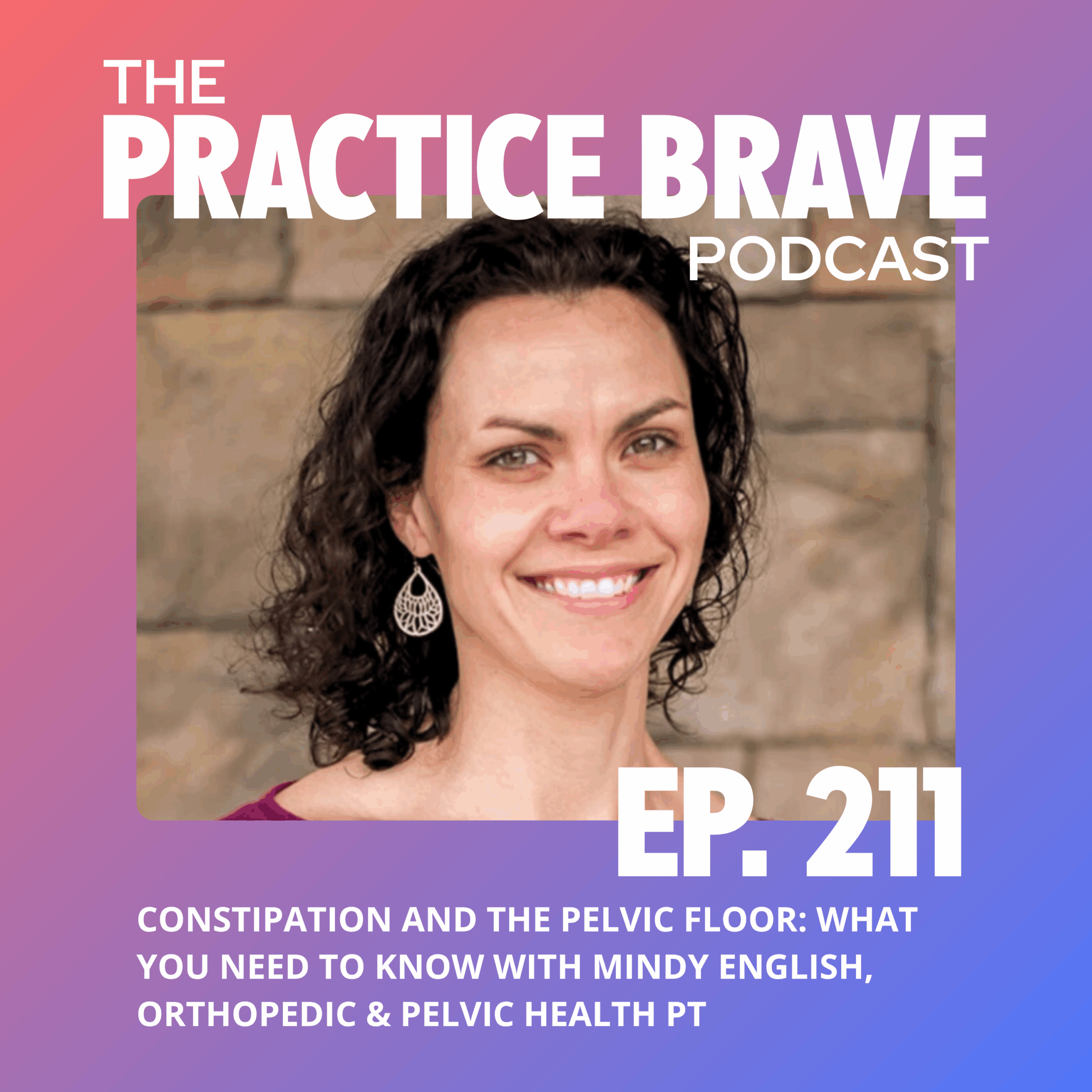
In this episode, I sit down again with Mindy English, Orthopedic & Pelvic Health PT with a background in sports and orthopedics based here in Eagle, Idaho. Mindy and I have done several episodes together as part of our pelvic health series for female athletes, and this one takes on a topic that doesn’t get enough attention: constipation, gut health, and how they connect to pelvic floor symptoms.
We dive into how digestion, nutrition, and pelvic health are deeply interconnected—and how constipation can affect everything from athletic performance to prolapse symptoms. Mindy shares what she sees clinically in both adults and kids, and we talk through why simply “eating more fiber” often isn’t the full solution.
This conversation is real, relevant, and full of practical takeaways for athletes, coaches, and anyone who’s ever struggled with gut issues or pelvic health symptoms.
Follow Mindy English for more pelvic health insights: @mindy.english.dpt
Learn more about the Pregnancy & Postpartum Athleticism Certification:https://join.pregnancyandpostpartumathleticism.com/ppa-cert
Are you a pregnant combat athlete? Check out my free resource for BJJ during pregnancy and postpartum: https://go.briannabattles.com/bjj-free-guide
EXPAND FOR EPISODE TRANSCRIPT
AUTO-GENERATED TRANSCRIPT
Brianna Battles 00:01
Welcome to the practice brave podcast. I am the host Brianna battles, founder of pregnancy and postpartum athleticism, and CEO of everyday battles. I’m a career strength and conditioning coach, entrepreneur, mom of two wild little boys and a lifelong athlete. I believe that athleticism does not end when motherhood begins, and this podcast is dedicated to coaching you by providing meaningful conversations, insights and interview topics related to fitness, mindset, parenting and of course, all the nuances of pregnancy and postpartum, from expert interviews to engaging conversations and reflections. This podcast is your trustworthy, relatable resource for learning how to practice brave through every season in your life. Welcome back to the practice brave podcast today I am here again with Mindy English. We have done a pelvic health series for female athletes this year. So she’s been on the podcast quite a few times. She is a pelvic floor physical therapist with a sport and ortho background, local to me, in Eagle, Idaho, and we collaborate a lot on working with female athletes and just trying to improve, like the intersection between coaches and practitioners and how we can better support women through pregnancy, postpartum and honestly across their lifetime of athleticism. So Mindy, thanks for being here. Thanks for having me again. All right, so this morning, we are riffing off of a DM that I got that I thought would be really interesting to talk about with Mindy, and it is the intersection of female athletes constipation and pelvic health symptoms. And you’re probably listening to this like, okay, weird, but we want to talk about that, because all of these things are very interconnected. A lot of female athletes, whether they’ve had babies or not, struggle with pelvic health symptoms. And as it relates to being a female athlete, a lot of female athletes tend to not have the most harmonious macronutrients, which can sometimes influence digestion and constipation, gut health, et cetera, and what influences pelvic health symptoms, well, like digestion and constipation and Overall, just like how your digestive system works so Mindy talk about this.
Mindy English 02:26
Yeah, so, you know, I think constipation and how people experience that is, I think, more widespread than is really talked about. And I think I started to realize that more as I started diving into treating kids with pelvic floor dysfunction, lots of kids are just completely backed up. And so then as I’m talking to adults, and I always ask about bowel habits. So if people are leaking, we talk about leaking symptoms, but I always talk about their bowel habits. How often do you what does your poop look like. And so many people say, Well, I’ve always struggled with it. And so then my mind goes back to like, this little kid who’s potentially like, was backed up, didn’t say a whole lot, or didn’t, may or may not have gotten the help they needed, just because we didn’t know as much 20 years ago, 30 years ago. And so it’s created this kind of lifetime of habits and patterns. If a lot of times when you’re backed up, if it hurts to get the poop out, your pelvic floor is sometimes tightening. Or part of that inability to get some of the poop out is because your pelvic floor isn’t relaxing well and allowing you to get the poop out. So it creates this, I think of it as like a boxing match in your stomach. So butter gets irritated, you get more backed up with poop. Everyone’s telling you to breathe and relax your pelvic floor, but you can’t, because it’s hard to breathe once you’re full of poop. And so it can create this really, really tough dynamic that leads to lots of symptoms. It can lead to incontinence. It can lead to prolapse symptoms, because now you’re straining to try and get the poop out, and it’s just this cascade that can be really complicated for people. And it’s not as simple as saying, well, just eat more fiber, right? Because that, and that’s what a lot of people are told. And yes, it’s important, along with water intake, but if you’re not moving things through your system, well anyway, more fiber can kind of compact that a little bit. And so, so we have to be careful about these blanket statements of, like, just eat more fiber,
Brianna Battles 04:40
and yeah, because especially like then, that’s where the female athlete part comes in. Because I think a lot of female athletes are very cognizant of I need protein and I need fiber, but they’re oftentimes under eating carbohydrates and under eating fat substantially, especially, I would say, millennials. Men who come from the era of like, kind of, like, lower fat by default, even if they’re not trying to be. And I find that when we’re really high protein, really high fiber, and sometimes, like, manipulate carbohydrates, maybe just around training, like, we’re still not really eating enough to fuel our activity. And that can show up in our digestive health. Like a lot of female athletes have accepted, like, well, I don’t poop every day, or, like, I have like diarrhea so, like, they don’t have, like, a good comprehension that your digestion is a direct reflection of how healthy your nutrition is for your body. And if you’re not pooping every day, if you are, like, if the substance of your poop is kind of problematic, we got to look at your your diet nutrition, and not just like, well, I eat a lot of protein, cool, but are do we have harmonious macronutrients? Like, are you getting enough fat in relationship to the fiber you’re taking in, in relationship to the carbohydrates in relationship to the protein? I don’t talk that much about nutrition in my world, but at the same time, it’s a major piece when looking at digestion and pelvic health symptoms, so you kind of have to, like, reverse engineer that process.
Mindy English 06:20
Yeah, and I think, you know, you just have to understand too, like with exercise, and if maybe there is a change in their training or something like that, and they’ve changed what their diet is because of that training, and now they’re noticing a change in bowel habits, that’s when I my antenna start to come up. Is what’s what’s different, or what’s, what’s causing more stress on your gastrointestinal system because there’s going, there’s such a wide range of, like, what normal pooping frequency is, right? Like, you can have people who go multiple times a day, and you have some people where it’s really is kind of their normal to go every couple of days, and if they have good consistency of that actually normal.
Brianna Battles 06:59
I mean, I know that we say that is, you know, like, I Yeah, I’m just like, God, that seems like the metabolism is just not, like, operating at the speed in which, like, would be, I don’t like the word optimal, but like, man, yeah, that’s rough.
Mindy English 07:14
Not like, yeah, it’s rough. And I think, you know, genetically, I think there’s some people who have, people have slow gut motility, so things just move through a little bit slower and so but again, if that’s not what your norm is, and that’s changed, and you’re increasing your fiber, and you’re doing all these things, there’s something missing. There’s a problem in that system, for sure, if it’s been more than three days, that’s not what we would consider like normal and healthy, right? And so I tend to look at, what are your tendencies, and has there been a change in that tendency, and then what else, what all has contributed to that? Have You increased your training? Have you slowed down your training? Have you changed your diet? Have you, did you start leaking so you stopped drinking water? Because that’s a really common thing that I hear, because if there’s a general mentality of, if I drink more water, I’m going to leak more, and so when we start leaking, we stop drinking water. But if you’re eating more fiber and not drinking water, yeah,
Brianna Battles 08:12
even if it’s like subconscious, where you know you’re feeling that the particular DM I got was like, Hey, I was trying to poop, and I was taking me a long time, I strained, and now I feel like they’re, like, had like, some sort of, like, prolapse symptoms, like pressure, feeling like something was there. And of course, that creates that mental spiral of like, Oh my God. What just happened? And this is somebody who hasn’t had kids, she’s like, Oh my gosh. What is like happening to my vagina right now? And it just, it kind of creates this, this spiral effect of trying to be like, What is going on? Why am I constipated? What symptoms Am I having? Did I just create a prolapse for myself? And so that’s when I started asking about, like, Okay, well, like, is straining normal? Like, what? What is your digestive health like? And then let’s Okay, let’s peel back a little bit more. Let’s look at the nutrition side of things. Give me an idea of what your macros are like, so I can see, do you have a lot of fiber? Are you really low in fat? And I find that for again, a lot of women, I something I’ve seen in female athletes, is their fat content is just really low, especially if they try to eat really healthy, they they’re under eating fat quite a bit, and we know that fat helps create more substance. It’s good for our Hormonal Health and just overall, like metabolism. But yeah, all of this is very interconnected. So talk to me a little bit about that scenario, because it’s not an uncommon scenario.
Mindy English 09:44
Yeah, so, so I think in general, a lot of people, let’s just go back to, like, sitting mechanics on the toilet, right? So I get nothing from squatty potties. But like, having something under your feet is a really awesome. Optional position. So it can be a stool, it can be books, it can be whatever. We live in a society where most of us are at like, a 90 degree angle. We’re not in a position where our knees are a little bit above our hips. We were kind of designed to, like, squat and poop, yeah, and all it takes is, like one time where it’s, like, really hard to get something out to kind of create, create a problem. You know, when you’re when you’re straining, there’s a pressure management issue that’s happening, and the pelvic floor should be kind of opening and relaxing to get the poop out. And a lot of people have, we call it like a D synergic pelvic floor, where they’re actually contracting their pelvic floor a little bit to kind of counterbalance that strain. And we know a lot of female athletes have tight pelvic floor, so it can be a tendency. So, so unknowingly, we kind of create this situation. We’re just trying to get the poop out, and it’s, it’s probably not the first time that person has tried to get the poop out that way, right? Like it’s been kind of this cascade of symptoms. And I always think of that like, oftentimes there’s this cascade of habits that happens, and then there’s one time where, like, our body just doesn’t respond well to it, yeah. And then we kind of start having having those symptoms. And then, yeah, it is. It can send you into the spiral, especially if you’ve never felt those things before. We think of prolapse incontinence anyway, we it’s kind of associated with either I’m getting older or I’ve had babies, right and and those of us who work in this space know that that’s not true. We know that there are people who have not had those are not in those stages of life that have symptoms but, but nobody’s talking about it as much with those people who haven’t had it. And so that feels really isolating and and again, as athletes, we take a lot of ownership of and like, oh gosh, what did I do? I just messed something up. I messed up my body. I did something wrong, yeah. And it’s Yeah, that’s exactly it.
Brianna Battles 12:00
Because they’re like, Wait, did I just like, what just happened? And now, is there something wrong with me? And again, there’s a lot of different variables that influence it, but if somebody is straining, can they create a prolapse in that moment? Is that a moment in which prolapse symptoms can now be present, or is it just maybe, like fatigue, or like tissue change that then reverts, like, what? What do you see?
Mindy English 12:28
Yeah, I mean, I think, I mean, you can see on imaging, there’s going to be, like a change in in positioning of organs with a straining movement. So, you know, certainly, with enough force, you could get, like, a true change. I don’t know if I could, like, hang my hat on, if you’ve pushed enough like it’s going to come completely out, right? But, but we know people can feel when we grade like a prolapse. You know, we think of how far the organs have descended through the vaginal canal. And we know that people can have symptoms and have feelings and really and have about a grade one, so not a ton of dissent, but enough that it’s noticeable, and people can have that amount of descent and not have any symptoms. And so I think it’s important that we acknowledge that someone feels those things, how much it actually caused is, is hard to say. A lot of times. I think it is just, you know, how our pelvic floor reacts, how our nervous system reacts
Brianna Battles 13:31
to that feeling, and then you become hyper aware of it. So then you’re like, that’s the only thing you’re thinking about. You know, it’s just like, when you have, like, an injury anywhere else on your body, you’re like, I know I hurt my knee last week, so now I’m kind of hyper aware of any movements that may re hurt it or aggravate some of this pain. And so then again, it creates this, I don’t know this, this hyper focus on what’s going on, and especially with your vagina, you’re like, extra aware because it’s different, because you’re not always super cognizant of how that feels, and then when something feels off, it does create a little bit of paranoia there.
Mindy English 14:07
Yeah, and I think it’s hard, because then if you go to the doctor and they evaluate you, and they either say, like there’s nothing there, or it’s a grade one, it almost, it almost makes it worse, right? Because then I think you almost, a lot of people feel like they’re not validated in what they feel. And so either way, either way, there’s some things we have to manage. It’s just like, if you know, if you had knee pain, they went to that, you went to the doctor, and they said, imaging is great. Like, you’re like, nothing’s torn.
14:39
Still have this great
Mindy English 14:41
I still have pain, and it still sucks to squat, so yeah, and so I think that’s where we have to meet them, is just acknowledging, like, yes, you have some awareness there. It’s something we need to make some changes with and kind of keep an eye on and make sure we’re getting you to the right person. Professionals, if it, if it is worsening, but also, like, there are things we can do to help it. Yeah, it’s not, it’s not the end of everything, right?
Brianna Battles 15:10
So, like, even if you’re somebody who has experienced, you know, prolapse, or you know some symptoms when you’re going to the bathroom, or you are somebody who has had IBS, constipation, diarrhea, like just inconsistent, quite literally, digestive problems your whole life. There’s a lot that you can do about it. But what’s actually practical for female athletes? Well, I think again, we’re looking at the nutrition side of things and acknowledging, am I getting enough calories? Because there’s a lot of female athletes that that are not fueling enough in general, and that also creates a lot of different issues within the body that are not just related to, like, caloric intake, right? Like there it just it affects every system of your body to not be fueling for your activity level. So really, looking at your your overall caloric intake, and then looking at how those macros are all, like, how they intersect, right? Like, even for weights, for athletes, like you might notice during different times, when you’re cutting or when you’re having to be more aware of your weight, like, what are your macros at? And you find have to find a happy balance between even it being a deficit, so making sure that you’re getting enough protein, fat, carbs and fiber, and then, like you said before, like, really getting in that water, in that deficit, especially as like, calories tend to drop. But I think a lot of women don’t even realize that they kind of naturally, are living in this really low calorie or low low in least one of the macronutrients category, and that alone can throw off the metabolism and the harmony in our body, which of course, affects the digestion and how well We digest, and then how much we’re trying to create digestion by, like, pressuring down and straining, and that creating the pelvic floor symptoms. So I like to just like, you know, I obviously I’m, like, rambling a lot, but I I want to paint that picture, because this is not an unusual conversation. And the more I started learning about pelvic health, more I was like, Oh yeah, that’s like, the conversation I’ve been having with friends and teammates for 20 years, right? Is like them not being able to go to the bathroom or having bathroom issues either a total like disregard to nutrition. At least back in back in my day, we didn’t care about nutrition as much. And now there’s like a hyper awareness around nutrition, and I think we have to find that, like, happy medium of like, am I fueling enough, like, enough calories in general? And then what are the macronutrients actually look like, even if you don’t track, and I didn’t for years, but like, track for a couple days just to see, like, wow, I really, like, only get this much protein or only get that much fat, and then you just start to see where you get a lot of something and not a lot of other things, and like, finding a little bit more harmony within those macronutrients. So then we know how to make some changes well.
Mindy English 18:11
And I think, like, what you’re choosing in those categories matter. So if you think a lot of athletes are going to choose bananas, right, it’s a quick it’s a quick fuel. I personally don’t love bananas, but great. No, Me, neither. A lot of people love them, so, but bananas can be constipating, and so if that’s like, your go to fruit all the time, and then you’re like, Yeah, I’m eating I’m eating my fruit. Well, yeah, you are, but you’re not eating something that is like, necessarily supporting your gut health super well. And so I think we have to think about those things too and and help people be aware of like, if, as you’re choosing more like fruits and vegetables, like, what does that actually look like? What is the quality of those fruits and vegetables that you’re eating? How is that either helping or hurting your digestive system.
Brianna Battles 19:03
Yeah, I mean. And just to give you guys like numbers, I was just like looking at like My Fitness Pal, just so I can give you an example of like myself, and this is what this was on a cut. Like, to be really clear, this was like, my macros for a cut, not what I’m eating now, but even during a cut, my my macros were between 62 and 65 grams Right? Like, I’m still getting quite a bit of fat, even in a cut. And when I talk to female athletes, they’re like, oh yeah. Some days I only get like, 30 grams of fat, 40 grams of fat, 50 grams of fat. I’m like, no wonder you are constipated, right? So again, we don’t have to be neurotic with our tracking, but being able to look at your food and be like, this is typically what I eat for breakfast, this is typically what I eat for lunch. This is generally speaking what my dinners look like. You start to get an idea of like, Oh, I’m really under fueling into this particular category. How can I balance that? Out, and then you start to see how you feel. Like I knew when I started adding a little bit more fat to my diet, suddenly I had a lot more energy. My metabolism was really effective, and my digestion was good. The scale started moving and like that too, you know, like you don’t even realize when you’re backed up, how bloated you feel, how lethargic you feel so it goes beyond just the straining and actual constipation. It’s just your overall function and how you feel as a woman. And I think we’ve we tend to gaslight ourselves and be like, Well, I’m just tired, and I feel like shit because I’m a mom. Oh, my stomach just looks like that because I have diastasis, or because I had a baby four months ago, or I’m exhausted because I’m trying to, like, lose weight I am in a calorie deficit. It shouldn’t necessarily be like that. Like it shouldn’t we really have to look at our nutrition and how that influences how we feel. And sometimes it takes being like, dang, something is really wrong with my pelvic floor to then try to have this holistic approach, instead of what I think a lot of people think is, Well, God, I just need to strengthen my pelvic floor now. I just need to do more kegels. I need to do more pelvic floor contractions, because now I feel like something’s falling out. I must be weak. Either. Must be a problem here. And frankly, that’s what a lot of their doctors tell them, too. Oh, yeah. And that just contributes, that just contributes to the constipation that contributes to the pelvic floor symptoms, even if, like, there’s not prolapse presenting, it’s because they are constantly doing a pelvic floor contraction, which typically, a lot of women aren’t doing correctly anyway. They’re squeezing their butt hole and not doing a pelvic floor contraction, which is why we like the cue zip your clit, because that’s more of a gets the front part of the pelvic floor, the actual pelvic floor to contract, instead of just squeezing the glutes, calling it a kegel.
Mindy English 21:55
Yeah. And I think so if you think about if your stomach is upset, our natural instinct is to, like, clench our abs, or, like, hunch over. We know a lot of our female athletes tend to be kind of AB grippers. So all of that kind of starts to affect our the motility of our digestive system and how things are moving we and then again, we grip our abs. Also the tendency tends to be either clench my butt or I have a tight pelvic floor, and again, it just creates this, this cascade, and then you’re eating more fiber, you know you’re or you’re not changing anything your diet. So then it’s just creating this, like big pressure system. It can become really uncomfortable, yeah, for people.
Brianna Battles 22:36
So what do you do when somebody is presenting with constipation. Obviously we can, like, make some positive changes in nutrition and start to troubleshoot that. But in the moment when, you know, like, somebody’s trying to go to the bathroom, they’re constipated, they are now aware that, like, Okay, this is contributing to some pelvic floor symptoms. Or I just obviously don’t even feel right, I want to start to feel better. What do you have them do? I typically, like, will massage a stomach or, like, get on all fours so that, like, my stomach, just like, stops gripping, like, and holding that tension. What do you do with people and the Squatty Potty? Of course, yeah, so
Mindy English 23:15
certainly I teach, teach a little stomach massage, a bowel massage, just to kind of help get things going a little bit I like to do oftentimes, like some twisting motion, so like some open books or like thread the needles, depending on which direction people like to go. Sometimes that can help and feel good. But again, like, depending on how backed up you are, sometimes your rib cage just isn’t going to move super well. So sometimes that can be hard for people, certainly breathing. If we can get people in different positions. So whether it’s hands and knees, some people like to be on their stomach. So if we can get them on their stomach and kind of think about pressing their belly into the floor to give them that feedback, sometimes that can help relax things a little bit, which like these
Brianna Battles 23:58
are all down training movements, guys. So if you’re listening to this and you’re like, What the heck? This isn’t just like when you’re going to the bathroom, this is like, down training the pelvic floor in general, which would be super beneficial, constipated
Mindy English 24:10
or or not. Yeah, Child’s Pose can be a really nice position for people. Again, it kind of depends on, like, everyone’s different about what they like when their stomach is upset. Some people kind of like that, like, clenched over position. Some people want to be a little bit more open. So I think you just have to play around with some movement and think about, okay, what are my down training positions, cat, camel can feel nice just to try and, like, stretch and move. I always encourage people like from a bowel habit perspective, go sit on the toilet within 1520 minutes of having some good fiber in your in your diet, we have something called the gastricholic reflex. And so eating fiber, a little bit of exercise and. And sitting on the toilet afterwards can help just stimulate that. And so just saying, and taking your time off the toilet, right? It’s like so many of us are in a rush, and we don’t have time because there’s no longer in and get out. So can I sit on the toilet and do some some nice breathing thing of it, it’s like potty yoga. Can I, can I, can I do some deep breaths and just really, yeah, get my my feet up and and try, at least, you know, have an attempt to try. And I think a lot of us wait till we have a feeling, and sometimes we just need to, like, set ourselves up for an attempt.
Brianna Battles 25:35
Yeah, and even just, like, if you’re sitting there for a while, like, didn’t just, like, get up. Like, get up, move around, walk around, breathe. Like, do some you can, like, do some squats just to get your body moving. Like, movement really helps. And so sitting there straining and straining, like, that’s not the answer, maybe, just like, come back and try later. And I also tell people, like, go on walks after you eat if you can, even if it’s like a five or 10 Minute, just like, lap around your office, lap around the neighborhood, I think so many of us like eat and then we sit there’s like, eat dinner, and then sit on the couch or eat dinner or eat lunch, and then go back to our desk at work. Like, but if you can just like, move around again, five or 10 minutes, I find that that really, helps?
Mindy English 26:21
Yeah, yeah. I mean, exercise is always good and helpful. And I think you’re right. I think especially for athletes like we’re training, which is great, but I think we underestimate the value of just like that quick walk, right? So, eat, walk, Go, sit on the toilet and see if you can get something moving.
Brianna Battles 26:39
Yeah, a little bit Absolutely. So some foods that I like to encourage people are like, Well, what should I eat that helps? Like, obviously, fruits and veggies. Yes. Like that part, for sure. I also like, for me, like Greek yogurt. I like that helps. I this is, I’m just going to talk from a personal perspective, what I eat. I like to have a lot of blueberries, and I will throw, like some granola in there. So then I’m just getting, like, again, extra carbs, extra fat, and just like substance. And then, and then, what was the Oh? And then, like, avocado. I really like to have avocado in my diet, because I find like, that healthy source of fat, little bit more calories, but even just like the consistency of an avocado or what is like, really helpful for your digestion. So if you like those that can be really helpful in your diet, obviously, if you like dairy allergy or something, maybe that’s not going to be it for you, but I know for me, it’s a really helpful way of just like those three in particular, and then eating the eating a whole egg, like, we don’t have to be like, egg white culture forever. Egg whites are very helpful. I use them too. But also, like, don’t be afraid of eggs. Like we can get in that healthy fat just as a way to improve our overall digestion and and how we feel.
Mindy English 28:00
Yeah, I think those are all great suggestions. Apples. I think apples are underutilized food that you can add to a lot of great things. And so, yeah, I think when you have to find the things that you like, but to like, find the things that kind of create this full well rounded, yeah, well, diet, and if you can think of, especially if you’re in like, a deficit or something, okay, what are the foods that give me the best thing for my buck? And you kind of have to, like, you know, work with your team of people to kind of figure that out, reach out to an internship
Brianna Battles 28:37
and, like, troubleshoot it, and again, just like, loosely track your macros, just to get an idea of, like, what are my tendencies? Just like with everything else, we encourage you to get a baseline of, like, your core and pelvic floor tendencies, even prior to having babies. Do you pressure out? Do you pressure down? Do you, like, grip your butt? Do you grip your abs? Like, all of those things matter and to, like, zoom out and have a little bit more of a holistic approach to this. We also got to look at, you know, your nutrition, what your tendencies are there, your training, what your tendencies are there, and how all of these things work together and influence our health from the inside out again. This is never just about symptoms, never just about exercise modifications and like quick quick tricks and hacks. It’s really just about taking inventory of your overall health, again, from the inside out,
Mindy English 29:25
and I think just from, like, a whole health perspective, if we bring hormones in a little bit, so right after ovulation, progesterone increases, and that can slow down our motility a little bit. So looking for those patterns, right? It doesn’t mean it has to be true for everyone. But again, if we think about tracking, like, just, like, get some good data, be a detective and kind of see what are my tendencies, what are my patterns, so that we can really figure out what the root of the
Brianna Battles 29:50
problem is. Yeah, literally, write it down if you have, like, a period tracking at app, like, what days do you feel like? Really good. Like, if good digestion, what days do you feel like? You really struggle, like sometimes around your period too, your digestion will change quite a bit, maybe more diarrhea, more constipation, but typically that, like levels out again as hormones change. But certainly, you know, as you like, navigate going into, like, perimenopause or menopause, where there’s significant hormonal changes, again, your digestion is affected by that. So we really have to take a big look at all of the different influences, and then have some tools and strategies to try to address it as holistically as possible. And then, you know, have interventions after that. Yep. Anyway, Mindy, thank you so much for being here. I kept this at a quick episode this morning, because I know you have a client here in a couple of minutes, but thank you so much for your time, and we will be back. If you have questions about this topic this episode, send us a message, and we are more than happy to help. Thanks for being here. Mindy. Thanks for having me. Thank you so much for listening to this episode of the practice brave podcast. If you enjoyed the show, please leave a review and help us spread the work we are doing to improve the overall information and messaging in the fitness industry and beyond. Now, if you are pregnant and you are looking for a trustworthy exercise program to follow, I have you covered. The pregnant athlete training program is a well rounded program for pregnancy with workouts for each week that are appropriate for your changing body. That’s 36 weeks of workouts, three to four workouts each week, and tons of guidance on exercise strategy. We also have an at home version of that program if you are postpartum and you’re looking for an exercise program to follow. The eight week postpartum athlete training program would be a really great way to help bridge the gap between rehab and the fitness you actually want to do. From there, we have the practice brave fitness program, which is an ongoing strength conditioning program where you get new workouts each week and have a lot of guidance for myself and my co coach, Heather Osby, this is the only way that I’m really offering ongoing coaching at this point in time. If you have ever considered becoming a certified pregnancy and postpartum athleticism coach, I would love to have you join us. Pregnancy and postpartum athleticism is a self paced online certification course that will up level your coaching skills and help connect the dots between pelvic health and long term athletic performance, especially during pregnancy and postpartum, become who you needed and become who your online and local community needs by becoming a certified pregnancy and postpartum athleticism Coach, thank you again for listening to the practice brave podcast. I appreciate you, and please help me continue spreading this messaging, this information and this work.
MORE ABOUT THE SHOW:
The Practice Brave podcast brings you the relatable, trustworthy and transparent health & fitness information you’re looking for when it comes to coaching, being coached and transitioning through the variables of motherhood and womanhood.
You will learn from athletes and experts in the women’s health and coaching/performance realm as they share their knowledge and experience on all things Pregnancy & Postpartum Athleticism.
Whether you’re a newly pregnant athlete or postpartum athlete, knowing how to adjust your workouts, mental approach and coaching can be confusing.
Each week we’ll be tackling questions around adjusting your workouts and mindset, diastasis recti, pelvic health, mental health, identity, and beyond. Through compelling interviews and solo shows, Brianna speaks directly to where you’re at because she’s been there too!
Tune in every other week and share the show with your athlete friends!
This post may contain affiliate links, which means we receive a small commission from the seller if you decide to purchase (at no additional cost to you!) We only share products and services we have used, tested, and love ourselves!

