212: Olympian Hannah Miley on Motherhood, Identity, and Returning to Sport
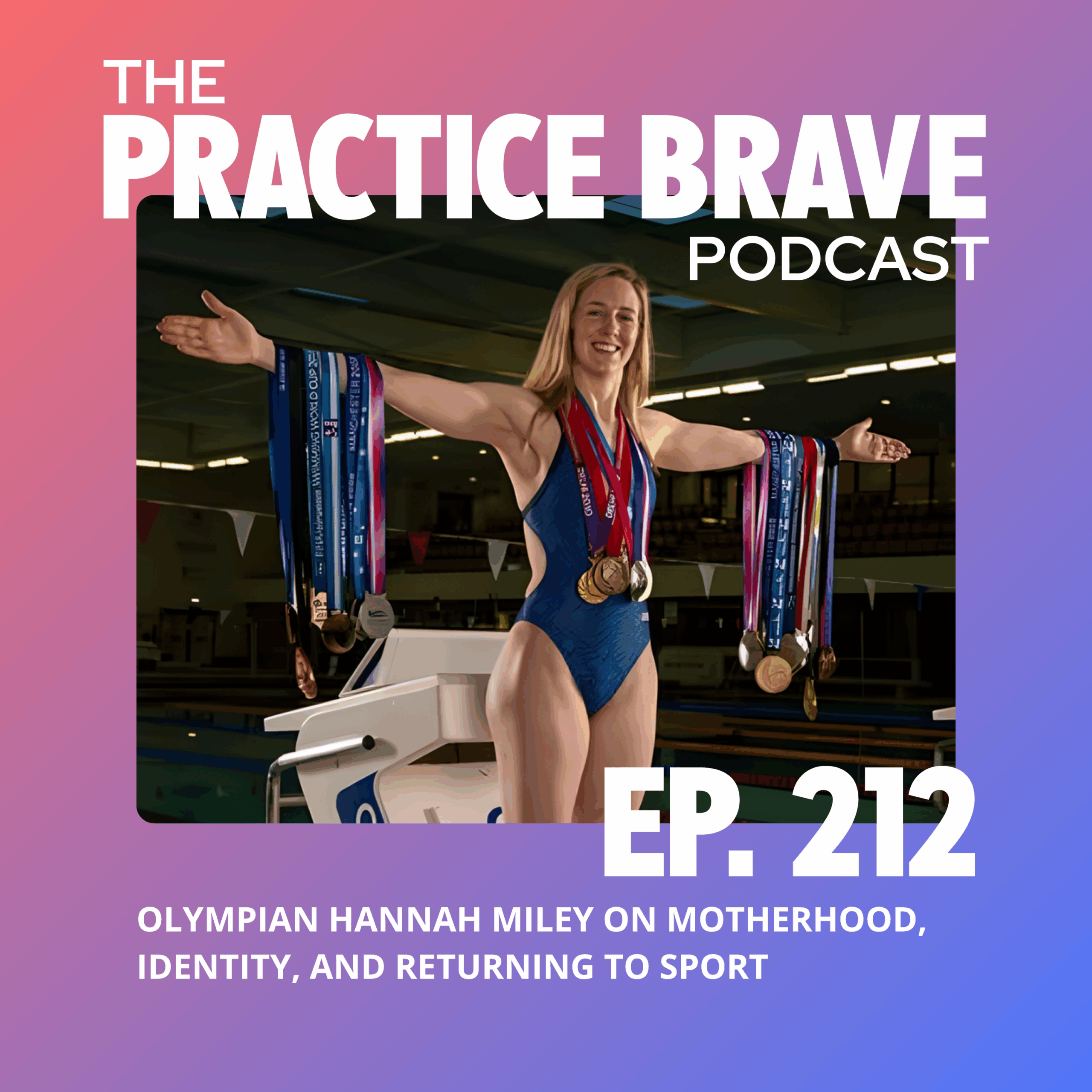
In this episode, I talk with Olympian swimmer Hannah Miley about her transition into motherhood and what it’s been like navigating a return to swimming postpartum. We dive into the culture of swimming in Scotland, why pelvic floor health matters for swimmers and female athletes in general, and the identity shifts that happen when you step away from sport after competing at the highest level.
Hannah opens up about her own postpartum recovery experience, the gaps she’s seen in resources for female athletes, and her vision for building more support and community for moms in sport. This is an honest, powerful conversation about redefining athleticism, rebuilding postpartum, and staying connected to the parts of ourselves that still feel like athletes.
Connect with Hannah:
IG: @smiley8889
FB: @hannahlouisemiley
Need workouts for your pregnancy or postpartum? Check out my programs (now with app access!):
The Pregnant Athlete Training Program: https://go.pregnancyandpostpartumathleticism.com/pregnancy
The 8-Week Postpartum Athlete Training Program: https://go.briannabattles.com/8-week-postpartum-athlete-training-program
EXPAND FOR EPISODE TRANSCRIPT
AUTO-GENERATED TRANSCRIPT
Brianna Battles 00:01
Welcome to the practice brave podcast. I am the host Brianna battles, founder of pregnancy and postpartum athleticism, and CEO of everyday battles. I’m a career strength and conditioning coach, entrepreneur, mom of two wild little boys and a lifelong athlete. I believe that athleticism does not end when motherhood begins, and this podcast is dedicated to coaching you by providing meaningful conversations, insights and interview topics related to fitness, mindset, parenting and of course, all the nuances of pregnancy and postpartum, from expert interviews to engaging conversations and reflections. This podcast is your trustworthy, relatable resource for learning how to practice brave through every season in your life. Hey everyone, welcome back to the practice brave podcast today. I’m here with Hannah Miley, and she is an Olympian swimmer and a mom, and I’m really excited to have a conversation today about the nuances of being a swimmer or swimmer background and navigating motherhood through pregnancy, postpartum, some of the struggles that Hannah has experienced in motherhood, but do it through the lens of swimming, because we don’t have a lot of information out there about swimming and doing it through pregnancy and postpartum. We commonly hear it framed as being a low impact, really positive sport, but sometimes it can still be a challenge, even for somebody who’s really high level. So I’m excited having a conversation with Hannah today talk about her background, her history, her success, and how that has all evolved as she’s become a mom. So, Hannah, thanks for being here. Thanks very much for
Hannah Miley 01:45
the invite. It’s awesome to be absolutely yes.
Brianna Battles 01:47
So give us a little bit of your background on on who you are as an athlete and just overall, yeah.
Hannah Miley 01:53
So, um, I guess you could kind of take it right back to when I first got introduced to water. And so I’m based up in Scotland. My accent might confuse some people. I don’t have the proper Scottish accent. My parents are both English. My dad is from Irish descent, and I’ve lived up in the northeast of Scotland pretty much all my life. So they’ve kind of maybe influenced my accent a little bit. I’ve not kind of brought up the Doric twang, but my dad was my main sort of inspiration with regards to swimming. He taught me how to swim when I was like three, first got me in a swimming pool at a hotel, and it just kind of spiraled from there. I loved being in the water. I always felt I was a bit of a quirky kid, a kid that didn’t like to follow the crowd. If everybody would go right, I made a conscious effort to go left, and I just found my safe space was in the water. It allowed me to be free. That quirky kid just fitted straight in because my imagination got to run wild. And, yeah, yeah, it was just a for me. It was my sport. I tried lots of other sports. I’m very hyper mobile, hyper extension in my elbows and knees, so any land based sport I could trip over on a flat floor. Basically, I was really clumsy, but I gave it a good shot. And yeah, my dad was heavily involved in the sport of swimming. He developed a device called the Aqua pacer in 1996 and at the Sydney Olympics, I think one in three Olympic medalists had trained with that device. So Paul Palmer, Brooke Bennett as well. He worked with, quite closely with Peter banks, and then he went over to Stanford and worked with the Stanford women’s team. So he kind of, he loved swimming. He knew his stuff. So through my teen years, it meant I didn’t have a leg to stand on if I had to argue. I couldn’t argue with him on it. But it was a partnership that we kind of just grew we had no idea, you know, father and daughter, Coach athlete. Didn’t know how that was going to go. He was predominantly a helicopter pilot, so he was only coaching voluntarily. So I was just this scrawny northeast Scottish lass and who just, you know, happened to be good at swimming. My main event was a 400 I am and yeah, we Yeah, I just kind of love being in the swimming world. Apologies, I’m not doing a very good job explaining it, but it’s no, you are.
Brianna Battles 04:15
I was like, Oh, 400 I am. Like that. That’s a lot. That’s so hard.
Hannah Miley 04:19
Well, it was mainly because nobody else wanted to do it.
Brianna Battles 04:23
Yeah, that makes sense.
Hannah Miley 04:25
So yeah, it’s a daft event, and I felt I had more chance of making a final and 400 im that I did for a 50 and 100 free. I mean, five so in so many times, I’m relatively short and small, not stacked. Muscle wise, I was always the underdog. So what I lacked in size, I made up for and sheer determination, stubbornness and just the unwilling sort of willingness to never give up really. So I love
Brianna Battles 04:50
that is, is, what is the culture of swimming like in Scotland? Is it really, really common sports for a kid to be involved in? Or no,
Hannah Miley 04:59
it’s kind of me. Football is the main key sport in Scotland, swimming. It’s very much encouraged to get your kids to learn to swim. We are actually in a bit of a crisis. We are losing swimming pools, just the cost of living, the cost of heating them. Pools, everything’s indoors because, hey, it’s not always cold Scotland, but it’s all indoors because outdoors, it takes a lot of heat to keep them warm and the unpredictable weather. So yeah, we are losing a lot of swimming pools, and because of that, it’s then impacting kids chances to learn to swim. And there is a bit of a scary fact that out of the nations, in the UK, Scotland, England and Wales, Scotland does have the highest drowning rate. So you know, we are trying to push a scheme where not everybody has that privileged position to pay for lessons, and it’s trying to make it accessible, so that every kid who leaves primary school can swim in some shape of some form. It doesn’t have to be 50 meters butterfly or 25 meters. It’s just life saving skill of, can they get themselves at the water? Can they roll onto their back? Can they, yeah, keep themselves alive if they do come into trouble being in that water, because we’ve got locks. We are an island. We are surrounded by water. So yeah, water is everywhere. And we we leave Scotland to go somewhere sunny and warm, yeah? And normally we find a pool. So, yeah, we are kind of, wow. We have good talent for a small nation. You know, we do. We are hardy, and we do like to swim, but I’d say it’s a sport that is still growing for us. When it comes to the Commonwealth Games, I guess that’s kind of on a par with maybe pan packs for you guys, Pan Pacific Games, first Commonwealth Games. We’ve got Australia, Canada, South Africa, you know, the sort of Commonwealth nations we had the games in 2014 and they were hosted in Glasgow, and that really did boost, I think, the legacy of a lot of sports, but for swimming, especially because we’ve a lot of Scots that now make, you know, the Olympic teams and have won medals and bits. So, yeah, I’d say we were Hardy nation with regards to swimming. We definitely don’t have the depth that say USA have or Australia. But yeah, we’re, we’re not to be counted out.
Brianna Battles 07:12
No, I’m, I love that. I like learning just more about that. We connected, just for you guys listening, we connected a couple months ago, I think, on social media, and had sort of having some conversation. Conversations and, like, got to meet online. And it’s interesting, because my background, like, I grew up swimming, which then led to playing water polo. I don’t know, like, if you ever were tempted to play water polo, or if you were just, like, full into swimming, it feels like it’s like, one camp or the either. But I, like, definitely went away from the swimming route into water polo with no desire to like swim on the swim team anymore. Again, this is, like, very typical, but it was really fun to talk to you and get to know just about like your background in swimming, and to be able to share that. And again, kind of combine our worlds. And for me to talk about something that was sport was a huge part of my life, from sort of swimming at like five, and did that all through high school, and then water polo is what took me to college. But it was big part of my life, and one I just not as tapped into. So it’s so interesting hearing about the culture of swimming in Scotland, and in this the state of what it is like right now, because that’s not a community I’m super dialed into anymore. Yeah, we
Hannah Miley 08:27
have sort of the aquatic side within Scotland in GB. We do have your Synchro, your divers, your pool swimmers, and I guess we do tend to stay in our own lanes. And I’ve always been, I always admire water polo players because the strength and stamina to, you know, fight in the water, get that ball, hand, eye coordination, your shoulder strength as well. It kind of makes My shoulders feel very weak. Yeah, so we’re just watching, well, a
Brianna Battles 08:55
few shoulder surgeries later, like, I agree, yes, before, like, surgeries before, like, age 22 but yeah, it’s not, as you know, with swimming, it’s not a super shoulder friendly sport, just that repetitive circular motion. But anyway, it’s fun to nerd out on swimming in water polo with you, and for all of those listening that maybe you grew up swimming and then you found another sport, or maybe you do triathlon, so swimming is part of your training. We’re excited to talk about just like, what your experience has been like as an athlete. So I want you to tell us a little bit about what was it like getting to the Olympics. That’s kind of a big deal, my friend,
Hannah Miley 09:34
yeah, it wasn’t, yeah, it’s not a small feat, is it? No, so I guess it was around about 2004 I was watching the Athens Olympics. And four years time, I was about 1415, and I thought, you know, can I be good enough? I don’t know. I was again, you know, progressing through the development pathway. And, you know, making my mark 400 I am was becoming. More of my strength. But you know, hitting the sort of joys of puberty and being a teenage girl, exams, studying schools, trying to get that juggle and balance and swimming is quite unforgiving in a sense of, I kind of, I turn up looking like a drowned rat most of the time turning it to school. I didn’t have much fear of expecting people to like the way that I look. I kind of just thought, Eh, what you see is what you get. This is what I am. And, you know, and I felt kind of proud of that, I guess strength within me, you know, I felt proud to be that swimmer, but going to the Olympics that was, you know, a big target. And in all honesty, I wasn’t sure I was good enough to go. It wasn’t until the trials in 2008 where I qualified. It was in Sheffield, and when I hit that time and realized that I came first in the trial event and that I booked my ticket, it was such a surreal moment. It was kind of excited, nerve wracking, terrifying, but elated, all thrown into one it was just this big washing machine of emotions, and then you had the kitting out day. So the way that we have our trials, we tend to have them sort of around April time. I know with USA, it tends to be maybe like six weeks before, sort of like June, July, June time. I think normally so for us, we had a bit of time to process it, go through kitting out and and kind of all the the extra little bits like that. So that was really cool, coming away with, like, three suitcases filled with kit, and my dad got selected as a coach as well. So for me, it was such a proud moment to not only make the team, but for my dad to be there with me too. So you know, our kind of like little team was, you know, we’d done something for ourselves, a four lane, 25 meter pool was what I trained in, day in, day out. You know, it wasn’t a big, fancy facility, you know, we had to really, it’s like the rocky effect. We kind of got it because we were, you know, having to work really hard to just prove a point. And, yeah, getting to the actual Olympics in Beijing, and seeing the food hall, and just just being completely in awe of how big it was and the amount of food that was there, all the different sizes of athletes and who the basketball players were, the gymnasts, the other swimmers, water polo players, Synchro like it was just eye opening and also quite intimidating at the same time, because you suddenly pinch yourself thinking, God, do I belong here? Should I be here? This is just like a dream.
Hannah Miley 12:24
And I remember turning up on poolside, and one of the athletes turned around and was like, hey, oh, it’s a right, big gala this. And actually made me laugh, because I thought your gala just sounds so trivial. Sounds like such a little, you know, kiddie competition. And I was like, How can you call the Olympics a gala, you know? And naturally I thought, yeah, it is. It’s the same size swimming pool that I qualified in, 10 Lane, 50 meter. It’s the event that I’m going to be racing in that I’ve raced for since I was, like, 12. So, yeah, it was, it was very, very cool. Probably didn’t perform the best at my first Olympics. I think I was very much a rabbit caught in headlights. But Rebecca Adlington for us, why? Winning the two Olympic gold medals, Joe Jackson winning that bronze medal in the 403 and then Kerry Ann Payne and Cassie Patton in the open water, along with David Davis for us as GB I, you know, I still get goose bumps this day seeing that performance and being part of that, and thinking, right, 2012 it’s in London. I want, yes, I really want to go there. So it kind of set a fire within me to want more and to try and push for it. So yeah, I kind of felt maybe a little bit greedy as my career went on, because there wasn’t just one Olympics, it was three. I even tried to see if I go to a fourth Olympics, but my shoulders were starting to give out, and then covid had hit. But it is, and I feel I maybe took for granted of going to the Olympics. I think as an athlete you, you know, you kind of work towards that goal, then once you get that goal, you then take another it’s like climbing a ladder. You go to that next level up and level up and level up. And actually, sometimes to stop and look back to see where you’ve come from and actually how far you’ve gotten is, yeah, you forget to do that sometimes, and it wasn’t into wasn’t until I retired that I actually truly got to appreciate what it is that I did. And as athletes, we are sometimes our own worst critics, and can be quite harsh on ourselves and thinking we’re not good enough. And I never won an Olympic medal. The the closest I got to it was in Rio. I missed that Medal by 15 hundredths of a second, so the equivalent of a blink of an eye. And that’s always the noise that everyone makes when I say that. But actually, yeah, it was probably one of the best things that could have happened to me, because it taught me the true value of a what it meant to be an Olympian. It was more than just the medals. There’s chances of actually even making the Olympic team, and then to actually make a final and then to try and see if I could battle it out to be in the podium position. And ultimately, I could only control the race that I did. And for me, that race was the perfect race. I couldn’t have signed it any better. It was just three other girls were faster. And it taught me an awful lot, and I had to mature quite a fair amount. And. And, and, yeah, and I’m always proud of that fourth place, you know, because somebody has to come forth. And if I rephrase frame it, it’s fourth in the world. It isn’t bad,
Brianna Battles 15:09
you know, no, it’s amazing. You’re right? And like that perspective, because I think when you are chasing that, and I just was, I spent my weekend with Sarah McMahon, who is a wrestler for team USA, and she was saying how, like, this high of, like, chasing the Olympics, and then it becomes addicting getting back to the Olympics, because it’s like this, this crazy, crazy high that can’t be matched anywhere. And then you get there, and it’s this environment. And so then it’s being able to, like, zoom back and say, like, look at your identity, look at the accomplishment, look at that, the pathway that got you there in the first place, and realize, like, that was the high also, instead of just being in that environment, but really being like, yeah, like you said, like, that maturity and that perspective you’ve gained, and how it’s helped pave your way now,
Hannah Miley 15:56
yeah, it took me a couple of years. I wouldn’t say it came to me straight away, because, yeah, I was hurt, like I was upset that I wasn’t on that podium. And, yeah, it took a long time to come to terms with that. Because I think You’re conditioned to feel that your worth is only as good as the medals you bring home, yeah. And, and, you know, every nation wants to bring her. I mean, an athlete goes to the Olympics because they want to win a medal. You know, you don’t go for a holiday, yeah. And I think as well, it’s being kind to yourself in a sense of, you know, you have earned it, and sport sometimes can be 90% luck, you know, you can do all the training in the world, but what happens on that day? A lot of it is control. You can have the best performance you can ever do, but just more people are better, and there’s nothing wrong with that. It’s just that sport that’s the way, you know, and you can still have a very, maybe under par performance, but still do well in the rankings. You know, somebody might have faltered. So it does sometimes come down to luck. And I kind of learned that I can feel sad, but I’ve had choice. Basically, I can feel sad and down and feel sorry for myself, or I can pick myself up and do something about it and actually tell that story, because, speaking to a lot of young swimmers, they’ve come forth, and I don’t want them to feel that their self worth is purely based on medals. Medals are nice. I used to use the analogy of, you know, or it’s like baking a cake. Your ingredients are your training and the water, or on land, your prehab and post pool work, you know, nutrition recovery. You go to a competition. It’s all those ingredients being put into that cake tin, and it’s being cooked, and then when it comes out, that is the cake, the medals season, best time, personal best times. That’s your cake and sprinkles. So with that, yeah, it looks like amazing cake, but even without it, it’ll still be a very good cake if you put that 100% effort, like honest effort in and yeah, for me, the Olympics was a really good eye opener for me, and kind of one of the reasons why I wanted to work more within female health, because I was unaware of how much effort I was pushing onto my body and the impact that was having.
Hannah Miley 18:04
And then all of a sudden, I was looking at retirement at sort of 2021, at age 31 which I guess for in swimming terms, it’s ancient to be 31 and still still swimming and trying to be greedy and trying aim for a fourth Olympics. But I ended up having a shoulder surgery. I had a rotator cuff muscle that basically just split itself in half. Yeah, I kind of knew that chances are I wasn’t going to make the team, but I thought, right, it’ll give me drive. It’ll give me a purpose. Try and get through the rehab and see if I can step on that block at the Olympic trials. And I did, and it was actually quite nice not looking at the time and actually just appreciating I am now pain free. I can actually now swim pain free, whereas the last three years, I was in a lot of pain, and I think a lot of it was possibly me not allowing myself that break after Rio. I, as I say, took that fourth place quite hard and just went straight back in and didn’t allow myself that sort of mental and physical break, because I thought I need this medal. I went to the World Cups, and I came forth like eight times at the World Cups as well. So I had my nose well and truly rubbed in that fourth place finish. And then my dad had left flying, got a new job as performance head coach in Aberdeen, so I thought, I’ll follow him. And then just started the season straight up. But then off the back of that, I then started getting a lot of injuries. And what I didn’t know at the time, it was probably my body telling me, you need a break stop. You need to, you know, don’t keep fighting through it and keep pushing. You know you are you do need to rest. Rest is just as important as the actual activity itself. So I learned the hard way, that way, and yeah, getting that onto that sort of block in 2021 at the trials was actually the first time I felt at peace with it all, and then when I knew I hadn’t made the Olympics, it kind of was a nice calming position to be in, because I know a lot of athletes who maybe are forced into a position of retirement with control because of injury, and I felt very fortunate and grateful that you. Yes, I had an injury, but I was able to rehab it to the point where I could still do the sport that I love so dearly and be pain free. Because ultimately, I didn’t want to walk away from the sport hating it. I didn’t want to walk away from the sport not being able to do it because I was in constant pain, and basically take as much of that support I had before I then finished up, but the transition once I finished swimming into life after swimming was tough. My life was on a spreadsheet. It was very predictable. I knew what was happening within the year training. You know, everything was so structured, and there was an element of selfishness, because, you know, your body is that Ferrari, that car, you have to maintain it to this sort of ninth degree. Everything had to be, you know, particular, your nutrition, your recovery, you know how often you trained, and minimizing illnesses and injuries, so avoiding things that put you that could potentially put you at risk. And then once you retire, you suddenly have this freedom. And it’s great. It was nice not being able to wake up at like 430 in the morning. But then you suddenly feel very lost afterwards. Yeah, because I didn’t know how to finish my day. So yeah, the sort of being able to reflect back on my career now has been hugely helpful in allowing me to move forward and find my love for swimming in a completely different way, which is how I ended up messaging you because postpartum and actually trying to find like a program to swim, yeah, something that I realized how very little information there is out there. Because as an elite athlete or a retired elite athlete, I felt I fell between a rock and a hard place. I wasn’t your general population that had the generalized information that was very basic and, you know, and there’s nothing wrong with that, but I felt that didn’t fit. I also didn’t have the support from, like, the elite side, and I had no idea where I needed to turn. So being able to try and find a program to basically have something to follow. You know, I spent my whole career being told what to do, and then following along with it and pushing myself to my limits. I did find it very difficult to actually find the motivation to get in and do it myself. Because a lot of people have said, Oh, well, you know what to do in the gym. You know what to do in the pool. But because I had nothing to strive for, I didn’t know. I’d say for us, we’ve got, like a historical Primark, and it’s, you know, bit of cheap fashion. It’s great. But when there’s a sale on in there, you know, you need something in there, but it’s chaos. You have no idea where to start. There’s stuff everywhere, and it’s very overwhelming. And I feel like that was my mindset when it came back to getting back in the pool and trying to do stuff. I had all the information, but where to pull it from, and actually to try and cohesively put something together was just was so overwhelming. So, yeah, so that’s why I thought reaching out to you to try and just talk to somebody about it.
Brianna Battles 22:46
Because, yeah, well, and I’m so glad you did, you know, and like, there’s so many things that you mentioned about, like, that huge identity shift that athletes experience, whether it’s when they’re done with high school or when they’re done with college in their sport, or you when, like you’re done competing at a high level, when your time at the Olympics is no more like that can just be a shock to the system because of how much your identity is attached to being that version of like I am a swimmer, and I train like this on these days, on these times, for this goal, for this block of time, and this is what my focus is this week. And when all of that shifts and changes for you, that was, you know, with, like, through the lens of being Olympian, but then I think with active moms in general, they can say, well, like, now that I’m pregnant, like, what does that mean for me, my training that I used to do, how I used to it, all of these things have changed now that I’m a mom and I the baby is here. Okay? I used to CrossFit. I used to run like this. I used to train for triathlons. What does that look like for me now? And I think a piece that gets so overlooked is like that athlete brain. The thing that made you go to the Olympics three times and have all of this success was because you were mentally tough, you worked hard, you were routine, you were disciplined. You could ignore the pain in your shoulder and every other pain and discomfort, Miss social events and life events, because you’re like, This is my goal. This is who I am. This is what I do. And even for those of us that are not Olympians, I think that mindset that is, I don’t want to say like, beaten into you, but it is so driven into you, even as a young kid, like I remember being little, little, little, and it was like, basically, work harder, always push harder, and it didn’t matter if you were sick or injured or you had like, it just didn’t matter. It instilled a level of discipline that I think has helped us so much in life, but at the same time, it has been hard to navigate what’s actually healthy. How do I live as like a sane person, especially now that like I’m trying to raise my own kid? But still be successful, still be active, still participate in the sport or the fitness that I like to do, but do it in a way that’s like, more normal, or at least healthier, because our version of being good enough is just so far on the other side of the spectrum than most, most women,
Hannah Miley 25:21
yeah, there’s like, a sense of rigidity as well to our structure, because it is, as you say, by the book, you did it regardless. Come rack shop you were Yeah, you turned up to training, and you found a way. And there’s a sense of learning to be a bit more free flowing, that actually it is okay if the way that things have been planned haven’t gone that way, and that’s taken a long time. For so long I’m still figuring out how to be adaptable. That’s kind of my new buzz word is adaptable during training and trying to get to the Olympics. My buzzword was like resilience. I even had a word. I even had the word resilience drawn on the back of my door so that I knew every morning I had to be resilient, whereas now I think I need that word like,
Brianna Battles 26:06
or be adaptable, yeah, oh, I know. Well, it’s, it’s the concept I talk about this a lot with, with a lot of the women I coach, because I needed it myself, right? But like that athlete brain, over time, it has to evolve into adaptable discipline. It has to evolve into athletic maturity. Otherwise, it’s not if, or you know if you’re going to get burned out, if you’re going to get injured, if you’re going to like, whatever experience struggle or change. It’s just when so being able to like, proactively separate like who you are from what you do and your worth, all of that really matters. And a lot of women struggle when they become moms, because that version of themselves solely doesn’t exist anymore. It evolves. It becomes more adaptable. You gain more maturity and how you approach fitness or your relationship with your body or your overall like, routine, of like, not being as rigid because, well, now there’s a baby, and if, I mean, you got a baby girl, like, you know, they don’t, they’re not predictable creatures, really, like, you can have a plan, and they’re like, that’s cute. That’s funny. You want me to nap right now? No, like, and just because they did the last week doesn’t mean they’re going to keep Do you know what I mean? Like, it just forces all of us who have, like, that control routine, kind of like rigidity, because we’re like, that’s what works. A process works. Routine works. Motherhood forces you to be like, actually, cool. I have to learn to be adaptable, whether I want to or not.
Hannah Miley 27:38
Yeah, and my my husband would have, you probably would chuckle at this. But my, I guess, the first couple of months, or maybe even the first year after my daughter was born, I literally had a spreadsheet for, like, breastfeeding my little one, because I needed to know when she fed, how long she fed for this and the other just and you would laugh, and you think, no, you don’t need to do that even when he gave her a bottle of, like, my express breast milk. And I’d be like, when did you feed her? And he’s like, I don’t know. And it would really stress me out, but it was part of my process, I guess, of learning to understand that whole process now, whereas now I kind of feel I’m a bit more relaxed with it, I actually understand it now. And yeah, in Reader, my daughter a little bit better with it. And yeah, she’s now almost two, but yeah, that sort of athlete mindset of having to get it right and having to be perfect, whilst it was great in that elite sport, trying to adapt it, because there’s some elements of it that can be useful and helpful in that pregnancy phase and postpartum, but it’s it’s managing it, as you say that adaptive science, there’s too much of it. Yeah, you can burn out. And I had a really tough time dealing, like, with body image as well, sort of accepting the fact that my body was changing, not just with the growth of the bump. I hated the first two trimesters purely because I felt awful I wasn’t able to perform or do as well, like any activity wise, and I had nothing to show for it, until the final trimester. And then I felt like, Oh, phew, there’s everyone can see now there’s a reason. Rather than actually
Brianna Battles 29:11
thinking, Oh, she’s just getting fat, or she’s just, yeah, I know. And isn’t it crazy that? Like, that’s the story we tell ourselves. Is like, okay, because I’m not obviously pregnant people just They must think I’m being lazy or slacking, or I just look like I’m gaining weight. And instead of like, just being able to, like, own it, we it’s hard like we can’t, because there’s so much that just preceded that season of life that influences body image. You and I both know swimmers so much struggle with body dysmorphia, eating disorders. Just really struggle with their body image, because we’re in a freaking bathing suits, and swimmers are supposed to be long and lean and everything and all the angles and whatever like there’s or you have a really big back and then your hips are. This, and there’s just so much commentary around the body, especially as a little girl growing up in the era that we did, it was and all of that is still present, even in motherhood. Isn’t that wild. And yet, it’s not just this isn’t just swimmers. This is all
Hannah Miley 30:21
of us, yeah, yeah. And it’s little comments as well. Like, I remember who was I was speaking to. It might have been like in the breastfeed support group, and it was, you know, nice to meet moms, but she just came out with saying, Oh, don’t worry, the baby weight will come off as you’re breastfeeding. And all of a sudden I’m thinking, is that noticeable. I’ve gained that much weight, and again, I just spiraled and it, you know. And I don’t think she meant it in a way of that, but yeah, that kind of era where your image and the way that you look is constantly talked about, whether it’s positive or negative, of oh, you know, and yeah, positive comments are great, you know. Oh, you look good in that. But it just reaffirms that I must try and keep this way that I look, or right or
Brianna Battles 31:03
them knowing like, well, you’re an Olympian, so you should look a certain way, or it should be like this for you, or not like that. For me, it was more of like, well, you work in the fitness industry, and I felt like this pressure of like, I don’t want to look like I’ve had a baby, or I don’t I, if I am going to be fit, I got to be like, a really, or if I want to be like, credible, then I need to, like, look the part and like, there’s just so much a pregnancy and postpartum. Well, your body experiences that, like, you just can’t control. Like, I gained over 50 pounds, 60 pounds, like it was insane. I’m like, I’m not just drinking milkshakes as much as I wish I was. That’s not the case. I just grow, like large babies and I’m five three, like, what are we gonna do? I don’t know so, but it’s hard when I think again, athletes have, like, the body image considerations, and they get a little extra commentary, sometimes by people online or in their community. That sometimes is well meaning, but is like, extra we’re just extra aware of it.
Hannah Miley 32:03
And I think being able to talk about is quite tough too, because you feel you don’t deserve to talk about it, because for somebody, it could be, oh, well, you’re just going from an elite body figure to a normal figure. So what’s with that? And yeah, you kind of feel you don’t have a right to moan or complain about your change in body, because there could be somebody out there that actually would kill for your body type or body size. So it’s, yeah, it’s an interesting one. So you feel very lonely in how who you can talk to about it really, because you talk to somebody, they’re like, No, you don’t need to lose weight. You look fine, but it’s like, but I never know the body to look other than like, very lean, ripped, muscular,
Brianna Battles 32:45
lean and like you can, like, perform, like how you feel in your body, and like the confidence that comes from that. And yeah, it’s a hard adjustment to make. So did you like, when you I had your shoulder surgery, you caught, you went and you tried to compete, and then you were like, No, I’m not going to. Did you still want to swim recreationally? Or did you have a period of time where you were like, I don’t want to go near a pool?
Hannah Miley 33:11
I did. I think I was missing and craving that routine. So I had a year. One thing that was really good was I had a lot of support from sport Scotland, and I was allowed to still swim with my swimming club. But instead of swimming the sort of 1011, swim sessions a week, I could swim three, yeah. And it was really nice, because it allowed me to still stay in touch with my teammates. It meant that I had a bit of a purpose to wake up for in the morning. Yeah. And, you know, I felt good about myself. You’re kind
Brianna Battles 33:43
of able to like wean off of the intensity of the training and that lifestyle. And so then when you got pregnant, did you keep swimming? Was that really important to you? Or did you like or did it shift, like your relationship with it a bit it.
Hannah Miley 33:57
Did it shift massively and and, you know what? And I feel bad for saying it, it was purely my body image because I was struggling to fit into my swimsuits. Yeah, and I refused. This sounds really stupid, but I refused to almost get, like one of the maternity swimsuits, because I was in very flat chested, very hydrodynamic, you know, there was, I could turn sideways and I looked the same.
Brianna Battles 34:21
There was an ideal swimmer,
Hannah Miley 34:24
spatula shaped, and, you know, and all these swimsuits, they were so low cut. And, you know, my chest was getting bigger, and I’ve never experienced that before. And I felt so self conscious. And all these swimsuits were so low, I just didn’t feel happy in them. And and also for the fact that I probably would only be wearing it for a couple of months, yeah, and they were so expensive for that short length of time, and I was like, it didn’t feel worth doing. So I was determined to still stay with exercise, so I continue doing reformer Pilates and some strengths work, but I did need help. I. Did have to, like, reach out to help, especially for the gym, because it got to the point where my bump was showing quite a fair bit. I was getting looks in the gym, you know, people almost questioning. They never said anything, but you would always get that look of, should you really be doing that? Is that safe? And I get it, you know, people want to err on the side of caution. And for me, it was really inspiring seeing the likes of like jazz Carlin for us, our, you know, Olympic silver medalist, she she was in the gym, and it was so nice to see an athlete documenting themselves doing that. So it gave me a bit of confidence and courage to keep doing it. And then I spoke to Dr Emma Brockwell and Dr Georgie brunovals to basically ask for help that sort of mindset of, I know what I need to do in the gym, I just don’t know what I should or shouldn’t be doing. And they were great in telling me about, you know, making sure that you don’t get that sort of coning shape when you’re trying to do any like core exercises. Don’t go in your back. You know, these exercises would be quite helpful. But I did find that my need for getting in the water was was lessened a lot, and and it broke my heart a little bit, because I was so looking forward to getting in and just enjoying that weightlessness and that feeling of, oh, I can do this, and yeah. And I got in a couple of times. I just didn’t get in as often as I wanted to. And I actually did collaborate with a company where they actually helped me design a swimsuit for my maternity phase and and it was brilliant, and we did a little photo shoot with it, and I got back in the water, and I felt great enough doing all the swimming. And then 24 hours later, my daughter was born.
Brianna Battles 36:34
You know what that is? A great marketing campaign for that bathing suit. You know, like that works out really well.
Hannah Miley 36:42
It did. It did surprisingly well. So, so yeah, I had a bit of a love hate relationship with it. And I think it was just more more my headspace, still dealing with that transition of where do I fit in, in swimming, I was focusing, still too much on my times and and not in the actual enjoyment of being in the pool. And it’s been a process and a half, I think for me to kind of overcome that and but I needed exercise when I was pregnant, like I needed to move, but it was just so difficult to get clarity on what was okay and what wasn’t. There were some pregnancy classes that were great, but I felt I wanted more. I felt I want more from it, but then I was too scared to go more, because I thought, Well, maybe it’s like this, because I shouldn’t do
Brianna Battles 37:22
more, right? Well? And I think just like the culture of exercise too, like, even between, like the US and where you are, UK or like Scotland, you know, like, it’s different, because it’s not uncommon in the US to see, like, a lot of pregnant women working out in the gym, or a lot of moms in the gym. But I know that globally, that is not the case. It is still like, almost like, Ooh, a pregnant woman like working out. That’s weird. So, you know, it’s like, Well, we’ve come a long way in some areas, maybe even too far. Like, there’s other places where we’re still trying to convince people that it’s okay and safe and well tolerated to work out during pregnancy, and we need some guidelines on what to do and what not to do, or whatnot. So I do like acknowledging that piece, because we have people from all over the world who listen to this podcast. And obviously my bias comes from being based in the US and working with a lot of women in the US over the last 10 years. But you know where you’re, where you live, it’s saying it wasn’t as common, and people were so like, looking at you like, Oh, is that okay? And then feeling like you didn’t have the support and guidelines or guidance of what to do or what not to do. So to bridge into that postpartum that’s even like, that’s even a harder season to navigate, because you almost assume, well, I guess I should be back to normal now, yet and again. Now we’re talking about those expectations that we have, that rigidity, that control of like, well, the baby’s here, so like, I am normal quote now, but it doesn’t always work like that. So talk to me about that process for you.
Hannah Miley 39:00
Yeah. So my daughter was born seven weeks premature, so we had a four week stay at the neonatal unit. She was very poorly when she was first born, so that kind of whole birthing experience was pretty impactful. I don’t want to say traumatic, because it was traumatic, I guess, at the time, but since the sort of almost two years since it has happened, I’ve been able to reflect back process it and realize, yes, it was traumatic at the time, but in the sort of sense of it, it was just a really tough process of not hearing her cry when she was first born. Yeah, happened very unexpectedly. It was not obviously a planned birth to be, you know, 33 weeks. So, you know, everything just got thrown out the window. You know, it was all about her. It was all about, oh, my goodness, we’re parents now, but we’ve got a month of what we didn’t know it was going to be a month. It was however long date, neonatal. And actually, you know, the neonatal experience. Is, it’s a fascinating one, because it’s terrifying, but actually, at the same time, it’s probably the best parenting course we could ever been on,
Brianna Battles 40:09
yeah, you have like, experts there teaching you, yeah.
Hannah Miley 40:13
And it kind of put into perspective of, you know, I’m like, some people go home after 24 hours. How on earth, do you guys manage? So I felt very privileged to have had that neonatal experience and all the different phases of going from the intensive care into special care, into high dependency, and then into transitional care. It was, you know, a couple of good stages that actually taught me a little bit about that sort of whole process, you know, going from that having everybody, you know, one on one with the doctor all the rounds, you know, you’re trying to be there as often as you can, learning how to breastfeed. It was almost like back into that whole athlete mindset of you’ve got a team around you. It’s this intensity, and everything’s monitored and marked. And you understood. Then you got to, like, I know how to do this, yeah. And the nurses were great, you know, they taught us how to change her nappy when she was in the incubator, and then being able to hold her, but obviously, be mindful of all the wires and the tubes that were on her. And I remember my first freak out was when she moved from the intensive care into special I think was high dependency, so it’s almost like a step down. So you don’t get that one on one, it’s maybe one with three or four babies, and I panicked. I was I was not ready to move. I mean, it was a great thing that she was moving, because she was doing well, she was getting better. But I was stressed because I just thought, well, if something happens, what, you know, worst case scenario, overactive brain, sort of athlete mindset, all the things that could go wrong, and how can I fix it to make sure it doesn’t happen? And actually, after a couple of days, I realized it was fine. Learned that routine. And then again, the next phase of when she moved into special care, again, it was like one nurse with maybe eight babies, and it was again, it was fine. And then that transitional care, where you had a room, you got to have, like, a couple of nights there with the baby to sort of understand the night feeding. You’ve got the nurses on hand if you need it. It just worked really well. And you know, as I say, that month goes by and I had no desire or interest to do any exercise bar figure out how to look after a baby, because I’m still waiting for the instruction manual. It must be lost in the post, yeah, and navigating all of that. And then the sleep deprivation, what that does to you, and the hormonal shift and change, and what that does to your emotions, and the little things that make you really upset and cry. And then I got into a bit of a horrible phase where trying to put on clothes, my pregnancy clothes far too big. But could I fit in my normal clothes? Nope, yeah. So, you know, and it was a really kind of hard bit to swallow, because, again, I felt, do I need to go and spend money to go and buy new clothes? And because my shape had changed so much, I was like, I don’t know what suits me. I mean, not that I’m going to look at trying to go with anything nice. I just so, I think I pretty much just lived in a jam for like, a couple of months, and just, like, very, very stretchy leggings and bits. And it wasn’t until maybe six months I then was realizing I was craving just to go out the house and just to do something. But I was petrified, because there was this expectation in my head that, oh, well, you’re an Olympian. You should be. You’ll just join straight in on this class, and you’ll lift heavy or you’ll be really fit. And I was like, No, I’ve had pretty much a year and a half where I’ve not done high intensity training, and it was quite terrifying. So I went back into reformer Pilates. For me, I was I had in my head, I need to get my pelvic floor right of all the research and stuff that I’d done, it was like, I need to look after my pelvic floor if I want to do any form of exercise, is my pelvic floor. So I saw the lady that did the reformer classes with during pregnancy. They then had postpartum ones, which was brilliant, because I could take my little one with me. Yeah, because that was it. I wanted to go to the gym, but nowhere would let you in with your baby, and I wasn’t in a position where I could leave her, and I didn’t want to leave her at home, you know, I just wanted to live out for half an hour. But, you know, there wasn’t anywhere. So the reformer classes were great. And then they had pelvic floor specialists who then did, like, internal checks. And actually, I’m so grateful that I put that money aside for that. You know, I was thinking, Oh, do I need to do baby century classes? And I thought, actually, I need to look after my health first, and then I can do the baby century once I’ve kind of got myself sorted. And it was the best thing I’d ever done. I was so, so pleased that I was determined to make sure my pelvic floor was was good. Because the midwife after my birth telling me one of the reasons why my birth room was experienced was so experience was so difficult was because I didn’t know how to relax my pelvic floor, and that was why my little dog got stuck.
Brianna Battles 44:48
Yeah, that’s a very common experience for so many female athletes that are athlete brained, because we’re like, oh, this is something hard. Weird. I’m just going to try to override that and work even harder and like, do whatever you can do to like, push the baby out, or whatever, and like. And it’s just It doesn’t work that way. Being able to relax is very counter intuitive to a female athlete. We are literally trained our muscles and our brain to hold that tension instead of relax that. And that
Brianna Battles 45:25
is why so many of us,
Brianna Battles 45:26
myself included, really struggle with that. And it is not intuitive. So when you’re
Brianna Battles 45:30
told, Well, just listen to your body,
Brianna Battles 45:33
and you’re made for this and whatever, it’s like, yeah, but like we’re really good at dismissing that, like we’re good at gaslighting ourselves and saying, I don’t need to listen to my body. This doesn’t apply to me. I know to push through that, and that can be really hard when it comes to birth and postpartum recovery, because we assume that if you work harder or do more, it’s going to be better. But sometimes it’s about doing less and being a little bit more strategic and being patient and having a process that is, that’s ultimately, that’s the hack, that’s the secret, but that is very hard to buy into when you have these expectations of like, well, if I just work harder, then my body’s gonna feel better, then I’m gonna feel like myself again. But that’s just, it’s a different form of working hard and of growth.
Hannah Miley 46:19
Yeah, no, I totally get that and, and, yeah, I remember looking, I think it’s like, my after my six week check. Well, I didn’t get checked. It was the baby that got checked. Yeah. I was just, are you doing? Okay, yes. And that was it,
Brianna Battles 46:31
yeah, that checks out.
Hannah Miley 46:33
Yeah, yeah. The I got given an app by the pelvic floor specialist. And she’s just like, when you’re sitting in the car five minutes, just do this, and when you’re standing sterilizing the bottles, or, you know, just standing, just do this. And it was really hard to start with, because you just think, Oh, is that it? But then actually, when you’re doing a little and often, I was really noticing the difference with that and but, yeah, it was so hard to just not jump straight into doing something hard and heavy. And just, were you
Brianna Battles 47:07
experiencing some symptoms after your birth? Like, were you peeing yourself? Was it did you have, like, prolapse symptoms? Like, what were you experiencing that you were like, I need some help.
Hannah Miley 47:17
And so it was like sneezing, coughing, even just simple things like standing up, like, yeah, went up and stairs. If I thought, oh, I’ll just quickly jump up these stairs. And I was like, oh, yeah, okay, I can’t jump up these stairs. And just little things like that. And we’ve got two dogs, two Spaniels, so, you know, going and taking them for a walk. And even just little things like, I didn’t quite need the toilet, but
Brianna Battles 47:42
a little bit was like that urge,
Hannah Miley 47:45
yeah, and then that feeling, that heaviness as well, you know, I kind of was just like, yeah, I really need to make sure I get this sorted and not, you know, just ignore it and push on through. And just think, Oh, this is part and parcel. I was very fortunate that my physio, who owns the reformer studio, she is a female health physio and like specializes in pelvic health, so she always reminded us to make sure that we get, you know, look after our pelvic floors, ask questions and those little bits and yeah, I’m very, very grateful to for her with that, because that that certainly has been one of the best things I’ve done, and actually helped me lay the foundations to then get back to the fitness, sort of just being able to get back to doing any activity really.
Brianna Battles 48:31
Yeah. So then what was it like going back to swimming? I know we talked about this prior together, and like some of the nuances of swimming and some of the struggles that swimming presents, even though technically it’s a low impact activity, you can still have pelvic floor symptoms, yeah, when as a swimmer, and I think that a lot of people don’t realize that, so talk to me a little bit
Hannah Miley 48:55
about that. Yeah, so my first swim session back in it was really weird, because I even before went, before I was pregnant, trying to get in. Once I retired my head, I like right two hour training sessions. I know how to do this. But then as soon as I got in, I thought, two hours feels a long time. I’ll just do an hour, you know what? I’ll just stick with the warm up. And I hated that about myself, because it was all or nothing with those two hours getting in for literally just half an hour postpartum felt amazing. It was so nice to get back in the water. However, it felt weird pushing off the wall, and it felt weird doing tumble turns and then getting out the water and just having this feeling of, I feel like I’m peeing myself. I know I’m not like water
Brianna Battles 49:40
falling out of you completely,
Hannah Miley 49:43
and it was really hard, and it was and it felt so embarrassing as well, because I was like, Is this hygienic? Probably not. I shouldn’t be here. And I felt so embarrassed and so overwhelmed that actually it was then a couple of months after that before I then got back in for another swim. And it did kind of put me off a little bit, because I felt. I don’t know what to do. Yeah, you know, I want to get back in and swim, and that’s not something that
Brianna Battles 50:04
people expect or even told to be aware of, even, like, I think as coaches or physical therapists, it seems like, well, swimming like, it’s not a lot of impact. It’s not like, super heavy pressure management, but just for those listening like a flip turn is, it’s explosive. It’s rotational. You’re pushing off of a wall, so there’s like force reaction and production off of the wall doing that. But it’s you called it something different than a flip turn. Is that a tumble turn? Is that? Is that like a UK thing? Are they? Are they not called that anymore? Okay? Thing, tumble
Brianna Battles 50:42
turn, either the language has evolved or there’s just a barrier, okay, but that
Brianna Battles 50:48
can be so that can create a lot of symptoms. And then, if we’re talking about diases, as some of the swimmers I’ve worked with, if you think about the position of swimming, it is that thoracic rib cage is thrusted up, and you are held almost like you’re in that position chronically, right? All of the sports is, like an extension based sport. Everything is opening the rib cage, and so that’s a lot of pressure on that midline, because you’re just, oh, I mean, I’m standing sideways, you kids can’t see but it’s really like, almost that, that like anterior pelvic tilt, like belly out, chest out, rib cage, thrusted, breast trajectory upward, because that’s the mechanics of swimming. You know, you’re not going to be tucked in a hollowed position for swimming, or even, like a super neutral position, so that can influence symptoms sometimes. And then if you especially having a vaginal birth, or just in general, like the stress is on the pelvic floor from pregnancy, it can feel like there’s not a lot of structural support there. So that’s why you feel like something’s falling out or water gets trapped up there, because there’s just more availability for it, too. And then you’re like, okay, like, I’m like, this gaping hole here, and it’s embarrassing, because, like, water gets trapped, and then you get out of the water and gravity kicks in, it’s just like this dumping of leaking and of water, like pee or just straight up water. And either way, women are left going, like, what is wrong with my body? Why does this uncomfortable? Is that pee? Is it water? I don’t know. And that’s where, like, the gas lighting comes into place,
Hannah Miley 52:24
yeah, and you’ve no control over it at all, like nothing, and that moment can stop you from doing it and and that really impacted my self esteem and self confidence with it. I felt like I just wanted something to follow, even trying to do breaststroke as well, like I feel my knees like my joints just didn’t I just felt so floppy. Yeah, I wasn’t fully prepared. And, you know, looking back at it, I probably should have maybe just written out a couple of exercises to do on the pool deck before I got in, and then just kept it a short session of just doing, you know, instead of going, I need to do 1000 meters. It’s right, I’m gonna, just gonna do four lengths, check in, in the turns feel or don’t even do a turn, stop at each wall.
Brianna Battles 53:11
That wisdom is acquired, though, you know, as much as we would like, maybe I would have done that. Like, nah. It’s like, we gotta, like, learn on our own terms and sometimes the hard way. But something I always tell my runners, even like my very high level runners, is, like, the best thing you can do to support your running during pregnancy, and honestly, your return to running postpartum, is to strength training. That’s the hack for like, if you want improved performance in your running, make your priority strength training, not just running. And I would say the same thing for swimmers and other endurance athletes, because lifting isn’t it’s not as fun. For my endurance girlies, they just want to do the endurance sport like they want to swim, they want to run, they want to cycle. But if you can shift for a short season of life, your training priority, Dean strength training that will improve your participation in swimming and cycling and running and whatever it might be, because now we’re rebuilding we’re getting that foundation strong. We’re rebuilding that foundation so then it is ready for the repetitiveness of an endurance sport. It’s building up that musculature. It’s building up that core, pelvic floor coordination in a controlled way, which is more like lifting based to then go into that repetitive, like nature of an endurance sport, where then we start to bring in that, like fatigue, so we gotta, like, have that, that consciousness dialed in for that core and pelvic floor coordination, but that’s sort of built and maintained through lifting.
Hannah Miley 54:40
Yeah, and and for me, I think it didn’t twig with regards to that until my daughter was a year and a half, almost January this year, that I then started to commit to doing strength work. So the CrossFit gym in Inverurie here, and. Did, started up postpartum classes. You could bring again, you could bring your little one there. They had like a little play pan. There was somebody that would sit in and keep an eye on them, and then it would allow the moms to just, basically just start moving again. Yes, and it was the best thing that I’ve ever done, because then I felt I was able to progress from the pregnant, sorry, the postpartum class actually, no, it was before she turned one. It was last year, actually, because then once she turned one, I panicked, thinking, Oh, she’s over one. She’s crawling and moving around. I don’t think I’m going to be allowed in anymore, but I then signed up to the just like the regular classes. And yeah, it was baptism of fire, but the best thing ever, because I can now skip I can do double unders, and I’m fine, like I’m normal, and that’s helped build my confidence to then get back in and start swimming again.
Brianna Battles 55:56
So yeah, shout out to your CrossFit gym. I’m hoping maybe it’s one of our pnpa coaches are doing that. But that’s what we do in a lot of different CrossFit gyms, is we create classes like that so that moms don’t have to choose between training and bringing their baby and can improve their body get stronger. And so yes, shout out to your gym and whoever’s coaching that class. And that’s awesome, because it’s really Yeah. That’s what we need in more communities. Is just like that resource to help women. Bridge all of the pieces, right? Bridge the mom life to getting into workout. Bridge the getting stronger so they can return to the kind of fitness they want to do, CrossFit or swimming, or whatever it might be. I’m so glad that you have that you have that as a resource, and ultimately, that’s what we want in more places.
Hannah Miley 56:43
Yeah, it’s getting there with it, and allowed me to have that routine, but, but yes, I mean, looking back, you kind of think, why didn’t I do this earlier? But there’s so much of that emotional roller coaster postpartum that you have to go through. There’s also the finance side as well. You know, I just started, I was employed, so, I didn’t know whether you know what was coming in each month, so having to kind of figure that out, but then having that desire of I need to work, but I also need to be home, because I don’t want her to go to nursery just yet, and I need to make the most of these times. And yeah, there’s all that juggling around, and it goes back to that point of rigidity, but then learning to adapt. And it’s, yeah, I feel like I’m now in a space where I’ve been able to adapt, where I have three sessions during the week where it’s first thing in the morning. That works really well. I really struggled to do exercise in the evenings. I lose all motivation. I’d rather doing it in the morning. And yeah, and it’s just been a wild ride with it all. But so, so grateful, and I so wish I’d found your page so much sooner to be able to follow it, because, like, those little bits of content that you put up has been so inspirational to follow and see and just really fascinating, and it’s made me more determined to try and help create that little something with regards to swimming. So that’s if I ever get pregnant again, I could maybe follow my own, my own work, and I don’t know.
Brianna Battles 58:06
So tell me, tell me more about that. Like, what is, what is like next for you? What are you working on? I know. I mean, I know, I know. But why don’t you tell all of us? I like, what’s, what’s kind of like on the next on the horizon for you?
Hannah Miley 58:19
Um, so I feel like I’m spinning about like 10 or 11 plays. I don’t make it easy, yeah, but I’m passionate about it. So my key element at the minute is trying to create a postpartum course for swimmers, so creating a series of workouts for maybe, like six weeks, and then with the scope to expand it for a lot longer, because the more I’ve dived into it, the more arms and legs it’s grown. It’s, do you go with somebody who’s got, like myself, extensive swimming experience is six weeks long enough. I probably would have struggled to fit two swimming sessions in. Is one swim session enough, you know, little things like that. So trying to create something that’s flexible, that basically allows you to have that card for you to take to the pool. You can follow it. You can do what you can on the day, even if it’s 15 minutes, half an hour, one hour, whatever your time constraint is, it then allows you to just start doing something with that, but with the premise of building up that land based support too. And having spoken to you about that, and actually the true value of that, I think it’s really important to bring that in. So my aim is to hopefully get that out as like a subscription based and then it means I can hopefully expand and grow on it, so that it can diversify into lots of different areas. Because I’m very aware that not every person going in, like I’m not going in to try and swim 5000 meters, I might try and go in and swim 1000 or actually just go in and swim for just half an hour, depending how far that makes me go. I’ve also currently writing a course for a PPI Pilates for Pilates for swimmers. So there’s a bit of a tie over with some of the pelvic floor exercises on that with regards to swimming side and I currently run menstruation talks and a sport ambassador. Their brand for wuka, which is a period wear, and basically working with sports clubs and schools to help promote period positivity, menstrual health and education, and for us to try and help our girls stay healthy within sport, but also looking after their body for that future, long term health. Because, yeah, even at the age of 20, I wasn’t thinking about kids and the impact my sport could have on my body. So, you know, being able to start that messaging now and and doing a way that’s not death by PowerPoint, you know, it can be fun. It’s something that can be, you know, relatable and, yeah, allows individuals to have that personal journey that allows them to feel they can still love their sport. And when they finish, however their sport finishes, they can still know that they’ve got their sport with them. They don’t feel they have to walk away and never come back, because I know some sports can can destroy a lot of self esteem. So yeah, yes.
Brianna Battles 1:00:52
Well, you’re doing a lot of important work, and I’m so appreciative of you sharing your story, your background, what you’re working on now, and I think it’s just really important for women to hear, for athletes to hear, and swimmers in particular, to feel like somebody gets them and their unique experiences. So I really appreciate you sharing this today. No worries. Thank you very much for that opportunity. Yes and tell us really quick where we can find you.
Hannah Miley 1:01:19
So I’m on Instagram at smiley triple eight, nine, and, yeah, I think I’m on Facebook as well, but the Instagram is kind of predominately where I’m
Brianna Battles 1:01:31
at, awesome. Well, thank you, Hannah. I appreciate you. Have a good one. Thank you. Thank you so much for listening to this episode of the practice brave podcast. If you enjoyed the show, please leave a review and help us spread the work we are doing to improve the overall information and messaging in the fitness industry and beyond. Now, if you are pregnant and you are looking for a trustworthy exercise program to follow, I have you covered. The pregnant athlete training program is a well rounded program for pregnancy with workouts for each week that are appropriate for your changing body. That’s 36 weeks of workouts, three to four workouts each week, and tons of guidance on exercise strategy. We also have an at home version of that program if you are postpartum and you’re looking for an exercise program to follow, the eight week postpartum athlete training program would be a really great way to help bridge the gap between rehab and the fitness you actually want to do. From there, we have the practice brave fitness program, which is an ongoing strength conditioning program where you get new workouts each week and have a lot of guidance for myself and my co coach, Heather Osby, this is the only way that I’m really offering ongoing coaching at this point in time. If you have ever considered becoming a certified pregnancy and postpartum athleticism coach, I would love to have you join us. Pregnancy and postpartum athleticism is a self paced online certification course that will up level your coaching skills and help connect the dots between pelvic health and long term athletic performance, especially during pregnancy and postpartum, become who you needed and become who your online and local community needs by becoming a certified pregnancy and postpartum athleticism Coach, thank you again for Listening to the practice brave podcast. I appreciate you, and please help me continue spreading this messaging, this information and this work.
MORE ABOUT THE SHOW:
The Practice Brave podcast brings you the relatable, trustworthy and transparent health & fitness information you’re looking for when it comes to coaching, being coached and transitioning through the variables of motherhood and womanhood.
You will learn from athletes and experts in the women’s health and coaching/performance realm as they share their knowledge and experience on all things Pregnancy & Postpartum Athleticism.
Whether you’re a newly pregnant athlete or postpartum athlete, knowing how to adjust your workouts, mental approach and coaching can be confusing.
Each week we’ll be tackling questions around adjusting your workouts and mindset, diastasis recti, pelvic health, mental health, identity, and beyond. Through compelling interviews and solo shows, Brianna speaks directly to where you’re at because she’s been there too!
Tune in every other week and share the show with your athlete friends!
This post may contain affiliate links, which means we receive a small commission from the seller if you decide to purchase (at no additional cost to you!) We only share products and services we have used, tested, and love ourselves!

