203: Beyond the Athlete Identity: Wrestling, Coaching & Growth with Katherine Shai
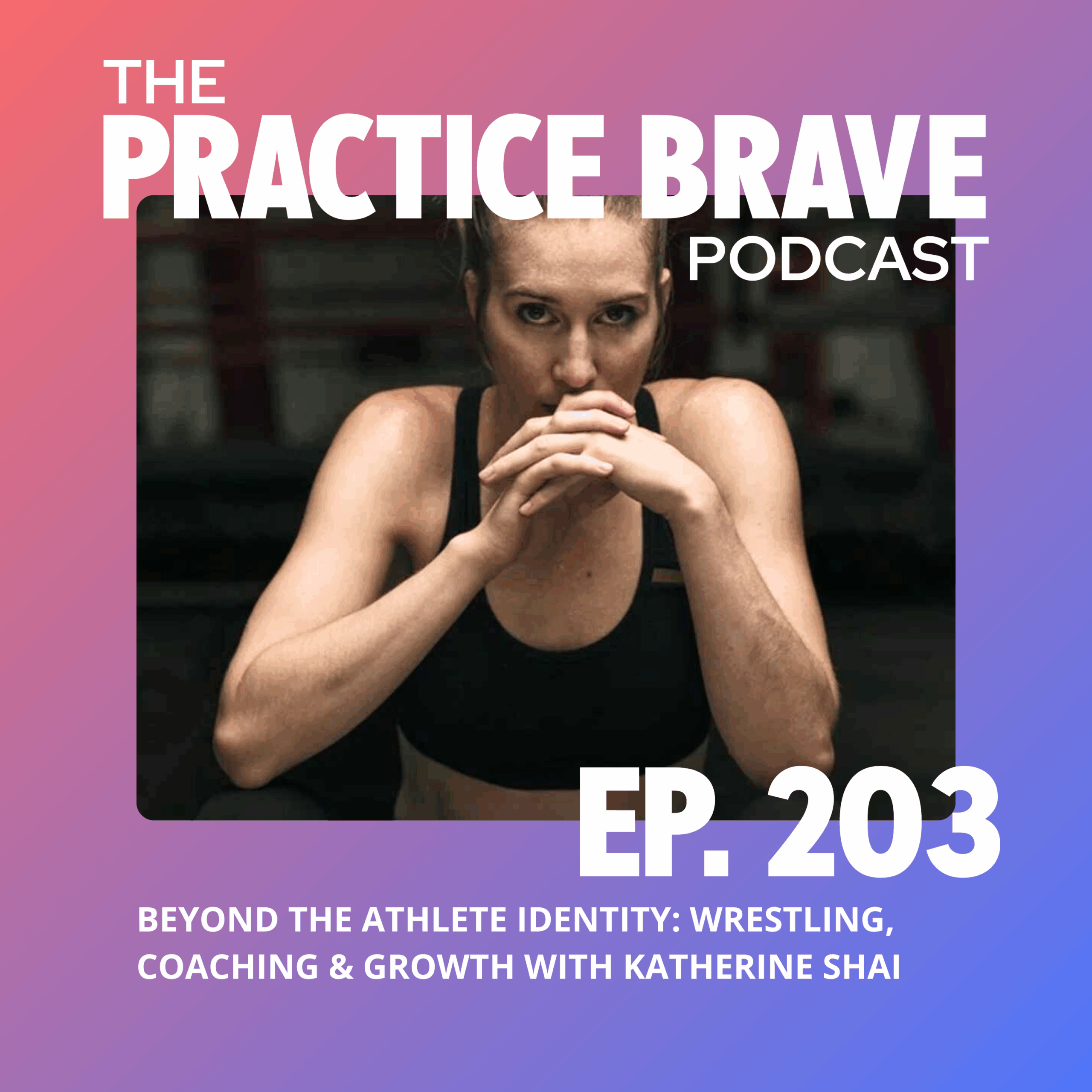
In this episode, I sit down with Katherine Shai — a 7x Team USA National Team wrestler, former University World Champion, two-time Olympic alternate, and founder of the wrestling education platform LuchaFit. Katherine has transitioned from elite athlete to mindset and technical coach, and brings such a powerful perspective on how women in sport evolve over time.
We talk about what it truly means to balance athletic identity with motherhood, and how mental performance support is just as critical as physical training. Katherine shares her journey through high-level wrestling, coaching, and entrepreneurship, and we dive into how adaptability, joy, and mindset impact both sport and life. We also discuss changing the culture around weight in combat sports, building community for female athletes, and empowering the next generation to thrive beyond just performance. This is such a grounded and inspiring conversation about redefining what strength and success look like as women in athletics.
Connect with Katherine:
IG: @katherineshai
Website: https://www.luchafit.com/
Learn more about the Practice Brave Fitness Program: http://briannabattles.com/practicebrave
Need workouts for your pregnancy or postpartum? Check out my programs (now with app access!):
The Pregnant Athlete Training Program: https://go.pregnancyandpostpartumathleticism.com/pregnancy
The 8-Week Postpartum Athlete Training Program: https://go.briannabattles.com/8-week-postpartum-athlete-training-program
EXPAND FOR EPISODE TRANSCRIPT
AUTO-GENERATED TRANSCRIPT
Brianna Battles 00:01
Welcome to the practice brave podcast. I am the host Brianna battles, founder of pregnancy and postpartum athleticism, and CEO of everyday battles. I’m a career strength and conditioning coach, entrepreneur, mom of two wild little boys and a lifelong athlete. I believe that athleticism does not end when motherhood begins, and this podcast is dedicated to coaching you by providing meaningful conversations, insights and interview topics related to fitness, mindset, parenting and of course, all the nuances of pregnancy and postpartum, from expert interviews to engaging conversations and reflections. This podcast is your trustworthy, relatable resource for learning how to practice brave through every season in your life. Hey everyone, welcome back to the practice brave Podcast. Today, I’m here with Katherine shy, and I’m really excited to talk with her all about honestly, like being an athlete, a mother the culture of women’s sport. She has like, a wrestling background, and she does a lot to support mental health in female athletes and their overall process. I’ve loved following your content chat, Catherine, and I’d love for you to give us some background. Thanks so much for
Katherine Shai 01:19
having me on. I appreciate it, and I’m excited because we have so many overlapping things that I hope we get into that’ll be really it’ll be really cool for your audience to kind of hear how our worlds collide a bit Absolutely. So I wrestled for team USA. I was on the national team for about a decade. Really, was competing in wrestling as as a youth, as a young kiddo, and grew up in a wrestling family, so it’s kind of no surprise that I’ve stayed around the sport. I retired in 2021 after the Olympic trials that was interspersed with with having children as well. So that’s a huge part about my about my journey and my own growth as well. And you know, when I I took a pause in my competition years to start having a family, and that’s when I started luchafit.com and I started documenting what my journey had been like so far. And I wanted to have a way that gave back to young female athletes, girls within wrestling, so they can hear the stories about being a Team USA wrestler. So it kind of started like that, and now it’s a full blown business, which is really, really, it’s becoming that dream come true, really. And so I focus a lot, you know, a lot of evolved from my own coaching, one on one with athletes. And then people started asking me for the mental performance side. It’s a side that I’m passionate about, because I had my own struggles, and then I ended up finding amazing mentors who shifted my worldview. And that’s what I want to do. I want to help other girls and athletes, because I have worked with a lot of boys as well, and I want to help those athletes shift their worldview about how they view themselves as competitors, as athletes, and that intensity we put on ourselves, that’s why we’re getting so good. That’s why we make huge leaps and bounds in our careers. Right at the same time, it’s, it can be, what holds
Brianna Battles 03:12
us back, right? Absolutely. And there’s so much here, like again, so many parallels. I talk so much about athlete brain, and I think that’s what really resonated with me about what you share and what you’re teaching. Because I feel like for so many of us, we are not forced to sort of navigate our own athlete brain, and how incredible, like, it is a gift, and also it can create a lot of struggle in our world in ways that extend so far beyond performance, like where we have to leverage it. And so I teach a lot about, like, leveraging athlete brain to work for you, not against you. And so many of us get humbled by those experiences. You know, definitely in motherhood, but it can be so self sabotaging when you’re performing. And so having those tools at a young age is just so important. And I love that you’re you’re teaching that side of it. I think so many different sport coaches focus on the tactics of the sport and of the competition by bringing in like that, sports psychology, mindset, mental health, sports performance side is just so amazing. I love that you’re doing that. Yeah.
Katherine Shai 04:14
And I think what’s really interesting is we have to compartmentalize as athletes, and then we get really good at doing that, and then we don’t realize the crossovers that are actually happening into our real life. So my whole focus is is a holistic approach to the athlete. So every everything that we’re dealing with, with the way that we interpret ourselves as combat athletes, as wrestlers, whatever sport really, I do think it crosses over everywhere, but the way that we handle ourselves in that sport is the way we’re going to handle ourselves outside of the sport. And if we compartmentalize it so much, and we’re like, this is the way I am as an athlete, and I won’t be like that later, or it’s okay that I don’t deal with this well now, because. Later, that’s not me. Like, I’ll be somebody else. The thing is, this is, this is who you are. This is exactly who you are. And so we need to have the tools now, and we need to get good at the things that we you know, kind of like, how’s our brain in? Get good at those areas, and get good at managing yourself in the sport in a high intensity environment, so that when you leave, and you know it feels like when you leave combat sport, that it’s going to be like, Oh, won’t be as stressful, but like, you will have other things, yeah. And how you deal with everything is how you deal with everything. So you need to me, it’s life skills, yes. And when we’re struggling and, like, quote, failing within our combat sport arena, it’s gonna reflect in life. Yeah, it’s so transferable.
Brianna Battles 05:47
And I don’t think we, I don’t think we realize that when we’re in our, like, athlete era, that everything we’re learning there, those life skills, for better and worse, are truly making who we’re becoming as humans, and why I talk about it so much in my work is because I get all of these athlete moms, but all of our coping mechanisms and processes and ways of like managing changes to our body, changes in our routine, and all like wanting to have more control, and then just like managing the mental and emotional and physical stresses that motherhood brings up can be so hard when you’re used to having control and process and just like more of like a set routine. It’s just it. It is all so transferable.
Katherine Shai 06:33
Yeah, it starts to kind of work against us. Yeah, yeah, that’s
Katherine Shai 06:39
that’s so true, right? We’re this idea of control, I think is actually a really important theme within combat sport and maybe with women
Brianna Battles 06:46
too, absolutely,
Katherine Shai 06:49
obviously across the board, I think, you know, it’s personalities, but we get really good at like you’re saying controlling, like our training and our environment and all these things, and then it equals this. And then we forget. Like, as children, we were taught about, like, growth mindset and like, how to be flexible. A lot of what I talk about with my athletes in mental performance is being flexible. Like, sure we made a plan, sure you made a plan for you know, as soon as you had a baby, you’re gonna come back or do A, B, C or D, but the timeline has shifted, something has changed. And if we’re dwelling on that like we’re not, we’re now moving our eyes away from the most important thing, which is you’ve got to put your head down and do the work so that you can actually arrive. And the idea of, but I’m an athlete, and I, when I control things, results happen gets in the way, ironically enough, and, and it’s, it’s all easier said than done, but that’s why, oh yeah, you need coaches and mentors around you to have a third party perspective. I mean, otherwise, you better be doing a lot of
Brianna Battles 07:50
journaling, yeah, and even just like, I think like, naming it and acknowledging like, this is a big part of, like, your life as an athlete and what you learned at a young age and how it’s how it sort of stays with you and how we have to, like, evolve our way of thinking, evolve our identity over time, because we’re going to be change will be forced on us by choices and circumstances like life circumstances, whether it’s just retiring from the sport, retiring from being an athlete, or just entering, like, a new season of what being an athlete looks like for you. And I mean, I think that’s that there’s just so much to that,
Katherine Shai 08:24
yeah, and entering into what life looks like as a new version of an athlete, especially with what motherhood can be really challenging, this is the first time, and the longest time I have I’ve not been an athlete, and figuring out when to lift when I want to is really, really challenging, even though it is fully high control. I work from home. I’ve got a baby at home, but like those things just like, Come out quickly, take over, really fast, but it is hard, like, just recognizing that it’s that it’s gonna be hard, it’s gonna have to just look different. I miss my athlete body. Like, I don’t want to be my like, you know, leaned out version, necessarily. I don’t need that. But I miss, like, the biggest thing I miss is, like, the strength, yeah, and I think that’s what a lot of women can relate to when they are moving past their competitive years. Like, I miss just being, like, having strength, or just being able to do things really quickly and easily, but that can still be the goal, right? You have to get the active
Brianna Battles 09:28
version right. Absolutely no, I love that. Well, I want to, like, rewind quite a bit, and because you were of the wrestling era where there were not as many girls in wrestling as what we see now. So I want you to talk to me about that. I know you said you come from a wrestling family, but what was it like being a young woman and girl in wrestling back then?
Katherine Shai 09:52
I think this is a story a lot of girls can still relate to, because we have so many pockets, you know. Yeah, all. Combat, right? I love that your audience is going to be a mixed variety of combat. So this always applies, but there’s so many girls who still are like in pockets of areas that they’re just the only girl on their team. So I think I was really fortunate growing up in the environment that I grew up in. My dad basically switched from coaching the men to coaching club women and the 19 late 1980s and in that process, recognized that there was just no opportunities for the women to hit the next stage. There was no world team trials to send a team to a World Championships that was happening. So he helped put that on. So despite the fact that I absolutely was in rooms as the only girl by myself. My sister also wrestled, but we were three years apart, like we we were in different rooms at times, often. So I do think that it gave me the foundation of being able to walk into anywhere that might be a little uncomfortable, and just like sitting with that and moving forward anyways, yeah, that was really, really building for me, because it helped me not have, like, let go of the shame, yeah, of being the only girl, because it has come up again. It has come up many more times in my career. When I started training again, I needed a place to train up here in Denver. Wasn’t at the Olympic Training Center. I had to walk into a college room of all men and be like, I could be here. I am fine. I’m fine. Don’t panic like I’m the only woman in this room right now, and I’m an adult woman, and they’re these college boys. So I think it’s really, really character building. But yeah, it was, it was challenging when you when you wanted to see the growth in the sports and more girls. My family was very proactive in getting girls divisions in tournaments. So sometimes we would enter the tournament and have like, one match. So I would say I was living in between these worlds of, like, wrestling the boys a lot, and being in that environment, and then also pushing girls wrestling and saying, like, when, when it’s there, we’re gonna do it. So I did not grow up in the world where it was the most necessary thing for me to get the best Top competition right. That makes sense. So a lot of youth this is and this is where my like perspective diverges from a lot of people and a lot of wrestling parents and wrestling coaches who are like, the girls have to wrestle the boys. And maybe I’m veering off a little, but for my own story. But you know, the girls have to wrestle the boys because the best competition, they’re the best, like, well, and they’re like, Well, maybe, you know, the finals match for the girls is the only good match, or whatever it is, and, and I think this is, like, a huge mistake, because it didn’t just because it didn’t constantly obsess over looking for the best competition. When I was a youth wrestler, it didn’t negate, or, like, hold me back from becoming a national team athlete, wrestling around the world, becoming a university world champion. Like none of those things prevented my growth. Yeah. But what was helpful was, like, I had a lot of respect for my female opponents, and I found great competition, and we just like stuck the path. We stuck the path, and we worked hard to find opportunities for girls to Russell. So if we keep diverging, we keep diverting our eyes elsewhere, I think that causes problems. But so there was, yeah, there was, I would say that there was constant battle, and there still is around us saying, like we’re meant to be here, and our little girls team in high school is just as important as the giant boys team, and we have just as much competitive abilities. There was always that point of contention, and that’s where now I don’t make a distinction between boys and girls. You know, at first I was really neutral about my language on lutrofit.com it’s an education platform, and I wanted everyone to benefit. And I absolutely still wrote and talked to girls, but I knew that there were, like, boys who could benefit from this too, because now we’re coming to this level where, well, we just have like, different versions of wrestlers, right, different levels of of capabilities. And I’m just trying to help raise the capabilities of these athletes and see them, help them see themselves as professionals, and when they step on, you know, enter the room and they step on the mat, this is another opportunity to see yourself as a professional, because it’s going to bring lend to your life, yeah, and, and so I’m working now to get rid of, I don’t want to just say, like, the language, but just kind of, like, the feeling that I grew up with, where it was like, Oh, I’m meant to be here like I am a competitor, you know? And the boys being like whatever, and almost like their opinion really mattered so much.
Katherine Shai 14:49
That’s what I want to do, like across the board, and be like girls. You don’t even have to think about that, right? Think about you as a as an athlete and a competitor. Don’t compare yourself to the boys, right? Just because some of the. Have been here longer, or got a few more opportunities, or got to wrestle more when they’re in youth, they were youth wrestlers. That doesn’t matter, right?
Brianna Battles 15:06
Just leaning into, like, the capability factor, yes, yeah, no, I love that. And I think like having that perspective and those like, real life, lived experiences, and then working with so many different athletes, it does help us, like, clarify what we say, how we say it like, what angles we lean into as coaches, like with teaching, because it’s like, no, this is what I’ve seen. Like, this is the growth of the sport. This is the trajectory. This is what people struggle with, and this is why, like being able to really lean into the capability, versus like, yeah, rah, rah, you belong here. You can do it like, essentially, girls are wrestling, they already know that, you know, like they know that they should be there, you know. And I don’t know, I started, I love what you said about when you’re the only woman, or you’re one of the few women on the mats, whether it’s wrestling or Jiu Jitsu or whatever like that. Just it does instill a certain level of like confidence that is so transferable into so many other things in life. And while it can be intimidating, like you do belong there. I know that there are barriers to getting into combat sports because you’re oftentimes not surrounded by a lot of people exactly like you, but there’s just so much that, so much value that comes from those experiences. I played what my background is, water polo. And there wasn’t a girls water polo team when I was a freshman in high school. So I played on the boys team. And then shortly after that, they did have a girls team, but that like, one year of just being, you know, 14, 1314, year old girl on a boys team. I swear it just almost like, like, hinted at what the rest of my life would look like, working in male dominated careers, doing Jiu Jitsu. Like, I just never, we never really knew that, but it does give you a certain level of confidence, of like, Yeah, I know that I belong here.
Katherine Shai 16:55
Yeah. And another place that that has shown up was, is in jiu jitsu and entering into a room where I’m like, I don’t know if any women will show up today. And then the flip side of that of how sometimes a lot of women, I’ve encountered, a lot of women within Jiu Jitsu, girls in wrestling too, absolutely who now it becomes their source of pride. They’re like, No, I am the only woman. Like, now that’s my thing. I’m the only woman in the room. I don’t want to go train with other women, etc, etc. Women within combat sport, women within Jiu Jitsu, like, have to band together almost every time. I’ve put on a few like wrestling, for combat events, for adult women. And I would get asked all the time to do them. I would love to do more. We’ll see. Yeah, but because I also love getting on the mat, and jiu jitsu is a way for me to wrestle adult, you know, wrestle with and do combat. Well, I can tell you, as
Brianna Battles 17:51
jujitsu girls desperately need some wrestling help, so you’re very needed, my friend, yeah,
Katherine Shai 17:56
and like, it’s not, it’s not anyone’s fault. It was just like most of those women who are joining in combat were like, I didn’t really have the opportunity to like wrestle, or didn’t think about a bit at the time. So, so skipping those skills, that’s all it is. That’s all it is. Just like you like, literally,
Brianna Battles 18:15
just got to get to the mat. And you’re oftentimes not really taught how to get to the mat when, yeah, unless people are just immediately pulling yard, yeah, yeah. It’s like, so there’s such a gap there. And I definitely think we need to keep bridging the wrestling world with the jiu jitsu world, but especially learning from women in wrestling. It’s so important. Like, when I was coaching Carla, it was like, she’s so tiny, right? But I’m like, holy shit. Like, you can, she can send it, you know. And I was like, I am, she’s gonna just own me. It’s fine. But, like, it was, it’s just so impressive. Like, I just, I love the wrestling grit. I love the wrestling, like, how dynamic it is, but how strong it is. It’s just such a great life skill and like, athlete. It’s just so athletic. It’s so beautifully athletic.
Katherine Shai 19:05
Yeah, yeah, yeah. And that’s, that’s our really cool connection. There is, is Carla, my college teammate, and we were running in the same circles in high school. So, I mean, she’s from Southern California, I’m from Northern California, yeah. And I, we never end up wrestling in high school, but we were like, I wrestled her teammate, Jazzy, Jazzy, green fit. And so our team? Were they teammates? Were they different schools, different schools, but they traveled together a lot anyways, yeah, but it was just, it’s a long, rich history within California girls wrestling. And then those of us who went to Menlo College, so Carla and I went to Menlo College, Ashley Evan Smith, who also fought in the USC Menlo College, most of our alumni are still involved in wrestling in some way. Many in combat are like Jiu Jitsu. But. Most of our alumni are still involved in wrestling. It’s really, really incredible, pre powerhouse group of women that came out of that school. Yeah, and I
Brianna Battles 20:09
think that’s incredible again, for that era it was, it just wasn’t as common as what we’re seeing now with the involvement of girls and women in combat sports. So I think it’s just, it’s, Oh, I love talking to, you know, women around my age, because for me, I mean, rust was never on the radar. And again, I was in my I was in the pool for so it was very different world for me. Yeah, Irish is very chlorinated, but, yeah, no. It’s just, I love, I love talking about, almost like, the history of this, because what we’re seeing now with this influx of more women in combat sports is still recent history in the grand scheme of women’s sports, and it’s really cool to talk to those of you who, like really have helped pave the way for seeing so many more girls involved in wrestling, specifically, but just in combat sports in general, that it’s it’s being encouraged, that it’s being popular. There’s more women’s teams and girls teams that are starting up. I just think it’s awesome. Yeah, it’s exciting.
Katherine Shai 21:05
It really is exciting.
Brianna Battles 21:06
Yeah. So let’s talk about motherhood, because you were still involved in competing when you decided to start a family. So give me a little bit of background on that.
Katherine Shai 21:17
Yeah, my husband, I married in 2014 and it was, it’s, that’s the thick in of the cycle, so going into the 2016 Olympic trials, so we’re in the middle of that cycle. And so family was really like an obvious weight for us. And I was, you know, strong in my competitive years. So I, after 2016 Olympic trials, I ended up third, so as an alternate, and lost to Helen marulous and semis, who became who’s our eventual Olympic champion. And that was a pretty jarring tournament, you know, to be so close and 2012 I was also third, also lost to our Olympian. And it’s just that, like, you’re right there, you know? Yeah, right. It’s, it was essentially one one match, you know, and I was one one match away from him being right up there or being that representative. And if you don’t know, only one per weight class goes. So it’s a very narrow team. We only had four spots up until 2016 and then we switched to six. So it’s, that’s it, six people total. And so I wasn’t really sure what I wanted to do at that point. You know, we were like, do we? Do I move on from competition entirely? That was kind of like where we were going, because I let we left Colorado Springs Olympic Training Center life. That’s where our national team trains. And for so many women, if you’re not there, like you, you kind of are, like piecing together your training. So a lot of it’s like, well, where do you go? What do you do? So we left, we moved up to Denver for my husband’s work. And then we were like, Okay, well, family, let’s start that. Like, sure. Why not? I also had a shoulder surgery right before I got pregnant to heal, get some healing underway. Yeah, years and years and years of issues with my shoulder. So we kind of, like, moved on, and we’re like, let’s go into family life. But then,
Brianna Battles 23:25
and were you just like, Was it like that loss that you were just like, okay, like, maybe I’m just done, like, I’m that, like, my career is now over, and like, sitting in, in that feeling,
Katherine Shai 23:35
yeah, because for the first time that fall, I made the decision not to participate in our world team trials because we have a non Olympic weight class. Like I said, there’s six, only six that go, and we have 10 weight classes otherwise. So they contest the other four weight classes at a world championships at the end of the year after the Olympics. And I decided not to participate in trying to make that team. That was like the first time, besides being injured, which I’ve had many surgeries and injuries throughout my career, that has derailed things, and that was the first time that I, like, did something for me in so many ways, where I made a brave decision to be like, I’m not in a good mental state, to try and go make a world team. Because I had, I had attempted to do that in other phases of my life, like after I had lost my father, and people were like, it’s you Catherine, you’re up. And I was like, I just lost my father a few months ago. Like, I don’t even know if I can put myself together. And so yeah, it was a big decision for me to say no, because I always said yes to wrestling. Because I was like, as long as I just stay in there. I’m going to finally make it, you know, I’m going to finally get there. And honestly, so much of my well being was based off of whether or not I made those teams. And this is a narrow, narrow, tight rope that I’m having to walk in order to be like, I’m worth it, I’m not. I’m worth it, I’m not. You. You know, I’m a good wrestler only if I make those teams, especially for the women, especially for the women. I’m sure many men feel the same way, like, I never want to negate that, but we can’t make a career off of being the top. You can only make a career out of being the number one. So that’s what is really, really challenging.
Brianna Battles 25:19
Yeah, it’s like that all or nothing, basically, is reinforced
Katherine Shai 25:23
or nothing, yes, yes. And I think that that’s evolving, right? Like, we’re not a team sport, so it’s not like, oh, a lot of great players within a team can be acknowledged. It is evolving. It is changing. And so made that choice, surgery, family, and I would say that my the beginnings of lucha fit was my healing. Yeah, it was me coming back to myself and thinking about, how would I do all these years of training differently. It was processing. It was grieving. Because going to that, going through a four year cycle not making an Olympic team, is there’s going to be grieving, yeah? Like, it’s a loss. And many Olympians experience a loss when they get there and they don’t place, or many experience it when they get there and they win, and then they’re like, my life is over. Now I have nothing, because I got everything I ever wanted, and now I’m empty.
Brianna Battles 26:17
Yeah? And now what? Yeah.
Katherine Shai 26:18
And now what? So that’s that’s spurred so much growth and so many things, so many thoughts about, how would I train differently? How would I have treated myself differently during that process? And so when I came back to sport, because the itch was still there, and I was like, I want to feel that strong version of me. I felt like I competed the best I’d ever competed Olympic trials. And I’m just like, I just walk away. And it was a really long, hard battle back, because I wasn’t, you know, even Carla reached out and she was like, What did you do to like, stay, you know, sharp or like, on it? I was like, nothing, Carla, because I didn’t think I’d come back.
Brianna Battles 26:58
Maybe that’s the hack, you know, is just like that grace period of like, not being, you know, like, get, like, a hard reset. What I tell a lot of, like my mom, athletes, is like, it is the ultimate deload like and almost like, let let it be like, let your body be different, let your brain, let your routine be different. Like a hard reset, ultimately, it’s like a is a gift. As an athlete who’s been grinding the same ish ways for a decade, at least,
Katherine Shai 27:29
I Yeah, honestly, it was a gift, because that’s all I knew. All I knew was to was to grind. And I didn’t even like I didn’t really I’ve had my third baby now, and I have never really enjoyed working out while I’m pregnant. I’m just kind of like, I do a ton of walking, and my level of like, health and maintaining is maybe, like, higher than most people. But yeah, I don’t really like, I don’t really like, enjoy working out. I am not like a CrossFit pregnant lady looking like that visual. I’m sure we can all see that. Yeah. I mean, you’re like, Yeah, hard. No, I am, like, a hard reset person, yeah. And I think that that’s if you haven’t tried that out, where you’ve just like, walked away and stepped away, but then you have to maintain your health. Like, don’t be crazy. But yeah, this time for my third I did a little bit more. I was like, Okay, I feel good. I’m gonna do a little bit of lifting. And I did things here and there. Try to be consistent, yeah? But it’s like, oh, and stretching. I think stretching has always been a part of it. Like, yoga comes in a little bit more, but that’s a very different mindset than, like, I’m maintaining things so I can, like, get ready to go. So it was, it was my son, who’s my first born, his first birthday. When I agreed to, like, I found a training location with, like, an MMA gym called DCO MMA in Denver. So they came to his first birthday. I remember as being it was very marked, a very important parks. I was like, okay, like, this is happening, training at a place, and I have a training partner, and I have all these things. It’s coming together. Because before that, I would just, like, run to a wrestling practice. So it was a year before I was like, yeah, like, I would, you know, I’m still involved in wrestling, but I wasn’t training hard yet. And that’s when it was like I’d had these hard conversations my husband, I think I want to return to wrestling all these things. Yeah, so it wasn’t a it was a year to when I started really hard training again, full time. And then I think it took six months till I could feel like I was actually training. And then I and then I and then I started competing. And my first competition was, was January of 2019, it was really rough. And I was like, Oh my gosh, I gotta, I have to qualify for, you know, our world team trials in that year. With the first time I compete, you’d be able to compete in final x, which is our, like, if. Basically the last the final two to compete it to wrestle off for the World Team spot. So that was a big goal. And I was like, I gotta get I only a few months, yeah, but I was able to do that. And I so I came back after not competing for two and a half years, and made another national team. I was second at World Team trials, and off we went to crazy here, going into covid and but it really, it really formed so much of the way I coach now, yeah, I’m so grateful for coming back and for experiencing wrestling on my terms and for doing it my way after learning these amazing skills and how to be a consistent athlete at like, having Olympic Training Center life and then leaving and being like, oh, I can do this myself, right? Know what to do, and that’s what I love teaching now, like, you know what to do, I’m going to hand you some tools. Be confident in them, move forward and treat yourself like a professional, like the one that you can become, yeah, and
Brianna Battles 31:03
that, like, it’s not over, like, I think you represent that so beautifully. Like, even separate from being a mom, is like, if you like, just taking that time off to, like, do what your body and your brain needed, to get healthier and to get like and just like, process and heal and evolve. Like it’s okay to take that time away, because it doesn’t mean that it’s over or that you’re not going to be capable again, like we’re gonna all have seasons of different and some a reframe. I try to use a lot of my athletes like different, which oftentimes comes from motherhood, ultimately serves as a really good opportunity. I mean, you just don’t, you can’t see it yet, and you don’t know how what that opportunity is going to look like. So true, but it’s there. It is there. Like you will see it, you know, once you get to like, the other side, essentially, you’ll see like, Oh, it wasn’t for nothing. That was actually, like, a really powerful season, even if it felt so depressing, even if I felt so unlike myself, even if I was felt so derailed or that it was over and hopeless, like it’s not like you are still, like you can still be an athlete, and you can still reach a different level and new level of potential, even after those sort of away seasons or different seasons.
Katherine Shai 32:19
I’m glad you brought up evolve, yeah, that’s the word, yeah, right. Because when you give yourself an opportunity to step away from what you’re obsessed with doing, there’s, like, nothing that says that’s the right answer, like that was it? It’s just the it’s just the paths that you have grooved in. You know, it’s the wheelbarrow going over the same rut in the ground over and over. So who’s to tell it? That’s like the answer for you. So the evolution is what’s powerful. And I say this a lot like that. My me stepping away from sport and like, completely like, I didn’t even think, you know, I did start writing, I started doing all those things, but I didn’t think that I would be as involved in within wrestling as I am now. I thought, okay, maybe I’ll move on do something else. Like I was starting to job interview for like, random places and and seeing like, I don’t know if this is right for me, but the evolution was the most powerful thing. It helped me step away completely and then step back into something like, Oh, I’m gonna enter a new era of myself. I’m gonna train completely different. I’m gonna view it completely different. And I was like, I was so I had, let’s see the right way to say this. I guess I was truly, like, stuck up about the way that I had trained, yeah, very stuck up. I was like, Well, I come from the Olympic Training Center, and now I’m coming to these, like, grungy, rough on rough around the edges, MMA gyms. And I’m like, No, this is, like, the proper training. And they’re like, No, do it like this? Just like, yeah, you’re done this way. And I’m like, it helped me so much,
Brianna Battles 34:01
yeah, so much. Almost like introducing, like, almost a scrappier version of your game.
Katherine Shai 34:07
Absolutely, absolutely, because I wanted everything to be so controlled. I’m like, Well, when I do this, this happens. And then it just was like, figure out how to be scrappy. I got scrappy with my training, with my mindset, with the way that I view the world, like it changed everything. So hopefully, some of your clients, I’m sure they are, are paying attention, but like, take that time off, step away completely, so that a new version of yourself can evolve, because it’ll be better than you ever imagined, and it’s never I think it’s scary, because it feels like, what if, what if I don’t change for the right thing or the right reasons or whatever you will. Like, I’m still I’m still me, but I feel completely different, you know, and I look back,
Brianna Battles 34:48
I’m like, I’m a better athlete now in my late 30s than I was in my mid 20s. And, like, ultimately, I think it’s because I’m just a healthier one, like with my. Is healthier the way I see the world is healthier the way I see my body is healthier, but that has translated directly over into performance. I’m doing things now where I don’t feel like there’s this steep curve compared to like, what like I used to be doing. Like, no, like, I literally am just better with age as an athlete, but because you just get holistically better in your in your belief systems and your approach and how you how the rest of your life supports how you’re how you’re approaching it. You know, you don’t even realize how toxic you can be and how rigid you are until you’re like, oh shit. Like, that was, that was not okay, yeah.
Katherine Shai 35:35
And some of it’s hard to describe, like, I can see it in the way that you’re speaking about it, and I know exactly what you’re talking about. Oh yeah. It can be hard to describe unless you go through it, similar to childbirth. But the big one for me was injuries. I I already kind of mentioned how I had a lot of injuries. I had three separate injuries. Some of it was, like, freak accident, but either way, plus tons of little things in between, right when I came back, I still had some injuries. It was not like I could train so different. I didn’t need this, like, obsessive, long warm up to be like, Oh, I prevent all these injuries. Like I just moved I learned how to move differently, and I prevented injuries. So instead of grinding like wrestlers out there, you know what I’m talking about, like, who want to grind, grind, grind, I figure out how I’m like, I’m in my 30s, I cannot grind the same, and I’m not going to and maybe what assured me earlier in my career, if I learned how to not just grind everything, because that’s what I was, I was just like a gritty, grinding wrestler, right? I learned how to move like an athlete even better, and this is how I train my athletes now, like, let’s move like an athlete. Let’s to adjust and move and and, you know, move around rocks like water instead of slamming into them, right? And maybe your your career will last a little longer, and you won’t be dealing with so many prolonged injuries, like I die, you know?
Brianna Battles 37:04
And like, coming from the strength conditioning realm into jiu jitsu five a little over five years ago, I started to see, like, the combat sports culture around like, what justifies good training is, like, more is better, and go harder and it needs to be intense. And if you want to get better at Jiu Jitsu, do more Jiu Jitsu. And my strength conditioning brain is like, Nah, that’s not how any that’s not how sports performance works. Like, more is not better. Yes, there’s a time and place to dial up intensity, to dial up volume, for sure. But like, there’s no off seasons in Jiu Jitsu. There’s no D loads built in. And for many like combat sports, it’s like, you train, you have a competition, and you’re back in the gym and you’re training for the next competition. And so it’s really hard to for, I think, a lot of combat sports athletes, to have that self regulation. And then we do see the burnout, we do see injury. We do see just like the mental struggles with Jiu Jitsu, and I certainly even knowing better, I went through all of it. Even knowing better, I was like, I’m going to train all the time. I’m going to train twice a day, and I’m going to sign up for all these competitions, and I’m going to blah, blah, blah. I’m exempt. And it’s just like, well, I didn’t get physically injured. I had to step away early in at purple belt because I was like, I need I need a break. I am not healthy, I’m not happy, I am not liking this sport. I’m dreading going to training and this I’m like, too old for this shit. Like I’m too old to be feeling this way about a sport that I do for fun, like I’m doing this for fun, literally opting into this. This is not my job. But I see that story rinse and repeat in the combat sports world, and then you involve weight cutting and like, just like the extremes that come with that, mentally, physiologically, emotionally, like, it’s just a rough world, I think, for knowing how to navigate that sport when it’s so different than I think traditional sports that people grow up in that’s
Katherine Shai 39:03
interesting for you to kind of like you’ve come from that background,
Brianna Battles 39:07
yeah, but even knowing better
Katherine Shai 39:08
version, yeah, I mean
Brianna Battles 39:11
that, but it’s the culture. It’s the culture that you’re surrounded by, and almost like wanting to do what you know is like expected of that culture, and then being athlete brain, I’m like, I can grind. I can do that. I know how to do that. And like, you just get into that cycle until I had to, like, snap myself out of it. I was like, I know this is not how I’m feeling. Is not healthy, especially for like, I got other shit going on my life. Got two kids, I got businesses, I got stuff going on. Why am I making this like, my whole personality to a point where it’s like, it’s ruining a sport that, like, I have found a lot of joy in, because I started jiu jitsu when my youngest had started preschool, and I was like, I can do something for these couple hours a day when he’s in preschool that like, is so different. I’m not so. Supposed to be good at it, because coming from, like, lifting and water polo jiu jitsu was so weird. Like, it was such a random sport. But I knew I loved the idea of learning a new skill set that was physical that I wasn’t supposed to be good at. And, like, I liked that idea where it where there wasn’t pressure and expectation, and yet I somehow, of course, created pressure and expectation, because that’s like, what
Katherine Shai 40:23
we do, yes, it mounts, it builds, and that’s the how we do everything.
Brianna Battles 40:29
Yes, oh, yeah, no, I’m like, this, is this? This all checks out. You know, no one was surprised.
Katherine Shai 40:35
Yes, that’s where it comes back to what you said, like, building the skills early, yeah, and learning how to have, you know, we’re going to fall in and out of good relationship with, with sport and with even with ourselves, like with how we deal with things. Yeah. So that’s normal. That’s a normal cycle, and those cycles are super important. It’s, it’s kind of like when you get sick and when you get healthy, those cycles are really important so that you can learn something about yourself. You can, like, evolve, and you can see yourself falling into the mental ruts or the physical ruts, and maybe the next time, you can snap yourself out of it a little quicker. So I think that those things are really important part of the process. I don’t think everybody needs to, like, jump into, like a mental performance coach quickly. And I have learned because I keep my client group very small and very selective, not because I think I’m like the best in the world or anything. I think I’m really good at what I do, but I want to stay focused on the small group that I work with, and I have come to learn as I expanded my client list, not everybody needs a one on one coach. Truly, some people are not ready for those big, massive steps that it takes. The people that I work with are the ones that are like, I’m really sick of the way that I’ve been treating myself and the way that I treat sport, and I want better, like I want to stay in the sport longer, and if I don’t make a change, I’m about to be out of here, or my career will probably not excel as it could. Yeah, 1,000% yes, they’re ready to take those steps. And then I would say, kind of like the next layer of people, they just need little bites of information. So that’s why I love having my articles that are free, offering a lot of con free content there, because that’s basically like, where I started was just like writing about the experiences, and then I’m creating a lot of guide type materials. I have workshops so like, bigger group sessions. I have a course that’s on video analysis, so you can start learning how to study yourself so you’re not just like hammering yourself and beating yourself up about your mistakes when you watch your own matches. I hated watching video. Hated I would cry through everything, everything, and I was like, and then when covid happened, my husband and I became like, video video study experts, but, like, we just dove right into it. I would say now we’re more more experts than we were then, but we developed, like, a whole system out of it that we teach. And so for a lot of people, they just need some of that, like self learning, self exploration time. So that’s the type of resources that I want to build for kind of, like, the vast majority, and then I just kind of have, like, that few that I work with here and there. But, man, I want to just create a ton of opportunities and resources and education guide books that that the majority of people who just want to, like, learn on their own and start, start on this path, yeah,
Brianna Battles 43:36
because, I mean, I think there’s, it’s not, it’s not a common culture, yet in most gym environments, especially for women, the women that are trying to keep up and are trying to like, hold their own, even like it, they don’t want to like, they don’t want to like, be like weaker or needier or be perceived that way. And so I think, like there’s so many common struggles with our relationship with sport at all different points in time and self expectations, expectations you feel from around you, whether it’s coaches or training partners or just the overall environment, like seeking those outside resources to help you develop as an athlete and improve your overall relationship with yourself, with your Training, with your goals, even navigating, like, always tell everybody, like competing in, again, Jiu Jitsu, for me, is so different than competing in literally anything else, like, Oh my God, it is so intense. You’re literally, like, fighting another person. Yeah, and it is different than competing in water polo or triathlon or CrossFit or all these other things where it’s just like, more about you. Now we’re involving another person, and it is, it is a really tough mental sport, especially once you start dabbling and competing, it takes on a whole new yeah, there’s just. They say there’s levels to this. And like, I feel like the moving into competing in any way is like, you just get slapped in the face by the next level. Oh, this isn’t just fun rolling in rounds with my training partners, who I kind of know what they’re going to do anyway.
Katherine Shai 45:18
Yes, yeah, and I seek that, yeah, I ran cross country from like, sixth grade. I ended up doing it in college too. Basically, I went to a tiny college. So we needed a team. We needed somebody to, like, keep the varsity spots. And I think, I think at least by my senior year, I was like, please, I don’t want to compete. Like, this is not I’m I’m literally, like, trying out for Olympic teams in wrestling, like I do not want to run.
Katherine Shai 45:42
Please don’t make me run anymore.
Katherine Shai 45:45
Like I’ve run enough. I think I didn’t have to compete maybe that year. But, and it was minimal, it was minimal, but, yeah, but I definitely can understand and relate to the differences, you know. Like, yeah, it would be like running and then someone, like, jerking my arms and my legs while I was trying to just, like, have a great race, right? Like, that’s kind of what combat sport is. Like, do your thing and stay focused. Oh yeah, someone’s gonna try and derail you the whole time, right?
Brianna Battles 46:12
They’re literally trying to choke you or rip your arm off or pin you to the ground. Yeah, it’s, there’s just it’s so different. Because, I mean, with wrestling, I know, like, competition is just like, that’s a natural part of this board with Jiu Jitsu. Like you can just be truly recreational and go to a couple classes a week, which is how I thought I would start. But again, I can’t make anything casual, so and then I, like, started dabbling in competition. I literally was so like, I will never compete. I was so hell bent on that, because I was like, it’ll bring out all of my toxic and I don’t want to do it. And so my husband, and so my husband was like, Okay. And then he knew, like, he knew, that I would eventually start competing you needed probably, because it’s really, like, forced, that next evolution of, like, I mean, I mean, you know, like, the more you stay in the game yourself, it makes you a better coach, because you’re like, able to reflect and relate more, and you know that game will evolve like, what that looks like will evolve over time. But it’s been, it’s been a really interesting process in this season of life to like, really, I guess, like, evolve who I am as an athlete, while still being having like that coach brain versus athlete. Brain juggle. Okay, well, I don’t really know where that got cut off, because my entire internet dropped off. So thankfully, we’ve been talking this whole time about evolving and being adaptable as athletes, and sometimes you got to do that in business and tech too. So sorry for that weird cut off. But we are going to be wrapping up this episode. You know, I talked so much about athlete brain, Coach brain, the motherhood experience and Catherine. You just like, have such great perspective that I think is so relatable regardless of what athletic history so many of us have, whether we’re still really involved or we’re less involved now. And just like navigating how that mindset translates into whatever season of life we’re in. So I really appreciate you sharing. Yeah, yeah, absolutely.
Katherine Shai 48:09
And, I mean, think you’re spot on there, right? Like this whole theme is, is being adaptable and being really flexible, and like during that having a lot of grace for yourself. You know, I love that we’ve been talking about, like, hard resets, because I think that’s been way more impactful than anything. And I, you know, I have an athlete who, and speaking of you’ve got a baby, a baby here. Baby is back. You know, normal
Brianna Battles 48:36
for this podcast, honestly.
Katherine Shai 48:40
And, yeah, that’s flavor and seeds of life. Like I have an athlete who luckily understands some of those aspects. And I she, she and her family do a lot of rock climbing. We’re in Colorado, so yeah, and hang on Baby. Baby, she needs to be adjusted, too. And and I think it’s important for anyone to who are, who’s listening and thinking about like, how they kind of kind of incorporate it into their world. Is having the outside things, having the things that, like you can compartmentalize. It is very important for an athlete to learn to compartmentalize their life and to to to give themselves the opportunities to turn on for this and then to turn off, yeah, and finding the ways that you can enjoy those different things and give yourself the opportunity to learn from it, by stepping away, by mentally and physically stepping away from sport at times. And actually, you know, I think a lot of times in my career, I often would be like, Oh, this is the only time I’m going to have off, so I better like, relax or enjoy it, or, oh my gosh, like, I’m not going to have a, you know, an Off, off button for the next four year cycle, which is kind of like a thing to think about. Like I’ve my perspective is really different, and my entire premise around sport. Part is like learning how to have joy in the really difficult parts, in the really fun parts, like, how do we just keep seeking the joy of it? Right? And when we put ourselves, you know, talking about culture, when we put ourselves into a position where the culture drives our motivation, like we’re running down, we’re running down a path that’s not sustainable, right? Because then we let, we let the culture dictate the way that we like, enjoy the sport, or the way that we interact with the sport, instead of like, this is what I have. This is what I build. And this is why I bring something really cool to the table, you know, right? And that’s what I want athletes to truly learn, yeah, is how to make it something of their own, how to be professionals and to be intense, and to also have joy in that process, so that they can be a part of it for a long time.
Brianna Battles 50:55
Yeah, and then how did you know when it was your time to, like, officially wrap it? Since you kind of thought you were retiring before, but then you came back after having your baby. How did you know after that process? Like, okay, like, I like, did you have peace with that decision, or was it still, what was that like?
Katherine Shai 51:13
I think that I had peace with the way I came back and approached things and, you know, Olympic trials in 2021 again, was not the result I wanted, and I lost in our mini tournament. So I was essentially third. I didn’t end up wrestling off for the national team spot because, again, I was like, I’m gonna take wrestling off. This is a whole different conversation. But like, wrestling off with the national team spot meant I want to stick around, get paid and keep competing, and that’s not what I wanted to do. So it was like, am I wrestling because of pride? To be able to say, Oh, I made another national team because I would have won that spot. But right? It was more like, I think that I’m ready to move on. Like this is I came back and did what I needed to do, yeah, and my family were ready for more, for more family. So I ended up having my my daughter, my second after that. And it was kind of like, I think I had peace because of my mindset. Yeah, it was still hard. I don’t I didn’t know if I was really done. I went and did some I did my first jiu jitsu competition. I was still, like, seeking some fun competition stuff, but um, it was, it’s always a process. It’s always a slow process. But I definitely had some I was not happy after it was very distraught for a long time. But there was some, there’s some parts of that process that I was at peace with, for sure, and and excited to do this with my life now excited to do to move on and impact other athletes.
Brianna Battles 52:44
Yeah, and your process is such a testament to, like, what you’re doing now as a coach and supporting other girls and women through this process. And I think that’s so beautiful. Like there’s a full circle element there of like, taking your pain and struggle and perspective and turning it into something that is so positive and empowering and will help this next generation navigate so many of the feelings and experiences you had, but there was no voice and person who could sort of like, provide what you needed, what I probably needed, but so many other young athletes need in their sport, whether It’s at a high level or pretty like recreational level. So I’m so appreciative the work you’re doing. Where can people learn more about you?
Katherine Shai 53:27
So find me on social. I’m on Instagram as Catherine shy. I’m on Tiktok as Catherine shy, S, H, A, I, and then Lucha fit. Lucha dot fit is on Instagram. And then just head over to lutrofit.com sign up for the newsletter. Keep staying in touch with all the amazing tools that I’m building for combat athletes. Because I think it goes across the board like I don’t think there’s hardly anything that I do that doesn’t apply, you know, for all sorts of combat athletes and all sorts of athletes, yep, because I’m really starting to ramp up what I’m doing and mental performance programs, support for for parents and I, my the most exciting one that we launched this year was our weight management guy, which any athlete, any athlete who has to make weight, can really utilize trying to change the culture around weight management, especially for females, We have a kind of different set of hormone situation that is affected, and there’s been a lot of pushback from the wrestling community about why and how we value weight cutting as part of mental resilience building that I strongly disagree with. So if you’re someone who has struggled with weight, has struggled with how weight cutting has affected you, then this is a guide that you should really utilize. And a lot of wrestlers used it, prepping for Fargo nationals, for freestyle and Greco this summer, and had a lot of success with it. Or. Love that putting a system in place is critical. And if you’re going to be a professional, which is what I preach, then this is something you have to have in your back pocket.
Brianna Battles 55:09
Yeah, I love it. I mean, I again, that’s like a whole other podcast topic is like, weight cut, weight management, all of that stuff, which you can do. But I love that because I again, that’s been a whole world that’s been opened up to me, even figuring out, like, where do I best sit, where should I compete? What’s a weight class that is appropriate for me in a lot of different ways, whether it’s like factual competition and where I like perform best, or like, where my body naturally sits. Is it that’s also the Wild West, and I know it’s like so prevalent in wrestling, I love that you’re bringing more awareness and education and insight on that that considers like the bigger picture, not just like this is what we’ve always done, kind of insight. So I really appreciate that. Yeah, absolutely, absolutely. All right, well, make sure you’re following Katherine and check out all of her resources, and honestly, send it to anyone in combat sports who needs this kind of insight and support? Because I’m telling you, it is so incredibly needed. I really appreciate the work that you’re bringing to this world. Is the fitness industry to combat sports world. Thank you so amazing. Thank you for sharing your story. Yeah, thank you so much for having me on. I appreciate it. Thank you so much for listening to this episode of the practice brave podcast. If you enjoyed the show, please leave a review and help us spread the work we are doing to improve the overall information and messaging in the fitness industry and beyond. Now, if you are pregnant and you are looking for a trustworthy exercise program to follow, I have you covered. The pregnant athlete training program is a well rounded program for pregnancy with workouts for each week that are appropriate for your changing body. That’s 36 weeks of workouts, three to four workouts each week, and tons of guidance on exercise strategy. We also have an at home version of that program if you are postpartum and you’re looking for an exercise program to follow. The eight week postpartum athlete training program would be a really great way to help bridge the gap between rehab and the fitness you actually want to do. From there, we have the practice brave fitness program, which is an ongoing strength conditioning program where you get new workouts each week and have a lot of guidance for myself and my co coach, Heather Osby, this is the only way that I’m really offering ongoing coaching at this point in time. If you have ever considered becoming a certified pregnancy and postpartum athleticism coach, I would love to have you join us. Pregnancy and postpartum athleticism is a self paced online certification course that will up level your coaching skills and help connect the dots between pelvic health and long term athletic performance, especially during pregnancy and postpartum, become who you needed and become who your online and local community needs by becoming a certified pregnancy and postpartum athleticism coach. Thank you again for listening to the practice brave podcast, I appreciate you, and please help me continue spreading this messaging, this information and this work.
MORE ABOUT THE SHOW:
The Practice Brave podcast brings you the relatable, trustworthy and transparent health & fitness information you’re looking for when it comes to coaching, being coached and transitioning through the variables of motherhood and womanhood.
You will learn from athletes and experts in the women’s health and coaching/performance realm as they share their knowledge and experience on all things Pregnancy & Postpartum Athleticism.
Whether you’re a newly pregnant athlete or postpartum athlete, knowing how to adjust your workouts, mental approach and coaching can be confusing.
Each week we’ll be tackling questions around adjusting your workouts and mindset, diastasis recti, pelvic health, mental health, identity, and beyond. Through compelling interviews and solo shows, Brianna speaks directly to where you’re at because she’s been there too!
Tune in every other week and share the show with your athlete friends!
This post may contain affiliate links, which means we receive a small commission from the seller if you decide to purchase (at no additional cost to you!) We only share products and services we have used, tested, and love ourselves!

