202: The Double-Edged Sword of High Achievement with Ashley Rose Faure
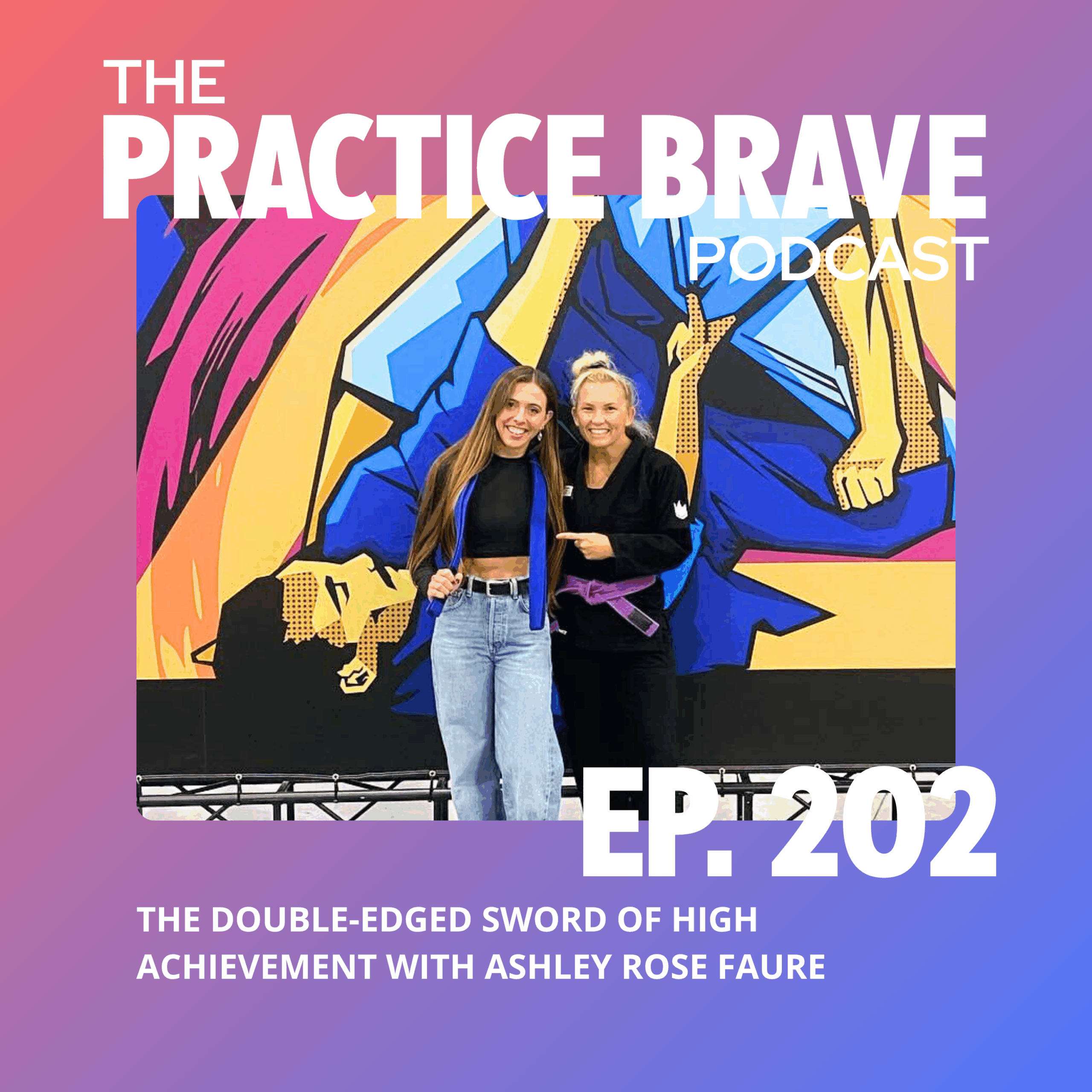
In this episode, I sit down with Ashley Rose Faure, a former Division 1 springboard diver turned endurance athlete, to dive into what it really means to be a high-achieving woman—especially in the context of sports and personal goals. We talk about the mental and emotional demands of maintaining a competitive mindset while juggling careers, families, and everything in between. We share how the pressure of competition affects us emotionally and why self-awareness has been such a crucial part of our journeys. We reflect on the influence of role models and how our experiences can help shape the next generation of athletes.
Ultimately, we emphasize that athleticism isn’t just a phase—it’s something that evolves with us. This conversation is about embracing the fluid nature of sport, supporting each other through it, and redefining what it means to be strong and successful at every stage of life.
Connect with Ashley:
Instagram and Facebook: @ashleyrosecoastal
Join the Practice Brave Fitness Program: briannabattles.com/practicebrave
Are you a pregnant combat athlete? Check out my free resource for BJJ during pregnancy and postpartum: https://go.briannabattles.com/bjj-freeguide
If you’re a pregnant or postpartum athlete looking for resources, I can help:
The Pregnancy Cheat Sheet Free E-Book:
https://go.briannabattles.com/adjust-cheatsheet
The 8-Week Postpartum Athlete Training Program:
https://go.briannabattles.com/8-week-postpartum-athlete-training-program
EXPAND FOR EPISODE TRANSCRIPT
AUTO-GENERATED TRANSCRIPT
Brianna Battles 00:01
Welcome to the practice brave podcast. I am the host Brianna battles, founder of pregnancy and postpartum athleticism, and CEO of everyday battles. I’m a career strength and conditioning coach, entrepreneur, mom of two wild little boys and a lifelong athlete. I believe that athleticism does not end when motherhood begins, and this podcast is dedicated to coaching you by providing meaningful conversations, insights and interview topics related to fitness, mindset, parenting and of course, all the nuances of pregnancy and postpartum, from expert interviews to engaging conversations and reflections. This podcast is your trustworthy, relatable resource for learning how to practice brave through every season in your life. Hey everyone, welcome back to the practice brave Podcast. I’m really excited to have my good friend Ashley for on today, and we are going to be talking about the double edged sword of being a high achieving woman, and I will let her kind of introduce herself, but Ashley and I met at Jiu Jitsu, and we both have an athletic background and overall, just really high achieving personalities. And so I think it’s going to be really interesting to have a conversation around what that looks like she is not a mom, yet she is a high achieving professional ultra marathoner and so many other things show she is wired to achieve. And I thought this is like a really meaningful conversation to have for our fellow athlete brains out there, regardless of where you are at in in your journey. So Ashley, thanks for being here.
Ashley Rose Faure 01:41
Yeah, thanks for having me super excited to be here. So my name is Ashley. I also was a d1 athlete like Bri but I did Springboard diving prior to that, I did gymnastics, and have pretty much been an athlete my entire life. So my days have always been jam packed with school, eating in the car, like four to five hours of sports, eating in the car, ride home and then going to sleep. And that’s definitely never really gone away, even as I exited my sports past post college and everything like that, where has now transitioned to a super busy life of being an endurance athlete. So I do triathlons, half Iron Man’s currently training for 100 mile race, running race. And then I also am in medical device sales, which, if you know the industry, is a very high demand job, and I’m super competitive, so I try to be the best at everything. Um, but it’s definitely, you know, I’m so grateful for some of these attributes that I have of extreme discipline and being a high achiever. But as Bri and I have talked about in the past, it comes at a cost sometimes.
Brianna Battles 02:52
Yeah, we like we wanted to record this podcast after a conversation we had last week talking about how, how I lost at one of my jiu jitsu competitions, and I was just like bitching to Ashley about it. And like, we again, we both are. We both compete. We both, like, are Try, try to be really high achieving in our careers. Her in sales, me in business and navigating a family. Ashley’s moved a bunch of times in the last bit. Like, we both just have a lot of like, life going on. And I think when you’re a competitive person, and when you pour a lot into your sports, like we’re not, we can’t be casual with anything. Like, I wish I could truly just be like a hobbyist, and I know that sometimes, like, you wish that too. But like, we just turn everything into, like, a full send. We are going to go all in on this. And like, it’s hard to navigate that, like, not going to the extreme when you’re in this season of life where, like, the capacity to give all of ourselves, like, we just don’t have that, but we are that’s sort of programmed into us from, like you said, that lifestyle of, uh, of like, going in training, and then you’re eating in the car and you’re hustling and you don’t know any other way, like, there’s no like, chill culture that was ever instilled in us.
Ashley Rose Faure 04:07
No, I think, like sitting on the couch and just doing nothing like that has never really existed in my life. Or having a Saturday where I’m just like, Oh, I’m just gonna relax. Usually, my Saturdays are packed with like, that’s gonna be a full day of Oh, and my lights just went off. Sorry, guys, there we go. Wait a second. Why did
Brianna Battles 04:32
it do that? Actually recording, yeah, and she’s in her garage right now because her husband’s on night shift, and so since we are loud yappers, she’s locked in a garage where she lights out. For those of you not watching, I just went black.
Ashley Rose Faure 04:47
But sorry, everyone, um, we’re doing our best over here, you know. But, but yeah, I mean, I think like I was saying relaxing or just like being. Being chill like I’ve never known what that is. And I’m approaching my mid 30s now, and I’ve never really done that, and I’m grateful, because the things that I’ve accomplished as a 33 year old is a lot, and I’m super proud of that. But then there’s times where, like, great example, I went on a run this weekend, on Saturday, and the previous like few days, my work schedule was insane, where I only got like, four hours of sleep, and I, like, crashed out on the trail. I couldn’t complete my run for the first time ever in a training block. I was supposed to do five hours. I did an hour and a half, and I was so hard on myself that I didn’t finish that run despite the fact that, like, I went home and I had a fever, but I was like, oh, like, I should have pushed through. I should have just sucked it up when I know in my rational brain that’s a bad idea. Yeah, I shouldn’t push through and run for five hours when I’m sick. But my like, subconscious, and how I was trained through years and years and years of sports is to just push through no matter what. So, right?
Brianna Battles 06:08
And like, that voice of like, well, like, don’t be a little bitch, you know, like that, like, inner voice is so hard when, like, basically, when you grow up and you’re like, actually, like, I’m opting into this. This isn’t for, like, trying to get a scholarship. This isn’t because I have to. There’s nobody making me do this. But, like, it’s really hard to undo that voice when it is truly, like, self inflicted. We are opting into training, we are opting into competing, we are opting into making this part of our life. And while maybe, like it used to be, like training used to be a big part of our job, kind of like when we were younger and as athletes, well now, like we actually have, like a real life, like a full life, with other things that we want to be good at. But it is funny how heavily your identity as an athlete, and that, like athlete brain influences how we show up and participate in what is maybe quote should be hobbies for most people our age.
Ashley Rose Faure 07:11
I’m like, How about instead, I make it my entire personality, yeah,
Brianna Battles 07:15
yeah, just again, full send into all the activities. Yeah, and it’s hard to regulate that.
Ashley Rose Faure 07:22
Yeah, and like, I mean this, this is something I have very actively been working on, just doing things like reminding myself that these hobbies are fun, and if I miss a run, I don’t accomplish my goal. Like I’m opting into these things because I like to do them, and I love training, but I also can’t dedicate the time to be like the best at some of these things, and that is something that is so hard for me, personally, to to even say out loud, to be honest, yeah, it’s like because I’m wired to want to achieve and to be the best at whatever I do, you know, so like Best case scenario for me, my dream would be to like, make Rookie of the Year at my job, and then to like, place at this 100 mile race. Realistically, I need, like, at least seven more hours per day to make that happen.
Brianna Battles 08:17
Yeah, yeah. And I think it’s hard because, like, in your world of like, I guess, like, Ultras and endurance based training, like, we see that women are peaking and performing really well in their 30s and 40s. So like, while that might not be considered an athletic peak in other sports in your world, you’re like, damn. Like, this, is it? Like, I’m totally, I, you know, like, I have, I don’t have kids yet. Like, I can kind of make a run for this, like, and see how it goes, not to say anything. Obviously, it doesn’t end when you have kids. For sure, obvious, I’ve created a whole business about that. But like, yeah, you know, I think it’s like, when you’re surrounded by that culture, it’s easy to just almost, like drink the Kool Aid of that culture when you’re already kind of wired that way, similarly to Jiu Jitsu, where, like, when I’m already kind of have those predispositions of being like this, all in drink the Kool Aid person, I have to really, really navigate, like, what I make that experience, because I can make it to the point where it’s like, not fun anymore, where it’s not enjoyable. And I’ve certainly gone through many, as you know, many shifts in how I feel about this sport. And I’m like, Damn like, shouldn’t I like over this by now? Like, shouldn’t I be it goes away past this and like that competitiveness, like that athlete brain, it just never dies. You just get better at, like, leveraging it and being more self aware. But it’s funny, because it’s like we were, that’s what we were talking about last week. It’s just like, it never, it never goes away. It just it never, yeah, fully goes away. Because there’s always like, I could, I wish I could train more. I should train more. Well, if I could do X, Y. Y and Z. But then we’re also balancing that with our careers, families, just like freedom, like of like our interests and other things we want to do, like our social life and like not wanting to be all in one bucket, but we want to be good in every bucket. And that’s the hard part.
Ashley Rose Faure 10:20
Yeah, it’s like, I want to be able to achieve 10 out of 10 at every bucket right, which, like, really, really hard to do, borderline impossible. So I think it’s, it’s a challenge. I know you and I talked about this before, where I know I’m always going to be bummed when I lose or when I don’t accomplish a goal, or if I have a bad month at work, like, I’m wired that way, I can’t change it. And me, like, trying to force myself to not be bummed and just be like, Oh, whatever about it almost makes it worse. So I’ve kind of gotten to the point where I allow myself to, like, throw a little fit to be bummed, like, if I lose, I’ll cry. Like, I’m the first to admit I’m 33 years old. If I lose, I will cry. That doesn’t
Brianna Battles 11:03
go away. Nope, cried a couple weeks ago. Or, like, you know, after I lost, and, I mean, I told you this, like, you know, it was, it’s not the for me, it wasn’t like the losing, obviously, that sucks and it’s frustrating. But I’m like, I keep making the same mistakes. I keep getting caught in the same shit, like, I know what I need to do, logically, like my coach brain, my more mature, like, you know, like athletic maturity knows what needs to be done, and yet I’m not able to connect the dots in my performance. So, like, I just had to, like, literally for an hour sit by myself. Thankfully, Jared knows how to, like, navigate my like, my like, flu, my mini temper tantrum, where I resort back to being like a 13 year old and he just, like, leaves me alone. I’m like, I don’t need you to tell me, like, good job, or like, it’s awesome that you’re out there. I don’t want to freaking hear any of that. Like, I just need to, like, pout for a bit and then I can pull out of it. But like, it’s just, again, shouldn’t we be over this, but like, we’re not like, we don’t get over it, because it’s just like, you’re wired to be like, with that kind of intensity and care and like, we put a lot into our sports and activities because it is a part of our identity. It is a piece of us, and we want to represent that well. And when we feel like we don’t or that we miss an opportunity, or we could have done better, it is very personal feeling.
Ashley Rose Faure 12:23
Yeah, and I can relate to that too, even in my endurance sports, like doing the wrong, the same thing wrong multiple times. I’ve gone fourth place in a lot of races. And my goal is, like, if I can put if it’s smaller race, like, my goal is to podium. That’s all I want. And why I don’t podium is because I I don’t feel properly, like, and that is a very simple change, but when you’re in it, like, if you’re listening to this and you do endurance sports, maybe you can relate. Like, towards the end of these longer races, the last thing you want to eat is, like, a gel, or food in general. Like, you just want it to be done. And I’ve done made that same mistake in more races than not, and it’s so frustrating, because I know what I need to do. You would think it wouldn’t be that hard, but I do it anyways, and then when I lose or I don’t achieve my goal, it’s like, I’ll just sit at like, the finish line and cry for a second, because I’m like, gosh dang it. I did this again and but I let myself do that, and I’m like, You know what? Like, I’m super blessed, because my dad and I are cut from the same cloth, and he’s also super competitive, and he hates losing, and I’ve seen that kind of be a part of his personality into adulthood. And so I know, like he doesn’t cry, but he gets pissed when he loses, and so do I. And I’m like, Okay, this is just my dad was a professional motocross and professional BMX, and so he’s a very high level athlete a lot of his life. And that competitive nature and wanting to be the best or achiever goals like and taking it seriously, I know that’s never going to go away, and I’m never going to try and force it to go away. I just need to learn how to manage it in a way that is, like, practical, I
Brianna Battles 14:10
think, yeah, you know, practical and, like, complementary of, like, also being able to pour ourselves into the work that we care about. Like, I know you have a lot of big goals, especially in sales. Like, there’s a ton of opportunity there, and it’s a newer position for you wanting to be high achieving there, make a good impression there, and quote, win by your own metrics, and KPIs and yeah. Like, that’s a lot of you know, performance pressure as well. I feel the same in my business, it’s like, yeah, I wish I could, like, go to jiu jitsu more. But, like, I had switched gyms almost a year ago. I now commute, like, I make the sacrifice to commute about 40 ish minutes to train. And you know, that’s that’s another thing that most people think is, like, totally crazy. But for me, I’m like, I know. Know that this was, this is what I need to do for where I’m at in my process. But then it like I have to focus on quality now instead of quantity of training. And so while I wish I could, you know, go and train and do all this stuff, I’m also like, well, I have boys that I really love, and I want to be present at all of their practices, and I have a business where, like, I want to scale that to its fullest potential. I have people that, like, rely on me, on my team, for me to perform. It’s like, I can’t just like Slack in any of these areas, plus, you know, a social life, because I really care about my friends and being able to say yes, like, we get one life. I don’t want to just be in the gym all the time. That’s ridiculous. That’s like, missing the point of, of, like, what we’re trying to achieve with having health and fitness and performance goals, like, is using them outside of those realms. So, you know, it’s like, it’s just this double edged sword of feeling called in a lot of different directions, wanting to do more, but then making peace with knowing and not everything at the same time. Like, you have to pour into different buckets at different times and sometimes, like, you just can’t put a lot into one of those. And for me, it’s like, as much as I love like jiu jitsu and training and all that stuff, like, I’m not willing to sacrifice my kids and my family stuff, just what so I can go do an extra practice a week, like, most of the time, that doesn’t really make sense for my life right now.
Ashley Rose Faure 16:32
Yeah, yeah. And I know with with this 100 mile race that I’m training for, this has been kind of like a dream of mine to accomplish this distance for like, five years, and I’ve been like Santa, slowly working towards this goal. Kind of starting running like a quarter mile at a time, and now I can run a lot further than that. But a sacrifice I’ve had to make for the sake of this particular goal is like, have had to put jiu jitsu on pause, which is something that I love and I enjoy and I really miss. But when I kind of sat back and, like, thought about the training volume that is necessary to run 100 miles, it takes a lot of time, and it’s it’s hard on the body, as is Jiu Jitsu, so I had to make the hard decision of, you know, putting that sport on pause, and a lot of my other sports on pause for the sake of trying to achieve this goal. And as much as I tend to think, if anyone can do it, I can, um, sometimes it’s it’s not worth it, because, like, Yes, I maybe could squeeze in an hour of jiu jitsu a day and still do both, but the negative potential result of that is, like, a pretty bad injury, probably, um, and I’m sure anyone who’s an athlete can relate to this. A injured athlete is a depressed athlete in general. Yeah, yeah, yeah.
Brianna Battles 17:50
And like, again, it’s like being able to, like, weigh what your priority is right now, which is you have this 100 mile race that you really care about, that you’re trying to pour everything into and so it’s like you have to put more into that bucket. And you know, jiu jitsu is a great sport because it will always be there for you to come back to. That’s what I like. One of the things I love most about it is it can it’s a sport that can follow you throughout your life, and it’s a sport that can be started at any point in your life. And I think that’s just, like, such a unique thing. But, yeah, it’s really hard when you’re like, well, I should be able to do this. Like, I if all people, like, I don’t expect this of others, but like, I can figure it out. And then when you get to a point where you’re like, actually, I just, I can’t, like, in the risk benefit, you know, conversation really has to get dialed in and that. But that’s like, the athletic maturity that takes a long time to work up to. Like, I’m assuming a few years ago, you wouldn’t have been able to, like, make peace with that decision.
Ashley Rose Faure 18:51
No, definitely not. I think it’s been a lot of like, time and practice and prioritizing and also, like, I want to be present for my life, and I don’t want it to be so jam packed that I am not even like, aware of what I’m doing. If that makes sense, it’s where, because sometimes I can get so scheduled where it’s like, I wake up, I work, I go for a run, I drive to an account, I work at the account. I get home, I run again, I go to sleep. And like, those days are kind of a blur, and I want to be able to, you know, Justin and I, my husband and I just moved to Bend Oregon, I would like to make friends here, and, like, build a community here, yeah, and like, sometimes looking at, you know, how I should prioritize things I don’t want to look back on this Time of, like, training something that I’m super excited about, and be like, Wow, I was so stressed out just trying to accomplish that. Like, I really want to enjoy it, embrace it, and like, be present for like, every bit of my life, because that’s, like, what it’s about. And as much. Is I’m like, even a few months ago, I’m like, I could probably make it work, and I probably could, like, but I would not get sleep. I wouldn’t have time to hang out with friends. Probably wouldn’t have time to hang out with my husband, not much and like, that’s not worth it for me anymore, and I can now recognize that, which I’m super proud of, because, like, few years ago, not I’d be like, No, I can do it. Oh, 100%
Brianna Battles 20:26
one point I love that you made was that like you, you’ve seen your dad like as an example of being high achieving, being really competitive. You’ve watched him win, you’ve watched him lose, you’ve watched him get injured. You’ve watched him work back from injury. I think that’s like a really rare and special example for people our ish age, to have a parent who, you know, has that story and that experience. But what I feel like is going to be much more common is our generation raising kids and raising little athletes, and now it’s common for them to see us, going to CrossFit, going and running, going and signing up for a race, doing Jiu Jitsu, training, Jiu Jitsu, like my kids have been in the gym with me literally their whole life, from, like, CrossFit gyms and like lifting to coaching with me, to, you know, training at jiu jitsu and like, it’s very normal for them, and it’s very normal for them to see how I win, very normal for them to see how I lose. And the funny thing is that, just like Jared has to laugh all the time. Is like, Kate and I are the exact same human, especially when it comes to, like, our intensity and our competitiveness and how we lose. And it has helped me, like seeing him and like having to figure out, like, the ways to support him is like, oh shit, that’s exactly what I do. Oh my god. And it’s like, I didn’t even recognize that. And I think that there’s, like, a big opportunity, there big opportunity for us to, like, empathize with them, but also, like, use it as a teaching opportunity with our kids, where it’s like, yeah, you can be upset. You can care a lot about this. And like, you don’t live there. You don’t stay there. Like, there are solutions. This is, like, the action plan. We have a lot of opportunities to share that, because that is going to be more of a common experience for this next generation being raised, of having parents that are really active and really still caring about fitness or sports or, like, taking a little bit further, whereas, you know, our parents generation, like you’re, you’re probably one of the rare ones who had that modeled
Ashley Rose Faure 22:31
for you. Yeah. And I feel very, very lucky that I had my dad, and I have so much in common with my dad, because I did get a really cool example of, like, what athleticism looks like as an adult, and so frickin rare dude. So Right? I don’t know anyone else who’s had that now. I know. I guess, now that I’m in Bend, I do have a few friends here who have very active parents, but in general, like, I was the only one of my friends who had a dad that even, like, worked out, yeah, and my dad, like, not only did, was he very active, but like he he was, like, fun fact about my dad, he was the oldest guy to jump the mega ramp at Woodward at 47 years old, which has since someone slightly older than him just passed him up. But like, that was my dad. It like approaching his 50s, still pursuing these big goals, and I’m so grateful for that. And like, I look forward to raising kids in a similar fashion. Because, yeah, it’s it has promoted this, like, continued push towards sport into my 30s, post college, post you know, I don’t do Springboard diving anymore, that, unfortunately, kind of has a lifespan. Unfortunately, kind of has a lifespan, but into other sports where I’m just always pursuing a goal and training. And, you know, it’s so nice. And like, for the moms out there who are wanting to set that example, like me being the byproduct of that, it is so nice to have that, yeah, and to see that, like, prioritizing your athletics and your sports and your training is really cool for your kids to see, because me and my brother, both, we’ve continued to be athletic our entire lives, and now me, my dad, my brother, we all surf together when we’re back in San Diego. And that’s like, our thing isn’t like going to dinner, it’s out, and going to do a sport together, and so it’s so fun, yeah,
Brianna Battles 24:26
and is it is so awesome. I love hearing that. And I just thought that was like, a special point to touch on. You know, that’s very rare for your generation, but it’s going to be a much more common experience for ours. And it’s so cool. And I see that. I mean, I see the differences. Like my boys, definitely, you know, are probably on the rare side of of them having parents, two parents that are both really involved in being active, where fitness is truly part of like, is our job, is our lifestyle, and. Just a norm. And they they like, they already know the value. They know like they were. They want to work out. They can understand that if I do this garage workout, it’s going to help me in football. And it’s not to like, look a certain way, or, you know, whatever like it’s they see the the connection piece there. And I think it’s just, it’s part of, like a family value system that you can instill, which then helps, you know, that lifetime of athleticism for the whole family, and that’s a huge part of what we’re trying to create here and create in our community with some future business ventures. But that will be, that’s for another day, but it’s gonna be talk about, like, high achieving and being spread thin and all the buckets. But, yeah, lots going on. But with that intent of really trying to show our kids, like, what is possible and what is possible across the lifespan, I see it with my mom. She, you know, in her 50s, kind of discovered CrossFit and cycling, and now she’s 67 and like she’s killing it, like she does the CrossFit open. She does a great job there. And it’s normal for my kids to see an active grandma. That is rare. She wasn’t like that. I didn’t grow up with that mom, but that version of my mom, I’ve seen her essentially grow up. I’ve seen her evolve, but now my kids know that, like, their example of like, what it means to get older is probably very different than, like, most people’s impression of aging.
Ashley Rose Faure 26:36
Yeah. I mean, your mom is a beast. She’s goals honestly, for real,
Brianna Battles 26:41
I know, and she makes good cookies.
Ashley Rose Faure 26:45
I know she does, but it’s, yeah, it’s one of those things where I’m I’m so excited to see this future generation, because there’s been so much development in parents staying in athletics, and so much like even when I grew up knowing my dad was athletic, even me as a female, looking at my future, I looked at my future in like, Okay, I’m gonna do my sport until college. My sport will then end at college, and then I’ll get married, I’ll have kids, and then sports are over for me, right? Like, that’s always how I thought about my life, where it’s like sports are temporary, like training for something that’s something I’ll do in my like, throughout my early years, and then it stops once you have a kid. And there’s been some really, really cool things, like in the endurance space, specifically happening where, yeah, this woman, I wish I knew remembered her name, but she ran, I think it was a 50k and she had a six month old baby, and she was breastfeeding at every aid station, and she continued on to win that race. And she like, passes, passes through the finish line, and she’s like, wait, I won. It’s like, there’s just, there’s so much more of that. And there’s been moms in the Olympics recently, especially in like, track and field and sports like that. And it’s, it’s really cool, and like, for me, very encouraging, as someone who’s like, wants to have kids somewhat soon, to be like, okay, like that doesn’t mean my sports end. It will look different. And I know that, but it’s really cool to see, like, how things are changing in that regard, and it’s becoming so normal. And like, thank goodness, you know?
Brianna Battles 28:32
Yeah, I know. I mean, it’s almost like some crazy lady keeps saying, athleticism doesn’t end when motherhood begins. You know?
Ashley Rose Faure 28:39
Like, I know it’s crazy. I feel like I’ve heard that somewhere.
Brianna Battles 28:43
That’s so weird, right? Yeah. I mean, I think we’ve seen a huge, like, positive trend where, you know, we’re seeing more women, you know, pursue being an athlete and having these goals. But even that comes with a double edged sword, because then there’s this like pressure of, like, well, I can be a mom, and I can do this, and I can do it all, and I certainly struggled with that almost 12 years ago, that none of this is new. It’s just getting more deserved, like, highlight and conversation. And I think it’s a double edged sword, because there’s also a time to like, pause. It’s also okay to like, be in a transitional season. It’s also okay to like, say, I don’t have to be competing at six months postpartum. I don’t have to be pushing all these boundaries through pregnancy just because I’m wired that way. Like, and I think that’s these like, what I love so much about talking about this stuff is like, pregnancy and postpartum are significantly transformative seasons for who you are as a female athlete, because it forces you to really look at your shit and be like, Okay, what is important to me? Like you just have to sort of reassess, and all of the things can be important. You can still want to compete, you can still want to look a certain way, you can still want to feel a certain way. And some of that gets paused for good reason, and that is okay, because that does. Doesn’t mean that it’s over. Like, there doesn’t have to be this, like, does like, this intensity to, like, maintain your mileage, your loads, your intensity all through pregnancy. Like, it’s actually beneficial to give your body a little bit of a break while it’s doing something totally different with growing a baby, kind of a big deal. And then postpartum is a significant thing to recover from, and we see so many people wanting to sign up for a race, wanting to get back, wanting to like, feel like themselves again, for obvious reasons. But even that can come with more risk. What you said earlier about like an injured athlete is a depressed athlete. That’s what postpartum feels like for so many people there they are technically injured. You know, they had a baby come out of their body. They’re recovering from a pregnancy where everything about their body changed. And it can be like, our solution as athlete brains is I can fix this by doing what I did before, which was, like I was training this amount. I was doing it this way. This was my lifestyle with it. This was my routine. I just got to, like, replicate that, but now with a baby, and that oftentimes backfires, and it’s usually not a matter of if it will, it’s when so and again, I talk about this because I’m on the other side of it. You haven’t gotten there yet, and what I can share is you can keep being an athlete through these seasons, and what that looks like is different. But on the other side of that, what you learn through those seasons is so freaky powerful, and it will make you a better athlete. Full stop, it will make you a better athlete, because you gain so much insight, perspective, maturity, body awareness, and like you have more to your life now, and it certainly adds a whole other freaking bucket that you care deeply about. But it doesn’t take away. It, just it kind of adds to the experience of being
Ashley Rose Faure 31:55
an athlete, yeah, and I think it’s, it’s really cool. And honestly, I’m so grateful to have met you, because I think prior to knowing you, and, like, gaining more insight into that space through knowing you, I had always thought like, like, I would worry about having a baby, because I knew that having a baby and not being able to train and exercise at the capacity that I’m used to will be super hard for me mentally, right, um, and It will, like, regardless of like, me mentally preparing for it. I’m very aware of how I work, and it just is what it is. But I know, like, at least no but something I’ve been really trying, like in my life, to instill is like a pause or a change is not a stop. Meaning, like forward momentum is forward momentum, and that could be as simple as like, for example, when I ran this weekend, I crashed out, I got sick, and I slept for three days and took two days off of running. That is a pause, and my running will be better because I listened to my body and I gave it a second to chill. Yeah, and I’m not going to lose endurance from doing that, from sleeping more, prioritizing sleep and taking two days off. And it’s, it’s just an adjustment that I’m learning to make is, you know, being a gymnast. If there’s any gymnast listening, if you did gymnastics in the early 2000s that’s psychotic. And you’re taught to push through anything. You’re taught to push through broken bones, torn ligaments, you fall, you get back up, like you can’t be a baby totally. Or, I shouldn’t say they like, it just instills this, like, Don’t be a bitch, mentality, that you think you can push through anything. But now as an adult, I’m like, that is dumb,
Brianna Battles 33:41
yes, and that’s why we’re seeing this like generation of mostly millennial women that were raised in a very specific kind of sport culture, gymnastics or otherwise, like in a lot of ways for a lot of us. I gotta be careful with how I say this, but I would argue that a lot of women our age, millennial ish, women experience some form of like mental emotional abuse through sports like manipulation, gas lighting, any like so many different forms of like these mind games that were intended to, like, make you tough, and it certainly fucking worked like we are tough, but yeah, it has also created a lot of other issues, from body image issues to our relationship with exercise, to our self expectations and the pressure we put on ourselves as these high achieving women, and it’s like, you do have to do a lot of work to, like, readjust to, you know, like, it’s given us a lot of gifts. Don’t get me wrong, like I am very thankful for the kind of work ethic that I learned and that was expected of me at a young age. Age. And I don’t think that our current generation has enough like people that are holding them to a standard, you know, I think that we’ve almost had like this pendulum swing, but now it’s like finding this way of like being tough, but also having grace and figuring out that line. And I think we are now at this freaking age with all of these other important things in our life. We’re still trying
Ashley Rose Faure 35:22
to figure out the line totally, and I I walk that line so closely, like, of being disciplined and not listening to my body like all the time, like it is a constant battle and reminder for me personally, to acknowledge Okay, I am wanting to push through this run because I was taught that’s what you do, right? Is that smart? And it’s like, it’s this whole, like, my entire drive home after this failed, long run that I did was kind of a conversation with myself. Of it is bothering me that I didn’t finish what I set out to finish today. But I also acknowledge that if I were to continue running with a fever when I’m feeling like trash, that could set me back so much further to where I’m then out and Miss five workouts. And so it’s this back and forth of, okay, naturally, I want to just suck it up and finish this, but then being mature enough to be like, but is that the best decision I can make for myself right now for my training? No, like I’m just doing what I was taught to do, and I’m trying to remove myself from that natural inclination to just push through no matter what that being said when it comes to Ultras and endurance racing, I’m so grateful for for that, the ability to tap into that so, oh yeah, you have to like, it’s the balance. It’s the balance of maturity to acknowledge that being raised in that way and being almost forced to do anything that you were told to, no matter what. It has a line, and I don’t need to do that anymore. And I’m looking back or looking at these sports now like there have been changes made to these sports to not do that anymore, and that’s for a reason. And look at our athletics like, athletes are getting better, and I only know so much what I’m talking about. But maybe that’s because, like, there is more intuitive and intentional training versus this. Like, Die Hard. You’re tough. Do what I say no matter what. I don’t care if you’re crying or you’re hurt.
Brianna Battles 37:39
Like, yeah, I think we’ve done a really great job. I think maybe we’ve been like, the last decade of like, understanding that, say, for example, if you’re a runner, that you also need to cross train like you should be lifting, because that’s actually going to make you a better runner. It’s not going to make you bulky, it’s not going to make you heavier, it’s going to keep your joints healthier. So then you can run further, you can run faster, and you just develop a different skill set. Like, we know that. We’ve known that for a long time, but I think that, like, it’s been implemented a lot better over the last decade. I think that we have better practices around sleep. I think we have better understanding around hormones. I think we have better understanding around nutrition and fueling and timing. I think we have better coaching practices and coaches that aren’t just repeating what was taught to them 30 years prior. They are like, you know, they understand exercise physiology and periodization, and that’s also still in just certain circles. So it is a lot of, I think it takes a lot of like, self efficacy as athletes to say, like, I know what I need to do, especially in this season of life where, like, maybe I can’t train for me, I have to say this all time, like, I can’t train like a 25 year old who does not have kids and isn’t running a significant business, like, I can’t do that. That is not my reality. But what can, what can really good look like for me? Well, that’s training X amount of days per week, that’s making sure I’m still lifting. That’s making sure I’m still running. These things are all important to me. I don’t want to give up any of those various physical outlets. Okay? I don’t want to give up, like, what I need to do and want to do in my business. So what does good enough look like? Like, what is the bare minimum? What is going above that, and then, like, how can I periodize different seasons of my year so that, like, Okay, this right here I am. I am going to be competing more. I’m going to have a higher focus on Jiu Jitsu. But then after that, like, I’m not or in business, like, I know my January through April are slammed, and I know my September through November are slammed, but in the months outside of that, it’s like, okay, I have a little bit more freedom, a little bit more flexibility in how I show up in my work and my business and the team dynamic. And like being able to take periodization that we understand from a fitness perspective and applying it to all of the different buckets of our life, I feel like that really helps dial in your focus so that you can help make. Manage expectations. So I think the biggest struggle for athlete brained people is managing our own expectations. It’s not like we have a coach pressuring us anymore. It’s not like we have a team counting on us anymore. It is our own brain that like is self sabotaging,
Ashley Rose Faure 40:15
yeah, yeah. And it’s something I do try to remind myself too, is like it’s all fluid, right? As an adult, like we mentioned earlier in the discussion of you just have to kind of move your priorities and be fluid in your workouts, your work, whichever, based on what season of the year, what season of life you’re in. And that fluidity doesn’t mean that you’re discontinuing. It’s just changing. And that, for me has been super helpful to to never think of like a dialing back, or like for me recently, pausing Jiu Jitsu. I’m not done with Jiu Jitsu. I just acknowledge that I don’t have the current capacity to train for this 100 mile race and train jiu jitsu, and my body can’t really handle both, and so I paused it, and I plan to go back, and I also know it’s gonna be really hard when I go back, because I’m gonna have to kind of rebuild the skills and the fitness for that sport. But that’s so much better than either burning out or getting her, Oh yeah, 100% and that’s where I try to keep in mind. Like for me, longevity is the most important piece of athletics, and keeping that in mind with the intention of my training me pushing myself and all of that is I have to it’s very consciously remind myself of that. And even like I hired a running coach, and I very intentionally hired a type B running coach, because I know, yes, I cannot have a type a running coach, because I will end up probably, like, despising running, to be honest, if things are, like, too rigid, and I need someone who’s like, oh, like, you’re sick, take the day off. Like, I don’t want you running. I’m glad you stopped.
Brianna Battles 41:59
Dude, that’s such a good hack and like, self awareness thing. Like, I really like what you just said there,
Ashley Rose Faure 42:09
to hire a type B coach,
Brianna Battles 42:11
yeah, well, to, like, know, like, because, again, we’ve all had, if you’re listening to this podcast and you’re like, I freaking relate, then that means you’ve probably had a variety of coaching experiences throughout your lifetime. And if you are a grown ass adult now, and you get to opt in to who coaches you you gotta it is so hard to self select what you need, because you might default to what you’re used to, but what you’re used to might not actually serve who you are now. And I feel like that is such an incredible hack of, like, really just being able to say, like, what do I actually need? I need somebody who understands that this is not my whole personality, but they’re still going to help me work towards my goals and or I don’t add the layers of guilt, or, like, mind fucking that we do, because I naturally do that. I don’t need that added on to my plate totally at this season of life, like maybe that was fine when I was 20. That is no longer fine, because I do enough of that myself. So then being able to, like, recognize, like, what you need from your crossfit coach, your your training environment, your running coach, your juicy, whatever it might be like, who is actually going to help you enjoy your sport, stay in it for a long time and make it whatever you need it to be at different points in times. I think that is truly the best hack. Instead of just accepting what is maybe convenient, is finding what, what’s going to help you
Ashley Rose Faure 43:33
totally and I feel so grateful to have kind of recognized that. And I recognized that through previously hiring a very type a coach when I was in triathlon, yeah, and that was almost to my detriment, because I ended up hating training, and, like, I naturally like training. It’s what I enjoy doing. And so, you know, when I was in triathlon, I had this very type a coach that would make me feel really bad for, like, skipping a workout, for being sick, he would make me feel kind of stressed out if I didn’t do things exactly as it was supposed to, whereas I had a coach or a call with my coach, my running coach, yesterday about my failed run on Saturday. And she’s like, I am so glad that you cut that run short. She’s like, I She’s like, if that ever happens again, like, No, I would rather you cut that run short than push through because I’d rather you missed three hours of one workout than five days of training. And she’s like, and I don’t want you burning out. This is a lot of training, and for me to get that validation from a coach was like, made me feel so much better as someone who puts so much pressure on myself to do everything right and exactly as it’s prescribed, to be like, oh, like, okay, like, I did make the right choice by stopping this one run early.
Brianna Battles 44:48
Yeah, dude, this is so good, because I think we have a lot of coaches that listen to this podcast, and if I understand, like, by the time, like, you’re coaching basically masters athletes who they have a life outside of. Their sport, but they also really give a shit about their sport still. Like, you cannot be a drill sergeant. You cannot be rigid and like, have these crazy expectations. Like, intensity usually doesn’t help athletes that are still opting into competing, performing, training in their 30s, 40s and beyond. Like, we don’t need somebody micromanaging and, like, kicking our ass. Like, we just need somebody to, like, help make the progress. Because we already, we already know how to mentally manipulate ourselves into pushing hard. Like, you don’t have to convince me to train you don’t have to convince me to train hard. You don’t have to convince me to, like, take care of my shit. Like I need, almost to I need somebody who can balance my brain, balance my intensity, so that I can find that grace and that bigger picture of, like, longevity in a sport and and again, it is. It is so hard to do that because we are used to just sort of going with it and accepting it. Because, like, I’ve been here before, I’ve had so many different kinds of coaches. I know how to do this, and you default to like what you know. And no matter where you’re at in the process, you sort of just accept it. But I think looking at like, what do I really need? Like, what does my personality need? Where some people like they might need that they never had that before. Okay, that’s fine too. But when you’re already this high achieving, high drive person. You got to find some balance in your interactions, in your teammates, in your environment, in your coaching world, even in, like, your own home, to say, like, I don’t have to be dialed i don’t have to be intense, I don’t have to be like, this high drive all the time. Like, we have to balance that out, or you will make yourself crazy.
Ashley Rose Faure 46:41
Yeah, and I think that’s something too. It’s like, I know I will never be lazy and I’ll never slack in training, just I’m not built that way, and I’m so grateful that for me doing a workout that’s prescribed, I do it because that’s like, how I grew up, and that’s how I learned to function. So for me, the accountability piece of completing the training is not where I need support. Where I need support is being more strategic and kind of undoing these, like, predisposed habits of I have, of just always pushing through, and that’s where hiring for me, hiring this like, I call her a type B coach, because she’s like, she knows how I am, and she’s very like, gives a lot of grace and wants me to pull back when I need to, wants me to communicate when I need to pull back and when I feel good about pushing. And I’m so grateful for that, because I think this training block that I’m doing for this big race, I’ve enjoyed so much more because I’ve had a coach that’s like, no Ashley, like, I’m glad you stopped early, or like you’re getting sick. I’m gonna I don’t want you running the next four days. Like, go on walks. I don’t want you running where, if someone wasn’t telling me that, I would be back at running. Yeah.
Brianna Battles 47:56
Yeah. You know, I think, like, there’s a whole section my coach certification where it talks about, like, emotionally intelligent coaching, like you can be a bro, you can be, like, really freaking tough and intense, yeah, and if you don’t know how to counter balance that with being emotionally intelligent in how you speak, how you listen and even how you navigate your own stuff, then like, you’re not actually going to reach your full potential as a coach, and certainly not as an athlete. And it’s not taught to us. It is very rarely intuitive to have that level of self awareness, especially when you come from the background of like, you just, like, push harder. You just work harder. I will outwork everybody. I will outwork this. Like, when you have that, like, high drive, high discipline, personality, like, it is really hard to give yourself, like, an adaptable approach to anything. And so as coaches, you have to be able to help guide that and like, and sort of like swim between. Well, this person needs, like, needs me to be, you know, basically more type B with them, okay. But this person, like, they need a little bit more of an ass kicking. Like, they’ve never had anyone hold them accountable. They’ve never had anyone believe in them and push them to their potential. So I’m going to go more type A on them and like you. But you can do that without being a dick. You can do that without being, like, intense and, like, shaming somebody for what they can or can’t do on any given day, again, especially when you’re working with, like, Masters level athletes. So it’s like that ability to, like, swim between both worlds, like, that’s the art of coaching. But again, that’s not really intuitive, and it’s not really taught to most coaching professionals. And so athletes are just sort of used to going with whatever, whatever they’re told or their own defaults.
Ashley Rose Faure 49:37
Yeah, and I think I’m excited to see like, coaches grow into the space of like, being a bit more intentional with their coaching based on their athlete and their athletes deficits, whether that is learning to rest like I am, or it’s doing what’s prescribed and like, giving it their all. Like people are different, not everyone’s. Like me or like you, where we’re like balls to the wall all the time, and that’s fine, but like, my coach knows like I am already that way. She doesn’t need to push me to do more. She’ll be more like, okay, Ashley, we need to pull back. Like, I noticed you really slowed down on this run. Like, what’s going on? Like, forcing me to say, like, this hurts, or I felt like shit, yeah, versus like I saw you slow down. Like, what happened? Why’d you slow down in a way that’s more, like, antagonistic, and you
Brianna Battles 50:33
just got to work harder. You just got to work harder. And it’s like, no, or like, you know, in the jiu jitsu world, what’s gonna make you better? Jiu Jitsu is more Jiu Jitsu. And I’m like, actually, no, like, my coach brain knows that, but my athlete brain is like, Fuck, I gotta just do more Jiu Jitsu, even though, like, I literally teach this shit like I am. I have my master’s degree in fucking coaching, like I know better, and yet, like, here we are where I’m like, No, actually, I know. Like, I need to, I need to balance this. I need rest. I need to, like, not be going full set and like, that’s not actually the thing that’s gonna keep me in this for the long run. I know these things, but it’s like the culture of coaching, the culture of our training environments, what we the influences we had growing up in sport, and how it still is, like, pokes around in our brain, in our 30s, 40s and beyond. It’s just wild. How it just Yeah, it doesn’t go away. So you have to be so freaking good at, like, self regulating, yeah.
Ashley Rose Faure 51:34
And I don’t think that there’s anything wrong with also, like, kind of lobbing that off onto a coach, or onto your friends, or onto your partner. Of that’s something I’ve had to do is, like, with my husband and my coach and my friends. Like, hey guys, like, I don’t expect you to do this, because it’s not your responsibility. Coach is sort of their responsibility. But yeah, like, I need a reminder sometimes to, like, pull back, yep. And I’m so grateful that I have, like, a partner, friends and a coach that will remind me of that, because sometimes I get so caught up in my subconscious way of training that I’m just going through the motions, sucking it up and doing it to my own detriment. And I think like being able to talk to you, Bre about this stuff, and you constantly are like, how are you actually doing? I’m like, I actually haven’t slept in a week, or whatever is going on with you that week.
Brianna Battles 52:29
Yeah. Like, I mean, it just says so much about like, that training environment, the teammates that you have, the peers that you have, like, you cannot be like, if you’re around the things that are going to be triggering or that are kind of like toxic for what you need, then that’s not the right environment for you. That’s the coach for you. That’s not like group for you. Whatever it might be. I just saw chance run by in his underwear. Okay. Oh, there we go. Oh, there he is. There. Of it. There we go. Yeah, I mean, I think you just like, you have to cultivate the environment that’s actually going to be mentally healthy for you as you grow up in this sport. And I feel like, grow up because, like, again, I’m, like, in my late 30s, and I still feel like I’m this, like, this little athlete girl in me, and I have to, I just have to create and cultivate what I need to feel happy and fulfilled pursuing all of my different athletic interests. Like, we’ve talked a lot about jiu jitsu here, but like, I also want to keep getting stronger. I want to, like, be versatile in in how I am in the gym, what I’m able to do, what I’m able to say yes to, like you. And I talk all the time about being like the Yes friends, where it’s like, want to go hike five miles. Yes, want to go paddle board over here. Yes, you want to go impromptu trip to Vegas. Yes. Like, being able to be yes people throughout our lifetime is really important. I see that modeled by my mom, who, like, is retired now, and she literally says yes to everything. She doesn’t give a shit if she’s like, if she’s bad, like, she has tried every new sport possible. Now she’s one of the pickleball ladies, of course, you know, because she’s like, Yeah, of course, we want to do that. So it’s like, but that ability, like, that’s what keeps you young, that’s what keeps you healthy, that’s what keeps you being an athlete throughout your lifetime, pursuing this lifetime of athleticism. We see this modeled, but it’s so easy to be consumed with this pressure that we grew up having, yeah, that it’s just not always intuitive with like, how to like, create more peace and grace and like knowing when to turn it up and knowing when to dial it back. Like, that’s just, it’s a imperfect practice that you got to have.
Ashley Rose Faure 54:39
Yeah? So I think the the main thing I’ve learned is an adult in athletics is athletics are now more fluid than they once were, and it is more strategic, because I’m unfortunately, dealing with a body that’s like a little older than when I was 13 or in my 20s, but realizing that. Like, best chance you have a long life of athleticism is realizing that, like I said, it’s it’s fluid, it’s going to be changing. It’s malleable. A pause is not a stop. And even if you’re having to pull back on something for the sake of, I don’t know, taking care of a baby, that doesn’t mean athletics are over. You’re just taking care of yourself. So that way, when you do go back to your athletics, you can go back and not get hurt or not potentially end your athletics because you went back too soon. Totally, I say this, it’s a constant thing I’m working on, and I I don’t follow what I’m saying, although, yeah, it’s like our
Brianna Battles 55:38
courage brain and our athlete brain. Well, yeah. I mean, I Yeah, yeah, that’s that coach brain versus athlete brain, that athletic maturity versus athlete brain. Like, you just kind of like, walk that balance. And one thing I, you know, have talked about before, is, like, if you are going to be an athlete across your lifespan, you’re going to have to get really freaking use to setbacks and starting over, because it’s gonna happen all the time, life events, surgeries, injuries, motherhood and just the different things. It’s not even just pregnancy and postpartum. It’s like, there are different things attached with motherhood that are going to create athletic setbacks for you and like, that is okay. Like, like you said, it’s not over. It’s just it’s going to be different. It might be paused. It might need to be like, only in the garage instead of, like, you know, at the gym. It might need to be a lot less mileage, because you just don’t have capacity for longer runs. And that’s okay, because it does come back to you, like, there are truly seasons throughout your life where, like, you have more time, and then you have less time, you have more interest in one area, and then less interest in another area. And like, it is fluid, it will change, it will be different, but it is not over. And I think, you know, we’re in, we’re in different places in some ways, but ultimately, I think that there’s just, there’s still potential. And I don’t know about you, but I feel better now than I did 10 years ago, and honestly, probably even where I was 20 years ago as an athlete, like, I’m like, healthier, well rounded, from body composition to just like, what, how I’m able to perform. It’s just overall, I would say it’s better, maybe less in some metrics, but better overall.
Ashley Rose Faure 57:27
I mean, I would definitely agree. I think when it comes to my, like, my relationship with food, I see food as fuel and like, like I mentioned before, I know why I failed in races is because I was under fueling and that I did not have a good relationship with food my entire athletic career because I was in like, a bathing suit or a leotard like
Brianna Battles 57:46
gymnastics and dance. Say no more or not dance, gymnastics and diving.
Ashley Rose Faure 57:50
Yeah, it’s like I didn’t have a good relationship with food. Now, as an adult, I have a great relationship with food, and I love the body that I’m in, and I’m super proud of the strong and able body that I have and that I’ve built, and that piece, I think, has grown in a very positive direction for me, and then the working towards a more like intentional, strategic and less rigid training is actually working to my benefit, to where I’m actually seeing more progress, because ultimately, like, my existing sports ended because I got burnt out, I was over it, and that’s when I saw the decline. And so now that I’m an adult, and, like, I’m getting faster, I’m able to run longer, I’m still enjoying my sport, like I’m seeing all the benefits. So you want, right when you’re pursuing something or, like, a big goal, yep, but without the burnout. And that is such a relief for me personally, because typically, in the past, I expect the burnout, like, I expect to kind of hate the sport by the time I go compete and like
Brianna Battles 58:56
and like, we don’t want that, right? You know, like, we’re at a point where I’m like, damn it, I know how this story ends. I don’t want that. Like, I have zero desire to get in a pool and swim like ever. Literally, I do not want to put on a swim cap or goggles, and I did that for 20 years. Like, I don’t want to do that. I don’t want to play a freaking alumni water polo game. Absolutely not like, and that’s sad, but I just don’t want to do it. I didn’t want to train for triathlons anymore, because that involves getting in a pool. Like, I just in a pool. Like, I just, I don’t want to do that. And so it’s like, I know how that story ends when, like, you’ve been burned out, or when, like, there’s been such an almost like negative influence on your sport and something that you love, that you’re like, whether it’s a bad coach or bad training environment, belief systems attached to that sport. You’re just like, I want nothing to do with that. And like, now I feel like we’ll do everything we can to protect and preserve what we find so that, like, we don’t repeat that same story.
Ashley Rose Faure 59:53
Yeah, I mean, I ultimately stopped doing triathlon because I was like, I spent 20 years in chlorine. I don’t want to swim. Last ever,
Brianna Battles 1:00:01
and I always smell like chlorine.
Ashley Rose Faure 1:00:04
Yeah? So I’m like, Okay, I love endurance sports, but I love being outside, and that’s why I love them. So we’re just going to make a little shift to doing some distance running, and then I mountain bike as well, because I love those things. So still consider myself an endurance athlete. I just don’t do triathlon anymore because I dreaded this one. Yeah, the smell of chlorine. I was, like, just so averse to it.
Brianna Battles 1:00:27
Yeah. I mean, I, I, like, just absolutely never want to clip into a bike again. I hated that. It gives me so much anxiety. Like, I hate it. I hate I just, I’m like, I’m gonna get killed right now by this car. Like, I cannot be chill on a bike. And I just, we laugh and say, like, I’m athletic until there’s like, an inanimate like, until there’s an object involved, like, I can’t like, a bike is involved. I’m like, suddenly not athletic. A snowboard is involved, suddenly not athletic. So, you know, I just give me, like another human and maybe, like, that’s the that’s the only kind of object that can make me still kind of be athletic. So that’s another fun thing to keep discovering about yourself. As you’re like, Oh, this is a new a new development,
Ashley Rose Faure 1:01:08
like, I’m athletic, with the exception of, yeah, ball sports. I don’t do the ball sports, yeah, see, like, we got it.
Brianna Battles 1:01:15
I think it’s so funny because, like, I wouldn’t have, like, recognized that 20 ish years ago, you know. But now I’m like, Oh, okay. Like, I know. I know where my inclinations are and certainly where they are not. So, you know, just the self awareness, it never it never ends. You’re always learning something new about yourself.
Ashley Rose Faure 1:01:32
Yeah. And I feel like this conversation’s gone a lot of different directions when it comes to athleticism and just Yeah, I think that is almost exactly what it is as you’re an adult, and athletics is, like, it’s always moving. It’s always changing. Like, you’ll kind of revert back to like, how you were. Then you’re like, oh no. Like, like, I don’t do this anymore. I need to be more strategic and more conscious here of my training. And right, it’s, it’s not I, I am a perfectionist, and I think, something that I’m working on, and that is a constant effort that I will never be perfect about, ironically, is pulling back on training when I need to, giving myself grace when I need to, and knowing that, like, forward momentum is forward momentum, even if that means Three days off, yep, like, and that’s something that will probably, I will probably be 60, like my dad, and still, hopefully in athletics then, and still working on the conscious reminder to listen to my body and do what I need, and to know that I don’t have to be the best at everything, and that I can just have different focuses and Different Seasons, and that’s okay, and that is the most enjoyable way to live. I think
Brianna Battles 1:02:44
it really is. So whether you know you’re taking three days off, you know, three weeks off, three months off, or three years off like it’s never over and it’s never too late and there, you still have just so much unlocked potential, even if that looks different than what it currently looks like, or what it used to look like like. It’s not over. It’s just going to be different. So Ashley, thank you so much for coming on the podcast, where can people follow you in all of your athletic adventures?
Ashley Rose Faure 1:03:11
So I’m on Instagram, a little bit on YouTube and Tiktok. My handle is at Ashley rose goes on all platforms. I post the most on Tiktok, like my runs, my training, things like that, and then Instagram is going to be more like the actual training structure and what that looks like. And, yeah, if you want to follow me, go ahead, but super, super excited to be here is
Brianna Battles 1:03:35
the chance in rollerblades. Yeah, chance, just if you’re not watching the video version of this, chance is interrupting our podcast on roller blades, Spider Man jammies and a Dodgers hoodie. So this is quite the esthetic. He recently discovered roller blades that we had buried in our garage. So I love just yet this is just normal for us. So, Ashley, thanks for coming on the podcast. I appreciate you. Bye, bye. Thank you so much for listening to this episode of the practice brave podcast. If you enjoyed the show, please leave a review and help us spread the work we are doing to improve the overall information and messaging in the fitness industry and beyond. Now, if you are pregnant and you are looking for a trustworthy exercise program to follow, I have you covered. The pregnant athlete training program is a well rounded program for pregnancy with workouts for each week that are appropriate for your changing body. That’s 36 weeks of workouts, three to four workouts each week, and tons of guidance on exercise strategy. We also have an at home version of that program. If you are postpartum and you’re looking for an exercise program to follow. The eight week postpartum athlete training program would be a really great way to help bridge the gap between rehab and the fitness you actually want to do. You. From there, we have the practice brave fitness program, which is an ongoing strength conditioning program where you get new workouts each week and have a lot of guidance for myself and my co coach, Heather Osby, this is the only way that I’m really offering ongoing coaching at this point in time. If you have ever considered becoming a certified pregnancy and postpartum athleticism coach, I would love to have you join us. Pregnancy and postpartum. Athleticism is a self paced online certification course that will up level your coaching skills and help connect the dots between pelvic health and long term athletic performance, especially during pregnancy and postpartum, become who you needed and become who your online and local community needs by becoming a certified pregnancy and postpartum athleticism coach. Thank you again for listening to the practice brave podcast. I appreciate you, and please help me continue spreading this messaging, this information and this work.
MORE ABOUT THE SHOW:
The Practice Brave podcast brings you the relatable, trustworthy and transparent health & fitness information you’re looking for when it comes to coaching, being coached and transitioning through the variables of motherhood and womanhood.
You will learn from athletes and experts in the women’s health and coaching/performance realm as they share their knowledge and experience on all things Pregnancy & Postpartum Athleticism.
Whether you’re a newly pregnant athlete or postpartum athlete, knowing how to adjust your workouts, mental approach and coaching can be confusing.
Each week we’ll be tackling questions around adjusting your workouts and mindset, diastasis recti, pelvic health, mental health, identity, and beyond. Through compelling interviews and solo shows, Brianna speaks directly to where you’re at because she’s been there too!
Tune in every other week and share the show with your athlete friends!
This post may contain affiliate links, which means we receive a small commission from the seller if you decide to purchase (at no additional cost to you!) We only share products and services we have used, tested, and love ourselves!

