193: From D1 Football to the Mat: Strength, Mental Health, and Jiu-Jitsu with Ty Horn
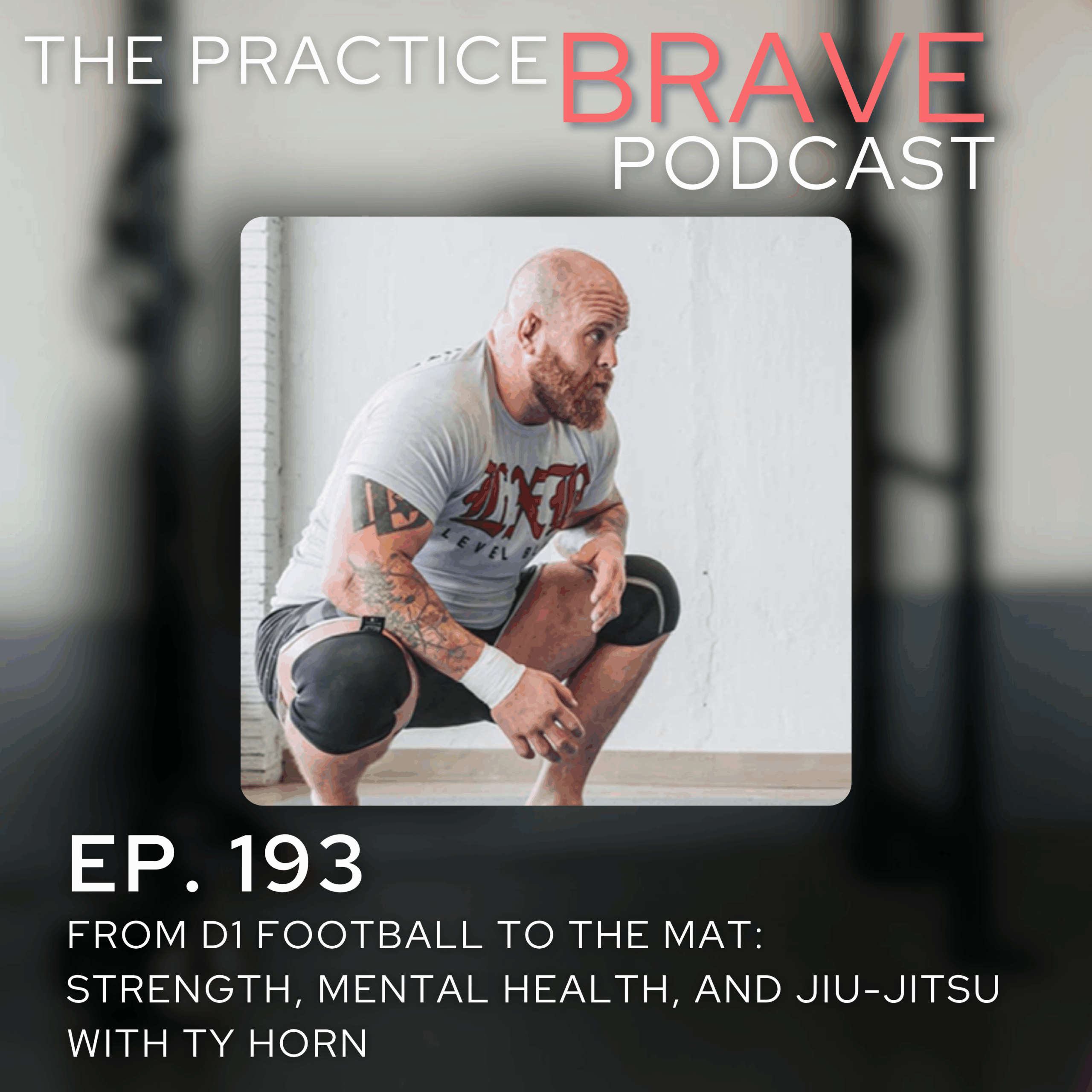
In this episode, I had the pleasure of sitting down with Ty Horn, who many of you might know from his presence on Instagram where he shares powerful insights about strength training, Jiu-Jitsu, and life.
Ty and I dove deep into his story—from being a Division 1 football player to hitting a major life setback, then rediscovering strength through strongman competitions and eventually falling in love with Jiu-Jitsu. He shared how strength training gave him not only physical resilience but a sense of identity and purpose again, especially after dealing with legal trouble, being ostracized, and navigating the post-athlete identity crisis.
This was a real, vulnerable, and fun conversation that covered so much more than just sports or lifting. Ty brought honesty, humor, and perspective to what it really means to train for life—not just for aesthetics or wins.
If you’re a parent, an athlete trying to figure out “what’s next,” or someone who’s trying to find their groove in fitness and life again—this episode is for you.
Follow Ty and his training journey, insights, and life lessons here:
Instagram: @mobility_monster74
YouTube: @mobilitymonster74
📚 Want to Learn More About Jiu-Jitsu?
Grab these free resources to help you on your journey:
📥 Free BJJ Ebook – https://go.briannabattles.com/bjj-freeguide
🎥 BJJ Workshop – https://go.briannabattles.com/combat-workshop-registration
EXPAND FOR EPISODE TRANSCRIPT
AUTO-GENERATED TRANSCRIPT
Brianna Battles 00:01
Welcome to the practice brave podcast. I am the host Brianna battles, founder of pregnancy and postpartum athleticism, and CEO of everyday battles. I’m a career strength and conditioning coach, entrepreneur, mom of two wild little boys and a lifelong athlete. I believe that athleticism does not end when motherhood begins, and this podcast is dedicated to coaching you by providing meaningful conversations, insights and interview topics related to fitness, mindset, parenting and of course, all the nuances of pregnancy and postpartum, from expert interviews to engaging conversations and reflections. This podcast is your trustworthy, relatable resource for learning how to practice brave through every season in your life. Everyone, welcome back to the practice brave Podcast. Today, I’m here with Ty horn, and we got connected through social media because he talked about being strong in Jiu Jitsu, and why that’s a good thing. And obviously I approve of that message, and I’m really excited to have a conversation with him today about training jiu jitsu and life, going from being an athlete in a different sport to fighting jiu jitsu a bit later in life, and then how Strength Training and Fitness is so critical for that sport and also for how you show up in your family. So Ty, thanks for being here. Hi. I’m so glad to be here. So glad to talk to you. Yeah, so tell us a little bit about yourself and your background. All right.
Ty Horn 01:30
Well, I was born, born and raised in Waco, Texas, and I grew up in a great family. And my sister was a phenomenal athlete. I played football. My parents were both raised very much so in a sports family, for sure, but nothing crazy. My parents weren’t super they didn’t pressure me or anything like that. I I was thrown into football, whether I liked it or not. I’m not saying I didn’t like football, but I will say that I was more fixated on girls and skateboarding than I was football. And I went and played in college, and I had no idea that I was gonna play in college, like, No one told me that okay. I was like, I don’t know. I’m gonna go to Texas State and party, right? And then my junior year, these people are like, hey, we want to talk to you. And it’s like, Oh, okay. And so I, I kind of reluctantly, was like, I guess I’ll play football in college, and I played at TCU, and I was there, I got a lot of time on the field, played guard and tackle, and then my junior year, I got in some trouble. I got arrested for selling a delivery of marijuana charge, along with a couple of my roommates, and that that was bad deal, because I went from having in my mind everything mapped out finishing my I was almost done with my degree, and I got removed from the campus, and so none of my hours would transfer to any other university. It was a big roadblock for me. You know, I was on felony probation, and we talked about earlier, but the stigma behind marijuana in Texas at that time was so much more, oh, that’s the stigma of it was so much worse than it is now. And so I was kind of ostracized by a lot of people that once respected me and loved me for football, and then all of a sudden was like, Oh, you’re a piece of shit, right? So that was hard. And I went from, like, the physical fitness aspect of that, I went from I was always a person that loved strength conditioning. I My favorite part of football was squats and sprints. I loved it. I don’t know why it was the committee. Was the camaraderie. Maybe it was just pushing yourself. I knew I liked that, right? Yeah. And then when I got in trouble, I came back to Waco, and I didn’t really have an outlet for that anymore. And I won’t say I didn’t train, but I did, like, push ups and ran a mile every once a week. Nothing’s just enough to keep me sane. I did do some kickboxing stuff and sparred all during that time, but for like, three years, I really didn’t do anything. Three or four years that was like real training, right? I found strong man. I went to high school with a guy who I ran to at a restaurant. He’s like, Dude, you need to come try strong man. Okay, and so I my son had just been born, and I remember thinking to myself, I want my son to think I’m big and strong and cool, right? So I started lifting again, and like, you know, religiously. And then that was, I don’t know that was probably that was like, my son’s almost nine. So I bet eight years ago that I really started hitting the weights again, hard. I did some power lifting, did some strong man and then three and a half years ago, I found Jiu Jitsu, and it was almost like all of that. I’m not a big, like faint person, but it was almost like if I wouldn’t have had strong man, I wouldn’t have understood how to train for jiu jitsu in regards to building that strength on the map. Because what is strong man? Strong Man is. Is a contest where you’re doing essentially functional fitness stuff, right? Have these sandbags and that unconventional strength is what you need in jiu jitsu to where you can actually apply it. I’ve had a lot of guys, actually, a guy that started jiu jitsu with me was a much higher level power lifter than me, close to 900 deadlift, 500 bench, 700 squat, big numbers. And I remember thinking, Okay, this guy is stronger than me, but on the mat, it was like, we’re about the same size. On the mat, it was like playing with a little kid because he couldn’t apply that strength. And what I equated that too, was barbell exercises are great, and they are a a very, very essential part of building your base of strength and your base physiology and stuff like that. It’s quite essential part of it. But yeah, at the end of the day, I found that all my functional fitness, strength things were what was really helping me on the map. And I noticed immediately I started my Instagram page thing. It started as a training journal. I just, I, I consciously wanted to be able to go back and show my son, like, look, I used to be strong back in my day, right? I said, it was just me recording lifts and saying how much, how much they were, and all this stuff. And then I just started to notice that the attitude in jiu jitsu that a lot of people have, and you know what? Even since I started, it’s improved the attitude that people had towards strength and conditioning, because jiu jitsu is supposed to be about that
Ty Horn 06:28
technique, right? Well, what strength does for you on the mat is it? It widens your net for being able to catch those techniques. You don’t have to be quite as perfect on that angle you cut for the Kimura to for the Kimura, trust you don’t have to be quite as of good a bite on your head, arm choke, because you’re crushing someone’s face, right? So it just all it does now, and I technique is superior strength, right? That’s at the end of the day. That’s what really matters. But it’s one of those things where I just couldn’t wrap my mind around the attitude of, you don’t need weights for Jiu Jitsu. It’s like, right bullshit. Look at Olympic level, judicas or wrestlers, they lift, right? This is a combat sport. It’s the same principle we need to be lifting for it. I don’t like super sport specific stuff or anything like that, but just being able to, being able to provide yourself with the resilience that lifting builds too. Yeah, no one’s bulletproof, and no one is immune to injury, but damn it sure is a hell of a lot easier to take a slam to the mat when you’re carrying a lot
Brianna Battles 07:38
of muscle. Yeah, when you’re slightly
Ty Horn 07:40
durable, pretty durable, you know, weak shit rates, right? So that’s, yeah, that’s kind of how I got into it, and that’s how I trained today. I don’t have any real This part’s weird. My whole life was, how strong can you get? What’s your one rep max? Even in football that that would be attitudes. And I went from, especially in strongman, was like, I’m focusing on these. I weighed like 370 when I first started. And I lost, like, I lost, I got down like 300 pounds real quick, just because of the cardio jujitsu and not focusing on bulking. You know, obviously that made me stop focusing on the big lifts, as far as how much I can do for one rep. And then he started focusing on the total picture of what I need for grappling. And so I feel like I’m still in the process of honing what that means for me and what that means for other people. And I do feel like what I’m trying to accomplish genuinely, my favorite part of this whole thing with Instagram is being able to provide people with information that will be advantageous to them, that will help them. I feel strongly that most people’s biggest problem in regards to their strength and conditioning on the mat is they didn’t spend the time to build that scaffolding and that base up to the point where you have created that resiliency and created the explosiveness and stuff like that. I think it takes, it’s a marathon, not a sprint. And I think a lot of people could greatly benefit from focusing on improving strength on the mat, because at the end of the day, if, if something is easier, you’re able to do it more efficiently, you don’t get tired. You know,
Brianna Battles 09:13
no, absolutely. And I think, like, yeah, it provides a great foundation of fitness, which then can be positively applied to, like you said, preventing injury, and then being able to apply like ultimately, so many of us do Jiu Jitsu to be able to defend ourselves, protect ourselves, others and like you, need a foundation of not just technique, but also, like fitness, capacity to do that. Yeah, yeah, and we’re going to talk about that in a bit. But I actually want to rewind a little bit to talk about your transition from being a college divine college athlete, like looked at is big, strong dude who was like, really successful, to then having to go home being ostracized, and then figuring out what your new identity is. Because I think so many athletes i. Actually struggle with that transition from, I am an athlete, I’m a football player, I am this, I am that, to like, well, now what? Now? What? Now? What? What do I do? How do I identify, where do I put my time and energy and efforts? And sometimes you see the pendulum swing of people getting, like, really hyper focused on exercise, like, I’m going to sign up for a half marathon and I’m going to drop 20 pounds. Or on the other end of the spectrum is I’ve gained 60 pounds, and I’m really sedentary because I don’t know what to do with my life. And I feel like, when you’ve been in like, collegiate athletics realm, you truly see people go each way after they’re done with sports,
Ty Horn 10:34
it’s one or the other. Yeah, we know where that’s really true too. And I’m sure there’s other things that are similar to this. I was an offensive lineman, right? Yeah, so I was forced to be a certain size, yeah. And so when I stopped playing football, I went, Hey, look, no one’s telling me to be over 320 pounds right now. So I weighed like, I got down to like, 250 and wow, I looked really silly, because my head is very big. And so I looked like a lollipop, because I was like, spinning and like, yeah, anyway, it was really tough. And you’re so right about like, it goes one way or the other, because I have so many friends that were top, top hand in college, physically. And then now it’s like, they let it go big time, especially lineman Lyman, either gets super fat or super skinny, is how it goes, right? Yeah, I’m the weird one that stayed the same weight throughout the whole class so well.
Brianna Battles 11:31
But I think that there’s, like, actually a lot to be said for that, because, and that’s not to say that you won’t experience that, but then it’s like, the the path of trying to find your way to what’s actually a healthy homeostasis for you now, like where you are. I mean, I believe in pursuing a lifetime of athleticism that you can always be an athlete, and what that looks like will look different through every season of life as we age, if we are lucky. And I think for a lot of people being an athlete is black or white, like, they’ll say, Well, I was an athlete and like, well, like, you can still be an athlete, and that part’s not over, but how you participate and what that looks like for you, maybe we have to just redefine what that looks like and figure out how it can best support where you are and who you are. Right now,
Ty Horn 12:17
I think it’s funny. They were talking about, I posted about this two days ago. I was talking to one of my friends. He played at Tulsa. He’s all American defensive tackle at Tulsa, and he’s in my house, and we’re talking about that, like, how and now he trains Jiu Jitsu, and we want to just, like, grab our teammates and shake them and be like, Dude, this is it. Yeah, this is what we’re missing. I loved physical contact. Maybe I was talking to watch about it yesterday. Maybe that’s my love language. Maybe touch is my even if it’s rough. Touch, aggressive. Touch, right? Yeah. Like, I remember before Jiu Jitsu, like, craving physical contact, craving, like I told you, I used to kick box and stuff. I used to just like, I haven’t trained in six months, but I’m gonna go in here. I’m just gonna fight these guys, like, get it out of my system. And I did that for a while, and then it was like a conscious like, holy shit. This is it moment when I got done with a jiu jitsu class. I kicked some people’s ass, and got my ass kicked a couple times. And I thought I had a big smile on my face because I thought, oh my god, I found it. This is, this is actually, if I’d have known, see, we didn’t have, we’re done in Texas. We don’t have wrestling we do, but that we do now, and public schools have it now. But I didn’t go to private school, so I didn’t wrestle, and, yeah, didn’t have the opportunity growing up, I think that physical contact was for lack of a, I mean, almost a cliche, but like to get my aggression out. Yeah, jiu jitsu was, was it? And I Golly. I felt so lost when I was out of football. I felt so like, what is the point of me? And I dove in and had some struggles with drugs and alcohol and depression and anxiety and all that stuff. And I’m not saying I’m perfect now, but as far as mental health wise, it’s mental health is something that I struggle with every day, like most of us, and I will say like you talk about homeostasis, finding that homeostasis of what works for you over a sustainable time period is what really matters. I was like, the holidays, right? Holidays messed me up because the kids are home. I work from home, from my building job, and the kids are here, and everything gets all screwed up. No one’s training. I know I don’t want to go train. And so, like, I don’t know. And then I become an absolute mess. I’m like, I’m a mess, and just not okay. And that’s what I’ve always known, that I always knew that it’s like a dog, like, if a dog is digging holes in the backyard and acting a fool, take it for a fucking run, right? Yeah, that’s what.
Brianna Battles 14:59
We’re no different. You. I tell everyone, like, I have to take my brain out on a walk. I’m like, I’m like, a hyperactive dog where that’s why I will run and go on a walk is because there’s so much going on, and if I don’t do that, and people are like, Oh, you like, train so much. You do so much. I’m like, right? Like, I I kind of have to, like, that’s I have to exercise my brain that way so that my energy and my life and my overall, like, happiness is dialed in. Otherwise, if I don’t get that activity and that outlet, it’s not good. It’s just not good. What happens to you when you’re not in your rhythm? I think I just sort of shut down, and it’s hard for me to be focused on the things I need to be focused on. So like, my creativity shuts down, push people away. Yeah, I just sort of like, I pull away. My mom’s like, I always know when you’re in a funk, because you just don’t talk to me. And I’m like, I know, and it’s because, like, I just, I can’t, like, go there, so then I just sort of like, retreat a little bit. And usually my friends, like, kind of call it the flu. Like, I get, like, my own mental flu, where there’s nothing they can say, nothing anyone can do, I just have to, like, go through it. Sometimes it’s just a couple days. Other times it’s longer. And it’s been at different points in my life, whether it was like postpartum or just like big life transitions, even like moving here before moving here to Idaho, like, and then that obviously so much reflects, or, I mean, I guess affects our physical health. So I will even look back on pictures, and I can sort of tell the state of my mental health based on what my body looked like at different points in times. And I don’t think people realize the extent that our mental health really affects our physical health, even if, like, we’re still exercising, like, I’ve been training literally my entire life. I never stopped, but how we participate in the rest of our life, you can physically see that.
Ty Horn 16:49
I can tell when my training is very much so going through the motion I’m going to train no matter what, yeah, I will say that I don’t really miss training ever. Yeah, I might have a week, like, where I get that same flu, and I’m like, Ah, and then I feel really guilty, and I come back and hit hard, but when I’m going through the motions and I’m not excited about training and I’m not training with intent, that’s when I’m in that state and I push people away. I’m not social when I’m not training and in a good, positive headspace. And it’s funny talking about your mom. Like, I call my mom’s my boss. She writes my checks. She’s the accountant, yeah, and I operate independently as a contractor from my dad and my mom, so I still have to have this correspondence with her. And she can tell when I don’t call just for fun and I’m only calling for work. She’s like, are you okay? Yeah, mom, always know, Mama, that everything’s good, but if I’m not, that
Brianna Battles 17:48
really is the test. I think if you have a good relationship with your mom, okay, let’s talk about jiu jitsu and mental health. Because I think a lot of people are like Jiu Jitsu, so good for my mental health, but they don’t even really know why. I’ll share for me, it’s the only activity I have ever found as an athlete, and I have done a lot of different sports and fitness ventures. It’s the only sport I’ve ever done that keeps me fully present and in the moment, because you can only focus on what is happening to you and also like what your reaction needs to be. You cannot be thinking about that email. You can’t be thinking about that shitty fight you had. You can’t be thinking about all these things. It’s the only thing that has ever kept my hyperactive brain in the moment, ever, the only sport, the only activity.
Ty Horn 18:33
Oh, me too. I’ve never even thought about that, but when you play a team sport, there’s room for you to go, okay, the ball’s over there. Like, I’m fucking but in Jiu Jitsu, I think about that sometimes where you ever like, this is abstract, but you ever like, you’re rolling somebody, and like, you make a wrong move, but you like, made it consciously, like, oh shit, that was the wrong like, you have to be right there. You have to be fairly invested. That’s a good point. Yeah, I think that it makes you focus on the here and now, which that’s a good metaphor for the rest of our lives anyway, is focus on the presence. To me, it symbolizes the struggle that that we all go through as humans, and whether, whether you get beat or you do the beating, yeah, there’s a lesson to be learned there. There’s always, you’re never going to reach a point where you go, Okay, I did it. Yeah, yeah. I don’t need to do anymore. I don’t need to lift weights anymore. Shit done, like whatever, because of that, that that kind of never finished mentality is what is good for my mental health. Because I, like, I thrive on that. I thrive on the idea like, you’re not strong enough and you’re not good enough, not not in a toxic way, but just keep me coming back
Brianna Battles 19:55
kind of way, well, right? And you know, we look at sports like, like football, or for me. Like Water Polo. Grew up playing those sports, and there is an end to that particular sport. It’s most likely High School for the majority of people, and then for the next majority, it’s college. You’re probably not going to play pro. And then some people go on and they play pro, whatever that looks like in whatever given sport that is. But even that, ultimately, that hasn’t an end game, like, there’s only
Ty Horn 20:24
higher sports, there’s only a couple sports anyway, that have that other level, like, or to for a career sake, exactly. That’s not, that’s, it’s not even worth talking about, right? Because it’s such a rare deal, right?
Brianna Battles 20:38
But then we have a sport like Jiu Jitsu, where I tell my boys, I’m like, This is not even a sport for you. This is a life skill and something that you can have that will follow you throughout your entire life, whether you do it a lot or a little. It is something that you can always come back to at any given point in your life. And it is a skill set that’s obviously on and off the mat. But ultimately, it supports that notion of what does it look like to pursue a lifetime of athleticism. You can do it at four. You can do it at 1444, or 84 like there are so few sports that truly represent that, like movement and fitness methodology and belief system.
Ty Horn 21:21
I always equate it to golf, because you can play golf your whole life, and you know the satisfaction? I don’t know if you play golf or not, but I do a little bit. But no, I’m not, I’m not great. I can break 100 but it’s the same satisfaction when you hit a really good like, Ooh, that was a smooth bow and arrow choke. That feels a lot like hitting a good drive. It’s just crisp. Feels right. And you can same thing. You’re not going to leave the golf course and go, I’m done. I’m a golfer now, like I’m and you can always go back to it. And for some reason, I don’t know why, but I always end up being people’s like, emotional support animal. I can see that you’re like, a big Labrador. I’m a big teddy bear. And I like to help people, and I like to make people feel good about themselves. That’s what makes me happy, is to, like, encourage people and stuff like that. And so I A lot of times, I’ll talk to people about their jiu jitsu stuff, and like, man, haven’t seen you in a while. Yeah, I just haven’t been able to train. And I feel really, really guilty about not training. But what you just said about it being a journey, that you can pick it up and put it down, pick it up and put down. Is that ideal? No, you ideally. You should, if you’re focused on it, you should train all time, yeah. But like, I mean, let’s say you trained jiu jitsu for two years. You got your blue belt. You quit. Like, every blue belt does. It’s like, Why does our, why does the human mind, why do we have this, like, finality or all or nothing mentality, right? Where it’s like, Oh, I haven’t been in a year, like, I can’t go back. Like, why, right? Like, if you can go anywhere, it’s, I always tell people, jiu jitsu is not going anywhere, no.
Brianna Battles 22:58
And like, for it almost like we know we talk so much in our guest sport and in business about having our self development like this growth mentality, but there’s very few physical outlets, especially for adults, that almost forces that installation of a growth mentality, and that forces the nature of hard work where, like You can be really athletic and really strong and still get your ass kicked, and you’re like, damn, like, fitness didn’t actually save me this time. Like, and I had to get to a place where, like, I didn’t start jiu jitsu till I was in my early 30s and a mom, and more importantly that, at a place where I was humble enough to be a beginner again and to not be good. And everyone says, I wish it would have started earlier. Like, I freaking don’t. I would have been so toxic. And I still struggle with like, yeah. And I still struggle with that. It brings out so much of like, I’ve been poked, you know, all this, like, athletic maturity, I like to think that I have, and then, like, the wrong buttons get pushed and I’m like, Damn, I’m being like a bitch, or I’m feeling like, really mad, or I’m like, pissed in the car on the ride home, or I’m crying over this like a freaking 13 year old girl again, like, because it pokes the things that need to be poked in you. And I think it’s hard
Ty Horn 24:16
that’s okay, though, because it’s okay that it makes you feel that way, because that just means that you care about it, right? Oh, yeah, didn’t care about it. You wouldn’t have those, those feelings. And I people kind of criticize the idea of making something your identity, and now, yeah, I’ve felt that way about people before. Like, dude, there’s more to life than Jiu Jitsu, right? There’s more life than whatever. But like, just people seem to do what makes them happy? Like, if that’s what, I feel guilty all the time when I haven’t picked up my guitar in a while. Yeah, because it’s like, I worked so hard to be where I am now with it and like, just haven’t picked it up. I guess I won’t pick it up again because I’m rusty. Yeah, I get upset over jiu jitsu sometimes, where I not from losing or from that, but I get frustrated with, like, my own personal drive, like we talked about earlier, where, yeah, like, I have days where I’m, like, full blown autistic, like, in the middle of the of the UK, and the professor right, trying to learn, and then I have other things where I’m like, All right, well, let’s roll. Yep, I get down myself when I’m not feeling like, super pumped about it. Yeah, kind of like, you know, it’s kind of like as a parent, too. It’s kind of like as a parent where you feel guilty for you feel guilty when you haven’t. You feel like you haven’t spent enough time with them, or you feel like you haven’t been I don’t know. It’s just kind of
Brianna Battles 25:47
kind of similar. Yeah, it’s like, it brings out the best in you, and can also bring out the worst in you. And it’s just figuring out how to, like, use it as a tool to support like, it’s how awesome is it that we get to be in this season of life as parents, in our 30s, with careers, and we have an element of play and an element of, like, self development, and then something that you care about, like, there’s so many, and I always see this like, well, you know, like when you’re at sport practices or games of our kids, and I’m like, man, you know, would solve so much of these parents just criticizing their kids and yapping and beginning their ass kicked, or at least still competing. And training in something that’s fulfilling for them, so they’re not like, living vicariously through their kids. Like, I feel like there’s just such an opportunity with this sport to really like, I mean, it just unlocks so much. I can’t handle that.
Ty Horn 26:35
Like, oh, I know. I mean coming like, you played sports at a high level. You live that life. I have lived that. When I hear the guy who didn’t even play on this eighth grade B team yelling at his son, making him feel like, yep, lower than I’m like, Dude, you need to stop taking me so seriously. It’s not that big of a deal. Yeah, because they’re
Brianna Battles 26:54
gonna ruin it. They’re gonna literally ruin it for their kids. And any chance that their kid had of being successful and not being burned out is taken from them, not from their own ability, but from the parents instilling like, trying to, like, push that on them, making it toxic.
Ty Horn 27:11
That’s an interesting topic too, that you just gets to expose is how many people that didn’t play sports at all growing up for whatever reason, yeah, actually ended up being like, phenomenal athletes, and then they find that out later in Jiu Jitsu, yeah? Like, I don’t know, my wife’s a good example. She didn’t grow up playing sports, but by God, we kind of figured out that she’s a really good athlete. Yeah, she was like, overweight growing up, and then she lost a bunch of weight, and so she never played sports, yeah. And then now it’s like, wait a minute, are you, like, like, you have, like, really good hands and, like, really good at both. The hell is wrong with you?
Brianna Battles 27:46
Yeah. And you’re like, not chronically injured with, like, injuries you’ve had from that all the overuse and stuff. It is fun to see. Like, jiu jitsu attracts so many different humans and like avatars of humans, and it creates this melting pot of people who can have friendships, and to kind of circle that back to, like, the mental health component of of jujitsu, why it’s so powerful. It’s like, it creates a community, but not a community where it’s like your own echo chamber. It’s a community where you get a lot of diverse backgrounds and you know people and what their interests are, what their history is. Like, you’re a big dude and, like, I’m a fairly small ish girl, and we could equally be on the mats and, like, it levels the playing field a little bit and creates that connection and camaraderie.
Ty Horn 28:31
That’s true. There’s a dice bottom me. I don’t care if I get canceled for saying it, but I’m gonna go ahead and publicly. Have a call to arms for all black people. We need more black people in Jiu Jitsu. Oh yeah, we need more, like, high caliber athletes. And I could, I’d sound stupid, but I could. So there’s a couple guys that played football at Baylor. They come roll with us, and I’m like, I don’t know if you realize this, but you could be a professional fighter in like, two years, if you just applied yourself to it. Then absolutely, I don’t know. And obviously it’s good when a good athlete comes to the mats too, because you you can kind of take the gloves off a little bit with them, and that’s always fun. But totally
Brianna Battles 29:09
Yeah, just bringing in, like, more diversity in general, like, you know, just seeing, yeah, like, just more access to Jiu Jitsu, and then, you know, getting more women on the mats, just like more people in general. Like, there’s just, there’s so many elements where, like, this sport can be so positive, whether you want to take it to a high level because you have that athletic upside or because you just, like, need that element of community, of something you do twice a week. You want to know how to protect yourself. You want to do something really healthy for you. It’s just something that’s really empowering, especially like a lot of women don’t even realize, like, it is such a critical skill set to have. Oh, yeah, and this is where we’ll start talking about the fitness part. But like, it’s one thing to be strong, it’s one thing to run, but lifting weights and being able to run fast, that’s like, not really going. To save your life in a really shitty situation. That’s not going to be the thing. Like, your fitness is a benefit, but it is not like a guarantee that that doesn’t mean you know how to defend yourself. And going to a one time self defense class doesn’t mean you know how to defend yourself. Tell you something, this
Ty Horn 30:14
girl right here, she ain’t leaving the house till she’s a blue belt. She’s already gotten her feet wet with some grappling at the house of her and brothers. No, it’s important, I think, that you could have the fittest CrossFit athlete of all time, and they’ll gas in two minutes trying to wrestle their hardest. Oh, totally.
Brianna Battles 30:35
And then you and I tell people that, like, when you get, like, the the new white belt, it’s like, just from a fitness perspective, like, if you can’t control your breath and you can’t control your tension, then you’re going to be smoked so much earlier. So like, the best thing you can do from fitness perspective is, like, be able to really leverage your breath control. And with a background in swimming that actually came really natural to me, I can, like, manage my breathing pretty well. Yes, that capacity, but then with the tension, like, you know, you’re just constantly, like, framing and trying to, like, oh, and you’re exhausted because you’re exerting, like, this isometric contraction the whole time in defense mode, or just trying to, like, muscle your way through everybody. That’s a tough thing to overcome.
Ty Horn 31:20
That’s funny. I didn’t think about this till now, but one of my friends at my gym in Waco, Steven, he played water polo, and he has stupid endurance. And you can tell it’s not necessarily just physical endurance. It’s also just like he knows how to chill. Yeah, yeah, my first day ever in Jiu Jitsu, I went in like, I mean, I was six foot, six 370 pounds, and played football, like I can handle myself, okay, you know. And I was, you know, throwing some blue belts around and getting inside control, feeling like, oh, yeah, I got this. The professor is about 511, 165 pounds, skinny, you know, and he arm barred me in like, five seconds. And love that. That’s what made me fall in love with it.
Brianna Battles 32:07
Yeah, yeah. Because it’s all like, you’re somebody who easily gets thrown around, but if somebody has this high level skill set, then you’re gonna get owned. And that’s like, I think that’s a really great thing for people, athletic people to be humbled, and maybe less athletic people to be exposed and know like there is an opportunity here for me to improve my fitness, but also be able to defend myself and do it in an environment where you’re supported and you’re learning a new skill set like you get, like the mental stimulation and the
Ty Horn 32:34
physical development. You said something earlier that I’ve never heard or thought about. You said athletic maturity, and golly,
Brianna Battles 32:41
what a topic. That’s a great time. Damn. That’s like, one of my favorite sentiments. And I know that came across. I don’t know how that came into my brain, but it was one of those things, because I was like, there’s nothing that forces you to mature faster than becoming a mom, at least for me, there you go, in my like, in my maturity as an athlete, because you have to reassess your relationship with your body, your relationship with food and what you want to pass on to your kids. I wanted to put all of that stuff away. I had to sort of put all of those things on the back burner, because that’s not how I wanted to show up as an athlete. And now your time is different. Your Capacity is different, your body is different. All these things are different. And through getting your ass kicked through parenthood, you realize you just develop more maturity in your approach, in your relationship with your body, in your relationship to like what it means to be healthy and fit. All of that just evolves a bit. And sometimes motherhood and parenthood forces that evolution.
Ty Horn 33:37
You ain’t lying, because you ever, I don’t mean this any kind of way. But like, you know, whenever you hear somebody complaining about not having time, and they don’t have kids, and you’re like, you don’t even know brother, like, like, not have time, like, Oh, you didn’t feel like it, feel like it either. And I think that when you have kids, like you said, it forces you to, like, too bad this is what we’re doing today. And, oh, we all have the stomach bug and all the, you know, whatever, and you don’t have a choice. I think that jiu jitsu makes you either mature real quickly. And how many people come in for a couple classes and they can’t handle the losing and they they leave, right?
Brianna Battles 34:18
Absolutely, you have to be willing to be a beginner and, like, have that again, that athletic maturity, and that the, I guess, like, willingness to be humbled, and to like, not be good. And I think when you do have some sort of athletic history, you’re like, you have certain expectations and standards for yourself where you’re like, Well, I’m like, athletic compared to these people. I should be able to do better. And then there’s so many times, even with, like, my comprehension, where I’m just like, how am I not getting this like, I feel so uncoordinated, and I’m like, fairly coordinated, and I just, I can’t pick up on this. And then there’s other people who maybe aren’t as athletic as me, and they just pick up on it so fast, and that’s because this. Four goes so far beyond the physicality nature. It’s like the mental and emotional and physical regulation and comprehension and learning styles. Honestly, I have
Ty Horn 35:10
really, really hard time with watching someone perform a technique and then going, Okay, I’m gonna do it now, right? I cannot do it like I might as well just check out and then work through it with my training partner as we go, like my brain doesn’t work that way. When I go, I’m like, Huh? I don’t I don’t know. Oh, I know. But then when I drill it, I do it a couple times, and I know it, and
Brianna Battles 35:37
I think that’s the other part of being an athlete, is we are so conditioned to learn, like, through moving. Like, we’re just tactile learners. Like, I need to physically feel it, like, maneuver my body into the right place, put my arm over here. Like, physically move me, and then I’m gonna get it, like, if my body can get those reps. But if you explain it to me, I can’t do it. If I watch something on Instagram. I’m like, what like, I have it saved, but then, like, that’s about as far as it goes, because it’s so hard for me to, like, retain or be like, what did they do there? Because I don’t see it like, I’m not visual. It doesn’t work like that. I have to physically move through it.
Ty Horn 36:14
Learning styles are tricky. And I actually, I was laughing yesterday, or I’m sorry last week, because my I have a client right now that I’m building a house for, and he, he is also a contractor, so he’s savvy, like, he just lives in a different part of the state, and so it’s easier for me to build it. He starts telling off all these dimensions and stuff to me about, yeah, outside, the outside of this pearl, and is going to be this, this, this. And I’m like, Dude, you’re going to have to, I understand everything you say. If you, like, text it to me and I can, like, digest it. I don’t know what you’re talking about. Like, I promise you I understand what you’re trying to accomplish.
Brianna Battles 36:49
But yeah, just not in this format. No, not in this format. Yeah, oh, I fully get that. That’s like, draw me a picture, yeah, exactly. Draw me a picture. Or, like, show me, walk me through it. Then I tell my training partners on I’m like, this is by ADHD. This is just really hard for me to learn that way, but once I like my move through it, then I’m going to get it, because I don’t feel it. And I think that that’s an important part to talk about too. Like, whether you’re you’re partnered up in Jiu Jitsu, or you’re coaching Jiu Jitsu, or you’re participating in it, it’s like there’s multiple learning styles and ways to digest what you’re being taught, and you don’t, you are not dumb if you don’t get it, or you don’t get the concept at first, like it takes it is a forever learning process, and there’s so many things still that I’m like, Why I should have learned that at white belt? Why don’t I know this almost like a basic white belt concept that right now at purple belt. I’m like, This is freaking new to me. I don’t know how I missed that one. I I see
Ty Horn 37:45
that all the time. I have one today where, like in theory, I should be really, really good at head arm finals. Yeah, in theory, I’ve never been great at finishing them. And then my one of the instructors today, Stephen Olivares, his black belt guy. He’s like, sink your hips down and then go back into it. And then the rest of the class, I was hitting arm neck triangles, left and right. I was like, oh yeah. And I felt like an idiot, because, dude, I know that. I know to do that. I just forgot,
Brianna Battles 38:17
yeah, it’s so interesting. And then you when you start to, like, realize, and if this, this might not be for everybody listening, but where you get to the point your Jiu Jitsu, where you’re like, all right, I kind of know what my wheelhouse is, and I know like, where my wheelhouse isn’t, whether that’s based on my size, my whatever, my my abilities, my previous injuries, or, frankly, just like the style that you gravitate towards. It’s been really interesting where for a while I was kind of trying to do stuff that just, like, wasn’t really in my wheelhouse. And I’m like, Why do I suck at this? Like, well, I suck at this because, like, I that’s just not my given game or my style. But you don’t really know that when you’re first learning. So I feel like when you’re first learning, yes, you just have to give yourself an abundance of grace and know that as time goes on, you’re going to figure out, like, this isn’t really my thing, but this other side of jiu jitsu definitely is. And you know, you have to find coaches and partners and people that can, like, help you kind of unlock that, but that’s all part of that athletic development, just in a different way well.
Ty Horn 39:15
And while we call it Jiu Jitsu, I still very strongly feel that I’m into submission grappling in general. Like you said you went to a wrestling class, I want to, like, people criticize jits, like, Okay, I don’t even do just Jiu Jitsu. I do, you know, and wrestling and Jiu Jitsu, you know. And so I think you hit the nail on the head where? And I’ve tried to post about this before, but it’s hard to put into words in a post of like, we all like, have our baseline attributes of things that we’ll be inherently good at. And like, you start with jiu jitsu stuff, where, okay, let’s say you’re really, really good at triangles. You have the body type to be really, really good at triangles, but you never hit them. You’re missing out. Right? It. Or, for example, I’m terrible at dark jokes. I have a lot of skeletal muscle. It is really hard for me to get all that into the thing, so I don’t even try to do it. It’d be like if you were a football player and you had the body type of a wide receiver, but you were trying to play Sumo with the big boys down the trenches. Not going to go well, 100% you have to be able to pick and find and use what works well, yeah.
Brianna Battles 40:24
And when you’re a beginner, it’s like, you don’t even know to think like that. And so I guess if you’re like a beginner, like listening to this episode, you’re just like, well, but I we were practicing triangles. I’m so frustrated because I don’t get it. And I remember thinking that, like, I feel so uncoordinated trying to set up a triangle, which direction do I move? What leg goes, where, where’s arm going. But then I’m like, Yeah, I got, like, a big butt, and I’m short, like, this is just not my thing. This isn’t my movement. But, like, in other positions and other submissions, okay, like, that is a little bit more in alignment with, like, what my natural baseline of potential is. It’s not that I can’t do a triangle. It’s just like, well, that’s probably not going to be my first look from that position, and that’s okay.
Ty Horn 41:04
What’s your like most the time I’m going to hit the submission sequence. What is your favorite?
Brianna Battles 41:09
Okay, well, like, I love, like, a hard, really athletic, like, knee slice, like basic bitch knee slice. And then I like to work it’s freeing, like, side control and north, south. I like to set up a lot of different chokes from there, and then get in a technical mount and set up stuff from
Ty Horn 41:25
there too. That’s actually my exact game. I treat side control, and north south is one thing, and I just float around them, and then I’ll 22 you shown there the army dude. I use from the like half north south, half side control position. I use that to swing to mount, which often turns into technical. Now, that’s funny. That’s literally what I do, like, almost consciously every game, everything, yeah, because
Brianna Battles 41:49
I think it’s like, when you’re like, you’re strong and you can be can be really explosive, but you also know how to, like time it so like, again, that just kind of falls into, maybe what your upside is as an athlete, with your body, with your background of athleticism, and it’s, like, what you prefer, whereas, like, I don’t really want to play a lot of, like, open guard, like, my legs aren’t super long. That’s like, really dynamic. And if anything, I’m just gonna, like, try to wrestle up, because it’s in more in my wheelhouse. So but I spent so long trying to, like, comprehend open guard and, like, it’s just, like, really my thing, why do I suck? And it was so demoralizing. But I think it’s just, again, it’s all part of the growth process of figuring out, like, what do you prefer? What do you like? Okay, you need to know how to do these things. Need to be familiar with it. But that might not be your first one or two looks, and that’s okay.
Ty Horn 42:36
Yeah, I remember, I always try to tell white belts and new guys, this, new people, this, if you spent your first six months in Jiu Jitsu, forget the submissions, man. You don’t even worry about that. Yet. You need to worry about escaping, worry about understanding the large underlying principles that you’re trying to accomplish,
Brianna Battles 42:57
which is hard because you want to, like, get in there and, like, feel like you want that dopamine hit of like being good, of being successful, of not getting your ass beat. But that’s why, like, that’s, I think what is ultimately the real dopamine hit is knowing that, like you’re there to get your ass beat, you’re there too, because that makes you better, and it keeps you kind of coming back for more. It’s like this, like, ultimate delayed gratification of every time you feel like you kind of got something the next, like, galaxy of shit that you don’t know, gets exposed and you’re like, well, here we go. It’s just, you know that dopamine hit like, never really last that long. Ain’t never done. You ain’t never done, never done. But that is the addicting part of that is like, I probably won’t deadlift 300 pounds again. Maybe I could, if I wanted to, like, progress to that, but I don’t need to, whereas, with Jiu Jitsu, like, I can keep getting better in different ways, instead of, like, chasing one set data point or outcome.
Ty Horn 43:58
Yeah, I never had a great deadlift, like, conventional deadlift for my weight class, you know, like, in comparison to what other, like, higher level lifter guys, like, I wasn’t that great. You know, the most I ever deadlift convention was 700 and that was like, last place at the strongman contest. So I felt like, you know, and I just think it’s funny how refocusing on here’s here’s a question for you, at what point you’re strong, athletic and you have a base physiology of a lifetime of fitness and training and stuff like that, at one point, does your lack of general strength start affecting your performance on the map? But I know that’s a really tricky thing, because it’s not, like, necessarily tangible, you know, because it’s gonna coincide with your game and what you do, and almost, I don’t
Brianna Battles 44:48
know, you know, what’s funny is, like, I’m not in the gym, I’m not as strong as I used to be, but I’m a better athlete than I ever was. Oh, you probably better control the. You’ve ever had, yeah, like, and I feel and like on the mat, like something I’m told all the time, and not in the like, insulting way, but in the like, you’re like, really strong. I like my base, my it’s more of, like, just your body awareness and body control and, like, leveraging your body. One of the first things I was told on day one of jiu jitsu was, if you’re going to be a girl in Jiu Jitsu, be as frickin heavy as you can. I was like, okay, like, I can remember that, but it’s been something where even if I don’t feel like I’m necessarily as strong as I used to be, it is so transferable to just being strong period, not just strong for a mom, not just strong for a woman, not just strong, you know, whatever, like, it’s just, I’m just strong, and I can match that in most cases, even with a lot of guys, I can, like, hang in there, through leverage, through body awareness, through just like, basic mechanics. And then you add on top of that, the technique side of Jiu Jitsu, and it’s something that is such a gift. And I think that so many people think, like, I’m just, like, not as strong as I used to be. But if you have a foundation of strength, and it doesn’t have to be, you know, like lifting super heavy all the time, but a foundation of strength will only continually serve you, whether you do Jiu Jitsu or not, it’s absolutely something that will give you so much longevity, less injury, and just a better quality of life. Oh, I mean,
Ty Horn 46:27
my parents, they’re such a good example for me of how they go about their they still are very, very active in fitness and training. You know, three and four. They’re 62, years old, and they train two, three times a week, with weights and stuff like that. And then they both played pickleball, like every day. And I just like, Yeah, my mom doesn’t have orthopedic issues because she moves her body. And that’s, that’s what really matters to me, is, like you said, this is a long game. This is a marathon, not a sprint, right? I don’t have any desire, any and you know what, if it is your desire to get if you’re a strength athlete, that’s different. I don’t ever want to make people feel like what they’re doing is is not valid or whatever. But if you’re kind of a first formula, that’s that’s good thing. But for I can’t think of any other scenario where one rep max strength really matters anymore.
Brianna Battles 47:19
No, it doesn’t. Especially if you’re, like, trying to be just like trying to be just like a really versatile athlete, which, again, that’s going to give you the most longevity in sport and in general. And so do you see, I see, like, a lot of times people that try to, like, share information on strength training or fitness for Jiu Jitsu, like they’re sort of trying to simulate sports specificity of jiu jitsu by, like, doing some, like, weird move with the cable, or, like, I don’t know, like, some dynamic thing. And I’m like, leave the dynamic Jiu Jitsu, sport specific stuff for Jiu Jitsu, and then just get freaking strong, like, build a foundation as a well rounded athlete. And that will be the sports specificity you need in your sport, but we’re like, we’re it’s like, we’re miss it.
Ty Horn 48:04
You’re exactly right. I think that sometimes I will incorporate certain semi sport specific things for fun. Yes, yesterday I posted thing of me doing sled shrimps. Do I really believe that doing shrimps with a sled is going to make my shrimp that much better? No, I don’t. I am doing it because it is. I’m simulating the movement that I use every day, right? And if I can add weight to it, it’ll make me tired
Brianna Battles 48:29
and so, and it’s an accessory movement to the other things that you’re the other thing, you know, I did before
Ty Horn 48:35
that, I did front squats, I did overhead press, and I did any endeavor. So before, that’s something I always think about too. You know how like social media and people in general, everybody wants the easiest, quickest, best cheat code, way to do everything, right? Oh, I know, especially fitness and diet and stuff like that. So I feel like most people are focused on fine details when they really need to focus on some big picture shit.
Brianna Battles 49:05
Exactly, they’re they do the little rocks instead of the big rocks.
Ty Horn 49:08
People are like, I feel like shit all the time, and I’m tired and I can’t recover from my workouts. Are you sleeping? Are you eating? Are you putting things in your body? You shouldn’t, and that’s what people need to worry about first before they start doing some crazy niche exercise with their hip flexor. Like, maybe you should be able to squat your ass off before you worry about or run sprints, until you’re worried about the little weird accessory stuff,
Brianna Battles 49:37
I mean, but that’s like, the whole thing with the health and fitness industry in general is, like, we get so hyper focused on the little rock that we totally miss, like, the fundamentals of just like, are you lifting? Are you walking? Are you sleeping? Are you eating? Kind of balanced macros, like we want to skip over all of that and then go straight for the sauna and the red light and the like, extreme. Dream diet and the very like specific moves that all this is going to fix x, y and z. And it’s like, well, you don’t really fix that is being able to deadlift well, so that you know how to hinge, so that when you go to Jiu Jitsu or when you go play golf, you have trained a movement pattern that’s actually going to help you in those environments, whether you’re recreational or competitive.
Ty Horn 50:20
No, that’s exactly right. That’s like, my son, he’s pretty good at basketball, and he’s always working, like, all the really cool, fancy ball handling stuff, and he’s pretty good at it. So I can’t really say anything, but I’m like, hey, you need to work on your layup, brother. Like, like, that’s really like, I don’t mean to be mean, but like, your layout sucks, like you need to work on that is so true. It’s just fun to work on the things that feel cool, I guess at the end of the day, no.
Brianna Battles 50:53
And I mean, it’s like, we can say all of this, because I think people get confused, like they see so much on social media with like, well, what should I be doing? What should I not be doing? But ultimately, if you’re doing a sport, something that is so dynamic, so reactive, so explosive, like Jiu Jitsu, where it requires, like, honestly, every element of our physiology, like, it’s anaerobic, it’s aerobic, like you’re using strength, you’re using like, technique. There’s just so many different elements of fitness and performance that are in one sport, and then it’s different the next round and the next round against different people. So like, you’re constantly in this state of not really knowing what to expect next. Like that, in and of itself, is an athletic element that we have to train for. So I think so many people see everything on social media with like, what should I be doing? What should I not be doing? But ultimately, it does just come back to the basics of, are you lifting in a way that prepares you for the athletic demand of that sport, that sport that’s right, of that sport like, and so that means really prioritizing being a well rounded athlete, not trying to do some fancy moves and some stuff that’s like, okay, I guess that sort of simulates, like, I don’t know whatever you know, like, if you just see so many different like jiu jitsu simulation exercises in the gym, but if you’re not hitting the main lifts and doing like, the accessories that are going to keep you safe and reduce your chances of injury and just overall, creating a more durable human for a sport that is very physically demanding, oh yeah, with a high incidence of injury. If you sometimes, you’re unlucky. Other times, your body’s just not ready for the demand of the sport. And that’s a personal responsibility aspect, too. Oh god, I
Ty Horn 52:34
had one the other day. And like, you know, God, forget anyone ever gets hurt or whatever. But you know when someone’s zigged, when they should have bagged kind of thing. Oh, yeah, yeah. Like, I was passing someone’s open guard, and I had their leg shelved on my shoulder, like they were going to try to triangle. That’s how I was going to do a dump pass. Well, when I did the dump pass, he went the other way, like, like, he rolled it kind of like, did the opposite of what I thought he was going to do. So it was my big ass chucking his knee against my head, and then him going the other way, and me towards MCO. And it was like, Oh no, and I’m surprised there’s not more injuries in what we do. And that comes down to having good training partners. I felt like a bad training partner in that moment, that I applied too much force or whatever, but the end of the day, there’s no such thing as bulletproof, and all we can do with the weight training is hope to reduce those chances of injury. And that guy was older. He’s like 50, but he’s in super good shape, and so it’s as a partial tear like, God forbid, he wasn’t resilient. You know, he might have needed a knee replacement. Who knows?
Brianna Battles 53:42
Oh, totally. But then I think it also in terms of, like, saying you’re surprised that, like, more people don’t get injured, I think there is the athletic maturity component of knowing, like, when you’re guy, like, when you need a tap, or, like, knowing how to anticipate, like, I’m not in a good position. I’m really vulnerable, so I better be ready to tap. I’m not going to fight through this. That is just not worth it in training. And again, that’s a huge piece of getting more mature in the sport, but also just more mature with, like, your own ego, and that’s hard, especially I think it’s hard when you have an athletic background where you’re used to, like, pushing through, and you’re like, This is fine. I can withstand pain and discomfort, and then you’re like, shit that done that. Y’all are tell.
Ty Horn 54:25
I don’t know if you can tell this elbow is hyper mobile, like it extends further. I do see that.
Brianna Battles 54:31
Okay, so arm bar you okay, not on that side.
Ty Horn 54:33
This elbow is, this is as far as it can go. So it’s like, I fought too many arm bars when I should have tapped. So I’m guilty. So that’s a jiu jitsu that’s a I used to have a good bench press and not even
Brianna Battles 54:47
not anymore. Yeah, I get that. I get that. I have a few weird looking fingers and an ear. It’s fine.
Ty Horn 54:53
Mine are so crazy. It’s called, apparently, when they do this, both of them are called a Crane’s head deformation. It’s when the tendon is severed during it coming out of socket. And so mine came out of socket and then severed the tendon when I popped it back in, and so now it permanently curled like that. And, ah, it’s funny.
Brianna Battles 55:14
So we’re really doing a good job of selling this through Jiu Jitsu. You’re going to get weird ears and fingers and but your mental health will improve. You’ll make friends doing great. I’m beat up, but I feel great. I know that is, I guess, in some ways. Well, hey,
Ty Horn 55:31
right there, though, right there. That’s a perfect metaphor and analogy for what we all have to do in life anyway. Yes, sometimes you break your damn finger, but yeah, suck it up and, you know, and take the good with the bad. That’s kind of
Brianna Battles 55:44
life, isn’t it? Yeah, it does develop that resilience and knowing, like, well, you know what? Like, if I’m we’re all going to be getting older and having issues, and I’d rather have my issues from living a really active, fun life that might come with a byproduct of like danger and injury, then sitting on my couch and just couch rotting, which, look, I’m for couch rotting sometimes, but I don’t want to make that my personality. You know,
Ty Horn 56:13
that’s what also drives me crazy, is when people say they don’t have time. And I’m like, I have time to have a full time job, have a very stressful, demanding job, have kids come home. I still play video games too much. I train, like, three times a day. Man, like, yeah, you got time. You got time. Dolls day and day too. It’s just a matter of the allocation of that time is the issue.
Brianna Battles 56:39
No kidding. And so like with that, you’ve also gone on to create some, like, coaching services and programs for jiu jitsu athletes, right? Yeah, yeah. So what does
Ty Horn 56:48
that look like? Well, because this isn’t my full time job, I’ve had to kind of like, I feel like I’m still just figuring out what I’m supposed to be doing with all this, to be honest with you, yeah, when you grow up, yeah.
Brianna Battles 57:00
Like, when I first started, I had what I would call, kind of like a niche following, like, where
Ty Horn 57:07
I had some, like, pretty notable people from my connection with the new wave people, yeah, had a lot of association with with that part of Jiu Jitsu. And so when I first started, when I was, like, kind of in the seven, 8000 follower range, whatever. I was training a lot of people online. Yeah, I had, you know, at any given time, I probably had five or six full time. Like, okay, when you lift, like, FaceTime me if you want me to check your form, that kind of stuff. I did that for a long time. I simply didn’t feel like I was doing my building career any justice by having to fixate on that so much? Yeah, at the end of the day, what really puts food in my place at different houses. And so while I do make some extra money from now, what I do is I sell programs that are just pre written, that are for Yeah. I mean, people generally have a pretty specific set of goal or a pretty standard set of goals. What do most people want to do? They want to look good naked, and they want to perform on the map. Want to perform on the mat. Okay, well, there you go. I can do that. So I have some pre written ones for sale that are great. And they’re all, they’re all 12 week programs. And some of them are, some of them are geared towards the fact that most of my following, and most of my people that are interested in buying a program for me are people like me that work a regular job, that have limited time and things like that, and so I wish people knew that you don’t have to train like, five times a week. You just go in there and get after it twice a week. I mean, ideally, would it be more? Yeah, sure, but like, that’s what we’re talking about earlier. Just because it’s been a year since you did jiu jitsu doesn’t mean you throw the whole thing out. You know, just because you’re only able to train two times a week, that doesn’t mean you, like, are
Brianna Battles 58:44
spinning your wheels. You’re still training, right? Yeah, there’s like, again, if we’re in this for the long game, which ultimately, like, again, jiu jitsu reinforces so well, is that this is not a quick fix. This is not just a four year high school season or college season. It’s something that you can keep doing, even if you have to take a step back in your volume and your intensity and your focus of it, it can stay with you, and it never goes away. Even if you’ve been away for a while, you can always come back and again. This is where, like, you get that hard ego check of saying, Well, I don’t feel like a blue belt anymore. I don’t feel like a purple belt anymore. Like, okay, it’s okay to not be there, and like, everyone’s version of what a purple belt or blue belt looks like for them is going to be different anyway. And it’s again, that athletic maturity to be put into a position where you are get humbled, and it’s a hard ego check. But ultimately, those are the experiences that will make you a great athlete long term. That is how it is developed, right there in those shitty seasons. That’s how it’s developed when you got
Ty Horn 59:48
your purple belt, how long did it take for you to skip warm up? That spoke weed in the parking lot?
Brianna Battles 59:56
Whale. I did notice. I. Started to go to class a little bit later, but it’s because my commutes a little bit longer. So not just, yeah, no weed in the parking lot. I have not rolled. I have not done jiu jitsu under the influence yet. But wouldn’t that be like, pop a little edible and and show up on the mat?
Ty Horn 1:00:19
I eat edibles like in the evenings, not every day, just like I’m four and a half years sober from alcohol, and so I don’t, congratulations, I cannot drink. Don’t get me drinking. There’s not enough black belts in the world world to control drunk ties. That’s a okay. It’s a dangerous person, and I just get real rowdy and make decisions. So I do still enjoy some gummies every now and then, but I don’t like it. I don’t like to get super stoned, yeah, because, like, I mean, I’m sitting here with my daughter right now. I don’t like, certainly not during the day, and so I don’t, oh, I know a lot of people that smoke every time they train, and I can’t do it. I have, I’ve eaten a gummy and gone to jujitsu a couple times, but I don’t really, I don’t really like it that much.
Brianna Battles 1:01:06
Oh god. I would just like, sit there and like laugh and not be able to, like, do anything.
Ty Horn 1:01:10
I’d be like, focusing on something else. I know that much.
Brianna Battles 1:01:14
Yeah, for sure. It would not be that wouldn’t be super productive for me in any capacity. But now I mean purple belts nearly fun for me. I feel like I’m enjoying jiu jitsu and having fun in it. Again, I put a lot of pressure on myself at blue belt and kind of like, went full send and making it my whole part, like, not my whole personality, but just like, a little bit too much for what the rest of my life requires. Like, I got to be high performing in multiple categories, which means jiu jitsu can’t be the main thing. As much as I would like love to develop that still, because you get that fix of being an athlete where you’re like, Yeah, I know how to do this. I remember this. This feels good to train twice a day and to like, be competing a lot and all that stuff. But for me, I just I needed to keep jiu jitsu fun, and I needed to be an environment where I felt like I could build upon fun and having, like, really dialed in support, that I needed to make jiu jitsu what it needed to be to fit into my life, which it’s still very much a priority. I take it more seriously than probably most women my age, but it also works for me.
Ty Horn 1:02:25
I take it maybe a little too seriously. Sometimes that works for me because of my background. I don’t think that’s necessarily the right answer for a lot of people, to put that kind of pressure on yourself, but exactly for me, I am okay with that pressure. I’m okay with like, like, You’re a piece of crap. Get out there and train. I’m okay with that. I need that. Yeah, I’m in that four strike blue belt form into the phase two where, yeah, it’s like, yeah, I can certainly give people a really hard time on the mat, even some of the high level guys, but, yeah, but I you know what the athletic maturity like you talked about, it’s hard to be the big guy sometimes, because you are held to a little bit of a different standard. Because, like, yeah, man, I can roll with a 220 pound Black Belt and probably eat his lunch because I’m 320 pounds. And so it was hard for me to process, like, Okay, I’m beating most people. I don’t have a purple belt yet. What? And I got really immature about it. I got really like, like, a little kid about it, like, Man, this is salty, yeah, a little salty. And then I don’t know what it was, but like, one day I just kind of realized that’s not the point of this, no. And we’re all human, and it takes a lot to trust that process of like and you know what? I realized, maybe almost now, when that was going on, I was not a purple belt. Yeah, I’m not. I wasn’t it because I didn’t have definitive game plan and a mindset that I was working with and that my professor, at least. His name is Lance Yeager at select Jiu wake up. He’s awesome. I think it requires both kinds of coaching and the kind of coaching that he has to me, while he has some great specific techniques and things like that, he’s very good at the big picture items like kind of understanding the underlying principles behind everything. And that Yeah, it’s really well for me. And it was to like, I had to be honest with myself, of like, are you really good at Jiu Jitsu, or are you just
Brianna Battles 1:04:30
really damn big fair enough? But yeah, no, I think that’s so important because again, it it makes you sort of get checked in, like, your identity as an athlete, and your belief systems and why you’re doing it, what you want out of it. And then again, just reinforcing the longevity of that sport is, this is not a race. This is something that we’re just it is a gift to be in it and participate in it as much as we can, and then adapt it throughout all different seasons of life. Like and I had to learn I. Somewhere between blue and purple that, like, I can’t be thinking about competing year round. That does not work with my life. My kids have their own stuff. I have a big I have a lot of responsibility. So you know what? I’m going to compete between, like, a little bit of spring and then worlds in summer and like, that’s it. I cannot be a year round person who’s competing because it just takes too much mental and physical energy for me. I can’t do it. I’m on or I’m off. I’m all or nothing as a human in many ways, and I have to work with that
Ty Horn 1:05:28
part of my personality. Oh, man, you and I have a lot in common then, because I know, trust me, I ain’t scared. I’ll go fight anybody. Let’s go sign them up. It’s not the fear of the actual competing. It’s the fear of not being able to devote myself as purely as I would like to, yeah, and to the competing where. And I need to be better about just saying I do Jiu Jitsu every day anyway. Just go, go compete. You know? I need to do that. And I’ve competed a little bit. I don’t like waiting around all day. I don’t you talked about having ADHD earlier, like, I’m probably borderline, like, neurodivergent autistic ADHD, where I get hyper focused on things and whatever, and I don’t take Adderall anymore. And that used to, I used to, and that used to kind of keep that at bay a little more, I’d be a little more normal right now, like I really, really want to compete, and I know I could do well, and I know it’d be a really good experience. It’s just with these guys right here. I’m T Ball Coach, basketball coach. That’s four nights a week right there, and I hear you, like, it’s just hard, and I know because we have to, like,
Brianna Battles 1:06:44
reassess, like, well, what does it even mean to compete? It’s not necessarily like what it used to mean to compete now. It’s just like, all right, I’m just, it’s gonna be, I tell myself, it’s another open mat, like, in that, like, it takes the pressure off of myself. Or I’m like, Yeah, I want to try hard. Obviously, I’ve, like, invested financially and time wise, or if I’ve cut, like, all right, that’s like, a mental part of it for me. I like, just saying, like, you know, I’m gonna go there, I’m gonna have a round or two or three, and it’s gonna be a really good source of feedback. But it doesn’t take away from who I am at this point in my purple belt. It’s not about her, compared to her, or compared to whatever rankings or whatever. It’s just, I’m gonna go, I’m gonna show up, I’m gonna learn something. And it is what it is. You know, whether I’m learning about, like a weight cut process or a part of my game, like I got owned in worlds at like, my in the semi finals with freaking worm guard. And I was like, damn, I just got owned by my own like, ghee. This sucks. So I was like, okay, like, the lapel form of jiu jitsu lapel game. I was like, I need to. That is an area that I need to learn how to shut down. But, like, but if you’re not around certain styles and games like in your own gym, then you might not have reps at that and sometimes competing shows it. So again, it’s your own, like effort of self development and just figuring out what works for you in terms of environment, training partners, coaches, competing, not competing, how to compete, cutting, not cutting. Like, there’s just so much to learn. And honestly, what an incredible opportunity that we even get to have this conversation as parents in our 30s, because, like, again, athleticism doesn’t end even if it looks different, like it’s beautiful, that this is something we still get to pursue, and that it didn’t end with your football career. It didn’t end with my water polo or CrossFit or power lifting or triathlon or whatever. Like, this is something we get to keep pursuing in just this unique way, and that’s the special part of this sport.
Ty Horn 1:08:42
Yeah, I don’t have any way to explain it to people that when people don’t train, they don’t understand or like, like, even my mom and my dad can empathize, because they were athletes, right? They get it, they get the drive they under. They at least understand that part of it. I’m not religious. I’m agnostic, and so this is my religion and sense of where what drives me every day and what gives me like a sense of purpose. It beyond my like for myself, beyond taking care of wife and kids and job and stuff like that. It’s training in this jujitsu. And how cool, like you said that we get to Evan, I would like to think that when I’m 50, that I’ll be better at jiu jitsu than I am now. I think I will, you will be. Yeah, you will be. And that’s crazy, right? Because, like, that’s true. I mean, like, you ever roll with that 50 year old black belt, that guy’s a monster, you know, he’s
Brianna Battles 1:09:35
terrified, but yeah, and they, they have everything to teach you, too. So it’s like, it’s cool, because it’s like, your growth isn’t just in your athletic upside and potential and how good you get at black belt, but it’s what you’ve learned over the course of being in that sport for so long, and the life that you’ve created throughout that process. So there’s, there’s so much more to like, I think that black belt and very experienced Black Belt experience. A process where, then you’re really getting to teach and to share and to give back in a lot of ways, where ultimately, like your process in jiu jitsu is becoming the best version of a coach, like you’re becoming a coach.
Ty Horn 1:10:14
I love the coach. I love to teach. I love any opportunity. And I I know a couple things that are very much so big guy, Jiu Jitsu, yeah, that I always get excited to share with other people, that other big guys, because I’m like, hey, look, this will work like, it doesn’t work for that guy, but it’ll work for you, buddy, I promise. And, yeah, I love that so much. I think that the one thing I am very excited to get a purple belt for is it? And then, this is totally an arbitrary statement, but I am excited for purple belt to be able to feel like I actually can coach and teach. I feel like when a blue belt starts telling me something, I’m like, No brother, like, whatever, but when a purple Bell tells you something, that person has been they didn’t quit at blue belt, yeah, and I don’t know, I’m excited to you talked about being able to help families and stuff like that. I really want to. I have a lot of interest in teaching the self defense aspect of Jiu Jitsu.
Brianna Battles 1:11:12
But, oh, absolutely. And then there’s just so many different directions we can take that. And then again, what it’s like such a cool thing to discover later in life, like, you know, maybe like my boy started at four, and that’s a gift that they’re gonna get to have. But this is something I didn’t start till my early 30s, and I’m just grateful that I found it when I did, and it’s been such a gift. So I’m so glad that we connected and social media, man, it’s just it’s so powerful when used for the greater good, and I know that that’s exactly what you’re using it for. I’ve enjoyed stumbling upon your stuff and your content. I think it’s just great content to put out there. And thank you for sharing everything today.
Ty Horn 1:11:50
Well, I’ve really enjoyed talking to you, too. And so I think if there’s more jiu jitsu practitioners like you than the whole the whole community is in good hands, you seem like you got it figured out so well, we
Brianna Battles 1:12:02
have a good time exploring and learning a lot, you know, getting your ass kicked in the arena, quite literally. So I’ll come up to
Ty Horn 1:12:08
Boise on that mountain lion hunt, and then we’ll get some open or something.
Brianna Battles 1:12:13
Thanks for talking.
Ty Horn 1:12:14
I appreciate it. Okay. Sounds good. See you.
Brianna Battles 1:12:21
Thank you so much for listening to this episode of the practice brave podcast. If you enjoyed the show, please leave a review and help us spread the work we are doing to improve the overall information and messaging in the fitness industry and beyond. Now, if you are pregnant and you are looking for a trustworthy exercise program to follow, I have you covered. The pregnant athlete training program is a well rounded program for pregnancy with workouts for each week that are appropriate for your changing body. That’s 36 weeks of workouts, three to four workouts each week, and tons of guidance on exercise strategy. We also have an at home version of that program if you are postpartum and you’re looking for an exercise program to follow. The eight week postpartum athlete training program would be a really great way to help bridge the gap between rehab and the fitness you actually want to do. From there, we have the practice brave fitness program, which is an ongoing strength conditioning program where you get new workouts each week and have a lot of guidance for myself and my co coach, Heather Osby, this is the only way that I’m really offering ongoing coaching at this point in time. If you have ever considered becoming a certified pregnancy and postpartum athleticism coach, I would love to have you join us. Pregnancy and postpartum athleticism is a self paced online certification course that will up level your coaching skills and help connect the dots between pelvic health and long term athletic performance, especially during pregnancy and postpartum, become who you needed and become who your online and local community needs by becoming a certified pregnancy and postpartum athleticism Coach, Thank you again for listening to the practice brave podcast. I appreciate you, and please help me continue spreading this messaging, this information and this work.
MORE ABOUT THE SHOW:
The Practice Brave podcast brings you the relatable, trustworthy and transparent health & fitness information you’re looking for when it comes to coaching, being coached and transitioning through the variables of motherhood and womanhood.
You will learn from athletes and experts in the women’s health and coaching/performance realm as they share their knowledge and experience on all things Pregnancy & Postpartum Athleticism.
Whether you’re a newly pregnant athlete or postpartum athlete, knowing how to adjust your workouts, mental approach and coaching can be confusing.
Each week we’ll be tackling questions around adjusting your workouts and mindset, diastasis recti, pelvic health, mental health, identity, and beyond. Through compelling interviews and solo shows, Brianna speaks directly to where you’re at because she’s been there too!
Tune in every other week and share the show with your athlete friends!
This post may contain affiliate links, which means we receive a small commission from the seller if you decide to purchase (at no additional cost to you!) We only share products and services we have used, tested, and love ourselves!

