197: Longevity, Injuries & Coaching with Integrity: A Conversation with Dean Somerset
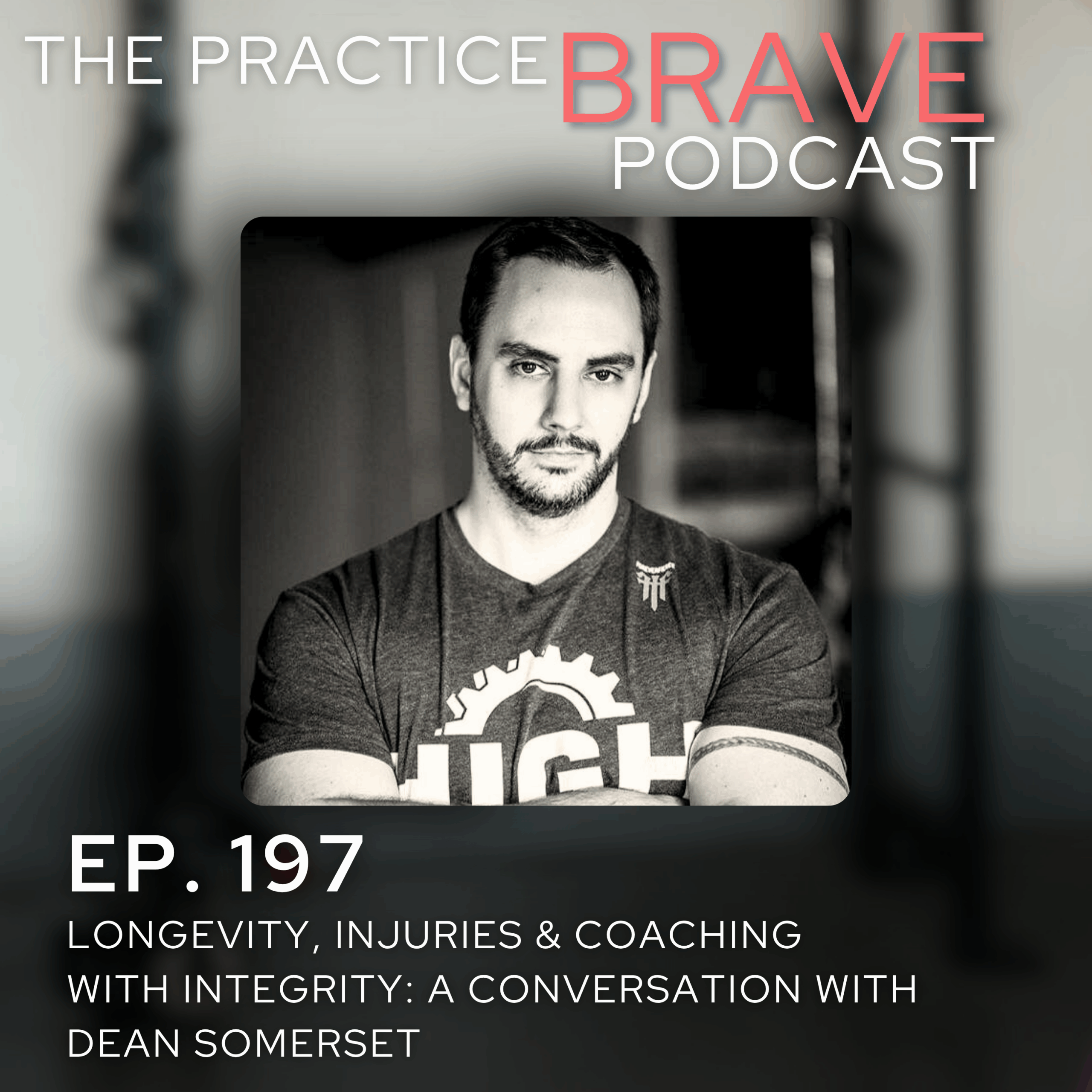
In this episode, I’m joined by longtime industry leader and educator Dean Somerset to talk all about what it takes to have longevity as a coach, trainer, and athlete. Dean has been in the fitness industry for over two decades, blending clinical insight with strength training in ways that are both accessible and high impact. We discuss navigating coaching through injuries, how to bridge the gap between rehab and performance, working with postpartum clients, and how to scale your coaching business without compromising quality.
Whether you’re a new trainer, a seasoned coach, or someone navigating injuries while still wanting to train hard—you’re going to take away so much from Dean’s grounded, no-BS approach.
Connect with Dean Somerset:
Website: https://deansomerset.com/
Instagram: @dsomerset1
Book: Rock Solid Resilience
Need workouts for your pregnancy or postpartum? Check out my programs (now with app access!):
The Pregnant Athlete Training Program: https://go.pregnancyandpostpartumathleticism.com/pregnancy
The 8-Week Postpartum Athlete Training Program: https://go.briannabattles.com/8-week-postpartum-athlete-training-program
Learn to coach pregnant + postpartum athletes:
http://briannabattles.com/ppacoach
EXPAND FOR EPISODE TRANSCRIPT
AUTO-GENERATED TRANSCRIPT
Brianna Battles 00:01
Welcome to the practice brave podcast. I am the host Brianna battles, founder of pregnancy and postpartum athleticism, and CEO of everyday battles. I’m a career strength and conditioning coach, entrepreneur, mom of two wild little boys and a lifelong athlete. I believe that athleticism does not end when motherhood begins, and this podcast is dedicated to coaching you by providing meaningful conversations, insights and interview topics related to fitness, mindset, parenting and of course, all the nuances of pregnancy and postpartum, from expert interviews to engaging conversations and reflections. This podcast is your trustworthy, relatable resource for learning how to practice brave through every season in your life. Hey everyone, welcome back to the practice brave Podcast. Today, I’m very excited to have Dean Somerset here to talk all about longevity in the fitness industry. He is a very successful coach trainer and has worked in a lot of different capacities. Recently put out a book, and I’m just really excited to talk about your experience, like wealth of knowledge and experience of being in the game as long as you have So Dean, thanks for being here. My absolute pleasure. Thanks for having me on Yeah. I mean, I remember reading some of your articles, like, way back in the day, and you were just such a pivotal voice sharing good, trustworthy, quality information and like, there’s a lot to be said for that, especially as we’ve seen an abundance of information come out on social media. So I appreciate you. I just wanted to say that. Well, thank
Dean Somerset 01:43
you very much. And like, I remember writing a lot of those blogs, thinking, if one person reads it, great, but then a lot of them became really popular, and that led to a whole bunch of different things. So you never know what doing something small is eventually going to lead to
Brianna Battles 01:54
absolutely so give us a little bit of your background, like, where, how did you get involved in the coaching industry, education and what what your Pathways looked like?
Dean Somerset 02:04
Well, part of it was growing up. I played pretty much every sport possible, and I was terrible at every single one of them. I was the guy who was at the very end of the bench, at the end of the bench, and I figured that the best way to learn how to become a better athlete was to read, which is a terrible idea, because athletes should not be like spending time learning how to be an athlete by reading you should actually practice. So I kind of screwed up on that point, but I got really good at learning about exercise versus training to become a better athlete. That eventually led to me wanting to get a degree in kinesiology. I initially wanted to go into physiotherapy or go into medicine, but then I thought, No, I actually want to work in the gym. I don’t want to work in a clinic or in a hospital because those environments are cool, but to a point they’re not quite what lit the candle in my life. So I wanted to work in a gym, but I still wanted to be able to blend those interests. So I was able to go through some certifications to gain post rehab designation, medical fitness designation, clinical exercise physiology designation, so I could work with a lot of the more medically vulnerable, but also a lot of the injury and post injury clients and that kind of scratched the need to get everything done, but in the environment that I was most comfortable
Brianna Battles 03:09
in, yeah. So what, what population did you end up really concentrating on? Or have you worked with, like, just a huge variety of people, a big variety,
Dean Somerset 03:19
but most of my clients are post rehab or medical referral. Initially, when I started training, I wanted to be involved in like bodybuilding or athletics, which a lot of people want to but then you realize that those aren’t the people coming in for help from a trainer. Those are the people who are like in the magazines, which is great, but they’re not going to hire the 21 year old, fresh out of university trainer who has no idea what they’re doing. It’s going to be the people who work in an office tower who have a sore shoulder, a sore back, a sore hip, their second knee replacements, maybe a disc herniation, that kind of stuff. So those are the people who were paying the bills. So I wanted to be able to learn more about those individuals so that I could get better service for them, but also get more clients from their sources, but then also be able to expand my repertoire to work with more of the people who are coming through the door?
Brianna Battles 04:02
Yeah, absolutely. And I mean, that seems like you know, you were really kind of ahead of the game in terms of thinking big picture on how to have longevity as a coach is almost like niching down. So then you could kind of further expand as time goes on. So what was different capacities? Like so many people listen to this podcast, and they’re like, maybe they went to school for exercise fizz or kinesiology, and at least when I graduated. And still, I think in a lot of ways, I don’t know if you relate, but there was no entrepreneurial path. It was very much you’re going to go to physical therapy school or maybe corporate wellness or, like, just very like, PE teacher. There were not a lot of entrepreneurial pathways to kind of like, create your own name, your own brand, in your own I guess, focus of coaching. What was that your experience?
Dean Somerset 04:50
Yeah, and I graduated university in 2004 which predates Facebook, predates YouTube, pre dates, all social media. So there wasn’t really anything. In the fitness industry, specific to that point, other than like Ursa, which is the International Health sport and racket Association, which just ran health clubs. So there wasn’t anything about personal training studios, personal training business. If you had a gym that had personal training, it was more like an afterthought add on. So it wasn’t something where it was a department, it was, Well, this guy seems to know what he’s doing in training. We’ll let him work with some of the members and maybe charge 20 bucks see if he needs to. But there wasn’t really as much of an entrepreneurial or business side of things. And as social media started to take off, as successful businesses started to get a little bit of a foothold and be able to say, here’s how we do things, here’s what separates us and makes us stand out, makes us unique, more people were able to get that approach. So I think that there was a lot of people who viewed personal training as if you are a trainer, you either own your own studio, or you work with pro athletes, or you’re the bottom of the barrel who work at commercial gyms, like nobody who’s a good trainer works at a commercial gym. I worked at a commercial gym for the first 14 years that I was a trainer, and I was able to establish myself really well in there, while writing blogs, while teaching workshops all over the world, while doing conference presentations, while being able to build out referral networks. So it kind of changed the concept of where you should or shouldn’t work. And part of that was just being able to say that I didn’t want to have the huge overhead of running my own studio. I wanted to have zero overhead and be able to leave at the end of the day and not have a care in the world anymore.
Brianna Battles 06:23
Yeah. I think that’s so valuable for coaches here that, like, it’s actually okay to have a job and, like, be an employee and work somewhere and you can still have a personal brand, it’s only going to elevate both sides of things, and again, a little bit ahead of your time, I think, in that approach. Yeah.
Dean Somerset 06:40
And part of it was also like working with the company that I was with to be able to say, How can I do this without stepping on your toes? Because obviously it’s their business, and I’m operating inside their business, so I have to be able to represent their business effectively and not take business from them to deliver to me. So it had to be something where we had some really meaningful conversations for a long period of time to be able to get to a balancing point where it was able to work symbiotically for everyone and for everyone to see the benefits that both sides were able to provide. Beyond that, when it got to a point where I was going at a rate faster than what the gym was willing to accommodate or able to accommodate, that’s when I was able to step outside. But they were very gracious in allowing me to do a lot of things inside, but a lot of that came from me saying to them, like, this is what I see going forward. This is my vision. This is what I would like the company to be able to do. Is this something we could do realistically, knowing that these are the benefits the company would get down the line, if it’s just all benefits towards me, the company is going to be like, Well, why would we want to do this?
Brianna Battles 07:36
Right? Right? Yeah, you have to think in terms of, like, what’s going to help everybody rise and again, that’s what’s in it for them. So was that company like funneling some of the like rehab and pain, like, were they kind of giving you that clientele, or were you training a lot of different people when you’re working
Dean Somerset 07:55
for that company? Initially, that’s how it worked at that one gym. Now, this was a gym that had, I think, 20 locations across all of Alberta. At a certain point, I was able to start taking over a lot of the continuing education within the company, to be able to teach other trainers what to do with these different situations. And then we created a bit of a directory where we could have trainers in each locations who could work with medical referrals, because they had taken the core courses to know what to do, and they had the basic competencies. So essentially, I was able to go from being just a trainer, working with the individual clients, to running a program within the company that was benefiting the company, to expand the repertoire of the trainers, to creating a certification process that will allow people to say, these trainers have achieved at least basic competencies in these considerations, to work with referrals. And when we got to that point, it opened a lot of doors for physical therapists, chiropractors, medical doctors to refer people into the company, knowing that there would be people there to take
Brianna Battles 08:49
care of them. Yeah, that could actually support that, because all of that, I mean, I feel very rarely is that a part of personal training similar to pregnancy and postpartum, where that’s not necessarily part of our undergrad or even, like, the main certifications, is more of these, quote, special populations, yet, people are injured all the time. People are pregnant and postpartum all the time, but there’s not really that specific information. So we do need that continued education for coaches.
Dean Somerset 09:15
Yeah, I remember in my degree, I took a sports injuries course, and we had, I think, 10 different guest lecturers who came in, and each of them taught us about rice 10 different times. We learned about rest, ice, compress, elevate, and that was about it. Like there was a couple of other courses that had an injury component, but all of them were like, don’t touch injuries. Don’t work with injuries. Don’t be around injuries. Don’t look at injuries. Don’t be negative around injuries. It’s just like, don’t touch them or even consider it. Except that people will come into you who have had an injury in the past that’s stable, but it’s still a consideration. So it’s not like you’re doing physical therapy or you’re doing medical interventions or providing medical care, you’re providing training, but you have to understand what that individual is dealing with in front of you, if they have a torn rotator cuff from 10 years ago and they. Bench pressing. You need to know what happens if that rotator cuff starts getting a little finicky, if they’ve had a knee replacement, but they want to get fit, does that mean they have to go only to physical therapy? No, they can come into the gym, but you have to understand what that knee replacement is going to limit them to do, and what you should avoid. More people are post injury than there are pre injury. So you have to understand that, yeah, everyone who comes through the door is going to have something on their medical file one way
Brianna Battles 10:25
or another, absolutely. And I think that coaches having that insight is so critical so that we can support the physical therapists and the chiropractors, because whether it’s they’re limited by scope of practice or by time, or just, like, really understanding the kind of movement they want to do. Like, ultimately, these our clients, our patients, should be in physical therapy forever. There should be a bridge for them to come see somebody like you, or to return to their group fitness or their own training. We have to, like, really find a way to connect the dots between what they’re getting in a rehab setting with their PT, and then the next step of working with a coach who gets it
Dean Somerset 11:02
huge and to bridge into what you do postpartum is post rehab. So you went like any mother out there, went through massive trauma in one way or another, whether it was natural delivery, C section, anything like that. So there is a post rehab component to that. So if you’re saying, Well, I don’t want to work within your clients, okay, well, you’re not going to have any mothers working under you, you’re not going to have any people who’ve had any injuries. So you better learn how to deal with injuries and postpartum individuals, because that’s going to make up a huge chunk of your revenue every year.
Brianna Battles 11:31
Oh, absolutely. Like, everyone has their own sort of special consideration, but they’re actually just really common considerations, and you got to have that skill set to understand, at least have some basic context and be emotionally intelligent enough, but also, like, physiologically intelligent enough to be able to, like, improve their overall quality of life, nevertheless, their long term athletic performance goals.
Dean Somerset 11:53
It’s huge, huge. Yeah. I mean, the funny thing is that the more you see the recommendations on different post rehab, the more you see that they’re all kind of the same. It’s like when you deal with somebody who’s had a heart issue, high blood pressure, diabetes, thyroid issue, anything like that, their cardiac recommendations are 70% heart rate, Max. Like, all across the board, everything is the same, 70% heart rate, Max. Yeah, 12 when you look at it that way. But it’s like, do I need to be varied on a lot of this stuff? It’s like, okay, cool. This person, guess what? I’m going to set you up on a highly customized plan specific for you, exact same as 99% of the other population coming through the door, because it works. That’s the key thing. Yeah, no,
Brianna Battles 12:29
that’s that’s a good point. And actually really appreciate you bringing up that perspective of, like, working with moms, because I think so many people, especially coaches and trainers, assume like, well, you’re not pregnant anymore, and when you’re pregnant, anymore. And when you’re pregnant, I don’t really want to work with you. I don’t work with pregnant people. And then part of it’s like, oh, well, like, you’re normal now. So like, let’s go. And I love that you touched on the fact that, like, it’s actually a really big deal physiologically, regardless of birth method. And that’s like a hill that I die on with everyone. I’m like, I don’t care if your birth and pregnancy was easy, having a baby come out in your body, and like, have physiologically changed in so many ways over the last year, and still being different if they’re posts, you know, like managing any kind of pelvic floor issue, their abs, diastasis or whatever. And ultimately, just like breastfeeding, not to mention all of the other variables we can’t even measure as well, like their nutrition, their sleep, their stress, factors like this is a very vulnerable state, and it’s not always popular to acknowledge that, especially in the fitness industry.
Dean Somerset 13:32
Yeah, and I mean, unfortunately, Women’s Health is, like, woefully underfunded and understudied. Like, if somebody has a C section they’re cutting through, like, how many different layers of connective tissue to get into the uterus to be able to extract the baby out? And then they’re told, like, Okay, well, just Don’t lift anything for three months. Okay, great. Go for it. Have fun. But if you have like, a torn ACL, you get like, 12 sessions of physiotherapy. That’s what it should be. But if you have a C section, you get none. It’s just given that you’re just going to suffer and do whatever. But, yeah, you kind of have to retrain a lot of those ab muscles to, actually, I don’t know, work. Don’t know, work again after major trauma. So it’s something that I think is kind of overlooked for a long time. And I work with a couple of physical therapists in Edmonton who are like pelvic floor and postnatal specialists. They that’s all they do. And we refer back and forth with each other all the time. And a lot of the clients that have come in to me from them, they come in in great hands, because they’re seeing really good treatment. But then it’s a matter of, okay, well, what are we dealing with today? Is this person able to deadlift? Is this person able to run? Is this person somebody who we have to manage intra abdominal pressure down to like, finite amounts? Each person’s a little bit different, even if they’ve gone through the same pregnancy, the same birth, the same everything, and they’ve had a healthy baby and healthy outcomes, but every person is a little bit different, and the challenge is just being able to work with that person in front of you, to find what their best is and be able to help them reach progress. There’s no real one set solution that’s going to work for
Brianna Battles 14:55
everyone, absolutely. And something you know that I coach a lot of my coaches on that have gone. The certification is like, it’s not just looking at their pregnancy and the way that they had their baby, like their delivery, and it’s not even looking at what they want to do as an athlete. It’s also say, like, who were you before you got pregnant? What sport Did you grow up playing? What did you do for the last 10 to 20 years? And then what was your pregnancy like? Because that’s going to help me connect the dots on what your postpartum recovery needs to look like, all of those things, that ACL injury, that hip pain that you had, the SPD that you had during pregnancy, the tearing that you had, or whatever, all of these things are clues and insight on what your postpartum recovery needs to be like. And that’s why there’s no like one size fits all postpartum exercise program or series of exercises you can do that are just like, you know? Well, this will solve all the problems. And no this, we are multifaceted humans, yeah. And, I mean,
Dean Somerset 15:51
everybody is going to have, if they’ve had multiple kids, they’ve had multiple births, which means multiple different scenarios to work through. So I had one client who has had four kids, which resulted in four episiotomies As well as, like, a failed C section approach. That wasn’t quite the one. When the doctor got in there, they’re like, Nope, we can’t do it this way. We got to go the other way. So four episiotomies, four natural childbirths, and one partial c section out of four kids. It’s like, there’s a lot of stuff going on in that. So when we did a lot of the basic muscle testing on her, she was like, she could make them recruit when she really thought about it, but she had to really think about everything to get it on part. So it took us about six months just to establish that basic, like, okay, when you contract your muscles, this is how you do it, this is how you move, this is how you feel. And then we could actually start building on top of that. There’s other people that I’ve worked with who came in who’s like, they’re off the charts on everything. Everything Everything is exactly what you would want to see. But we were able to start dead lifting and lifting weights and running and doing all that within day one. So everyone is different.
Brianna Battles 16:49
Yeah, it’s just like that foundation of like, just that finding that neuromuscular connection again, after your body has been so significantly altered, even just by growing a baby, you know, like, you know that we lose so much of that, even if you have a really good fitness baseline, it is still compromised a little bit. And this has just become not popular to say. But I feel like as coaches, we have to acknowledge that this is a big deal, because culturally, we’ve been really dismissive of women’s health and really dismissive of mothers in general, especially as it relates to exercise, I think you’re fairly close to the same age, and it’s like I was one of the few women in the weight room in my early 20s, and that was only because I was a college athlete that I was even there. We’ve seen such an incredible upswing in women lifting and not needing to be convinced that exercise is beneficial for them, like we’re seeing more and more women in the gym, but it wasn’t always like that. So now to see women who are like, Yeah, I want to keep exercising through pregnancy. I want to get back to exercising as a mother. That’s a very much part of my value system. We haven’t had the medical community, the practitioner communities, and even aspects of the fitness community kind of catch up with that avatar person, yeah.
Dean Somerset 18:03
And the downside with the fitness industry is obviously, like, it plays catch up based on the needs of the market. So for the longest time, there wasn’t that need, until there was that need. So now the fitness industry is trying to catch up and trying to get ahead of the curve and trying to be like, what do we need to know about these people? Because there’s so much information to know out there, and there’s so many different options that it’s hard to stay on top. To stay on top of it, especially for a lot of young, inexperienced, relatively newer trainers who are like, well, there’s you’re pretty much drinking from a fire hose at that point. So if you’re like, Okay, now I need to understand about like, exercise physiology, biomechanics, program design. Now let’s throw that all in its head and start looking at things like post surgical complications and follow up pregnancies and all that kind of stuff, then that’s a lot of stuff to take in on a relatively short period of time, right?
Brianna Battles 18:49
Yeah, and it’s hard to get like, buy in, I think, not just from the client and the person who is postpartum or post ACL surgery or, you know, kind of back pain, whatever it might be, like, buy in from them, but also the buy in on the coaches, because then coaches are, like, tempted to give them what they want instead of what they need, and then, you know, afraid that they’re going to lose that client if they’re actually giving them, you know, what they need in terms of rehab. So how have you navigated that in terms of, like, Hey, I know you don’t really want to rehab and you’d rather get back to running or lifting or kind of pushing boundaries, but how do you go about explaining that process and getting that buy in?
Dean Somerset 19:29
Well, part of it is, I mean, working in a gym, I’m not working in a clinical setting, so I’m hoping that the people coming in have a bit of a different motivational stance, and they want to work a little bit harder, which is great. That’s what I’m here for. And then my plan isn’t to necessarily tell them what they can’t do. It’s to show them what they should do and what they can do and what will help them get to the point of what they need to do. So a lot of it comes to laying out what my actual plan is. So when you hit this milestone, then we do this when we hit this milestone, then we do this when we hit this milestone, then we do this. This is the plan that will get you back to doing the things that you want to do. It. We have to take it step by step, but most of the time, we can train really intense and get person to scratch that itch that they’re looking for, for that intense training as we go through that rehabilitative process. And that’s really the cool part about training, is that you can meet people where they’re at and absolutely obliterate them mentally, physically, spiritually, emotionally, and have them come back later saying, that was a great workout, but I didn’t hurt afterwards. If you understand how you’re playing with the variables of things like load, velocity, volume, frequency, all that kind of stuff, you can adjust those variables as you go forward and make it something that’s really beneficial for that person and meets them at the point where they’re like, this is a good workout. I’m really happy we’re doing this. This is awesome. And I don’t hurt the way I thought I would.
Brianna Battles 20:42
Yeah, I think that’s that’s like the art of coaching, truly, that so many people haven’t experienced because they’ve been taught that, like, either they’re maybe not as supervised with their exercise routine, because they’re doing their own thing, or maybe they’re in a class setting, so then actually, be really intentional. They’re like, Oh, actually, deadlifts. Don’t, don’t, they don’t hurt me now, or because they’re doing them better, or they’re, like you said, their volume or their intensity was manipulated to where they needed to be, not just what they should do or what somebody else in their class was doing. So then they went full send to try to keep up and like, that’s where we see a lot of those injuries happen. And in my world, postpartum of just doing too much too soon, or maybe doing more than they should be doing during pregnancy, where they’re pushing these boundaries without even knowing what some of the potential consequences are. There’s just so many different variables that we don’t get to have control of in a lot of ways with our bodies, whether it’s during pregnancy, if it was part of them, or otherwise, like most people don’t get injured on purpose, but we have to know what the contributing factors are and variables to maybe be more mindful of. But that’s just not always intuitive.
Dean Somerset 21:47
Yeah, and the biggest thing I try to get across to a lot of my clients is that this is a team approach. I’m not doing this to you. We’re doing this together, and you need to communicate with me about what’s going on. So if I ask you, like, how did you feel after the last workout? And you’re like, good, I couldn’t stand and walk for three days. Well, that probably isn’t what we’re going for right now. So that’s good information to have, and I’m going to adjust accordingly. If I ask you, like, where do you feel these muscles, or where do you feel these exercises working? And you tell me here, here and here, and I’m like, okay, something’s off on that we have to adjust around it. That’s me trying to get the exercise better for you. It’s not that you did it wrong. It’s that I want to make sure you get better results from the specific approach. So the communication has to go both ways. I have to let you know why I’m doing something, but then you have to communicate what you feel from that in a way that allows me to adjust the programming, the adjust the exercise, to make sure you’re getting a benefit
Brianna Battles 22:35
from it. Yeah, I mean, and there’s so much value to I kind of call it like emotionally intelligent coaching, which it doesn’t even have to be weird. It’s just more of like, knowing how to have a conversation with somebody and, like, gather feedback, verbal and nonverbal clues. But I don’t feel like that is something that is really taught or highlighted enough it for coaches in general, whether it’s their certifications or undergrad, what they’re learning, unless they happen to have a really good mentor or, you know, they’re kind of following the right group of people. But, I mean, you and I both seen the fitness industry change quite a bit over the last decade. Ish, what do you have to say about that piece, where it’s not always intuitive on how to communicate like that?
Dean Somerset 23:17
I mean, part of it is that, yeah, everyone’s kind of going into more of, like, an online or Instagram style of training, where it’s like, here’s the exercise. Go do it this way. And not too many people are like, Okay, well, let’s fine tune this. Let’s dig into it, and then let’s also talk about the person who’s doing the exercise. To dig into this. That’s harder to do, but it gets better results at the end of the day, but it’s really hard to scale. So if you’re interested in building your online empire where you work for like, two hours a day and train 20,000 people intelligent, emotionally intelligent training is probably not going to be something that you’re interested in because it doesn’t resonate with your audience. It might be something that if you’re a one on one or face to face with people, that’s where it really clues in. If you’re working a small group to a point, but then you’ve only got so much time you can spend on each individual, but it’s something that I think a lot of trainers, if they want to establish deep, meaningful relationships with people in person, is going to be where they’re seeing that if they want to establish maximum scale with minimal interaction with individuals, then online and scale businesses are probably going to be the better way to go. Yeah. And the good thing is, is there’s options for everyone out there to do both, or to do one more than another based on what lights the candle. Yeah, for me, I’ve done pretty much all of the different models. It’s a matter of what works well for me and what I like during covid and during academic shutdowns, sitting in front of a laptop all day was not something I was interested in. I wanted to get back in the gym, and that was kind of a really good eye opener for me, because it allowed me to see that, yeah, this is where I’m meant to be, right?
Brianna Battles 24:45
Yeah. And I think there’s just so much to be said for like, even if you’re not necessarily doing a lot of one on one, your messaging, and how we communicate online in our marketing and how we sell and how we speak to them. Asses that can still be, you know, through, I guess, an emotionally intelligent lens of coaching, and that’s actually what why I feel helps distinguish people where I’m like, that’s like, a bunch of fluff and Bs, and this person is like, they’re showing their integrity without even having to show it. They’re showing their expertise without even having to, like, proclaim it. I just think it goes a really long way in standing out amongst so much noise. And again, as somebody who’s been in the game for so long, I think you can certainly speak to that.
Dean Somerset 25:29
Yeah. I mean, you can definitely tell the people where it’s like, all right, you got that from, like, a copywriting course, and I can definitely see this the scale that you’re using on that. But then there’s people that actually speak from their heart, like you were saying, you can tell the people that genuinely care and are willing to put things into place, but they’re also the people who’ve gotten reps and reps and reps at working with people and understand what those people are concerned about. They’re not just digging into like a survey results. They’re like, Okay, I know that a lot of my clients have this specific problem, and here’s how I’ve been able to deal with it. So by just dealing with that directly you’re speaking to the emotional intelligence of the person on the other side? Yeah, absolutely.
Brianna Battles 26:05
So what advice would you have for a new coach? Maybe they just graduated. They’re a few years into coaching, trying to kind of find their way. What are some actionable steps that you would recommend a coach to take,
Dean Somerset 26:16
honestly, some of the best things you could do would be shadow people that you look up to see what they do, see how they do their daily life, or see how they work with the people that they work with. There’s pretty much unlimited options for shadowing. You can go shadow at a private personal training studio in a commercial gym in medical setting, depending on what their information sharing policy is, or how you’re able to learn if they have security clearance issues, then, yeah, you have to check them through that, maybe in for a physiotherapy session or a chiropractic clinic, learn how other people do what they do, and ask questions. The more you can form those relationships with those individuals, and you get to know what they do, and use that information that they give you, willingly and freely to be able to better yourself. That’s going to make you a better trainer, a better coach, a better therapist, a better practitioner, no matter what you do. So I’ve had people come and shadow me from like Europe, the United States, Canada, Australia. People just come to say, I want to see what you do. Yeah, they’re always willing to come, as long as it’s something that they want to learn from, and as long as it’s something that doesn’t take away from the session with the clients I’m working with. Happy to have people watch. But I got most of my start by shadowing other people and learning what they do. So one system isn’t going to teach you everything. It’s going to be a matter of how many different systems can you learn from, and then where can you find the commonalities between them that then you can use to be able to say, this is an approach that seems to be consistent across the board, absolutely. And then
Brianna Battles 27:39
what would you say to a coach who’s been in a game a while and now they’re looking to scale. What do you think scaling can look like for coaches?
Dean Somerset 27:49
Well, it could be a couple of different things. You could either take on new employees and take on multiple new clients. Go from one on one exclusively to semi private. Go to large group, go to online, go to large map. Scale online, create a product, release it, write a book, do anything like that that would allow you to reach a different audience than you would normally be able to reach, but the biggest thing is just making sure that you deliver value and service to those people. So no matter what you’re planning to do with scale, just make sure that the end user is able to get the same benefits that they would get if they were training with you in person, in a one on one venue, or whatever your highest value system would actually be, make sure that you have to deliver that across the board and however you’re able to do scale.
Brianna Battles 28:28
And then what would you say to somebody who is intimidated to kind of niche down into working with more of a specific population? I think it’s really tempting to be like, well, I can help everyone. I you know, like, where you want to be able to, like, gather as many clients as possible and make yourself that available for everybody. But ultimately, there is value in niching down. So what would you say to somebody who’s a little hesitant to do that you’re able
Dean Somerset 28:54
to provide value to those people if you’re able to understand what those people are going through and how you can reach them. So yeah, it’s great to be able to say you can help everyone, but then you have to be able to specifically understand what those people are going through, talk their language, address their key pain points and considerations, but then also create an environment that allows them to flourish. So a hardcore bodybuilding gym may not be the best sit situation for somebody who’s brand new postpartum, who’s never lifted weights before. It might also not be a situation for somebody who’s other. If they come into a very large gym that’s blasting hardcore rap music, they’re probably going to get turned off the instant they walk in. If you’re playing music from like, the 60s, 70s and 80s, they might be like, oh, yeah, this is actually my place. So the environment plays as much of a role as any. So understand what they’re going through and make sure that you’re able to meet their demands, meet their considerations and concerns, but also speak their language and create the environment that is most supportive
Brianna Battles 29:49
to their Yeah, absolutely. Who is either has been your favorite client to work with, or a generalization of like, who’s your favorite type of client to get at this point in life?
Dean Somerset 29:59
Yeah. Honestly, like I’ve had the pleasure of working with a really wide range of clients, and the clients that I love working with are the ones that consistently show up, show up to train hard, are willing to communicate and actually take pleasure in the process, the ones who are willing to ask questions and say, What is this working? Why am I doing it this way? I never view that as a challenge. It’s more like they’re wanting to learn. So the clients that want to learn and want to get better, they’re the ones I want to work with, the clients who show up just because they feel like they’re obliged to show up once a week for their one session a week. They’re great, but they’re not the ones that really spark that candle in me as to park that fire and make me want to get better at it. So you don’t also like working with clients that are more complex. I’ve been able to work with a couple of clients that have had heart transplants or, like, cardiac issues, and get them back to a stage where they’re able to say, like, they have no cardiac restrictions, which is really cool, to be able to do some Paralympic athletes who have individual concerns that are very specific to that one person, and also high caliber athletes who just want To really dominate at their sport. They’re kind of interesting too, but in very different ways. So the clients that really want to train hard and are really engaged in the process, they’re the most fun. You mentioned
Brianna Battles 31:11
one aspect of scaling, which is potentially writing a book. And I know that you have done that, and tell us a little bit about your recent book that you have just put out there.
Dean Somerset 31:22
So the book is called Rock Solid resilience, and it’s written by myself and Dan Pope, who’s a doctor of physical therapy in the Boston area. He goes by the Instagram handle fitness pain free. We wanted to write a book that was something that people could use to essentially determine, do you need to go to a doctor? Do you need to go to a physiotherapist? Can you train through that injury, that ache, that pain? What does it mean? And then what do you do about it? So there’s a lot of people out there who may not have direct access to medical care, or maybe they live remotely, or they’re military professional who’s overseas and deployed and don’t have access to any kind of health right away, so they might want to still stay fit and still be involved in the process, but they might be like, oh, you know, my shoulder is feeling weird. What is this? And they don’t have access to someone who can diagnose it for them. So we wanted to walk them through different processes to be able to say, is this something you could train through, or is this something you could train around? And is this something that we could develop a program for that would allow you to consistently train for not just like 60 days or like three months, but for like, 20 or 30 years. How do we manage you, to get you into best shape your life and then keep you there for as long as possible? I love
Brianna Battles 32:31
that, and it’s like, really reflective of a sentiment I talk about, and I know I’ve read through you too. It’s like, how can we help people pursue a lifetime of athleticism, and not just athleticism, but just like activity, have the longest quality of life, and so much of that is like just kind of really being intentional with our training and knowing how to listen to our body, and then actually working with it so that we’re not working against it. So what are some suggestions that you have for the athletes listening, the gym goers listening, that have a hard time navigating that.
Dean Somerset 33:03
So biggest thing is just making sure you track what you do. So if you can actually write down your program, or write down your workouts, the exercises, the sets, the reps, the weights, that kind of stuff, that way you can look back on it and be like, Okay, well, what was happening here? What was going on there? And if you’re able to say to yourself, wow, in this program, I did 72 sets of bench press in one way or another, wonder why my shoulder is sore. Well, that was probably something that might tell you that things happen. Or maybe it’s something where you’ve consistently done like, 10 sets of leg exercises, and then this week, you jumped it up to 25 and then you’re like, spelled like crap. Well, it’s probably because you spiked up the training volume in that place. So 10 seems to be a number you’re comfortable with. So maybe drop it down to 11 or 12 and see how you do there, rather than more than doubling your volume. When you can actually see what’s happening and be able to relate that back to what you’re doing, you have a better chance of being able to say, Okay, this happened here, therefore I need to change this over there, rather than say, I don’t know why I heard I don’t know why I’m breaking down all the time. What’s happening, you can actually look at those numbers and be able to say, Okay, now I have an idea of what’s going on. And it doesn’t have to be anything that’s crazy involved or investigative, like you don’t have to get right down into like sleep scores or anything like that. But just if you want to, the meaningful data is the stuff you’re going to look at in your store independent you perform independent. That’s it absolutely having
Brianna Battles 34:25
that, that self evidence goes a really long way, huge, and it’s
Dean Somerset 34:29
something where, like, a lot of the time, when my clients are saying, I’m feeling this, I’m feeling that, I’ll just look back through their training, be like, what’s happening? What are we doing? And say, oh, okay, when we did this, that seemed to be correlated with the spot where you started to feel this stuff happening. So okay, let’s adjust this back down here just a little bit. And that happens a lot of the time with my endurance athletes, when their volume, either, like a lot of cyclists, if they’re on the bike, volume, or runners, if they’re a road mileage, starts to really ramp up. You can usually see the point where their body’s like, this is our volume limit. This is the most we can tell. Rate for a day or for a week. Anything beyond that, it starts to break down. And then you just understand how to actually massage that limit in one way or another to make it so they can be more productive work. So with a lot of tracking, it’s just about being able to say, Okay, what’s happening and what do I do about it? That’s great insight.
Brianna Battles 35:17
So tell us, what does a day in the life of being look like for you. How do you like to spend your time? How do you train? What is your what’s your like life like
Dean Somerset 35:27
right now? Ridiculously busy because I’m training about 60 sessions a week right now. And that’s not by design. That’s just by accident that I’ve just been saying yes to everything. So normally, wake up at five, get to the gym by six. Train all day, all day. Get home at six, eat dinner, hang out with my wife or my dogs, and then go to bed and do it all over again. So it’s one of those things where I wish I could say I had a really, like, broad set of interests, but right now, it’s just like, put the hammer down and go as hard as you can, and in between that try and write a book. Yeah, no big deal. I’m doing some podcast appearances here and there.
Brianna Battles 36:05
Yeah, here you are. And how do you like to spend Do you like to what does your exercise routine look like when you are a really busy entrepreneur and coach? Sometimes I feel like it’s really easy to put our own training and health on the back burner. Sometimes I’d imagine, during a season of writing a book and training 60 clients a week, that’s a lot. What does that look like for you?
Dean Somerset 36:28
It’s one of those things where it’s like, get the workouts in when you can. Sometimes they’re 20 minutes, sometimes they’re an hour. In the winter, I try to get on the treadmill and run as often as I can just to maintain cardio health. Yeah. In the summer, I get to bike to and from work, which is about nine kilometers, or about five miles each way. That gives me a chance to get some cardio in each day and save a few dollars on gas. But then after that, with weight training, I’ve got a gym set up in my basement, so when I can, I’ll get into there. When I don’t. I’ve got the gym here, so I’ll get out like 20 minutes of just whatever feels like needing attention that day, yeah, and yeah, it’s very unstructured right now and very chaotic, and not a way I would recommend anybody live, and not a way I would want my clients to actually do anything. But unfortunately, that’s the reality of the days, right?
Brianna Battles 37:13
Well, and I think that’s really important to highlight that, like you can really care about this stuff and know a lot about it, and it’s still sometimes hard to implement during different chaotic seasons of our own life. And it’s not because it’s not part of the value system. It’s just that ebbs and flows sometimes. That’s also a part of scaling. That’s also a part of being in this industry, where we say yes a lot. And it doesn’t mean that it’s a forever thing. It just means some seasons are more chaotic than others, but it’s really about that long game, which clearly you got dialed.
Dean Somerset 37:47
Yeah, I know the summer is going to be a little bit less chaotic as far as science sessions go, because people are going to take vacations. So it’s one of those you make Hey, while the sun
Brianna Battles 37:55
shines, right? Yep, so true, so true. Well, tell us where we can learn more about you and your book, and just follow along with your journey.
Dean Somerset 38:04
My website, Dean somerset.com if you want to go on Instagram, it’s de Summerset one. I’ve got a YouTube channel, summertime 23 and then the book, rock solid resilience is available anywhere you get books, Amazon, Barnes and Noble, Hudson’s Indigo chapters in Canada, or any of the local bookstores you like amazing.
Brianna Battles 38:23
Well, congratulations on, honestly, just a lot of longevity in this field, and for continually evolving what it looks like for you and for the rest of us. So thank you for all of that, and thank you for
Dean Somerset 38:35
your time today, not a problem at all. Very pleased to be able to be on here and get to
Brianna Battles 38:39
connect with you. Yes. Thank you. Thank you so much for listening to this episode of the practice brave podcast. If you enjoyed the show, please leave a review and help us spread the work we are doing to improve the overall information and messaging in the fitness industry and beyond. Now, if you are pregnant and you are looking for a trustworthy exercise program to follow. I have you covered. The pregnant athlete training program is a well rounded program for pregnancy with workouts for each week that are appropriate for your changing body. That’s 36 weeks of workouts, three to four workouts each week, and tons of guidance on exercise strategy. We also have an at home version of that program, if you are postpartum and you’re looking for an exercise program to follow, the eight week postpartum athlete training program would be a really great way to help bridge the gap between rehab and the fitness you actually want to do. From there, we have the practice brave fitness program, which is an ongoing strength conditioning program, where you get new workouts each week and have a lot of guidance for myself and my co coach, Heather Osby, this is the only way that I’m really offering ongoing coaching at this point in time. If you have ever considered becoming a certified pregnancy and postpartum athleticism coach, I would love to have you join us. Pregnancy and postpartum athleticism is a self paced online certification course that will up level your coaching skills and help connect the dots between pelvic health and long term athletic performance, especially during pregnancy and postpartum, become who you needed and become who your online and local community needs by becoming a certified pregnancy and postpartum athleticism coach. Thank you again for listening to the practice brave podcast. I appreciate you, and please help me continue spreading this messaging, this information and this work.
MORE ABOUT THE SHOW:
The Practice Brave podcast brings you the relatable, trustworthy and transparent health & fitness information you’re looking for when it comes to coaching, being coached and transitioning through the variables of motherhood and womanhood.
You will learn from athletes and experts in the women’s health and coaching/performance realm as they share their knowledge and experience on all things Pregnancy & Postpartum Athleticism.
Whether you’re a newly pregnant athlete or postpartum athlete, knowing how to adjust your workouts, mental approach and coaching can be confusing.
Each week we’ll be tackling questions around adjusting your workouts and mindset, diastasis recti, pelvic health, mental health, identity, and beyond. Through compelling interviews and solo shows, Brianna speaks directly to where you’re at because she’s been there too!
Tune in every other week and share the show with your athlete friends!
This post may contain affiliate links, which means we receive a small commission from the seller if you decide to purchase (at no additional cost to you!) We only share products and services we have used, tested, and love ourselves!

