196: Pelvic Floor, Platforms & Performance: Kristi Brewer on Lifting Through It All
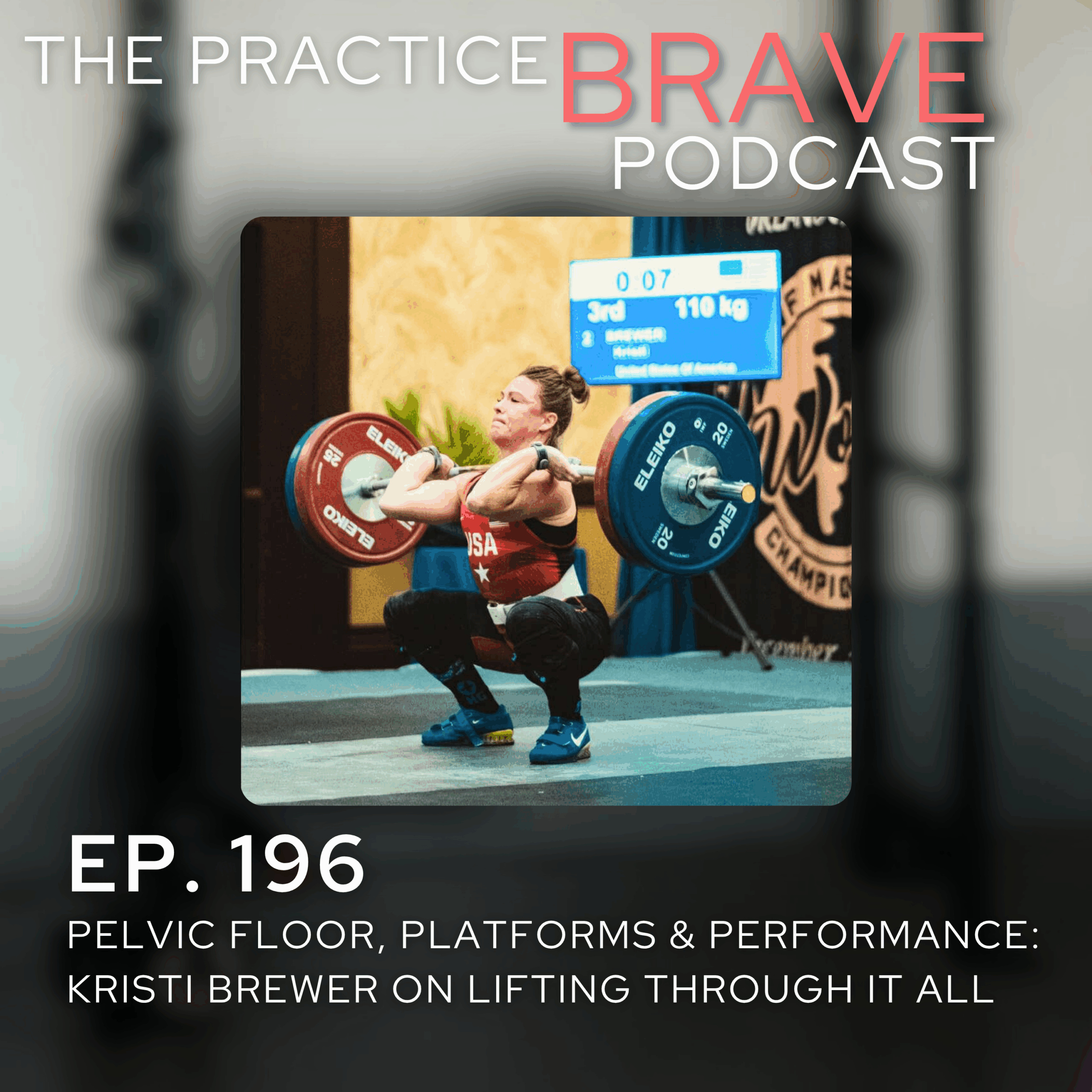
In this episode, I had the pleasure of chatting with Kristi Brewer—USA Weightlifting athlete, CPA, athlete mom, and all-around powerhouse. Kristi started Olympic weightlifting at 35 (yes, 35!) and went on to become a national team member in her late 30s and early 40s—all while raising her family, building her career, and training from her garage gym.
We talk about her journey into elite competition, the mindset that drives her, pelvic health issues in lifting (yes, we talk about peeing during lifts), and how the athlete identity doesn’t just survive through motherhood and aging—it can thrive.
Follow Kristi on Instagram: @k_mighty
If this conversation lit a fire in you, share this episode with another athlete mom or late-in-life lifter who needs to hear it. Leave a review, tag us on Instagram, and let us know your biggest takeaway!
Need workouts for your pregnancy or postpartum? Check out my programs (now with app access!):
The Pregnant Athlete Training Program: https://go.pregnancyandpostpartumathleticism.com/pregnancy
The 8-Week Postpartum Athlete Training Program: https://go.briannabattles.com/8-week-postpartum-athlete-training-program
Learn to coach pregnant + postpartum athletes:
http://briannabattles.com/ppacoach
EXPAND FOR EPISODE TRANSCRIPT
AUTO-GENERATED TRANSCRIPT
Brianna Battles 00:01
Welcome to the practice brave podcast. I am the host Brianna battles, founder of pregnancy and postpartum athleticism, and CEO of everyday battles. I’m a career strength and conditioning coach, entrepreneur, mom of two wild little boys and a lifelong athlete. I believe that athleticism does not end when motherhood begins, and this podcast is dedicated to coaching you by providing meaningful conversations, insights and interview topics related to fitness, mindset, parenting and of course, all the nuances of pregnancy and postpartum, from expert interviews to engaging conversations and reflections. This podcast is your trustworthy, relatable resource for learning how to practice brave through every season in your life. Welcome back to the practice brave podcast today. I’m here with Christy Brewer, and I’m excited to talk with her, because she is now a retired, if we can ever actually fully retire, USA weightlifting girly, and I’m really excited to talk to her about what it has looked like to pursue a lifetime of athleticism, to be an athlete mom, while having the responsibilities of like a career and a family and life and just her different experiences as An athlete, everything from managing pelvic health symptoms when lifting to a competitive mindset to again, just balancing what it means to be an A woman with athletic goals and big dreams and big training responsibilities, but also a mom who is fulfilled in other ways and a woman who is fulfilled in other ways. And I, I’ve just really enjoyed getting to know Christy, and I feel like there’s so many angles we can go with this podcast today. So Christy, thanks for being here,
Kristi Brewer 01:45
girl, yeah, I’m excited, even though we’re super close locally, we’re doing this virtually. I know I was really
Brianna Battles 01:51
excited when I moved to Idaho. Christie was like, What, you’re in Idaho, and now I am. So we were finally able to meet up over at her garage and work through different training tweaks to her lifts to help with some pelvic health symptoms that have kind of like flared up a little bit more, some that have trolled her for a little while, and others that have maybe become gradually more annoying over time. And I just think that that’s certainly in the weightlifting community, a symptom that is very normalized, like, peeing under really heavy load, peeing on the platform, stuff like that is all very normalized in that community, whether those ladies have had babies or not. So Chrissy, can you like, tell me a little bit about like, that culture and like, what is pretty common, what you’ve seen in your time?
Kristi Brewer 02:39
Yeah. So it is, like you said, essentially normalized, but it’s not normal. And it is like, there’s girls who I’ve seen high level, all levels, who have heed the platform, who have not had babies, and to, you know, others who have, and I just always thought, oh, it just kind of like, is what it is, and didn’t really understand that there is, you know, there’s issues, and there’s also ways to resolve it, like you don’t just have to necessarily deal with it. And while I was on the national team and training, what do you call it, competitively at a high level, I did like, pee the platform, if you would, per se, but I would always wear a pad. So whenever I had a heavy day, whether it be in training or always in a competition, because I was like, I refuse to pee the platform. And not because I was embarrassed, but because I hate interrupting the clock. Like, it’s so frustrating because you’re so dialed in, like, when there is a clock stop, it screws you up. And so I never wanted to be part of that. So I would always just wear a pad, like, and I didn’t want to worry about it for me. And I would do it also in training. But, yeah, it’s, it’s something that’s out there. I and most people just try to be like, Oh, IP platform, and it’s like, I don’t believe it’s a badge of honor. I believe it’s like, hey, let’s
Brianna Battles 04:05
address this. Yeah. And it’s hard to kind of like, undo that culture. I remember one of my like, first strength coaches, way back when he was, like, a mentor and strength coach, and he just was like, yeah. I mean, that’s just kind of like, what happens when you lift really heavy. And that was way before I, like, was working in this capacity. And so I think that both in the strength sport community, but also, just like, our understanding of women’s bodies just have always assumed that if you’re peeing, that just means, like, Oh, you’re like, clearly working really hard, you are at your threshold. And yes, that is, in fact, true, you are at your pelvic floors threshold. There’s a lot of different variables that influence that symptom, and there’s a few tweaks that we can make and now, and I now, I know this now from over a decade working with female athletes with different pelvic health symptoms, but like there are things that we can do proactively as women. But. We, frankly, just haven’t been taught how to lift really heavy for our unique anatomy. We have different anatomy than like, what a lot of the weight lifting, whether it’s weight lifting or power lifting or strong man or CrossFit whatever, like Valsalva and different bracing and breathing strategies have been taught to women, but they don’t necessarily serve our bodies, because those breathing strategies and bracing strategy are caught with male bodies in mind, not with pelvic health in mind. So while Valsalva is certainly a strategy that can be really effective, it’s effective until it’s not, and then we have to have other ways to help our female athletes perform and then function, not just in the moment and on the platform or in training, but like, when we’re
Kristi Brewer 05:42
80, yeah, yeah. Well, and like you said, I I feel like that. It’s gotten worse as I’ve gotten older. And I used to always think, like, I don’t pee when I box jump, I don’t pee when I jump rope. So it wasn’t, per se, like, an issue, and it was only under, like, heavy, heavy load, like, 90% plus. And now recently, like, obviously, my 90% is gone down because my maxes have gone down just because I’m not training at that capacity. And so it’s like become more of an issue and an annoyance and frustration. Like, for me, it’s frustrating because I just want to be able to train and not have to worry about that. And so it was like, Okay, well, what, what do we need to do? Because at the end of the day, like, if there’s a dysfunction, I believe, like, and I can train, then I want to learn how, like, how can I train better to improve overall performance,
Brianna Battles 06:41
yeah, and I think it’s hard because, I mean, there’s so many different layers to this. It’s like, as women like, we’re still kind of that generation that was, like, some of the first women that were lifting, and then some of the moms that were training through pregnancy, and then we’re kind of continuing to pursue fitness as moms like, and you kind of found it a bit later in life, right? Like, your your like, athleticism, you found a bit later in life?
Kristi Brewer 07:04
Yeah. So I was, like, I was always an athlete, collegiate athlete, and then, you know, I was under the mindset, like, once you have kids, once you graduate for kids college, like you’re essentially either a career woman, say, like mom and that that’s like fulfilled. My entire wouldn’t say fulfilled. It wasn’t fulfilled, but It filled my entire day. You know, I worked corporate America. I rushed home to babies, and I was putting a husband through medical school. So there was 10 years, 23 to 33 which would have been those, per se, prime years, or I didn’t train, and then I essentially hit rock bottom and trying to find something for myself. And that’s when I found, yeah, weightlifting at 35
Brianna Battles 07:49
so I want I just like, like, who pause there? Because that is so powerful. Because I feel like so many people do feel like their identity and activity level as an athlete, just like dies when they maybe are done with college, or they get married, they have kids, they’re in like, the stress season of like life, and almost like you’re growing up at a really fast rate during that, that season of life, and your own goals kind of get sidelined. And also, I love that at 35 when so many people love to say, like, your advanced maternal age, or you’re washed up, or you’re whatever, all these things geriatric, yeah, like, there’s almost like a negative connotation with 35 or even with 40 like that. It’s somehow you’re not able to be not just athletic, but as athletic as you once were. So talk to me about finding yourself as an athlete at 35 and what that process has looked like between 35 and however old you are now. Yeah, so I’m
Kristi Brewer 08:48
44 sporting age. So yeah, I started CrossFit in 34 sorry, when I was 34 and I had never heard of a snatch, clean and jerk, hook, grip, any of that. And I signed it for CrossFit because I am someone who loves high intensity. I hate running it like makes me go crazy. It’s just not my thing. Never has been and I love, I just love the intensity and the community of CrossFit. And then when I got into CrossFit, I found out about weightlifting, and it ended up being, it was kind of funny. So it’s not that I was, per se, better at weightlifting. I was actually, at that time, had a really good engine, like I was crushing all the chippers and and the workouts. And so what happened is I was like, well, that addictive, like athletic mindset got triggered, and I was like, I want to do this. I want to go like, I’m going to make this happen with CrossFit, I needed to be good at like, 900 things, which required a way more time, and then also going to a gym, because I needed access to everything. Versus weightlifting, I was like, Dude, I just need, like, a barbell plate to squat rack, and I can do it in my garage. I can train whenever it works with my schedule. So that was kind of why I transitioned into weightlifting. I’m also a CPA, so I love the monotonous, like, of, like, the entire thing of weightlifting. I love, I love that I’m doing the same thing and just trying to, like, I know exactly what I’m going in to train for and how to get better. Versus CrossFit, it was always like, oh, surprise. Like, and so I preferred much more of, like, I know exact predictability. Like, honestly, it is mundane. I’m doing the same workouts a different just different variation to tweak something. I’m going down a rabbit hole. I don’t even know if I’m answering the question, um, so anyway, like, I found it at 35 and I was like, Oh, I’m kind of good. I What? I compared myself to numbers, whether they were, like, local, national, international numbers. I was like, Oh, I I’m not terrible. I can get somewhere. And so I started October of 2015 and my first competition ever, I actually qualified for nationals. And I was like, what’s that? And I was in the 60 3c session, and I remember going, and I’m like, I just want to be in the A session. Like, if I could make the a session with all of these amazing athletes, I’ve made it. And then within, like, my next nationals, I was in the a session, and I was like, you know, like, an athlete, Okay, what’s next? That what’s next. And so after the a session, I was like, I want to meddle. And then I met, started meddling, and I was like, Well, I want to go for the national team. And so I made the NAT my first national team at 38 so I was in the sport for about two and a half, three years before I was qualified and admitted into, like, the drug testing pool, which is, like the most amazing. I thought it was, like a badge of honor, you know, to be qualified to go through, like that whole process. But yeah, at 38 I was the only person with kids on the team. I was everyone thought I was a coach because I was so old. But no, I’m an athlete.
Brianna Battles 12:19
Yeah, 38 a mom of two, a job as a CPA and casually, just going to be on the national team again at 38 so it’s almost like you’re not washed up. Am I right?
Kristi Brewer 12:35
And that’s so I always pick up, because you see posts all the time like, Hey, I’m 30 I’m 35 is it too late to start weightlifting, right? So I believe, like, that’s why I continually Share my story on Instagram, because I was inspired when I saw a fellow working mom, older, dominating. And I was like, yeah, if she can do it, I can do it. And that’s really like, so anyway, I show up, continue to share my story, because I’m like, some other mom out there is going to be like, hell, yeah, let’s go well.
Brianna Battles 13:09
And I have found that so inspiring, because it truly represents, like, what it means to not just be an athlete mom, but like, pursuing this lifetime of athleticism that it’s not over, even if it looks different, like, aren’t you? I mean, I feel like all the time I reflect back, and I’m like, I’m so grateful for the athlete I am now compared to the athlete I was in college. Like, we are two different people, and I am so much better now than I was then, and I’m better now than I was a decade ago in my 20s. Like, and it’s wild, because we have such a almost like a backwards thought process of what happens to women, what happens to our bodies, what happens to our our like, I guess, our athletic potential once we are over 22 or once we become moms, or whatever, like, once you’re over 30, there’s a lot of negative connotation there. But I’m seeing over and over and over that like women are actually reaching their peak later in life. And I think there’s a lot of different reasons for that.
Kristi Brewer 14:02
Different reasons for that, I think. And like, I was talking to our national head coach of Teen USA weightlifting, and he made a comment, and I would never thought of it, because people are always like, oh, kids like being older, having so much on your plate is a negative. And he was like, Well, it’s actually one of your strengths, because thinking about like, your ability to focus through like, chaos and to juggle everything you know, when a lot of people start to break down, whether it be in competition or training, I’m just like, like, whatever you know, because I’m used to the chaos and then having to essentially deal with it and keep going. I believe, like what most people consider a weakness, is one of has formed me to be the like a
Brianna Battles 14:54
strength, totally and like we learn to prioritize and be so much more efficient with our. Training with our mental edge, and also know that like this is not like, almost like, I guess, the freedom to know this is not my whole identity. This is not my whole job. Like, if weightlifting or Jiu Jitsu or CrossFit or whatever got taken from me tomorrow, I would still be okay. And there’s so many athletes that are dedicating their life to their sport, their triathlon to CrossFit to Olympic lifting, whatever, where, like, if that got removed from them, they enter an identity crisis. It’s huge. And it’s not that, like, we don’t love our sports and care. It’s just like, I think it’s it almost gives you this, like, mental advantage where you’re you’re like, I love this, but it is not who I am in my entirety. And there’s so much freedom there, yeah, well, I will
Kristi Brewer 15:41
definitely say, like, I still went, went. So I was on Teen USA from 38 to 42 I retired in 23 and it, it was I actually went through another, like, identity crisis, the same thing I experienced when I, like, after college, because I had given so much in this pursuit, and it was hard, and now in understanding so another coach conversation I had, like, well, weightlifting is not who you are. It really just amplified everything that I already was in the sense of, like, I’m dedicated, I hard working, like, I’m gonna show up. I’m passionate. I’m a hustler. Like, and those attributes, while it amplified, not amplified, but essentially like were shown, I can’t think, yeah, lifting, like, those attributes and who I am are actually going to show up in any endeavor. Like, now, I miss you, mountaineering. And guess what? I’m the same
Brianna Battles 16:40
thing, dedicated full sun,
Kristi Brewer 16:43
like, you know, both in, like, all in, yeah, um. And so it’s just kind of like this, you you’ll forever be who you are. And it’s just like a different method of the man, yeah,
Brianna Battles 16:57
no, I really get that. And so before we started recording, we were talking about, like, Christy was like, how are you doing? I’m like, Ah, I’m fine. I am coming off of, like, getting my ass whooped at a jiu jitsu competition this past weekend where I had to, like, cut pretty hard week of and, like, where you just get, like, really hyper focused on that one thing, and then I’m in like, my post competition funk, which I would love to just say, doesn’t happen to me, but it just does. And our athlete brain and coach brain, at least for me, it’s constantly at war, like, especially in those, like, competitive and training environments, like, I would love for jiu jitsu just be, like, a recreational thing. But even my coach yesterday was when I was, like, telling him how frustrated I am, he’s like, Yeah, but like, you don’t have it in you to not compete like you still like you can’t be recreational with this sport. And I was like, but I wanted to be for so long. And now my brain, my athlete brain and my coach brain, they both troll me constantly. And it can be so hard when you invest yourself into a sport or into competition and have certain expectations, and then, like you literally just get your ass kicked by it, sometimes mentally, physically, emotionally. And while it’s not like my whole identity there are, you know, we take it really seriously. And you know what we were saying earlier is like that competitive little girl, she just never dies, that athlete brain, it never goes away. We get better at managing it. But like, I sat there after the competition, just like, teary and pissed off in the corner where I told my husband, I was like, don’t, don’t talk to me right now. And like, he knows, fortunately, to, like, leave me alone. But I’m just sitting there and like I am a 38 year old woman with two kids at home. I have a whole business, and I’m sitting here pouting in the corner because I’m just pissed off at, like, how today went, you know, like, that doesn’t die. It just doesn’t die, no matter how old you get, no matter, like, how much it matters or doesn’t matter.
Kristi Brewer 18:51
Yeah, well, and I think that’s honestly the edge, right, being able to essentially always be a tiger. I feel like that’s why we tell people it’s like, it’s not necessarily the athletic ability, that’s the athlete mindset, and that’s something that will never die. I like, forever an athlete, and that, like, it’s going to be different levels. Like, right now I’ve, like, totally different goals for, say, lifting. Like, yes, I’m still gonna compete, but it’s not like, in pursuit of making the national team. This now is like, truly me against me, which is actually really cool, because it’s like, I’m literally just here to beat myself, and honestly, just to see, like, hey, what’s capable at 44 for Christy Brewer?
Brianna Battles 19:37
Like, yes, yeah. And like, that’s the that’s the beautiful part, is that, like, we get to pursue a lifetime of athleticism and whatever that might look like, whether it’s in a sport that we grew up in, the sport we discovered later in life, or just different physical activities and hobbies and things that we can just dabble in, get better at and improve and like you can leverage that as. Athletic mindset and your identity as an athlete into so many different activities and so many different ways to, I guess, like, experiment with that, and ultimately, that helps us as moms, like, raise our kids. I’ve loved seeing you training with your girls and what you do with them, like, because you’re a little bit ahead of me in mom life, and I think it’s so awesome that you get to train with your daughters, like, that’s so cool. And ultimately, like, look what you’re instilling in them, like they have such such a great body awareness and mechanics, and just they’re using their bodies in really powerful ways. And that’s just not something that certainly not something I grew up with. I don’t know if you grew up with that exposure, but like, it’s just, it’s so much more than just us being athlete moms and having our own stuff. It’s like, how we are able to create that culture within our family? Yeah, and I always tell
Kristi Brewer 20:51
people, I’m like, I’m not a sideline mom. I am like, I want to be in there. And I think one of the coolest things about continually to pursue, like competition, athleticism, fitness is I get it like my daughter, not only it’s not just like, well, back on the day of high school, like kids relate to that, you know, like high school in 2000 is the high school in 2025 totally. So she gets, she saw me and has seen me like they grew up, like they saw me Miss lifts. They saw me get pissed, they saw me celebrate. They see like in person the entire journey. And so it’s not just talking about it, but it’s actually seeing it and being a part of it. And then what’s even cooler is being able to talk her through, like, the mind part of it, like the mental toughness, because I’ve been there and not, like, not 25 years ago, like yesterday, yeah, I knew exactly what you were going through, because I was going through the same thing. Of, like, for example, like every day when you go to train, do you ever feel like training? Generally not. And it’s like, well, you just do it because you want to get to the end pathway. And when the weights are heavy, I’m like, yeah, they are, but you’re going to do it anyway. And so talking her through those things that like I’ve had to work myself through, you know, like I had a mental CO or a sport psych, and like, being able to help her through those same like, processes, visualizations, like, Yep,
Brianna Battles 22:30
it’s such a, it’s such a power play as a mom, for our kids to see us living our advice, especially like, You know, we’re, like, we’re raising kids that are in sports or or anything like that. Like Cade, he’s my older one, so he’s a little bit more competitive than chance right now. But like, he is intense and competitive and driven and like, if he loses, or if he, like, doesn’t play, well, oh, it’s shitty. Like he he is like, I call him like, he’s just my little, like, toxic boy for a little while, because he is pouty, he’s angry, he’s mad. He’ll stay on the field and cry and just be so frustrated. And there’s so much where I’m like, having to talk him through it. And in the very same time, my husband sees me pouting, crying in the corner at 38 years old after losing and he’s like, Jesus. Like, Jesus. Like, where does kid get it from? And I’m like, I know, I know, but ultimately, you’re right. Like, they see us ride the wave of like, good practices, bad practices, training hard, putting ourselves in really vulnerable moments, winning, losing. Like, the fact that they witness that as normal is teaching them how to be an athlete, how to win, how to lose, how to learn to manage their emotions. Like, I have to say, he’s gotten so much better over time, like rebounding quicker, but like, I also, like you said earlier, that’s the thing that sets these kids apart. That’s the thing that sets us apart is like giving a shit. Like, the art of giving a shit is like a lost thing, and I feel like we have to be able to instill that into our kids, like it’s okay to care. It’s okay. It’s actually like you should care. I want you to care. I want you to be mad. I want you to be frustrated. I want you to reflect on that. I want you to want to get better. Like, the not give a shit attitude is so shitty. And I mean, that’s something I think we’re gonna we are this next generation is gonna struggle with.
Kristi Brewer 24:20
Yeah, totally, like, literally caring. Because when people say, Oh, I’m scared, I’m nervous, or, like, good, it means you care. It means you’re going to show up. It means you’re going to do the work. And talking through like, the work often sucks. The work is really like, what you have to do, like, and I so I was lists, are, of course, scrolling through Instagram, and I just like, re shared this story, and it was this lady talking about, takes no talent, and most of those things, like showing up to practice early, like taking care of your jersey, doing the accessory work that nobody wants to do, you know, doing all the extra work. Going to sleep, take like, eating the food that you need to do, drinking the water, like that takes no talent, but you know what it like, adds up over time, and it’s like, all those little things that people are like, I just want to do the fun stuff. When it’s like, well, everything matters.
Brianna Battles 25:18
So, yeah, yeah. No, I I totally agree. So before we get into like, some of the nuances of like, of like, the peeing, when lifting and stuff like that, I want you to tell us like, you found Olympic weightlifting at 38 and then you went full send into competing at the highest level that you can. And you did that in the trenches of like, mom life and having a family and having a career. So what did life look like for you during those really competitive years where you were juggling all of
Kristi Brewer 25:48
those things? Yeah, so I founded at 35 we moved like right when I decided I was gonna go all in. And so I’ve actually been remote solo athlete my entire career. And so that was another thing that most people are like, Oh, you’re older or whatever, but you’re like, in a gym with a bunch of people. And I was not like, I literally trained 99% of the time by myself in a gym. And it was honestly the that’s kind of like, the only way I can make it work, because zero commute, I could train whenever. There was never the excuse of, like the gyms closed, like, sorry, yeah, and we’ve just built, like, we’ve invested, over time, in equipment. So what I have now is, like, amazing. I did not with that. So I would say, yeah, like, that was the catalyst, is of a home gym. And I would, I’ve always woken up early. I’ve worked. So my career started in corporate America, the largest, like, accounting firm in the world. And so I learned right away, like, they just worked you to death. So I work, like, gained this great work ethic, of like, if you want to get stuff done, like, show up and make it happen. So in a long story short, like, I’ve always woken up early to get, like, get on top of my day. I’ve always meal prepped because that’s one thing, one less thing I had to do during the week. And so not just for me as an athlete and to make weight, but also for my kids, because it’s just easier to meal prep, like a bunch of everything. So my kids really only know how to eat protein, carbs and fat. Like, here’s your carbs, here’s your like, meat, and that’s just kind of we’ve always structured when my kids. When I was in my elite days of the national team, my kids actually went to public school, and that was huge. That allowed me to have like, focus time for work. So I would drop them off at school at nine. I would work from like, nine to one, and then I would train from, like, for honestly, like three hours. Like, that’s how I was able to get to my level, is because I trained a lot and I recovered a lot, and then I would train, pick them up from school at four, do all the mom stuff. And then at night, I would either go back to work, I would focus on my recovery, and I would go to bed, wake up and do it all over again. So now my kids are home schooled. It’s a lot harder because they’re home all day. I spend a lot of time driving my youngest one’s autistic, and so she’s in like, 20 hours of therapy. Yes, I have help, but there’s just a lot more on my plate, and that’s another reason. And I would not say age, I would say fully, like, if I chose to be at the level I was, or, sorry, make the sacrifices and train at the level I was, I would be, like, be able to still do, like, really great numbers, maybe not national team numbers, because those Girls are amazing. Like, truly amazing. Like, it’s terrified and excited for what the like, this next generation is doing. But I believe, like this new era, new season, where I’m weightlifting to, like, maintain and enjoy life and sport and kids and juggle.
Brianna Battles 29:19
Yeah, the kids just need you differently now, and like, you know, sort of adapting, like doing what you could when you could, and now it’s just, like, sort of evolving with you. And but I think that’s like, what rather that happens to people early on in motherhood, or I just, I get different points, like, you’re training, you’re gonna have seasons where you have a little bit more freedom, and then you’re gonna have seasons where you have less freedom. Yeah. So it’s like, and so it’s like leveraging that and knowing that not one season is forever, that, like, you’re you might start to slowly, like, let out the rope you have a little bit more freedom. Like, I’m in that season right now, and I’m like, damn, this is so incredible, like, because you just spend so long. Being needed so incredibly much for everything, your body, your food, the whining, the fighting, the just chaos, the interrupted workouts. Like it was so much, and then all of a sudden it’s like, okay, they’re like, in school a little bit they’re in school a little bit more. Like, I have more predictability in my schedule that allowed me to dive into training a bit more and not just doing like a the nap time, hustle workout. It was more of like, I can, I can have a little bit more. And then, you know, as they get older, it’s understanding, okay, well, they have more sports, they have more commitments. So when I would normally want to go to that jiu jitsu class at six o’clock at night, well, I can’t do that because we got basketball, baby, you know, like, so it just everything ebbs and flows. And I think being an athlete mom makes you a lot more adaptable, but it can, it’s still just hard to be adaptable, like you’re forced into it, but it’s hard, yeah,
Kristi Brewer 30:52
and that’s ultimately, like, I’m in this new season because my kids are in a new season, yes. And in reality, like she’s my oldest one who competes now, she’s 15, and I got, you know, three, essentially, years of her being in the house, me, mothering, whatever, yeah, but it’s also amazing, because now, like, she’s competing in this high level. So I’m kind of taking a step back, and, like you said, it’s always ebb and flow, fill where you like, fit in, and maybe, maybe your foot’s on the gas, and maybe it’s, you know, sometimes it’s not. And so, right? I’m so grateful. Like, I have zero regrets during those years, I went all in. I reached, like, an unbelievable, what do you call it? Rank? Yeah, like in this sport, and I have no regrets, because now that I’m I have to take my foot off the gas, like, I’m okay.
Brianna Battles 31:47
Yeah, you’re okay because you have a full life, and that is a big part of your identity, and what you’re interested in, what you love, and it hasn’t gone away. It’s just your relationship with it looks different, but it’s still there. Like, that’s still definitely a part of you and what we have to give our sport and fitness and athletic mindset just kind of shifts throughout different seasons of life. And like, I just appreciated the transparency of this conversation, because so often we talk about that through the lens of, like, pregnancy, oh, my training is less than or postpartum, my body is screwed up, and I can’t train a lot, and I’m not sleeping in. My boobs are wild. Like, there’s just, you know, like, it just those seasons are just so freaking hard for different reasons. But then all of a sudden, like, you kind of get to the other side, and then all of a sudden, you’re in a totally different season. Your kids are bigger. They need you differently. There’s just, there’s more there. But then you also have so much more, what I like to call, like, athletic maturity, where you’re able to, like, table some of your own stuff, and, like, just have perspective that we didn’t have in younger years of being an athlete. And now you are in the trenches of being in your 40s, and where perimenopause is, either like on the radar or or happening, your body has changed a bit. You’re starting to notice some changes, and you still want to be an athlete and still perform at the high level for where Christy is right now, even if that’s not where you were, like, five years ago, and that was how we actually ended up meeting in real life, as you reached out and you said, Hey, things have changed. I don’t exactly know why or what, but I’m starting to pee more to the point where I’m getting really freaking frustrated, and I can’t just, like, ignore this anymore, which is truly how most people end up reaching out to me. They’re like, damn it. Okay, fine, fine. I’ll slide into your DMS. Now, I know I’ve been, like, creeping on you for a while, or, like, listening to what you say about this or that, but now I’m ready, so talk to me about some of the things that you were experiencing when you were lifting, because you’re still lifting really heavy. Like To be clear, we’re not talking about, like, easy weight here. You’re still moving around quite a lot of weight.
Kristi Brewer 34:06
So, so yeah, like I said, I I percentage wise, like, my numbers are less, but still, you know, like, I’m still squatting over 300 and still clean and jerking over, you know, 225, and so while, like, that 225, is now my 100% where it used to just be, like 80% so I feel like, in relation like those numbers are less, yeah, so it’s yeah, there’s just issues where I didn’t have them before, specifically in the clean, like I used to not have issues in the clean, generally, in squats, but I was like, crap. Like, I’m so frustrated because I can’t even finish, like, I can’t even get myself to push my limits because I’m pee and it’s frustrating, like, and I’m in my own house, so it’s fine, like, I can go change. Blah. To the bathroom, like, again, why you want a home gym? Because it’s really take care of yourself. But, like, that’s a
Brianna Battles 35:06
new thing, yeah, well, especially when you’re an athlete, like, you can’t have those mental interruptions. And that’s what I tell people. It’s like, maybe you’re like, not embarrassed by it, but it certainly throws you off your game when you’re trying to lift really heavy, then all of a sudden you’re like, Shit, I just peed. And then, like, that thought comes into your mind and it interrupts your output. It interrupts your capacity, not just from a quote, functional standpoint, but from a psychological standpoint. So that’s why I tell athletes, like, you got to, like, this is, yeah. Like, lose it, yeah, yeah. So, like, that’s a whole other thing, you know. And I think, like, it’s a lot of it’s especially saying a CrossFit community where women are like, peeing, doing double unders, and it’s like, well, it’s no big deal. And it’s like, yeah, like, but it kind of is, because now it’s trolling you mentally, and that the mental trolling in that kills performance in general. Like, you have to have such a clear mind, whether you’re competing in CrossFit or weightlifting or whatever. And if you have something that kind of comes kind of comes in, hijacks your moment, that freaking throws you, that throws your performance. So it’s, again, it’s beyond the functional. It is the psychological component of having pelvic health symptoms. And so one thing I noticed with Christy, when I went and, like, watched her just, you know, to kind of give any listener some like tactical feedback and insight. Here is she tends to pressure send her, like Valsalva and her breath down into her pelvic floor. And so that adds additional load to the pelvic floor on top of the barbell she has loaded on her back or on top of the barbell that she has front rack in a clean position, for example. So it’s like, not just the load of the barbell, but it’s the where she’s sending her pressure. And so we worked on redistributing it. I had her kept cueing, like, breathe higher and wider. Like, usually I’ll say, like, breathe into your lats. But even for Christie, I was like, hey, I want you to, like, breathe into your shoulder blades. Like, really, bring your breath higher and wider. So we’re just distributing it differently. And it’s weird, because it’s retraining her brain in a lot of ways, and it’s just kind of troubleshooting that. And then we worked on timing her breath, because where she struggled the most with peeing was coming out of the bottom of a clean and that position has a lot to do with the position of the pelvis, or why she’s peeing, has a lot to do with the position of the pelvis, because when you catch it clean, typically your your pelvis kind of tucks under and you shift to quads to drive up. But we were working on her catching with keeping her glutes behind her a little bit more to help absorb that force and then produce force coming up with more support of the pelvic floor, so then cueing an exhale as she’s starting to stand up again, because an exhale creates a co contraction of that system, which then gives her support from the bottom of her pelvic floor up so it’s able to again, absorb that force of the barbell, absorb that force of catching it, and then absorb the force of having to stand up with that much weight. So I know that was like a lot, but there’s few things that we’re looking at. There is the timing of her breath, where she’s sending her pressure, and the position of her pelvis. Those are like the three main things with Christy that we were kind of troubleshooting. And this is not a one size fits all philosophy at all. This was just like my observations watching her, and it’s not me changing how she lifts. I cannot do that. I should not do that. It’s making small tweaks to the approach which can then improve her pelvic health experiences, giving her that freedom to be able to lift a little bit heavier and drill this new neuromuscular pattern, just like, I mean, you know, in weightlifting, like you spend so much time with a PVC pipe and an empty barbell training, those mechanics, it’s the same shit, just a different presentation. We worked a lot on that, and just putting that, those different cues, into different movements, and in that session, things started to look quite a lot better to me. And I’m curious how things have been going for you and your training. I feel
Kristi Brewer 39:04
like it’s gonna take a lot, like time I have 10 years of breathing and bracing differently. And so while I’m frustrated, it’s not automatically fixed. Um, I feel like I’m at least more aware of my where I’m sending again, like that pressure, because I I think, like chest and laugh, like I just think, breathe, bring it up, and then breathing out. So right now I feel like I’m retraining what is now a subconscious motor pathway. Is retraining that. And I do feel like it’s, I feel a difference, but we’re only what, like a month in.
Brianna Battles 39:47
So, yeah, totally. And again, this is, like, this is, yeah, it’s definitely a time thing. And just experimenting with it at like, lower loads, because your reach, you’re it’s a neuromuscular pattern that we’re trying to train where, like, you’re making. Really conscious at first, so then ultimately it can become an unconscious or unconscious subconscious. I don’t want you going unconscious. That’s like my sport, not your sport, a subconscious thing where her body will just her brain, honestly, will just know what to do, like those small shifts to improve her performance, to make sure that she’s not peeing. You know, peeing is a sign that like something is off. That system is not coordinating. It’s reached its threshold, and that’s how it presents. For some people. It might present as knee pain, hip pain, back pain, all of those things which we are a lot more aware of. And we’re like, Oh, damn, I need to do something differently, because every time I clean, my right knee is hurting. Clearly I’m doing something. Maybe I’m tweaking this coming out of the bottom, or maybe I’m doing that. We watch footage, we make small adjustments and saying, Why the hell is my knee hurting so much? We do that as athletes, and for some reason, there’s a lot of resistance to doing that for something like peeing. It’s just a different presentation of a symptom, yeah?
Kristi Brewer 41:06
Well, not something is, I think that it’s the awareness that a you can’t, like, train differently to improve the situation. And it’s not just like, Oh, it is what it is. Like, hey, let’s understand like, the
Brianna Battles 41:20
reason, right? And, like, a lot of, unfortunately, I’m trying to change this with my certification, but like, a lot of pts and a lot of coaches be like, either ignore it or don’t do that anymore. Just don’t lift over 200 pounds, Christy. And you’re like, Um, okay, like, No, I’m gonna keep lifting, right? Like, so we have to find a way to tweak how you’re doing it, not just what you’re doing, but how you’re doing it. And that’s where we see a lot of improvement, because we’re not taking away a movement or an exercise or a training, we’re just making small tweaks to how it’s being performed and like that’s what I am hoping that we can some changes that we can create, both in the athletic realm for women, but ultimately in the coaches and practitioners knowing how to come in and work with an athlete like you, like I did, and say, oh, okay, I can see what’s going on here. Let’s make x, y and z changes and like, keep building upon that. Keep practicing it when you’re going to your garage and doing the same exact training program that you have scheduled, but now we’re just shifting when you’re exhaling, or now we’re just shifting your position, driving out of the bottom here. Or we’re more aware of X, Y and Z. There’s a lot of potential there, and we just are not fully there yet.
Kristi Brewer 42:36
Yeah, yeah. Like I said, I believe a lot of it is awareness and that, like, you don’t have to deal with this.
Brianna Battles 42:43
Yeah, yeah. Because, I mean, and again, symptoms can get exaggerated at different points in our life for different reasons. And it’s not just because you become a mom like, that’s not it at all. Like Christie said, there are girls peeing on platforms at the highest level of competition that are not mothers, and so much of it has to do with how they breathe and brace and just their pelvic floor being hypertonic, which just means, like, really tight. It holds this contraction all the time. As girls in general, we suck in our stomachs, and we hold a lot there, if you’re in any kind of, like, singlet or whatever, you’re automatically holding in your stomach. So that keeps this contraction of a pelvic floor so or the pelvic floor is staying in this contracted state, and so it cannot absorb force or produce force as well when it’s just constantly holding and therefore fatigued. So then you add load, you add a breath hold, you add a weight value, you add all these different variables, and it’s like, well, yeah, no wonder it can’t perform the way we want it to. So it’s undoing some of these habits that we’ve held for so long, and just kind of finding a different strategy. And then at some point it starts, we start to build resilience there where, then there’s a little bit more freedom to for our body to compromise, right? Because it’s not our form and whatever is not always going to be perfect, especially at a really high level, like it might be ugly, but our ability to compromise is so much better, you know? So it’s like the same conversation we have in terms of, like, helping somebody get better at Olympic lifting, it’s just get better at how will we set up our our strategy for it. So lot of lot of potential there, and we see this, you know, maybe this wasn’t something that affected you much during pregnancy or postpartum, or maybe only sometimes during those seasons. But then our bodies change as we get older, like hormones truly affect pelvic health and the tissues and everything like that. And so that’s why we see, you know, women in perimenopause and menopause have more of a flare up, so to speak, of pelvic health symptoms. That’s why, you know our older generations might be in depends, because, like, their ability to hold, like. Like. So it’s really kind of zooming out and looking at like again, this lifetime of athleticism, but ultimately our quality of life and what can we do proactively? It doesn’t have to be crazy. It’s just changing our approach in some ways. Yeah, and
Kristi Brewer 45:15
that’s honestly like for me now it’s like, how do I maximize not just like my list on the platform, but my overall health. And that’s why I’m like, Okay, let’s look at every little thing. Because when you’re like, hyper focused on one sport, like, everything is just like, hey, how do I maximize the weight on the bar? And in reality, like, not the reality, but now this new phase of life. It’s like, okay, how do I maximize my my whole health, like, from the inside out, because I want to do a lot of things. And I want to do a lot of things. Well, not just at 44 not just at 55 but like, I want to be 95 and wiping my own ass, yeah.
Brianna Battles 45:59
Well, it’s so funny. You say that because my grandma is 95 and is still wiping her own ass and, like, she’s like, really stoked about that. And then she’s like, and in a day, somebody else has to do this. Just give me a pill, Brianna. And I’m like, oh my god, grandma. Like, you know, she’s like, so fiery and sassy. And it’s like, it’s, it’s not funny, but it’s like her, she’s still so capable, even though, like her, she’s managing dementia. But like her physicality, like she takes so much pride in that she is still pretty independent. And I’m seeing that at like 95 she was able to live alone up until like this last year, very independent, and still takes so much pride in being able to, like, still take care of herself in those ways. Yeah? And that’s truly what I think it means to live the most athletic life you can, is having that independence and high and long quality of life, yeah?
Kristi Brewer 46:59
And I want to be like, moving and grooving, you know, I don’t want to be like, hunched over, like, you know, like, yeah, I believe again, because you you’re now seeing, like, really advanced age old people doing amazing things, you know. Like, yes, your body adapts. Let me just put it this way, yes, we have put so many stigmas on age of abilities at certain ages, but in reality, your mind and body, like neuroplasticity, is real. You can learn new things forever. Your body will adapt, like everything can get better anyway, like that
Brianna Battles 47:39
is my big with No, I totally agree. I see it, I feel it. I feel like I’m just surrounded by women that are like, yeah, everything we were told and like those stigmas that’s not it, like it’s not it when you prioritize like, moving well, being a forever learner, trying new things, keeping an open mindset, like there’s so much potential to unlock. And, you know, I always say, like, athleticism does not end when motherhood begins, but it also doesn’t end when our career begins, when, like, our marriage begins, when, whatever, all these other variables, life variables, are going to happen. We’re gonna have lifestyle obstacles and, like, it’s not over, even if it’s different. Like, different is the thing that actually might give you that leverage and and athletic advantage. Yeah, it’s
Kristi Brewer 48:31
just like, going on the flow.
Brianna Battles 48:33
Totally. Christy, this is a great conversation. Tell everyone where they can follow you and learn more about learn more about you.
Kristi Brewer 48:40
Yeah. So I am only on the gram because I cannot manage a million socials. I’m on Instagram on at K, underscore,
Brianna Battles 48:50
mighty K, mighty. Well. Thank you so much for coming on. I appreciate you. Appreciate your just everything like you sharing your story and your experience and your wisdom, and I know that it’s going to help a lot of people to have you to probably look up to and just have as a great example of what’s possible.
Kristi Brewer 49:07
Well, thank you. It was good talking.
Brianna Battles 49:12
Thank you so much for listening to this episode of the practice brave podcast. If you enjoyed the show, please leave a review and help us spread the work we are doing to improve the overall information and messaging in the fitness industry and beyond. Now, if you are pregnant and you are looking for a trustworthy exercise program to follow, I have you covered. The pregnant athlete training program is a well rounded program for pregnancy with workouts for each week that are appropriate for your changing body. That’s 36 weeks of workouts, three to four workouts each week, and tons of guidance on exercise strategy. We also have an at home version of that program. If you are postpartum and you’re looking for an exercise program to follow. The eight week postpartum athlete training program would be a really great way to help bridge the. Gap between rehab and the fitness you actually want to do. From there, we have the practice brave fitness program, which is an ongoing strength conditioning program where you get new workouts each week and have a lot of guidance for myself and my co coach, Heather Osby, this is the only way that I’m really offering ongoing coaching at this point in time, if you have ever considered becoming a certified pregnancy and postpartum athleticism coach, I would love to have you join us. Pregnancy and postpartum athleticism is a self paced online certification course that will up level your coaching skills and help connect the dots between pelvic health and long term athletic performance, especially during pregnancy and postpartum become who you needed, and become who your online and local community needs by becoming a certified pregnancy and postpartum athleticism Coach, thank you again for listening to the practice brave podcast. I appreciate you, and please help me continue spreading this messaging, this information and this work.
MORE ABOUT THE SHOW:
The Practice Brave podcast brings you the relatable, trustworthy and transparent health & fitness information you’re looking for when it comes to coaching, being coached and transitioning through the variables of motherhood and womanhood.
You will learn from athletes and experts in the women’s health and coaching/performance realm as they share their knowledge and experience on all things Pregnancy & Postpartum Athleticism.
Whether you’re a newly pregnant athlete or postpartum athlete, knowing how to adjust your workouts, mental approach and coaching can be confusing.
Each week we’ll be tackling questions around adjusting your workouts and mindset, diastasis recti, pelvic health, mental health, identity, and beyond. Through compelling interviews and solo shows, Brianna speaks directly to where you’re at because she’s been there too!
Tune in every other week and share the show with your athlete friends!
This post may contain affiliate links, which means we receive a small commission from the seller if you decide to purchase (at no additional cost to you!) We only share products and services we have used, tested, and love ourselves!

