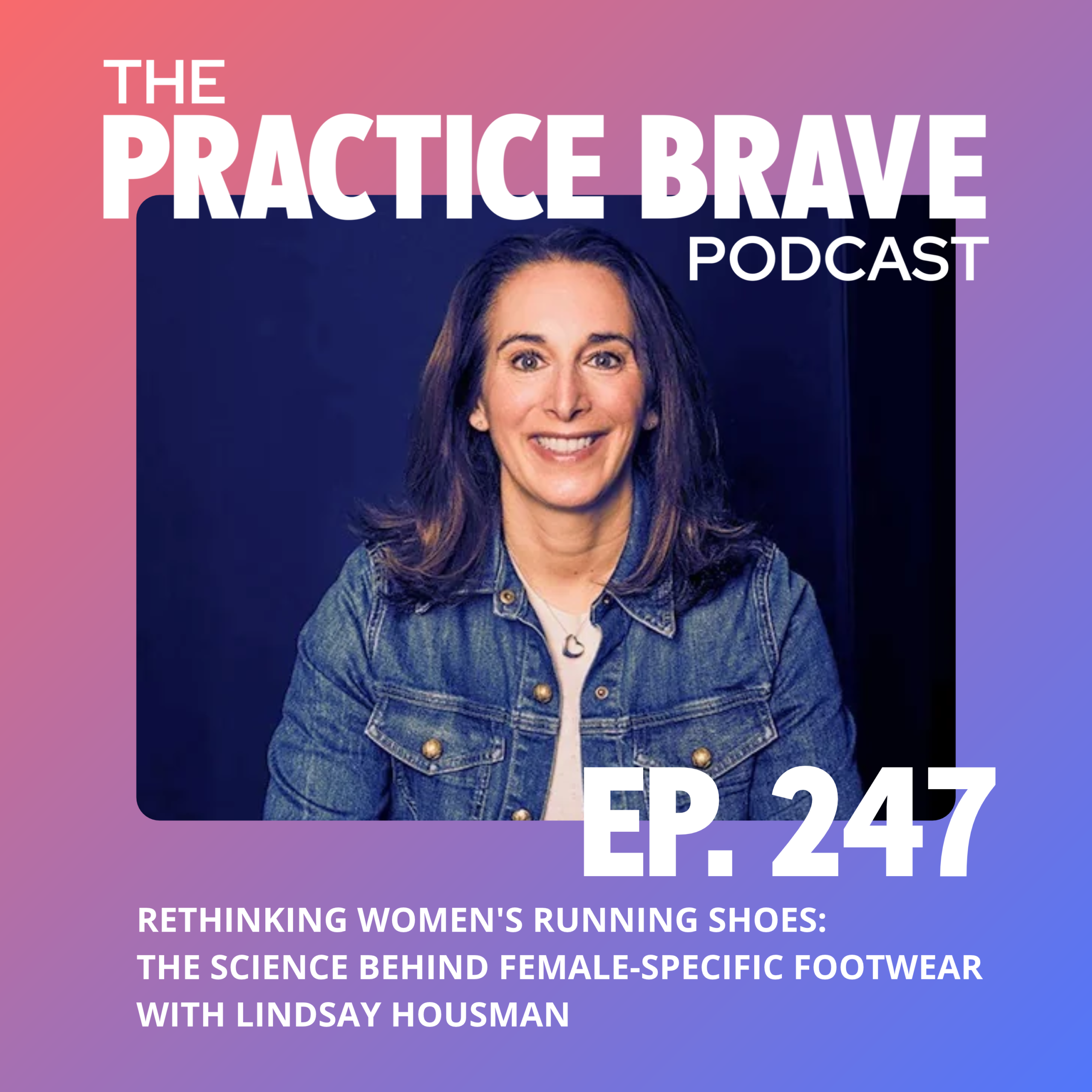
In this episode, I sat down with Lindsay Housman, founder of HETTAS, a female-specific running shoe brand built around research, innovation, and community. As a mother of twin daughters, lifelong sports enthusiast, and business leader, Lindsay shares how her personal experience with foot pain led her to question the footwear industry’s approach to designing shoes for women.
We explore why women’s running shoes need to be about more than simply shrinking men’s designs, how differences in female anatomy and biomechanics influence footwear, and why hormonal fluctuations deserve a bigger place in sports science research.
Lindsay also shares her journey of building a purpose-driven business while raising her daughters, creating a flexible workplace for women, and advocating for better representation in women’s sports and health research.
👩💻 Connect with Lindsay and HETTAS:
Want to learn more about Lindsay’s work and the research behind female-specific footwear?
– Website: HETTAS
– Instagram: @wear_hettas
Try HETTAS and Get 15% Off!
Ready to experience running shoes designed with women in mind? Visit hettas.com and use the code BRIANNABATTLES15 at checkout to receive 15% off your purchase!
Explore HETTAS and find footwear that supports your running journey.
Want to become a more confident pregnancy & postpartum coach?
The Pregnancy & Postpartum Athleticism Coaching Certification equips coaches with evidence-informed tools, practical strategies, and the confidence to support pregnant and postpartum athletes through every stage.
👉 Learn more:https://join.pregnancyandpostpartumathleticism.com/ppa-cert
EXPAND FOR EPISODE TRANSCRIPT
AUTO-GENERATED TRANSCRIPT
Brianna Battles 00:01
Welcome to the Practice Brave Podcast. I am the host, Brianna Battles, founder of Pregnancy and Postpartum Athleticism, and CEO of Everyday Battles. I’m a career strength and conditioning coach, entrepreneur, mom of two wild little boys, and a lifelong athlete. I believe that athleticism does not end when motherhood begins, and this podcast is dedicated to coaching you by providing meaningful conversations, insights, and interview topics related to fitness, mindset, parenting, and of course, all the nuances of pregnancy and postpartum. From expert interviews to engaging conversations and reflections, this podcast is your trustworthy, relatable resource for learning how to practice brave through every season in your life. Hey, everyone! Welcome back to the Practice Brave Podcast. I’m very excited to have a conversation with Lindsay Hausman today, all about her company Hettas, and we got to meet in San Francisco, close to a month ago for the for all mothers organization nonprofit doing a lot of incredible work supporting female athletes staying in sport as they become mothers. So I love connecting with people there. And Lindsay was a very easy person to talk to. I was so excited. I love when I meet an extrovert that I’m like, ooh, I can just attach myself to you and talk, and then realize how much we had in common from point of passion. And Lindsay, welcome to the show. Thank you so much for being here and give us some info.
Lindsay Housman 01:33
I’m I’m so excited to be here. So I’m Lindsay. I’m the founder of Hettas. We’re a female specific running shoe brand focused on research, impact programming, and community. I’m also a mom. I have 14 year old identical twin daughters, whom the company is named after. And my sports of choice right now are tennis and skiing. That’s
Brianna Battles 02:00
awesome. What is your sport background? Was it tennis or skiing, or have those just like been dosed throughout your life?
Lindsay Housman 02:06
My sport. Well, I think I had a ton of energy as a child, which I still do. So my parents got me into like gymnastics when I was really young. So I did that for a long time, and then I moved into volleyball. And then as I got into high school, I expanded into tennis in badminton. I like sports with a net. Yeah, I see that. Yeah, it was so. And then when I started skiing when I was 10, I just fell in love with it, which is how I ended up on the west coast of British Columbia. Yeah, so I just, I just have such an affinity for sports and everything that they brought into me, brought to me in my life, and keeping girls active and in sport, and moms active and in sport is just really a passion.
Brianna Battles 02:50
Absolutely. And beyond your athletic background, you’re a pretty smart lady. So I was so I was like, oh, you have so much lore. You’re so fascinating. It was awesome to connect with you and learn a lot about you and how a lot of your life experiences, professionally and personally, have led to Hedda’s. So, will you give people a little bit of like your professional background, your life trajectory, and then how it’s landed you here, raising two teenagers and starting a shoe company, very casual.
Lindsay Housman 03:24
Yeah. Yes. I mean, if you had asked me 10 years ago, would I have a female performance running shoe company? I probably would have been. What are you talking about? Yeah.
Brianna Battles 03:37
What? Why?
Lindsay Housman 03:38
My background’s in business, focused on finance and accounting, and then did a dabble in marketing, and then landed in technology. I always loved being in departments where I could touch everything in the company. I love learning and talking to people, and found that in those types of roles suited me. How you know how Heda’s came to be was really a number of things landing at the same time. My husband and I he worked at Lululemon for a very long time, and they have a practice of doing vision, values, and goals. So every year he makes me sit down because it’s not my favorite thing to do, and say, okay, 10 years from now, where would we? What do we want? We realized one of the times we were chatting that our kids would be 18. We were like, oh, that’s that’s wild. What that? What does that even look like when you you know you’ve been in the throes of having toddlers and now you know eight year olds? We’re like, wouldn’t it be cool to start our own brand because we believe that brands can do good in the world and have social impact? And we were, what would that look like? And and we knew we wanted it to be something around women in sports, keeping girls in sports. And we didn’t want to do apparel, and we didn’t want to do a kids product because. Knew from our experience at the time working at a different shoe company that margins were really challenging. Fast forward a few years, started struggling with a lot of foot pain in my mid 40s. My bunions that had never bothered me. All of a sudden, you know, I couldn’t walk 20 minutes without having pain at tennis. I, it was so painful. Like like when you land hard on that forefoot, and I my husband kept saying, “Oh well, we’ll just have Doug, who’s now our our product partner, make you a pair of shoes.” And he’s someone that we met through the shoe company we were working at. He was on the board and has a history in the athletic shoe industry, and he was just like, “Oh, Lindsay, you’re wearing shoes made for men,” and it just made me so angry. I was like, “This is crazy. I’m not wearing men. I wouldn’t wear men’s clothes. I wouldn’t ski on men’s skis. I wouldn’t play with my husband’s tennis racket. Like we are fundamentally different body compositions, and you know, having gone through pregnancy, postpartum, was in perimenopause. Didn’t know that because it wasn’t a word five years ago, which is crazy. You know, I was just thinking, this is your feet are so foot health is so important to longevity and to enjoying my 50s, 60s, 70s, 80s. You know, if I’m in this much pain in my 40s, what does that mean? And that sort of started the conversation. Well, what if we designed a shoe from a woman’s perspective? What would we do? And it led us to a number of conversations that led to headsets.
Brianna Battles 06:35
So amazing! It’s another story of like becoming who you needed or creating what you needed, and I think those are the that’s like the secret sauce of successful business, right? Because it’s like yes, you see the business opportunity, but you’re like, but I can personally vouch for this need, and you know if it’s something you’ve struggled with, then you’re one of many people who struggle. Like you’re very representative of the greater women’s health spectrum?
Lindsay Housman 07:06
Yeah, no, and I think it you know it makes it easier to be in integrity with your business decisions and really identify your business values, which I’m sure you found through through your platform and your business.
Brianna Battles 07:21
Yeah, because people can like sniff it out where they’re like they’re just trying to sell,
Lindsay Housman 07:26
yeah,
Brianna Battles 07:26
to like make a bottom line kind of thing.
Lindsay Housman 07:29
Versus
Brianna Battles 07:30
like I really give a shit about this. Like I personally have been victimized, and I am making it a life mission to like do something about it, you know. Like I think you can just feel that energy, and I think in a the world and landscape that we’re in, where there’s so much online consumption, there’s a lot more AI. Like people need to feel that energy and that passion, and that’s why I hit it off with you because I was like, “Ooh, you’re fiery. I like it.” Like I think I literally said that. I was like, I find people that I’m like, that’s like you have an energy that is very specific and in business and in being called towards something bigger than ourselves and like creating something totally new. Yeah,
Lindsay Housman 08:16
and it and it gets you going on the hard days. Like I, I feel like this product is so, and this not just this product, but I’m going to call it like a whole segment. That yes, there are shoes on the women’s wall, but they’re not necessarily designed for women’s anatomy biomechanics. We don’t. We are just beginning to start to understand how hormone fluctuations might impact those biomechanics, and what does that mean from your footwear? And so it’s almost like yes, we we are creating this product, but we’re we’re trying to actually forge a new path, and I think you need some fire and craziness to do that,
Brianna Battles 09:03
right? Because you’re like, I mean, similar to like, there’s the fitness industry, which is so chaotic and massive and filled with a bunch of crap and a bunch of good. You go into the shoe side of things, and it’s a huge landscape as well. So you’re like, how am I differentiating myself? And I guess I think that’s a really good point that most people don’t think of is a lot of the shoes on the wall. Yes, they’re women’s shoes, but they’re kind of like they’ve they’ve just what’s that called when they like just kind of pinkify everything, shrink
Lindsay Housman 09:34
it, yeah,
Brianna Battles 09:35
yes, that expression. I’m I was I was trying to find it. I didn’t have it, but that is I think, something that we don’t necessarily realize because we’re like, oh well, it’s smaller.
Lindsay Housman 09:45
Yeah, it’s been marketed to me. Like, of course, like I just assume that at this point, at the point that we started it, you know, 2020 or 2019, when I started having all the foot pain, it just never occurred to me that that wouldn’t. Be the case, and the shoes wouldn’t be tested on women or reviewed by like all the things. Not even just that our body wouldn’t be considered in that design process. So there’s there’s a lot of. I think it’s exciting to see the conversation, particularly with women’s sports and what we’re seeing with the growth in women’s sports. There’s starting to be more conversation around this now, and there are a few brands out there that have taken this approach, and there have been some bigger brands that are starting to also adjust their line of shoes, which is which is exciting to see. Like the goal isn’t for Heta’s to be the only female specific running shoe out there. It’s like let’s elevate this conversation and bring put some pressure to have these larger brands take more accountability for how they’re making and marketing shoes to
Brianna Battles 11:02
us? Absolutely. Now you mentioned like the tech side of things, so I think a lot of us who don’t maybe fully understand the biomechanics of what makes women’s feet or women’s running different than men. What is something that you guys are seeing as you’re looking into this, creating a women-specific shoe, where you’re like shrinking it is not good enough. We need it to be X, Y, and Z. Like, what are some of those things?
Lindsay Housman 11:27
Yeah. So when we started out, I we partnered with Simon Fraser University. So in British Columbia, around Vancouver, Simon Fraser is one of the two main universities, and they just opened a new biomechanics lab called Wear Tech Labs, and we were fortunate to have an early introduction to the director of Wear Tech Labs, and our research partner is based out of there. So we did a study, like let’s look at everything that’s been published from 1970 to 2021, and around women in performance running and shoe design, and there there wasn’t a lot. It was, I think that was the first shot.
Brianna Battles 12:05
Weird.
Lindsay Housman 12:07
I mean, my favorite quote from that study was from 2016. So at that time, so I’m reading like the early draft of this in 2022. In 2016, a study was published that said women are excluded from sports science studies because their hormones are a confounding variable, and I remember reading that and texting my girlfriends and being like, “This is insane! Yeah, this is not. This is five years ago that this was said.” So when we we gathered all the we distilled the studies from this from this work. It really came down to what was known was anatomy. So that’s what we focused a lot on. And then when we went to do testing, we had to create things like we had to build a women’s force profile to test the shoes, because only a man’s force profile existed online. So, what the literature shared with us was that women, like that
Brianna Battles 13:07
alone, is kind of like and mic drop.
Lindsay Housman 13:10
Yes, no women’s force profile,
Brianna Battles 13:12
right?
Lindsay Housman 13:13
And and what we learned through the literature was that women’s feet are more pie shaped than men’s feet. So we’re not wider, but the proportion of our forefoot to our heel. We have narrower heels in proportion to our forefoot, and so your your shoes need to have more of that pie shape. And the heel really, in order for it to be held and not have heel slippage and not have not have to use the extra lace holes. Yeah, you know, a lot of thought has to go into that. Combine that with the fact that our ankle bones are lower. So usually, a lot of women get rubbing along their ankle bones with whatever sports shoe that they’re wearing, and that’s just simply because of the position of men’s ankle bones versus women’s. Our instep is much more rounded and smaller. So you know when you shrink something down, you might, but it’s more boxy. You might not get that snug fit that you need through your lacing structure to stop your feet from sliding back and forth. And then you also, women have a their big toe turns up a little bit more, and we just as a preference like to have longer toenails. So you need more space in the toe box. So if you think about your toes poking through your running shoe, you think about having to use the extra eyelet. You think about the cuts on your ankle or the hole at the back of your shoes. Those are all a result of wearing shoes that that didn’t necessarily consider your anatomy.
Brianna Battles 14:41
Absolutely, and then I would think that, like, I’m probably gonna sound dumb, but even just like our pelvis to knee to ankle,
Lindsay Housman 14:49
yes. So then you get into the biomechanics, yeah, yeah,
Brianna Battles 14:52
like the biomechanics where men very different from us in a lot of ways, like structurally.
Lindsay Housman 14:58
Well, yeah, we have smaller. And then
Brianna Battles 15:00
how that affects the foot and gait, and like we know that, but like we yeah, so like biomechanically we know that exercise science we know that, but as it relates to what we are the equipment we’re using essentially.
Lindsay Housman 15:12
Well, what was so when we did the female force profile, which we so there’s a mechanical machine you can use to test shoes. So you put the shoes on this machine called an Instron, and it just like repeats it quickly. And it’s not a replacement for testing on humans. It’s just something if you’re trying to look through different iterations of foam, or you’re thinking about plates. It’s just an efficient way to do it before you do the human tests. What we learned when we had to develop the force profile because you have to tell the machine how to behave like a woman, and we discovered that women strike the ground with less contact time than men, and that their force when they hit the ground is 30% less. So what you end up with is a quicker gait cycle, um, which then has different implications for the how the shoe flexes, what your energy return, like yeah, how your shoe wears, and so we’re just starting to like figure out how to use that data, um, and we’re just starting to figure out how do we bring hormones into that, which is a big passion of mine. But it’s it’s hard, and it doesn’t excuse it. But I understand why it’s been hard to bring hormonal testing in because well, no one’s focused on it until the last decade, and so there have been not been really good ways to account for that variation in the female population, and now there are starting to be better tests than blood tests that you can do on more of a mass scale. That now we can start understand the hormonal variation. So we just did a study that I don’t have the results yet. He just finished his master’s and defended it, and is finishing the edits, and then it will be made public. But we funded a study on the effects of the menstrual cycle on lower body biomechanics. So you know, starting to get into what can we learn and how do we apply it?
Brianna Battles 17:22
Yeah, and obviously you said you don’t have the results yet. But for somebody listening, who maybe this is a very new conversation for them, they’re probably saying, “WTF does hormones have to do with feet?” So yes, can you can you explain that part too?
Lindsay Housman 17:39
Hormones. I mean, there’s there’s starting to be more and more information about the effects of estrogen and progesterone in particular on you your whole body. Yes, and you know, in a nutshell, estrogen touches everything. And when you think specifically, I think the most answer people might, or the incidents people might be most familiar with, are the ACL tears in female soccer players, which thankfully are getting a lot of attention and research. But where you are at in your cycle and your amount of estrogen affects your tendons and ligaments, and when you don’t have your cycle, or you have an erratic cycle, or an adjusted cycle because you’re pregnant, those ligaments and behave very differently. So if you think about those of us who have been through pregnancy, I think about having twins in my round ligaments. Oh yeah, how loose my pelvis was. Yeah, and you know there’s a different level of stability required that was for me during that time. And then I went into a state of perimenopause, and all of a sudden I started having all this tennis elbow, and so it was related to the tendons in my elbow, which I didn’t know at the time, and also the recovery from that and the way my body recovers, and so you’re changing hormones, even though you might not realize it, whether it’s in your cycle or because of where you are in your life journey, have an impact. And I mean, you work with pregnancy and postpartum, so tell me your perspective on this.
Brianna Battles 19:25
Yeah, I mean, we have the structural changes, obviously, and but then the hormonal changes. It’s especially with my runners. I’m like, it’s not just your ability to keep running; it’s also taking into account like this is the load of your body is changing, the center of gravity, how much force your whole body is absorbing, especially particularly the pelvic floor, is absorbing a lot more force from just your weight alone, and then the biomechanics of your running is changing. Like your gait is running, so it’s not just like seeing how much can still be done. Like we can of course celebrate that. It’s awesome. So saying, we know that runners get injured all the time. Like our runners have like such a high, our normal runners have a high incidence of injury. So it’s like during these seasons where they’re they might be more prone to injury because of the hormonal and tissue changes, because of the structural changes, because of the gait changes. Like all these compounding factors. For me, it’s just helping them feel more informed and how they approach their running during pregnancy because of these things. It’s not questioning their ability because a runner will be able to keep running under like literally any circumstance.
Lindsay Housman 20:34
Yeah. So
Brianna Battles 20:35
it’s not that. It’s not like trying to take away from that. It’s just saying, and these are other variables to consider so that you actually are informed about your training, and then with that, here’s some things that we can do differently. Are we strength training? Please strength train. Please get stronger glutes. It’s going to help your pelvic floor. Let’s make some of these positional adjustments or incorporate more incline training. So then we are changing. We’re working with that center of gravity. We are changing how the pelvic floor is absorbing that force and then producing it, which has that top-down transfer to the feet as well. So it’s just like everything; it’s just a lot more nuanced of a conversation than is it safe and can I physically do it. I’m like that’s like the lowest hanging fruit.
Lindsay Housman 21:17
Well, and I know you know the center of gravity was one of the ones that my early conversations about starting this company that was just blowing my mind when I found out that shoes weren’t tested on them, and like I was like my as a skier, I’m very conscious of my center of gravity, and I’m like my husband and I have completely different centers of gravity. And then I was thinking about my pregnancy, and then post pregnancy, my hips are just wider. My my my whole structure has changed.
Brianna Battles 21:45
Hips, rib cage, like your feet get bigger.
Lindsay Housman 21:48
10 years to get my rib cage back. It did do it. It was. It took 10 years. Um, but I was very excited when it when it came back. Yeah, I could. Yeah. Um, but like it’s all those things. If if what I’m putting on my feet, and if we we know that foot health and balance, we know that falls lead to decline when you are in your senior senior years. I just got really angry. Like if my I I want to be in a position where my balance and my strength is in a as as best as place as possible to prevent a fall when I’m older, and I’m seeing that that that is looking less likely as with all the foot pain I’m having now. You know, it’s just it just really was the spark behind it, and then having daughters and and wanting them to see a life of activity and feel like they could participate in sport throughout their entire lives was really important to me.
Brianna Battles 22:57
Absolutely, yeah. I refer to that as like this lifetime of athleticism, and so many people come into my sphere because they’re now pregnant or postpartum. They’re in this like significant transitional period in their life, and it’s oftentimes the first time they’re like, “Whoa, what I was before is not what I currently am,” and I will never be that version again.
Lindsay Housman 23:18
Yeah,
Brianna Battles 23:19
and they’re like just trying to find some support and validation in that, but really, it’s like that season is just a good catalyst for everything to come. And then when we’re talking about our youth and our daughters and the girls in our life, it’s preparing them for their future in sport, their future in fitness, and frankly, just their future understanding their own body because that’s I mean so many of us didn’t even know what a pelvic floor was until a baby came out of it you know what I mean so it’s like there that’s a very normal story for so many women
Lindsay Housman 23:49
yeah 100% and I think I’m really excited about all of the conversations like the one we’re having and the work you’re doing that are happening now that I feel like my daughters are already more aware, yeah. And by the time you know their late teens, 20s, certain things that we didn’t like perimenopause, it’ll just be normal. They’ll just be, you know, there’s just going to be things that I think for the next generation, from a health and equity perspective, are going to be in a better place. And I think, as you know, in the roles you and I have as sort of stewards of that next generation, what can we do to leave the world in a better place for them? Right. Um, is is is so important.
Brianna Battles 24:41
It is because you know so many women I think get blindsided by their own body and life experiences because like maybe our like our moms literally had no idea otherwise like it’s not that they were like negligent they’re just like no one ever pointed it out and now we could say the same. Because we are, we do end up blindsided by all. I didn’t know this could happen. I didn’t know that could happen. Why is this so hard for me? But it’s almost like the expectations to be an athlete, to be a mom, to have a body that performs and looks the way that it used to. Like this, this bar of expectation has risen so much for our generation of women in their 40s and their 30, like you know what I mean. Like it’s just been a different parameter, and so then when they feel blindsided by wait, no one told me this could happen or that it would it was going to feel this hard. And it’s like, well, that’s because our landscape has changed so much. That there’s just more pressure that we’re putting even on ourselves. Nevertheless, culturally,
Lindsay Housman 25:40
yeah, no, I I agree with that too, and it it makes it that piece of it. And you know, how do we normalize some of these aging things and understand where there is choice and there are things that we can affect, and then there’s not because that’s just what aging and going through different life Stages are, yeah. I think that’s the next. I feel like that’s the next next phase.
Brianna Battles 26:06
Absolutely, and I love that you’re, you know, having a company that stands for the education and the resource, like the research, providing resources and just kind of like doing more than just making another shoe kind of thing, like you’re like you’re you’re kind of on a mission versus a product.
Lindsay Housman 26:25
Yes, no, I like to say, you know, when we started the company, I I like to say the shoe is the vehicle to do the work, and the there the work is around this knowledge improvement, knowledge sharing, and I don’t just want people to come to our website and buy a pair of shoes. I was thinking about this when I started the company that I have had coaches in every sport that I have done except for running, and that blew my mind when I thought of. I ran for two different decades of my life for two different reasons. I ran in my 20s because I did a ton of traveling, and it was the easy thing to do was pack a pair of shoes and I loved seeing cities that way. Like I ran through so many cities and explored, and then I ran when my twins were born because when you have two babies, it’s like I’m not I’m not going to a hit class. I’m not going to play tennis. I’m gonna I’m gonna go for a run and I’ll be able to get a half hour in a gym at at some point. But I was thinking about it. I was like, I never had a running coach, and so like, I want to support women in their athletic journey as well. And we’re when we’re looking at HEDAs and we’re looking about the resources we’re sharing. You know, having access to finding trusted people like yourselves, like people that and organizations like the Mother in Sport Collective. I know that if I meet people through them, they’re trusted advisors. And I had another call this morning with a group called the Midlife Collective. That I know if I find people through them, they’re trusted advisors. I know if I find people through you, and how do we share that information also through our website, so women don’t feel like they’re just purchasing a pair of shoes, but their support in their journey. I look back on it and I’m like, if I if I do start running again, if my feet get to the point where I can play tennis and run, which we’re not quite there yet, but we’re getting there. I want a coach. It seemed crazy to me that that was the only sport that I just thought like, oh, I would never just show up at the tennis court. I would like, I’d get someone to like help me, like make sure I’ve got my technique properly. But for some reason, I just thought I could put on shoes and run.
Brianna Battles 28:37
I know it is. It’s a really good point because I think we, for especially like athlete brain and high drive women, we’re like, all right, I’ll do like three miles this week, but next week I’m definitely gonna push till five. And you know what? I’m feeling really good today, so never mind. We’re gonna go to seven because it’s pretty outside, and because I’m feeling really good, or I need to like make I need to even out. I’ve already gone like you know seven and a half miles. Like I need to go to eight now, you know. And it’s like you just have that brain that’s very metric driven and very much like vibe driven. Versus this is what you’re actually ready for. We’re gonna stick to this plan, and we’re gonna progressively overload this, or it’s time to deload this, or it’s time to focus on getting you faster, or it’s time to focus on you know just like different elements of running, but you’re right. Unless you’re investing in a coach, it’s very hard to self dictate.
Lindsay Housman 29:26
Yeah, or like, or I even there’s programs out there now. I think there’s so many more opportunities. So how can yeah, how can we use Heather as a place where we can support someone beyond the shoe purchase?
Brianna Battles 29:37
Absolutely, and I love what you said about almost like who are you connected with, and like, how are we rising together? Yeah. One thing I’ve noticed, you know, I’ve been working in this capacity for over a decade, and it’s like within the last few years, it seems like there’s a lot of people who care, but they’re almost operating in silos. Like, there’s like the clinical and like physical therapy ish practitioner. World. Then there’s the research world. Then there’s the medical world. Then there’s the coach world. And then there’s the actual athlete that all of us have like touch on. But because we’ve stayed in our own weird silos, like we haven’t been as collaborative as we should be. And when I first started, it felt very collaborative because it was like this grassroots. We got to help people, and like, oh my God, what do you know? What do I know? And like combining brains, but then as more informations come out, it’s been a little bit more like a proprietary mindset inside of a we can support each other and like and like combine our worlds, combine our brains, combine our efforts because that’s going to be the thing that actually helps women instead of just trying to elevate our own our own silo,
Lindsay Housman 30:41
100%, and and you, I just, I’m starting to see like I know on the research side, I’m always looking out to who is starting up programs in women’s research because one, I believe like let’s let’s try to connect, yeah, because I don’t want to repeat research with Simon Fraser. Like we we’ve been fortunate. We had a three-year grant from the Canadian government. We’re about to apply for our five-year grant. If that study is happening at Stanford or at the WUSA Alliance, I don’t want to repeat it. Like, let’s let’s brainstorm together of what can we do adjacent or how do we build on this? And and Stanford’s doing a good job of they’ve started a research summit. It’s every November, female athlete research summit, and and so the different female the different bodies participating in female research are now gathering there, and it’s a good a good starting point to have those conversations, but it is it’s it’s it is siloed and it’s it’s hard because how do we keep in touch with everybody? Like sometimes you just feel overwhelmed. Well, I think it’s
Brianna Battles 31:54
just like a even just like hey, what do you know? What do you see as a practitioner? Let’s bring that in, like because a lot of times then it’s just guessing or it’s only hearing from the athlete, which obviously they have their own bias towards what they want or whatever. But it’s like, what is the clinician seeing? What is the coach seeing? Yeah, and who is working with them in what capacity and what volume? Because like as a coach, you’re working with them all the time. You see and witness more than anybody else.
Lindsay Housman 32:21
Yes. So, like,
Brianna Battles 32:22
that is the person who can basically report what they’re seeing or what’s working, what’s not working, and then that helps dictate what is actually being studied.
Lindsay Housman 32:30
I mean, a lot of ideas.
Lindsay Housman 32:33
Yeah, like when we when we get the next research. Yeah. So when you research grant, you know, bringing in a broader sort of group
Lindsay Housman 32:43
to
Lindsay Housman 32:43
speak with Chris.
Brianna Battles 32:46
You know, I just again, like as a coach, I would say like I’m not not in the medical field, not in the research field, not like a practitioner, but I have so much hands on and interaction with all these different people that then you just start to disseminate that information, you have to figure out what is actually working. Like there’s, it’s almost like there’s the research and there’s the reality. Yeah, we like create a bridge to catch the research up, or at least to get it moving in that direction. Yeah, for the realities of what women are experiencing versus what we’re just assuming they’re experiencing.
Lindsay Housman 33:17
Yeah, yeah, and and because research takes a lot of time, I learned a lot about university research, and it’s very thoughtful. And it does take time to go through because you’re also holding the researcher to a certain standard of ethics, which is really important. There’s a you know there there are it is slow for a reason. That when you get these grants, like I think under our first grant we completed five research studies and there’s one that’s underway now, and then we’ve started. We had some funds left over that we’ve started on one in the next grant, but like if you think about three years, it’s five studies. It’s limited, right? So you want to make sure you’re. How do you choose when the you’re looking at the ocean?
Brianna Battles 34:04
Totally, yeah. And it’s like you have to start broad before you can start getting more specific and more specific. And of course, it’s going to take time. And but that’s again why we like we can all come together and like share our own angle of what we’re seeing, and so then everything can just keep being elevated. It’s like a really, it’s been a really interesting thing to witness over the last decade plus of of really working with this population and and just what we’ve seen change and the interests. And I just joke like, pregnant and postpartum athletes are finally trending. And I remember when I got roasted for having a company that was like pregnant athlete, postpartum athlete, pregnancy, and postpartum athleticism. They’re like, that’s way too niche. Like, no one’s like gonna hate the
Lindsay Housman 34:45
word niche. Oh yeah, and I was just like, well, I
Brianna Battles 34:48
don’t know. I am that. Like, I was in those seasons. I identified as that. I knew that I wasn’t that weird.
Lindsay Housman 34:54
Yeah. Well, you’re working with Dr. Margie Davenport on. Study right now too.
Brianna Battles 35:01
Yes, for combat sport athletes, we’re doing a big survey so that way we can at least, like we’re talking about, like at least acknowledge that yes, this is a thing. Even though moms have been doing combat sports for years and years, we don’t. That’s not reflected in the research. So let’s get something acknowledging that, like yes, indeed, this is being done. This is what the experiences are. This is what women are reporting, and then from there you can start moving that dial.
Lindsay Housman 35:26
Absolutely, that’s really exciting.
Brianna Battles 35:28
Yeah, it is. It’s cool. I mean, and I like to be really collaborative because I feel like I get my hand in a lot of different pots. Yeah, in business and just as like a multi-passionate person. Yeah, always. you know, but that’s actually something I want to talk to you about. And I, I think your career and growth is really admirable about being a high achieving woman and mother. And I want you to give some other moms who are maybe in like a younger season of life, or maybe they don’t have kids yet who have these big career goals and have they’ve done a lot. They’re thinking about becoming moms, or they’re in the trenches. How did you stay in the game slash? What did that game look like for you professionally when your girls were little versus how it’s evolved over time?
Lindsay Housman 36:19
Yeah, that’s a great question. So I had my kids when I was 35, and I was in a fairly senior position by that point in a in a at a company that is was more male male dominated. And so I was nervous the day I signed a job offer, moving from finance to technology, I it was like the three month mark, and I needed to tell them that I was pregnant. And I and I just felt the right thing to do was to tell them before I signed the job offer. And I was really nervous about it. I remember spending the whole weekend having conversations with our friends about like they’re like you shouldn’t do that, sign it first. And I was like, “No, I just really feel like I need to be true to me and really and be upfront.” and And the reaction of my then boss was amazing and so supportive, and we had a great conversation. And so it sort of taught me like to to be more trusting of like my my instinct and mind intuitive and and being open and honest and I I kept it that way sort of through my mat leave where um Canada your mat leave is is a year to 18 months and because I
Brianna Battles 37:38
quite quite the contrast to the U.S. here, but yes,
Lindsay Housman 37:42
um, and so, but I, I really like work, and so I didn’t want to, and because I was having twins, I actually had to go off early, um, and I, I didn’t want to take the full time amount off, and so I’d worked out a very, um, with my boss again, I was just really open. Like, what can we do to accommodate me coming back to work, but still spending time with my kids?
Brianna Battles 38:08
Yeah,
Lindsay Housman 38:08
and so I had a very slow sort of return to work plan, and then I knew in my sort of my capacity that, and I was fortunate again to be in a place that accepted this, that I did not want to work four days, five days a week. I wanted to go back to a reduced workload. I only planned on having two kids. I had them to have them both at the same time.
Brianna Battles 38:33
You’re like, this is efficient. I appreciate. And
Lindsay Housman 38:36
then we moved to Australia when our toddlers were 18 months and casual, I think that’s the first moment someone asked me, like, when did you learn that you had a tolerance for risk? And I was like, I look back on it, and I think it was the moment where we, I’m like, yeah, deciding to move to another continent on a 16-hour flight away with twin 18 month olds. I think that’s when we realized that my risk tolerance was a little bit higher. Yeah, but I worked for a Swedish company there based in Australia, 90% women, and I I wanted again to work to feel like we were living there, and I I like it. And they offered me a very flexible full time role while I was there, so I still could take my kids to swim lessons and and run the technology department. But in my head, through all of this, I was always really clear on what my values were, and for me, my value was more time than money. So I I sought out jobs and things that I could do that that fit that criteria and companies that had that ethos in them.
Brianna Battles 39:51
Yeah.
Lindsay Housman 39:52
And same when we moved back to Canada, which I was nervous to do. Canada might seem like it’s very progressive and. Is in a lot of ways, but it’s still not the way Australia was for maternal friendliness and diapers for your year of mat leave and like these. I was like, that’s incredible. So you know, we stayed an extra year and then came back when my kids were five. And I again, it was my I was very values based decision. I could have worked somewhere else and made a different salary, but I chose to work at a company that honored my values as a human and as a parent, and and allowed me to still have a career that I felt fulfilled in and was still decently compensated. But I I got that time with my kids, and even today with Hedda’s. Like part of big reason I started the company was I wanted a different workplace for women, and my kids are competitive dancers. I can’t see them at night because they’re not home till 9o’clock, and I’m in bed reading by 915. So if they need a ride at one in the afternoon, one day a week, and I can. I’m gonna make that happen. And so I wanted a place where I could be flexible with my own schedule, and also flexible when I find that when you invite the whole person in as an employee, and you understand what they value and what’s important to them, that you can make it work flexibly, and so that’s how I got here. So I don’t know if that was helpful, but that’s the story.
Brianna Battles 41:30
I think it’s really beautiful, and it paints a picture of like this is what we can help create as business owners, as founders, in a lot of ways of like how are we hiring moms? How are we keeping women working where they’re like pursuing that side of their brain? Yeah, that feels really like because a lot of people some some don’t want to work. That’s fine, but if you do have that thing, like, but I actually really like what I do, and it’s like so valuable for me to use in my case. Like, I love using my coach brain, and it actually makes me a better mom because it lights up a whole other side where I have that going, and then I can shift gears and do school pick up and drop off in the sports shuffling chaos. Like I get to these, you can have it all. You just have to adjust what that looks like and your expectations around that at different points in time.
Lindsay Housman 42:19
Yeah, 100, 100%, and you know it’s it’s I I think also being open and honest with yourself around what that is that that supports you, and then open and honest for whoever if you’re working for someone,
Brianna Battles 42:34
yeah,
Lindsay Housman 42:34
who that is, or if you choose to have your own business. Like I’m very honest about what’s going on my life with the people on my team at Heda’s, and there are seasons like competitive dance season where I have a very hit and miss schedule, and so really conscious about planning that ahead with them, and under they can understand how they can get a hold of me, but I can still be there for my for my kids.
Brianna Battles 43:02
Absolutely, I think it’s really inspirational, and I love the that you had such positive experiences. I guess before it was like cool to have positive experiences in the workplace, and I I know like other countries are different for sure, but that you had that modeled for you and available to you during your own season of life, so that like look how you’ve been able to stay in the game and iterate your game. I think that’s like the coolest part is talking with other women that are a little bit ahead of you. Like that’s like my favorite thing to do because they that’s the cheat code, man. Is yeah talking to other women who are a little bit ahead of you professionally or in motherhood, or in fitness, like whatever it
Lindsay Housman 43:43
is,
Brianna Battles 43:43
like learn from those that are just a tiny bit ahead in terms of how they navigated that particular season.
Lindsay Housman 43:50
Yeah, yeah, 100, 100%.
Brianna Battles 43:53
Well, it sounds like you have a really incredible thing that you are creating and building upon ahead of us. Can you tell me some of the things that are coming down the pipeline soon. We are in October 2026 right now. What does Q4 and what does next year look like for you? Oh
Lindsay Housman 44:10
my God! Thanks for grounding me. You’re always good to date. We’re in the midst of launching a new shoe, so our current shoe, the Alma, is available in three different styles, addressing different parts of what would be you need in your shoe rotation if you’re training for a 10K half marathon or marathon. And the shoe we are launching, the Cambi, is just a straight mileage shoe. Like just put it on. Go do your miles. Go do a long walk. Um, it’s still the same level of support, the same heel cup, which people love. Like the that’s what we get the most positive feedback on in that in the Alma is the way that your foot is held. Yeah, and we put a more traditional knit upper on it. Um. It’s really lovely. So that that shoe will actually be shipping out the first week of November, and we’re gonna have a big launch party for it and you know celebrate because I think sometimes I forget to celebrate. It’s easy to just like keep going forward.
Brianna Battles 45:15
Yep.
Lindsay Housman 45:15
And yet another crazy thing that’s happening this fall, like closer to December, is Outside TV is making a documentary on Hedda’s, which is a streaming platform of Outside Magazine, and I’m super excited. It’s going to be 230 minute episodes, and the first one’s going to air before Christmas. Talk about things you never thought about doing. I just that was like so like not even on my radar. Yeah. Um. But the team that I’ve been working with outside has been lovely, and they’ve made it really not daunting. And I’ve really had to push myself outside my comfort zone. Um. And you know what? I’m so glad I did it. I almost said no, but I I was like Lindsay, you can do this, and just take some baby steps. Yeah. And the next year we have another shoe that we’re launching that will be an unplated shoe. It’s a nod to a ’70s racing flat, so it is designed as a track speed shoe. However, I wear it for everydays. I use it as my gym shoe. I use it as my walking shoe. But if you you did want to take it to the track and do track workouts, it perform that’s it performs really well. So we’re keeping, you know, our ethos is is building technical running shoes with advanced materials, and we’re we’re staying true to that, but doing it in a way that we make a shoe can do this and that.
Lindsay Housman 46:46
Yeah.
Brianna Battles 46:47
Oh, I’m super proud of you. I think it’s incredible when you you have the the personal drive behind it, the professional experience to bring it to life, and the legacy that you’re trying to create, not just for your daughters, but for so many other women that are coming down the pipeline and and just revolutionizing the the shoe industry, you know, and doing it in a lot of ways. That’s like elevating all these different silos. And I, I mean, I loved meeting you. I knew right away. I was like, you are an interesting lady, and we’re going to become friends. So
Lindsay Housman 47:21
I love that. Yes. Yeah.
Brianna Battles 47:24
Just I knew. So thank you so much for sharing with us. Tell us where we can go to learn more about you, learn more about Hetas, etc. Put it on the show notes.
Lindsay Housman 47:33
So we our website is hetas.com h e t t a s.com, and if you’re looking for us on Instagram, we’re at where w e a r underscore heddas. Those would be the two best places you can follow me on LinkedIn. I don’t do personal Instagram, but I I am active on LinkedIn under Lindsay Hausman, and I like to post not just about heddas, but about research and women’s sports and keeping girls in sports. So, if you’re following me on LinkedIn, that’s what you’re going to see.
Brianna Battles 48:11
Amazing. Well, thank you so much for sharing today. We appreciate you. Keep up the good work and go learn. Go try out some headers, you guys. Thank you. So
Lindsay Housman 48:21
appreciative for being here. Thank you.
Brianna Battles 48:27
Thank you so much for listening to this episode of the Practice Brave Podcast. If you enjoyed the show, please leave a review and help us spread the work we are doing to improve the overall information and messaging in the fitness industry and beyond. Now, if you are pregnant and you are looking for a trustworthy exercise program to follow, I have you covered. The Pregnant Athlete Training Program is a well-rounded program for pregnancy with workouts for each week that are appropriate for your changing body. That’s 36 weeks of workouts, three to four workouts each week, and tons of guidance on exercise strategy, we also have an at-home version of that program. If you are postpartum and you’re looking for an exercise program to follow, the eight-week postpartum athlete training program would be a really great way to help bridge the gap between rehab and the fitness you actually want to do. From there, we have the Practice Brave Fitness program, which is an ongoing strength conditioning program where you get new workouts each week and have a lot of guidance from myself and my co-coach Heather Osby. This is the only way that I’m really offering ongoing coaching at this point in time. If you have ever considered becoming a certified pregnancy and postpartum athleticism coach, I would love to have you join us. Pregnancy and postpartum athleticism is a self-paced online certification course that will uplevel your coaching skills and help connect the dots between pelvic health and long-term athletic performance, especially during pregnancy and postpartum. Become who you needed and become who your. Online and local community needs by becoming a certified pregnancy and postpartum athleticism coach. Thank you again for listening to the Practice Brave podcast. I appreciate you, and please help me continue spreading this messaging, this information, and this work.
MORE ABOUT THE SHOW:
The Practice Brave podcast brings you the relatable, trustworthy and transparent health & fitness information you’re looking for when it comes to coaching, being coached and transitioning through the variables of motherhood and womanhood.
You will learn from athletes and experts in the women’s health and coaching/performance realm as they share their knowledge and experience on all things Pregnancy & Postpartum Athleticism.
Whether you’re a newly pregnant athlete or postpartum athlete, knowing how to adjust your workouts, mental approach and coaching can be confusing.
Each week we’ll be tackling questions around adjusting your workouts and mindset, diastasis recti, pelvic health, mental health, identity, and beyond. Through compelling interviews and solo shows, Brianna speaks directly to where you’re at because she’s been there too!
Tune in every other week and share the show with your athlete friends!
This post may contain affiliate links, which means we receive a small commission from the seller if you decide to purchase (at no additional cost to you!) We only share products and services we have used, tested, and love ourselves!