234: Revolutionizing Pregnancy and Postpartum Exercise: New Research Insights with Margie Davenport, PhD
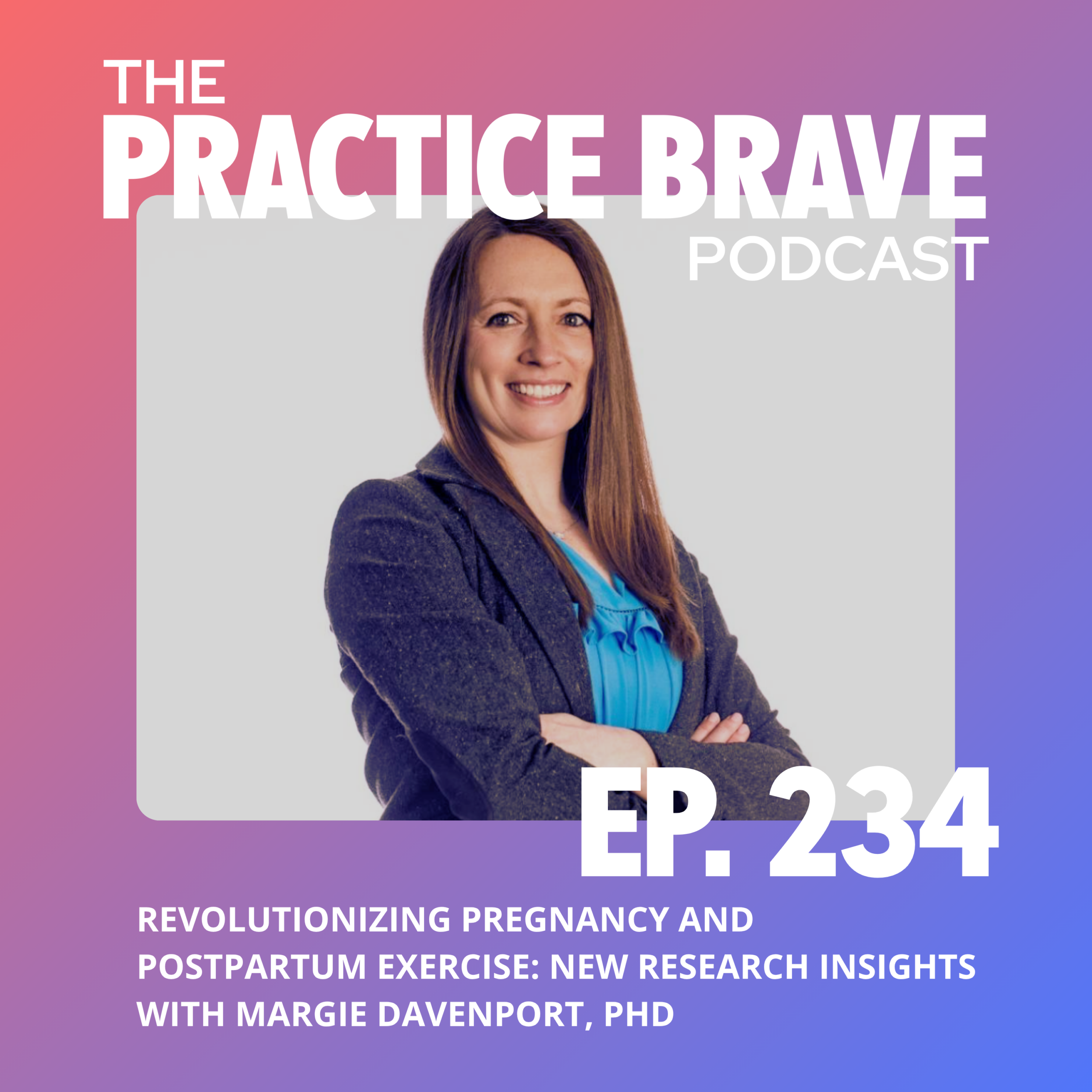
In this episode, I sit down with Dr. Margie Davenport, researcher, professor, and leading voice in maternal health and exercise science, to discuss how the landscape of pregnancy and postpartum fitness has evolved over the past decade.
Dr. Margie shares insights from her extensive research on exercise during pregnancy and postpartum, including how newer evidence continues to challenge outdated recommendations and support women in maintaining active, athletic lifestyles. She offers a behind-the-scenes look at the challenges of conducting research in women’s health, including barriers to funding and the ongoing need for more high-quality studies focused on pregnant and postpartum athletes.
This conversation is a powerful reminder that research doesn’t exist in a vacuum. When science, coaching, and lived experience come together, we can create better support systems and more opportunities for women to thrive throughout pregnancy, postpartum, and beyond.
Connect with Dr. Margie
Instagram: @drmargiedavenport
Website: https://www.ksr.ualberta.ca/exerciseandpregnancy/
Ready to become a P&PA Coach in person?
Join us for the Pregnancy & Postpartum Athleticism LIVE Certification this September in Boise—an immersive, hands-on experience designed to help you confidently support pregnant and postpartum athletes.
👉 Register here:
http://briannabattles.com/ppa-live-event
EXPAND FOR EPISODE TRANSCRIPT
AUTO-GENERATED TRANSCRIPT
Brianna Battles 00:01
Welcome to the Practice Brave podcast. I am the host, Brianna Battles, founder of Pregnancy and Postpartum Athleticism, and CEO of Everyday Battles. I’m a career strength and conditioning coach, entrepreneur, mom of two wild little boys, and a lifelong athlete. I believe that athleticism does not end when motherhood begins, and this podcast is dedicated to coaching you by providing meaningful conversations, insights, and interview topics related to fitness, mindset, parenting, and of course all the nuances of pregnancy and postpartum, from expert interviews to engaging conversations and reflections. This podcast is your trustworthy, relatable resource for learning how to practice brave through every season in your life. Hey everyone, welcome back to the Practice Brave podcast. Today I am here with Margie Davenport, and I’m really excited to have this conversation, because she has done so much in the recent years of publishing a lot of great research for pregnancy and postpartum exercise, and it’s just she’s having a moment, but that moment has been built upon years and years of work and interest in this space. So, I’m really excited for this conversation. Argy, thank you for being here.
Margie Davenport 01:15
Hi, Brianna, thank you so much for having me. It’s been a time we finally met, so this is great.
Brianna Battles 01:20
I’m so excited for this conversation, and I just want to start out by saying, thank you so much for the work that you’ve done, and the research that you have been contributing over the years, and like we joked about before, recording the last few decades of trying to get better information out there, so that the medical practitioner and fitness communities can honestly be putting out better information, more updated information for the way women work out in 2026 and beyond. I have recently updated the entire pregnancy and postpartum athleticism coaching certification, and with that, we really went through so much of the research you and your team have done, and I just really want to congratulate you and thank you.
Margie Davenport 02:02
Well, thank you so much. I, one of the most important things that we do is take our research and get it into practice, so that is just the most delightful thing to be hearing early on in the morning. Thank you.
Brianna Battles 02:14
Absolutely, yeah, it is. I mean, I think it’s a really great opportunity where we can take the research that sometimes focuses on just shouting the what, like what are we trying to get out there, like just putting that out there to begin with, and then the coaching can help with the implementation of, and this is how that’s accomplished, and you know our worlds are just I think we can collaborate so much more in the research practitioner medical and coach communities, and how that translate to the female athletes that we’re working with
Margie Davenport 02:40
absolutely agree,
Brianna Battles 02:42
so I want to dive in before we go into the, like, the research side of things. I want to know what got you interested in the topic of pregnancy and postpartum exercise, and what your own personal background and story was getting to this point.
Margie Davenport 02:56
So, a few decades ago now, I was a national team synchronized swimmer here in Canada, so I spent my days training at the highest level. Absolutely loved it, but when I retired, I knew that I wanted to stay involved in exercise and health in some way, shape or form. So I went back to school and did a degree in kinesiology. Throughout my athletic career I was always doing research to try and understand how my body worked in the best sort of nutritional strategies and training strategies, and so I just sort of naturally fell into, I guess, research when I was looking for a lab to work in. I was really interested in diabetes, actually, and how exercise can impact glucose control and blood sugar overall, and the only person that was doing work in that particular area was this woman who was doing work with pregnant women. So I was like, no interest. I was in my early 20s, zero interest in pregnancy, wasn’t thinking about kids at all, but thought this would be a great place to be able to start, and when I started working with her, I basically fell in love with the physiology. I fell in love with this really unique period in a woman’s life, and then my PhD was actually in postpartum exercise, and so I fell in love with the baby, so sort of brought me full circle, and haven’t looked back,
Brianna Battles 04:20
absolutely, and so but what did that look like as your own, like maybe your career as an athlete stopped, the research kept going? What did that all look like for you? What was that transition time like?
Margie Davenport 04:34
Oh, it was bumpy, for sure. It was a big change to go from when I was training, I did a lot of Olympic lifting, and we did a lot of running, in addition to all of the swimming training that we did, and when I transitioned to not being quite the same level of athlete that I was, the work that we were doing with our pregnant ladies was really focused on walking back in the early. Early 2000s we had so many questions, you know. Could you walk during pregnancy? Could you walk at a slightly higher intensity of exercise during pregnancy? We certainly were not talking about resistance training, so really took it back a step. And I think, you know, you’re very well aware that when we talk about pregnancy, even today, there’s a lot of caution, and this idea that women who are pregnant are actually really quite fragile, but luckily the research has really changed a lot, especially in the last five or six years, which is exciting.
Brianna Battles 05:33
Absolutely, and I think sometimes you know we can look at like the athlete community or fitness community and really, well, yeah, they’ve been training, they know this, but it’s really the angle of having to have that validated, so that their OB-GYNs are encouraging it, so that they’re not being told don’t lift or you can never run again or don’t do this, where there’s a lot of limitations around that. So, being able to bring everyone up to speed to reflect again how women are actually training is significant.
Margie Davenport 06:02
Yeah, absolutely. And the surprising thing is that a lot of the limits that we’ve placed on pregnant women for so many years, they are actually based on nothing, they’re based on the expert opinion of somebody at some point in time who suggested that this might be an interesting or an important consideration for the health and safety of the mom and baby, so
Brianna Battles 06:25
yeah, so and that’s like where the 140 beats per minute parameter came from, right? Was like, don’t get your heart rate over that, even though that was overturned long ago, that is still being perpetuated in a lot of the medical communities, at least. So you’re saying that was only based on someone’s opinion.
Margie Davenport 06:42
Yeah, absolutely. So, back in 1985 there was actually a lot of concern that exercise and pregnancy was going to harm the baby specifically, and I had the pleasure of hosting Dr. Raul Artel up here in Edmonton before COVID back in 2019 to support the development of the Get Active questionnaire for pregnancy, and so I asked him about this 1985 guideline, and he said, you know, I had my colleagues basically saying that I would be causing harm, we only had this evidence in sort of that moderate intensity range, and so it would just be an appropriate placeholder to say that we know that it’s okay up to 140 beats per minute, but nothing else past that, and it became this sort of really ingrained number that I’m sure you as well get emails about all the time.
Brianna Battles 07:33
Yeah, absolutely, it’s like the thing that won’t die, that in the, you know, random, like 75% of your one rep max or the 20 pound allotment, or just like whatever else is thrown out there, but that’s not how athleticism or performance has ever worked, but yet pregnancy seems to take on a whole other conversation and insight from all communities. Honestly,
Margie Davenport 07:58
absolutely, that’s why the research is so important, and then the knowledge translation, once we actually have the research to go with
Brianna Battles 08:05
- Absolutely. So, I mean, you started in research a long time ago, and you’ve been able to watch how things have evolved. So, can you walk me through maybe some what that timeline has looked like, and where it started, and how it evolved gradually,
Margie Davenport 08:20
so you know, back early 2000s everything was really quite conservative, and I would say that the entire field was quite slow to grow and change in terms of recommendations until we developed the 2019 Canadian guideline for physical activity throughout pregnancy. So, before that point, there was a lot of concern that exercise was going to cause a miscarriage, a small baby or an early baby, and so we did 12 systematic reviews and meta analyzes, which basically is like fancy statistical words for saying that we looked at all available literature, put it together to see what the actual response or outcome actually is, and so, with those reviews, we found that being physically active during pregnancy was associated with a 40% reduction in major pregnancy complications, like gestational diabetes and preeclampsia, and it was not associated with an increased risk of those adverse harms, such as miscarriage, in these women. So, for me, and I think for many people in the world that was a bit of a turning point because we were able to very conclusively demonstrate the effectiveness and the benefits of continuing to train during pregnancy, we also saw impressive results in terms of preventing depression during pregnancy, and so that really opened up the possibility to look at more athletic populations, the trailblazing athletes who were sort of really becoming more visible at that particular point in time, who were continuing to run at the fastest level, so Alicia Montano and Allison. Felix, and so many other incredible women who were really pushing the boundaries of what we thought we could do while we’re pregnant, and so that’s led to a lot of the research we’ve been doing over the last couple of years.
Brianna Battles 10:12
Yeah, absolutely, and I think what’s been really cool is it’s like it’s flipped the script, the things that people were concerned about in terms of like maternal and fetal safety were actually saying no, like exercising actually improves outcomes or reduces risk of whatever, and so it’s a whole.. it’s reversing everything that I think was originally generating a lot of that fear-based, you know, insight.
Margie Davenport 10:34
Yep, absolutely. And it gets even more wild because we know that traditionally many athletes are reducing the volume of training that they’re doing, if they choose to, that is completely fine. If they develop a complication in pregnancy where a reduction in activity is recommended, that is also completely fine. But if women are being told that they need to reduce their activity levels at a specific time point or whatever else, that is not fine, because that’s not based on evidence, and the data that we have now actually suggests that in the absence of wanting to reduce your training level or complications, that maintaining training throughout pregnancy is actually associated with about a 50% reduction in complications during pregnancy, and it reduces the risk of injury postpartum, and we don’t even want to start talking about athletic identity and mental health, and you know, keeping yourself in the sport that you love. So, detraining in pregnancy has been a really interesting area that we’ve started to look at quite a lot.
Brianna Battles 11:38
Yeah, absolutely, and it’s so important because, like, I love that you mentioned the mental side of it, the identity shift, because anybody who consistently participates in fitness and who identifies as an athlete, that is a big part of their, their life, their ecosystem, their environment, their happiness, and so even if training needs to look different, keeping them in the game, even as the game evolves, is ultimately the end goal, and to not have, like you were saying, like anyone instilling fear that’s not based on any research or what we actually do know.
Margie Davenport 12:13
Absolutely,
Brianna Battles 12:14
so I think many people consume research without really understanding what goes into it. So, what does conducting this type of research, like with pregnancy and with postpartum, actually look like behind the scenes?
Margie Davenport 12:27
I don’t think we have enough time to get into that, not in detail. It’s, it was the highest, yeah, you know. So, when we talk about working with pregnant women, pregnant women weren’t included in clinical trials, until actually quite recently, we have really stringent ethical approval processes, where we have to be able to demonstrate that the type of study that we’re doing is going to be potentially beneficial for these women, and so you know we take a very long term view when we’re looking at anything that’s traditionally considered to be riskier or is not typically recommended, so probably the best example that I have, and we’ve done this with almost every other type of activity we’re looking at in pregnancy, is that heavy weight lifting. So, for a long time, you know, women were told don’t lift over 20 pounds if you’re somebody who lifts heavy or you just have a toddler at home, that’s almost impossible to avoid. And so what we did is we weren’t able to get ethics to start doing these heavy weight lifting studies in person right away. So we started with a survey, and so we circulated this survey to women that we knew were already continuing to lift more than 80% of their one RM from before pregnancy and into pregnancy, and we had over 600 women respond, so there are a lot of women who are lifting heavy in pregnancy, and so we looked at what happened in terms of certainly mental health, so their emotional health, but also their physical health, if they continue to train throughout pregnancy, or if they reduced and removed heavy weight lifting in pregnancy, and we saw that those who continued to do heavy lifting in pregnancy, so what is not recommended in the guidelines up until very recently is that they had about a 50% reduction in pregnancy complications. So this is really incredible, and on top of that, we know that it supports again their athletic health and their emotional health. Now that was the evidence that we needed to be able to demonstrate that there might be potential benefits of lifting during pregnancy, and so that led to our in-person assessment, where we had women, they were lifting at 90% of their 10 RM, which is such a strange number if you work in the area, but that was the highest lift weight that I was allowed to go ethically with our research board, and so. We directly measured fetal responses to this heavier in or higher intensity weight lifting, and again we found that it was very well tolerated. The women were well, they didn’t enjoy the 10 RMS for sure, that was a little bit more of an endurance than anything else, but it’s now let us move forward, so that we’re actually doing a study right now, looking at that 80% of one RM that you know we started four or five years ago wanting to look at, we can now finally get there because we’ve taken this sort of slow, gradual, very thoughtful approach to be able to do this type of research, and we’re doing that with all sorts of other activities as well.
Brianna Battles 15:42
I bet it’s almost like progressive overload translates into literally every other element of like research of business, everything, right? Is you have to do a little bit more over time to start making some progress.
Margie Davenport 15:55
I have never thought of it that way, but that is exactly what we’re doing.
Brianna Battles 16:00
Yeah, I feel like that principle comes up so much, Ruby, and I just.. I now you just see everywhere, like it’s.. yeah, it’s almost like doing a little bit more over time, actually.
Margie Davenport 16:10
Aggressive overload and research, there you go, might move the needle a little bit, but that’s really exciting that we’re able to start looking at that. So, and your research, when looking at the heavy lifting, is that mostly focused on like the maternal and fetal responses in that moment, or like, how are you looking at it, like in the moment, but then also translating to long term or postpartum. So the again, when we’re talking about progressive overload in research, the first thing that we have to do is demonstrate in an acute setting, so one session of this heavier and higher intensity lifting, we need to see if it’s safe for both mom and baby, and so we’re looking at fetal heart rate using ultrasound, we’re looking at the blood flow going to the baby again using fetal ultrasound, we look at maternal blood pressure, heart rate, oxygen saturation, we also look at glucose and lactate as well, so we’re trying to get a really global assessment of at that particular point in time with that individual session. Is are there any adverse responses that we’re seeing? So far the answer is no, that it appears to be quite well tolerated. So then you’ve pretty much guessed it. The next step is to do training studies and or perspectives, so moving forward. So we recruit women who are already lifting heavier weights and follow them through pregnancy, look at their training logs, and get a better assessment. So we’re kind of doing a combination of both of those right now,
Brianna Battles 17:41
absolutely, and so now, How does pelvic health start to fit into the conversation regarding maternal health outcomes?
Margie Davenport 17:50
So pelvic floor health is, you know, it’s such an interesting thing, because that has exploded since 2019 so when we develop guidance for pregnant and postpartum women, the first thing that we actually do is go to the women and ask them what health outcomes are going to impact your decision making about whether or not you’re active during or following pregnancy. When we started the 2019 guidelines, so I think that was around 2016 where we started to consult with women, pelvic floor urinary incontinence didn’t exist, nobody was talking about it, nobody cared about it. By the time we released the 2019 guideline, we ended up having a recommendation specifically on that, because we had so much feedback, and that just between 2016 and 2019 everybody started to talk about it, and we’re starting to see it even more to the point where I would say that pelvic floor assessments and pelvic floor muscle training is a critical and essential piece of being a pregnant athlete now.
Brianna Battles 18:57
Oh, yeah, absolutely. I mean, that is what catapulted me into this space, and I didn’t know anything about pelvic health at all as an athlete. As a coach, it was never part of any of the conversation, and I had my first son in 2013 and started working with this population in 2014 2015 and all of a sudden it was like pelvic floor. How do we integrate this into what athletes are doing, because they don’t want to go off and do kegels, like that’s not can’t tell an athlete to do that, they’re absolutely just not going to do that. How do we start to integrate it into the training, and like you said, it still wasn’t like a common thing that was being talked about until we started seeing these athlete moms almost like maybe rush back into training, or they’re doing more, and now they’re having pelvic floor symptoms, or because the culture, millennial-ish women were training a lot more, lifting heavier, running further, running faster, so now you see some more pelvic floor issues, or more awareness around it, and then it did become more popular within the narrative of, like, wait, I’m experiencing the symptoms, why didn’t anyone tell. Me about incontinence or prolapse. What do I do about it? I was told to stop exercising by my doctor or by my practitioner, that I can’t lift heavy or I can’t run anymore. And there’s.. I feel like there’s been a lot of triage that we’ve been having to do around pelvic health and how that’s communicated.
Margie Davenport 20:17
Yeah, I know, absolutely. And it’s.. you’re absolutely right, there’s so much fear about pelvic floor dysfunction that if you experience any leaking, oftentimes women are just told to stop. We actually published it’s a Delphi study, but it was an international consensus where we strongly advocate you need to go and get screened, you need to be treated for your pelvic floor dysfunction, but it is not a reason to stop. If you, we know that two thirds of women actually stop exercising training during pregnancy and postpartum simply because they’re mothers, and there’s so many barriers at that particular point in time, but it is essential to incorporate physical activity, exercise, and training throughout your life to be able to support cardiovascular health, your mental health, pelvic floor health at the same time, and so the message about this is something that can be treated and needs to be screened for, but that it isn’t a reason to stop exercise, that message is really not getting out there as well as I would like.
Brianna Battles 21:24
Yeah, absolutely, I agree. It’s especially, I think, within the medical communities, where it’s like, well, then if it’s causing you any symptoms, well, now that’s suddenly being framed as a contraindication to exercise, but we know that exercise is the tool that can actually improve their symptoms when we modulate it, you know, the way that it needs to be. What are some of the biggest challenges in recruiting participants for pregnancy and postpartum exercise research?
Margie Davenport 21:52
There’s all the challenges, so you know, we do a variety of different types of stays, so surveys, you know, they’re great because you can do it in the comfort room of your home, you can do it on your iPhone, or whatever else, you know, but it does take time, you know, we’re talking 20 or 30 minutes to be able to answer some of these really important questions, I would say that the hardest, most difficult recruitment that we have is actually for in-person studies. They are intensive, they do take a couple of hours to be able to complete, but they’re absolutely necessary to be able to change the needle in terms of what we’re recommending, surveys will never be providing high-quality evidence for any of our medical guidelines. We really have to do in-person assessments to be able to change the needle, and so it’s, you know, we have incredible women coming and working with us here in Edmonton. They donate their time, like we provide some compensation, but it’s never, you know, as much as we would like to, because funding is also the other really big issue when we’re talking about women’s health, and we talk about exercise and pregnancy and postpartum. I am always told that is a niche area, and that we already know that exercise is safe and beneficial. So, why do we need to do more? It’s like just go after any woman who is pregnant and doesn’t know what to do in terms of her training.
Brianna Battles 23:34
Right, absolutely. And so you mentioned funding, that was going to be one of my next questions. Is that being like that also being a barrier on top of ethics,
Margie Davenport 23:42
yeah, it’s, it’s probably the biggest barrier. I’m quite fortunate here in Edmonton, we have the Women and Children’s Health Research Institute, so they, they have a number of smaller grant competitions that have, you know, better success rates, so 30% of the time that you submit a grant application, you might get funded, whereas with our major national ones, we’re looking at under 10% so you submit 10 grants and one of them will get funded, and then when we talk, you know, we know that women’s health research is underfunded, it’s under recognized, underappreciated, but then again, when we talk about this niche area, that there just doesn’t seem to be as much awareness or support for it, and so we get creative, you know, a lot of the work that I do is done pretty much off the side of my desk, you know, unfortunate to have a position where, you know, research is a big part of what I do, but we put together the 2025 Canadian guideline for physical activity throughout pregnant or physical activity, sedentary behavior, and sleep throughout the first year postpartum, and I think I had about $10,000 to put together that entire guideline, and it was. Choice between, do I put in my own blood, sweat, and tears, do I recruit all these undergraduate volunteers to help support, which is a great experience for them, or do we just leave, leave it, so that there’s no guidance in the postpartum period. So easy decision, but it’s a really tough grind sometimes. Yeah,
Brianna Battles 25:20
absolutely. What would be a solution like? What would help generate more funding? Is that just overall like interest in the culture expanding, like we’re seeing it, or like what does that process look like? You’ve been in it for a long time now, and you’ve obviously seen a ton of change and progress and awareness, but we’re still kind of stuck in some ways, too. It sounds like,
Margie Davenport 25:43
yeah, I mean, we’re seeing reductions in health research funding, right across the board. You know, in Canada, we’re a little bit more buffered, certainly in the States. You know, any research in pregnancy has taken a pretty major hit. I do think it’s culture, for sure, valuing understanding women’s physiology, women’s health overall, but you know there’s lots that can be done with, you know, donors and foundations, and a lot of the funding that I’ve been fortunate to be able to receive is actually from more our foundations that are here in Canada,
Brianna Battles 26:22
that’s good to know. Just because I think a lot of people listen to this podcast and we’re like, we want more research and we want to help support this, and knowing that, knowing the ways that actually can happen and how that can be facilitated.
Margie Davenport 26:34
Yeah, what instance of funding, if you see the call out for the surveys, come join, because it can take, you know, we’ve had surveys where women really, really want this information. So, for example, we have a climbing survey that’s just about to be published. We had almost 700 women answer the call, and we completed that survey in three months. That’s incredible. I have a survey now looking at physical activity and exercise in women who have a disability. There is zero information available to them. I can already tell it’s going to take me more than two years to be able to get the number of participants that I need, so it just slows it down.
Brianna Battles 27:18
Yeah. No, it’s really interesting. And so on that note, what, how do you identify the amount of participants you need to then bring that research to life?
Margie Davenport 27:28
So, when we’re talking about surveys, we do what’s called a sample size calculation, so it’s a little bit tougher with surveys, especially when there’s no other available information to look at, but typically our surveys include at least 300 women, that would be a very descriptive explanation of, you know, this is what they’re doing, and these other health outcomes. When we’re doing something that’s a bit more comparative, that’s when we need to get into that six, 700 or more participants with our in-person physiological assessments. We need many fewer, so we’ve published with as few as 10 pregnant and 10 non-pregnant women, and it just goes upwards from that. So, sample size calculations, statistics, I get lots of support from my statistician, because I’m not the best at that.
Brianna Battles 28:16
No, for sure. What has surprised you the most? Was there a research study, or a statistic that you’re able to find, or a change in hypothesis that you maybe had, like when you look at the course of the research you’ve been doing, was there a moment, or a study, or something that came out that just was like one of your favorites?
Margie Davenport 28:35
Oh, I think that would be like choosing a favorite child. I really find that the work that we’re doing right now is just so exciting and motivating, because it is completely challenging my biases about pretty much everything I thought I knew about exercise and pregnancy. So, you know, with the heavy weight lifting study that I talked about, I was absolutely shocked that there was any reduction in pregnancy complications. Looking back now, you know, three, four years later, it makes sense to me, but at the time the data didn’t make any sense. We have published a study looking at contact in pregnancy, contact sport and pregnancy, so like soccer, that sort of thing, and the, you know, my bias was, if you had a hard hit, that about half the time there would be an adverse outcome as a result, and the numbers are way lower than I would have expected. Same thing with climbing, which is thought of as a very risky activity. Um, you know, we, we have data that’s coming out, which shows it’s actually really quite safe, and we do interviews with women who climb during their pregnancy, and they’re just like, well, you know, I feel much safer on the wall because I have three points of contact when I’m climbing than I do when I’m walking down the street, where I only have one foot on the sidewalk at a time, and. So changing the way that I’m thinking through the research and the interviews that we’re doing with the women who are actually really pushing the boundaries, that would be my favorite.
Brianna Battles 30:11
Yeah, I agree. It’s been.. I’m pretty involved in the jiu jitsu and combat sports space, and so I’ve been working with a lot of different pregnant and postpartum UFC fighters, just MMA in general, and then jiu jitsu, and really seeing like women can stay pretty involved in that sport with like, and it becomes less about the contact in my experience, and a lot more just about like how do we make some some range of motion adjustments or certain movement patterns that just aren’t physically just cannot structurally do anymore. Yeah, exactly. Much more resilient, I think, during pregnancy than a lot of other seasons in life.
Margie Davenport 30:49
Well, it’s not even just in pregnancy. So, what we’re starting to see is that women who maintain some level of sports-specific skills that they actually have a reduction in the risk of having an injury postpartum, you know, traditionally we would say stop doing jiu jitsu, that’s too risky, but if you’re getting creative and finding ways to reduce those riskier aspects, but still maintaining, you know, the neural patterning that’s actually happening and the types of skills that are continuing, we know from non-pregnant populations that if you remove somebody from sport for a length of time, like six months or longer, that they are at increased risk for injury, because they have to relearn those sport-specific skills afterwards. So, you know, it’s great that people are starting to rethink and get creative about how we can maintain sport participation. It might look different, but they’re still in
Brianna Battles 31:48
- I always say, like, different is the opportunity, like that is the hack during pregnancy and postpartum. It’s not just about, like, maintaining, it’s about leaning into what. How can I do this a little bit differently? That’s ultimately going to make me a better athlete long term, and with our combat sport athletes, it’s like, well, maybe you’re not practicing a lot of your striking, or you’re not practicing a lot of your open guard in jiu jitsu, because that’s just no longer comfortable, but there’s a lot of other things that you can work on your top game and your passing, and you can work on some of your footwork here, like there’s so many different angles of your game that you can develop sometimes what feels like a setback is actually setting you up in a lot of other ways.
Margie Davenport 32:25
Yep, fully agree. And that’s a sport that we have no data on, by the way, as I’m sure.
Brianna Battles 32:31
Well, let’s maybe we can change that together or something. Yeah, it’s been, it’s been so fun working with a lot of these, like the UFC fighters and jiu jitsu athletes, it’s, it’s fun because they’re, you know, they’re able to still do quite a bit, and the energy that’s given is a little bit different, though. The intensity is way down, but ultimately it’s keeping them in the environment, which goes back to what we talked about earlier, of like
Margie Davenport 32:56
identity,
Brianna Battles 32:57
they feel happy in that environment, and so even if what their training looks like is different, they’re at least still there, they’re around their friends, their teammates, they stay in their routine.
Margie Davenport 33:08
Yep, absolutely.
Brianna Battles 33:10
What are some areas where you think the public conversation still oversimplifies training during pregnancy or postpartum?
Margie Davenport 33:19
Hmm, almost everything. I think that goes back to the conversation that we just had. It’s there’s this idea of risk versus benefit, that you know, continuing to find ways to do jiu jitsu with a slightly lower risk for contact, you know, a lot of people still see that as incredibly risky and dangerous, even, and that the safest thing that you can do is go for a walk or maybe a jog, but what we really risk doing in that particular way is detraining athletes again over stress how important I think that conversation is going to have to be moving forward, is finding ways, so you might not be able to continue playing rugby, but you can go into the gym and really build your strength. There are lots of ways that we can find that athletes can continue to train during pregnancy, maintain or grow those opportunities that you were talking about to be able to use it as a way to get better or stronger when you come back.
Brianna Battles 34:28
Absolutely, so I think you know it seems in a lot of ways like our research is incredibly needed, especially for the medical community to get on board with the maternal fetal side, and then we have the research that also needs to infiltrate to the practitioner and the coach side, where we’re like, well, now we’re implementing it. It’s not like we’re trying to get the read, like the medical community to like stop giving outdated, generic advice, but then we need the practitioner and coach community to know how to implement a lot of this stuff. How do you. You suggest going about bridging that gap,
Margie Davenport 35:03
million dollar question, so that you know that’s something that we’ve, you know, really been trying to work through over, especially the last couple of years, when we’ve been doing more work focused on athletes, you know, medical recommendations will not change until we have this higher level of certainty of evidence, that is what changes the guidance, and when the guidance changes over time, and it might take, you know, 10 years or more, the clinical guidance is going to be changing on the ground, but one of the things that we’ve started to really do is a lot of qualitative interviews to truly make sure that we get the athlete voice at the center of all of the work that we’re doing, and so we talk specifically to the athletes, and depending on the study, the coaches and practitioners as well to find out what it is that we’re doing or need to do to be able to answer the burning questions that you have when you’re working specifically with an athlete. If I’m, you know, sitting at my desk and I’m like, hey, I think this would be a really cool idea, and then not actually ask the people who would potentially utilize it, you know, I’m doing a disservice, but traditionally that’s what we have done with academics, and so trying to make connections with, you know, I now work with a number of sporting organizations to be able to, you know, help implement that, but also find out what their needs are, so that we can better address it as well. So it’s tough, a lot of it is relationship building and talking, and most importantly, I think listening.
Brianna Battles 36:39
Yeah, and it seems like you want, like, you want to know what’s needed in the research from the athletes, but then still having to almost get the basics researched to validate that with the medical community, so like before you can move into talking about pelvic health and lifting, like, we have to just say, hey, mom and baby are like, they’re okay, like, look, we have this research that says this is well tolerated, that this is really beneficial, that anything we thought was a contraindication actually isn’t. Before we can start getting more like the nuance or the specificities at it,
Margie Davenport 37:13
you are absolutely correct, and that’s what I’ve spent literally the first 17 years of my career doing, up until the point where we had that level of evidence that we could conclusively say that that for these individuals exercise is not only safe, it’s beneficial, and then we can start to chase the questions that the athletes really want to know about.
Brianna Battles 37:34
Absolutely, and I know there’s a disconnect between the Canadian guidelines and maybe some of the what we have here in the states. I know in the ACOG we had been told, like, yeah, lifting is safe, but it wasn’t like specified to a load or to an intensity or anything like really specific to pelvic health, like at all. It was just like, yes, lifting good, and I think everyone kind of took that and ran with it. How have you seen there be like discrepancies in what the research says versus how athletes are actually training?
Margie Davenport 38:08
So discrepancies, I, I would say that their research is way behind, you know, the athletes are already doing it. The problem that we run into is that athletes are making choices with that are not necessarily as informed as we would like to, so the goal with my research is to be able to provide the evidence, good or bad, so that women are empowered to say, okay, this is what I want to do, this is what the level of risk is, this is what the level of benefit actually is, and then can feel comfortable making that particular decision right now. That data is not really there.
Brianna Battles 38:50
Yeah, yeah, and I think that’s why, like, I mean, there’s so much opportunity, right, for us to just all keep, like, linking arms between our medical, our medical people that are interested in better supporting fitness with their patients, the research, the coaches, the athletes, the practitioners with what we’re seeing like in real life, and then what still needs to be actually put a like period on in the research.
Margie Davenport 39:16
Absolutely,
Brianna Battles 39:18
so what is next for you? What do you have on the horizon with continuing to move this needle forward?
Margie Davenport 39:24
So, I actually just got back from Lausanne, so I was leading the development of the, I’ll call it 2026 but it might end up being 2027 consensus statement on sport participation for preconception pregnant and postpartum athletes, and so I’m, I think that one’s a game changer. It’s going to change the conversation much more than the 2019 guideline is so the big thing right now is trying to finalize that, and then the next piece is just really continuing on to better understand how to be able to. Support athletes, as they, you know, go through the decisions about when or how to become pregnant or pause pregnancy until post career through pregnancy and returning to whatever that they want to return to in the postpartum period. So, lots going on. It’s going to be going to be a fine couple of years for sure.
Brianna Battles 40:21
Well, it’s really exciting and awesome for you. And so, kind of piggyback on that, do you feel like, and with the progressive overload comparison we had, do you feel like before you can like you really need to get more information specific to pregnancy before you can dive into the postpartum stuff as much as you want to? Like, do you feel like there’s a divide there, or are you trying to do a little bit of both at the same time? How does that feel for you?
Margie Davenport 40:45
So we’re doing it all, which you know, I’m very fortunate to have some really brilliant trainees and team members that I’m working with. So we are currently and very actively doing preconception of quite a bit of work in that particular area. Pregnancy, for sure. You know, I’ve been in that area for so long, but, like I said, my PhD was actually in postpartum exercise, and so we have some really exciting data coming up, looking at postpartum exercise in athletes, lactating athletes, specifically. So, I would say another year, and a lot of that data is going to really start to come out, so it’ll be fun.
Brianna Battles 41:28
Yeah. And is that, I mean, without giving too much away, is that more of like the physiological benefit of like training during pregnancy, and then like benefits postpartum, or like what areas is it focused around, or do we not say, and it’s okay if you can’t
Margie Davenport 41:43
say, yeah, no, I don’t mind. So it’s a combination of both, but probably one of the most exciting parts is that we’re going to start looking at energy availability, bone health, and then breast milk supply, and quality and quantity of breast milk to go with it, so those are some of the burning questions that athletes have told us that they want to know about trying to understand a bit more about injury risk. I don’t think it’s as simple as, oh, I came to kick back too quickly in the postpartum period. I actually think that’s actually a very small part of the equation, and so trying to start to get a better understanding around that particular area.
Brianna Battles 42:27
Absolutely, it’s going to be exciting to start seeing, like I think more like strength conditioning principles start to get integrated into the research conversation and into, into practice, honestly into real life. I think we’ve, we’ve looked at pregnancy and postpartum athletes, and you know, fitness in general, as being this own, almost like in a vacuum, like their own, like subset of population, and so then, like, all things basic, and I say that with air quotes, for those of you not watching this live, like those basic strength conditioning principles sort of get overlooked when it comes to our pregnant athletes and our postpartum athletes, and so much of that is just strategic coaching, progressive overload, periodization, and keeping people in the game, and just adapting it as needed.
Margie Davenport 43:13
Yeah. No, absolutely. And from a research side, you know, part of the reason we don’t have some of those key recommendations actually in there is because the research studies don’t report the data that we need, you know, so I think that conversation, I agree, is going to change quite a bit as we start to recognize that pregnancy is not that unique, it’s a really cool unique, but the way that we can train is maybe not so different as we originally thought.
Brianna Battles 43:43
Absolutely, well, this has been such a great conversation. Where can people follow you and learn more about the research that you and your team are putting out?
Margie Davenport 43:52
So, we have a website, exercise and pregnancy.ca but the latest information is typically on my Instagram at Dr. Margie Davenport.
Brianna Battles 44:02
Awesome. Well, I really appreciate your time and the work that you’re doing, and the ways that we can just combine forces to keep changing the conversations that women have regarding training during pregnancy and postpartum.
Margie Davenport 44:15
Yeah, it was great to chat.
Brianna Battles 44:21
Thank you so much for listening to this episode of the Practice Brave podcast. If you enjoy the show, please leave a review and help us spread the work we are doing to improve the overall information and messaging in the fitness industry and beyond. Now, if you are pregnant and you are looking for a trustworthy exercise program to follow, I have you covered. The Pregnant Athlete Training Program, is a well-rounded program for pregnancy with workouts for each week that are appropriate for your changing body. It’s 36 weeks of workouts, three to four workouts each week, and tons of guidance on exercise strategy. We also have an at-home version of that program if you are part. Postpartum, and you’re looking for an exercise program to follow. The eight week postpartum athlete training program would be a really great way to help bridge the gap between rehab and the fitness you actually want to do. From there, we have the practice brave fitness program, which is an ongoing strength conditioning program, where you get new workouts each week and have a lot of guidance for myself and my co-coach, Heather Osby. This is the only way that I’m really offering ongoing coaching at this point in time. If you have ever considered becoming a certified pregnancy and postpartum athleticism coach, I would love to have you join us. Pregnancy and postpartum athleticism is a self-paced online certification course that will up level your coaching skills and help connect the dots between pelvic health and long-term athletic performance, especially during pregnancy and postpartum. Become who you needed and become who your online and local community needs by becoming a certified pregnancy and postpartum athleticism coach. Thank you again for listening to the Practice Brave podcast. I appreciate you, and please help me continue spreading this messaging, this information, and this work.
MORE ABOUT THE SHOW:
The Practice Brave podcast brings you the relatable, trustworthy and transparent health & fitness information you’re looking for when it comes to coaching, being coached and transitioning through the variables of motherhood and womanhood.
You will learn from athletes and experts in the women’s health and coaching/performance realm as they share their knowledge and experience on all things Pregnancy & Postpartum Athleticism.
Whether you’re a newly pregnant athlete or postpartum athlete, knowing how to adjust your workouts, mental approach and coaching can be confusing.
Each week we’ll be tackling questions around adjusting your workouts and mindset, diastasis recti, pelvic health, mental health, identity, and beyond. Through compelling interviews and solo shows, Brianna speaks directly to where you’re at because she’s been there too!
Tune in every other week and share the show with your athlete friends!
This post may contain affiliate links, which means we receive a small commission from the seller if you decide to purchase (at no additional cost to you!) We only share products and services we have used, tested, and love ourselves!

