231: Balancing Motherhood and Elite Sports: Insights from Olympian Dr. Tara Peterson
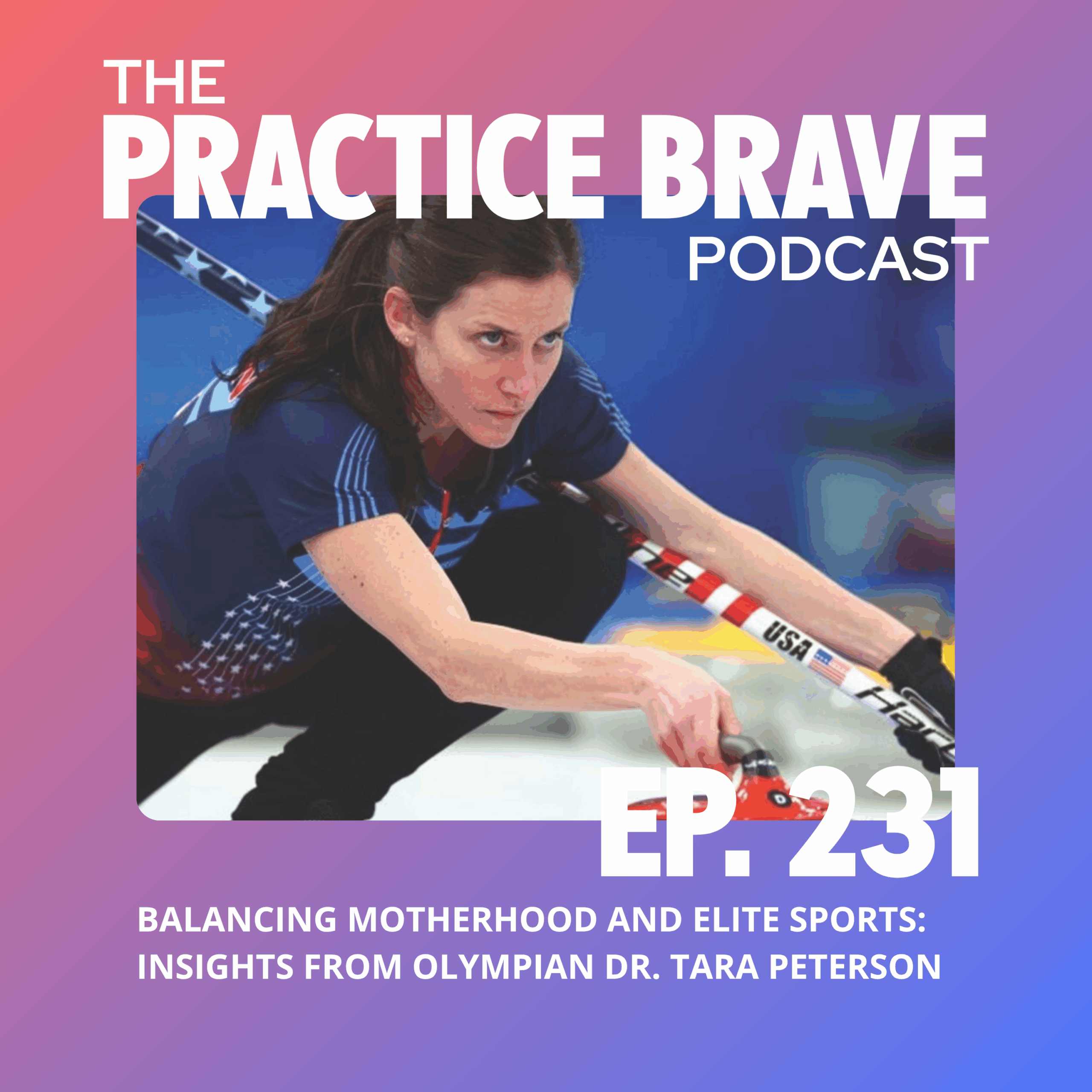
In this episode of the Practice Brave podcast, I sit down with Tara Peterson, a two-time Olympic curler and dentist, to talk about what it really looks like to pursue elite sport while navigating motherhood and a professional career.
Tara shares her journey from her early days in curling to competing on the Olympic stage, all while working as a dentist and raising a family.
One of the most powerful parts of Tara’s story is how she returned to sport postpartum—starting to practice curling just two weeks after giving birth and stepping back into international competition only seven weeks postpartum. Her experience highlights both the physical and mental demands of this transition, as well as the importance of listening to your body and having the right support in place.
We also talk about postpartum training, managing expectations, and how the four-year Olympic cycle shapes decision-making and priorities along the way.
This episode is a powerful reminder that chasing ambitious goals doesn’t have to come at the expense of other parts of your life—it just requires intention, support, and a willingness to evolve.
Connect with Tara
IG: @taraissupercool
Need workouts for your pregnancy or postpartum? Check out my programs (now with app access!):
The Pregnant Athlete Training Program: https://go.pregnancyandpostpartumathleticism.com/the-pregnant-athlete-program
The 8-Week Postpartum Athlete Training Program: https://go.ppaprograms.com/pp-program
EXPAND FOR EPISODE TRANSCRIPT
AUTO-GENERATED TRANSCRIPT
(auto-translated)
Brianna Battles 00:01
Welcome to the practice brave podcast. I am the host Brianna battles, founder of pregnancy and postpartum athleticism, and CEO of everyday battles. I’m a career strength and conditioning coach, entrepreneur, mom of two wild little boys and a lifelong athlete. I believe that athleticism does not end when motherhood begins, and this podcast is dedicated to coaching you by providing meaningful conversations, insights and interview topics related to fitness, mindset, parenting and of course, all the nuances of pregnancy and postpartum, from expert interviews to engaging conversations and reflections. This podcast is your trustworthy, relatable resource for learning how to practice brave through every season in your life. Hey everyone, welcome back to the practice brave podcast today. I have Tara Peterson here. She is a 2026, winter Olympian in the sport of curling, and she does that with her sister, and it’s really awesome, because she is an athlete mom and she’s a dentist, and overall, an incredibly high achieving woman, as you can probably tell by just the nature of that description. So Tara, thank you so much for being here.
Dr. Tara Peterson 01:18
Thanks pre for having me. And this is pretty exciting,
Brianna Battles 01:20
absolutely. So we were talking about this a little bit before we started recording, but there’s a lot of emphasis on highlighting moms that are now making it to the Olympics and our professional athletes and mothers, and it’s incredible to see them finally get that that spotlight and that attention that they deserve. But we rarely know everything that has gone into that process, like who you were before becoming a mother, and then how you’ve been able to navigate becoming a mom while still pursuing your own interests and your sports and your goals and what your potential still is. So I would love to learn more about who you are.
Dr. Tara Peterson 02:00
Yeah, for sure. It’s, it’s true. It’s been, it’s been a long journey. You’re making me tear up just kind of thinking about all of that. But yeah, I mean, like, it’s pretty cool how, obviously, there’s been mothers in sport forever. It’s just, I feel like it’s getting more and more publicity, right, because there’s more of us, and we’re all waiting longer to start families because of sport. And I think just society is more accepting of that, whereas maybe 10 years ago, they weren’t. It was kind of like, you got to choose, and now women don’t have to choose, which is amazing, because we can do it all. So I think that’s important to just get out that information to anybody that’s, you know, if they’re kind of like, well, if I don’t know if I want to start a family, because I have this, you know, this thing, whether it’s work, it’s sport, it’s it’s anything in life, I always say, Just do it like, it’ll all work out. Like, if something is is worth it, you’ll work for it, and as long as you have people behind you, like, You got to have people in your court to help you, because it’s, it’s, I cannot believe all the single moms who do it by themselves. That is extremely impressive. I would not be able to do that. I have so many people backing me. And like, that’s what’s made it so I can do all the things that I’ve been able to
Brianna Battles 03:15
- Yeah, and I can’t wait to learn more about you, because just like looking at your overall who you are. And like, Wow, you are, like, incredibly impressive. And I am, like, I just really want to learn. Like, how did this start? Because so many people don’t know what Curling is until it is on their TV in the living room. And I told you, like my boys and I went down a rabbit hole of, like, trying to learn more about it. How did you get into curling?
Dr. Tara Peterson 03:40
Yeah, so Curling is a huge family sport. My mother is originally from Winnipeg, so her dad was a big curler back in the day they moved down to the states, and it was a very male dominated sport at the time, so he would do it with his buddies. You know, they were smoking and drinking out on the ice, so women just honestly weren’t even, like, allowed, children definitely not allowed, like at the club, because like at the club, because of all that that was going on. And then fast flash forward to 2000 was when one of my mom’s friends was curling and said, Hey, I remember that your dad used to do this. Why don’t you bring the family down? And let’s, let’s try it. So my mom brought the whole family down. We tried it, and then my parents signed us up for junior curling at the St Paul curling club in St Paul, Minnesota. And my sister and I always joke how we hated it, like we didn’t. We did not like it, but I think that comes down to the fact that we obviously didn’t know what we were doing. You weren’t good at it, and we didn’t have any friends, but they forced us to go every and it was Saturday mornings at 9am so you had to get out of bed early on a Saturday morning, right? So they forced us to go. And eventually we liked it. We got on a team, we made friends. But we always joke about, like, like most sports, there’s like a half time in between it that you go up and upstairs and you eat snacks. So like that. What kept us going back was the snacks. We loved the snacks, so we always joke about that, and I still love snacks, let’s be honest. But yeah, like I said, we met friends, we got on a team, we started competing, you know, just kind of around Minnesota, Wisconsin area, and then those tournaments were super fun. Like you just have one chaperone, one parent of the four of you, and then you’re just hanging out with your friends all weekend, like you’re staying in a hotel room, like it’s fun. And then, like I said, we kind of got good won a junior nationals, won a few here we are, two Olympics later, still, still enjoying it.
Brianna Battles 05:38
Just fast forward all of that. And like, side quest, you are also a dentist. So along the lines, you were curling since you were a young girl with your sister. And then, is that something that you’ve just always consistently done, or did you ever have a break from it? Like, did you ever think between, like, basically pursuing your profession and not as much time spent with curling. Like, what was that
Dr. Tara Peterson 06:03
like? Yes, for sure, I had to make a decision at some point. But, yeah, we I mean, curling was always there, but it was always a hobby. It’s a sport. They don’t really have it in university here, but we always know you need a degree, you need an education, you need a job. Curling is not going to pay the bills. Hopefully, in the future, at some point they’re kind of working on this professional curling League, but hopefully at some point it will pay bills for someone doesn’t right now, so my parents encouraged us. So yes, I’m a dentist. My sister’s a pharmacist. We did undergrad, we did dental school, but again, to be a dentist, I always joked, you have to be there to learn, right? I got to work on patients to learn how to become a dentist. So I did have to take a break from curling. My first year of dental school, I was curling, and that was all book work, so it was easy to take tests on the road, study on the road, and then my second year of dentistry, I did make the decision to step away from curling. So I guess had, like, three years off. I kind of had a foot in the door. I was kind of the alternate for a team for a bit, but I just I couldn’t commit, because I did choose dentistry, knowing that curling would still be there if I wanted it. Yeah. And so then in 2018 in Pyeongchang, I went there to as a spectator, to cheer on my sister, who was in the 2018 Olympics. And like, staring at the ice, I was like, this is such a cool vibe, like I want to I want to come back, but I want to be down there. I want to be on the ice. I want to compete. So it kind of worked out that I was able to get on to that, that 2018 Olympic team, because two girls had had had babies, kind of the next consecutive years, so I was able to kind of slip into the team, and then, yeah, and 2022 was my first Olympics. I was amazing.
Brianna Battles 07:49
And so for those listening that maybe they’ve seen curling on TV, but they don’t really understand the mechanisms or like, like, what, what are they trying to accomplish in this sport? Can you give us a little bit of a an overview
Dr. Tara Peterson 08:02
for sure. Yeah, curling is it’s a fun sport. Everyone gets addicted, especially every four years in the Olympics, because it’s one of the few sports where you the athletes are miked, so you can literally hear everything we’re saying, everything we’re we’re planning like we’re talking strategy. We’re yelling it across the sheet so our opponents know exactly what we’re going to do, and we’re talking, okay, I’m going to do this. They’re going to do this. Not many sports you do that, right? Like you’re trying to hide that. You can’t hide it in curling. But basically, it’s kind of like shuffleboard on ice. The goal is to get more of your rocks to the bullseye, to the very center of the it’s called the house, but that Bullseye and then, kind of like baseball, so there is eight or 10 ends or innings, so you kind of throw them that way, and then you come back this way. And everyone always asks, okay, do you throw the rock, or do you sweep? We do both. So again, kind of like baseball, you got a field and you got a bat, is kind of the the gist of that. And, yeah, there’s, there’s actually a lot of fitness that goes into the sport that people always go that looks like a sport I could do. And it’s true, like, that’s one of the fun things about curling, is that it is a sport that it’s a lifetime sport. Anyone can do it. Like, I still play in a league that we play 80 year olds,
Brianna Battles 09:21
yeah?
Dr. Tara Peterson 09:21
And there’s kids like you. Anybody can do it, anybody can try and I think anyone should. But then once people try it, they go, Holy crap, that is so much harder than I thought. Yeah. And they go, okay, I get what they make it look so easy on TV.
Brianna Battles 09:34
Yeah, absolutely. So tell me a little bit about, like, the, I guess, the performance side of things, like, what does your training have to look like, because there’s a lot of sports strategy. But what about what complements that to make you really elite and curling?
Dr. Tara Peterson 09:48
Yeah, so like, with the sweeping aspect of it, you’re sweeping your little butt off for 20 seconds, and then you kind of like biathlon, then you need to quick get down the hack, and you need to get your heart rate down. On control to then deliver and throw your stone. So there’s a lot of interval training that we do to make it so that our cardio is good, because it’s the game is three hours long, so you’re constantly going up down, up down with that. And then sweeping is a lot of upper body, but it’s also core, and then actually delivering the stone. We’re in a one legged lunge. So you’re always in that on that same side. So we need to strengthen your quads, your glutes. All that for pushing out of the hack or the starters block is what we push out of,
Brianna Battles 10:34
yeah.
Dr. Tara Peterson 10:35
But it’s funny, there people are like, well, it must just be, you know, legs, or it must just be arm. It’s honestly full body that we need to do, because there’s, you use your whole body during all of it, even sweeping I’m we’re using our legs like my legs get more tired than my arms sometimes. So yeah, there’s a lot that goes into it
Brianna Battles 10:52
that’s amazing. And so I know you said that you’ve been doing this since you were a little girl, but did you do other sports as well, or was your focus very concentrated on curling growing up.
Dr. Tara Peterson 11:02
No, we did all the sports. I always say my parents were super good about putting us in every sport just to find out what we liked, because you never know what a kid is going to gravitate to. You never know what a kid is going to be good at. So we we did kind of any sport you can think of, and curling, obviously was kind of like, what was almost like a club sport, right? Like you’re not doing it at the school, you’re not doing it in your city. You need to drive to the curling club to get there. So it’s a little bit different in that sense that we were lucky that our parents could drive us there. But yeah, I played soccer, softball. I ran cross country in high school. Golf, I still golf a lot, so kind of just everything, and then once we kind of got good at curling, that’s when we maybe dropped some other sports because there wasn’t time for it. Or I always joke that I haven’t, I haven’t downhill skied or snowboarded since I was in middle school when I got more competitive with curling, because it wasn’t worth it. It wasn’t worth falling down the hill and breaking a wrist, because then you can’t curl. So there are some things that we definitely stopped doing to take up curling more seriously.
Brianna Battles 12:07
So when did you see, like, Okay, I’m really good at this, and I have a shot of taking this pretty far. Like, at what point was that, and was that along, like, the same era that you were in dental school, or was it before that? Like, where were you at in that process?
Dr. Tara Peterson 12:22
Yeah, I think it was before that. So the junior worlds the year before an Olympics, is always like the test event for the Olympics. So in 2009 we went to the junior worlds in Vancouver, before the 2010 Winter Olympics. So it was, I think it was there. I think that was my first Junior World and just walking into the Olympic Stadium, and because it’s a test event, they’re treating you like Olympians, like nobody can get through this door, except for the athletes. And then they have food at the venue, and they have drivers driving you everywhere, like you’re treated pretty darn well. And I’m a How old am I at that point? Maybe 17. So I think that that was it, because you’re curling on what’s going to be Olympic ice, you see the Olympic rings, and that’s when it’s kind of like, okay, if I stick with this, if I work hard, I think that I could be an Olympian. I could be here again.
Brianna Battles 13:17
Yeah. So what brought you back to it when you were in dental school, and you were doing a lot of that, concentrating your efforts around becoming a professional. When did you start dosing curling back into your life and routine and then, I guess, then taking it more seriously again?
Dr. Tara Peterson 13:33
Yeah, because I did have to step away. And I think I was still, I definitely was still playing in league. I’ve been in the same league at St Paul curling club since middle school. So, like, 20 years, I’ve been in the same league Tuesday nights at 450 it’s great league, but that’s a beer League, so it’s fun, but still playing in leagues. Again, I always had my foot in the door. I bet
Dr. Tara Peterson 13:57
I was still practicing a bit, but it was when I went to the 2018 Olympics in in South Korea that I was like, Okay, I want to do this again. I miss it. I miss that competition. I miss that passion that you feel. And also I’ve just always been the busier I am, the better I am. I thrive off that. If I don’t have enough going on, I’m like, okay, and now I’m lazy. I don’t want to do anything. Yeah, they always, they give, give the busiest person, you know, a job to do, and they’ll get it done quicker than anybody else. And like, I feel like that’s me. So I needed another thing. Now that dental school was was ramping down, I was going to get a job. I didn’t want to just work. Sounds boring. So it was that. So that was, like, the end of summer, early fall of 2018 that I jumped back in head first, and with the new job that I got off of dental school, I said, Okay, I want to do this. And they said, Okay, let’s, we’ll make it work. Well, you might have to work extra when you’re home, but let’s, let’s make it work.
Brianna Battles 14:54
That’s incredible. So then what? What was the next big event that you were training for? Once you decided to. To do both at the same time, essentially,
Dr. Tara Peterson 15:02
yeah, so like with with curling in a season, there’s, it’s kind of like we play every other weekend we go up to Canada. There’s a few local events, but it’s mostly you fly to Canada. Okay? For those they’re long weekends. And like I said, it’s every other weekend from, let’s say, September through December, just kind of in these get going tournaments you’re and you’re acquiring points on the World Curling Tour,
Brianna Battles 15:29
okay
Dr. Tara Peterson 15:29
to then get to get invited to bigger tournaments, but then it’s ultimately, I guess, the nationals that are in February, and then the worlds that are in March that you’re working for, and then the worlds you need to do well worlds to then get that Olympic spot. So really, when you, when you join a team, it’s kind of like you’re almost committing to a four year plan, because it’s ultimately to get to that Olympics.
Brianna Battles 15:54
Yeah, that’s amazing. And so when did you and your sister, like, really form this team to be committed? Was it after that? 2018
Dr. Tara Peterson 16:04
Yes, yeah, yeah. I know. I’m like thinking back. When was it the teams changed a bit from the from 2018 to 22 to 20 what was this? 26 oh, that’s a long time, but yeah, it’s so prior to, I guess, that 2018 Olympics, my sister and I were competitors for a bit, like, there was maybe a stretch of six years or so that we so we played together in juniors. She’s two years older. She aged out of juniors, and then was on a different team as me. So, like, that was super hard on my parents, because we would be playing against each other at these big events, and my mom’s, of course, getting interviewed. Who were you cheering for? And she’s like, I just cheer for good shots. Like, that’s all I can do. Yeah. So we were happy to be back together, because I obviously it’s easier on the parents, but we just get along. We’re friends outside sports, she lives 10 minutes away from me, like our babies hang out together all the time, like we were just close. So I think it’s a huge advantage.
Brianna Battles 17:08
Yeah,
Dr. Tara Peterson 17:09
we were happy to be back playing together.
Brianna Battles 17:11
It’s amazing. So talk to me about your journey into motherhood. What was that like for you, especially like professionally, in your career, but also in your sport, like both,
Dr. Tara Peterson 17:22
yeah, for sure, it was. It was something that my sister and I delayed. We kept delaying and delaying because, like anybody who’s become a mother, you’re never ready. There is never going to be the perfect time. And with curling again, I talked about kind of that four year cycle. We had kind of said, Okay, between 2022 and 26 we want to have a family. We need to time. Times ticking. We’re not getting any younger. And so we had told the team, this is hopefully the plan we’re going to try for this. And they were supportive, which is fantastic, and we wanted to do it together, because it would just be more fun to have babies together. So again, curling, we were trying to have the babies during the offseason, so we just could never skip a beat and get back into it, and who knows how the human body is going to work. All that we’ve never done this before, so we both ended up being a little bit later than we wanted. I ended up having my baby four weeks early, I swear, because I said, You got to get out of me. I got to get to curling. I The team needs, because I was originally due at the end of September, she was due at the end of November, and the curling season starts in August. So I didn’t start the season, and she did, I think she played in two tournaments, very pregnant, very uncomfortable, and then she’s like, I’m out.
Brianna Battles 18:36
Yep.
Dr. Tara Peterson 18:36
So that so that was, I guess, two seasons ago. Now, we kind of had a revolving door. We four people play. We had a six man team. Like, thanks for all the help to the ladies that helped out. And then, like I said, I swear the baby listened to me when I said, You got it. You got to come out, because I got to get to this international competition. The team needs me. We can’t play without me. Tabs out. So, yeah, our first tournament, the baby, my husband and I went at seven weeks postpartum, and I Yes, we flew up to Canada and I competed. It was tough, just because you’re navigating breastfeeding, the baby’s not sleeping. And I played, great. It was amazing. But I think I blacked it all out, right? Because you can’t think
Brianna Battles 19:18
about feelings. You’re like, I don’t even, how did we actually do that?
Dr. Tara Peterson 19:22
Yeah, and like, my husband is a saint for because i He did everything else. It was amazing.
Brianna Battles 19:29
So what was your pregnancy like? Were you curling pretty consistently through your pregnancy?
Dr. Tara Peterson 19:35
Not really. So I guess I got pregnant in January. So then I played at the nationals, hardly pregnant, and then I played at the Worlds, maybe I was 14 weeks pregnant, so I didn’t tell anybody. I don’t even think I told my team. And I first baby. No one can tell right? And I don’t really feel anything. I was lucky. I didn’t have any nausea. It was, it was easy to do all that, but then the C. And kind of ends in March, so I or I guess, end of March, so I did not have to curl April through September.
Brianna Battles 20:09
You really did time that, like, perfectly, I guess I did.
Dr. Tara Peterson 20:11
I did again. It would have been a little bit better had I been more pregnant at Worlds and have the baby sooner. But it actually worked out pretty well that I did not have to. My sister did, though, like I said, she had to play two tournaments, and it was hard. She goes, I can do it, but everything hurts playing at eight weeks, or, excuse me, eight months pregnant,
Brianna Battles 20:30
right? Because I would assume that, like, physics and biomechanics matter like a lot in that sport. So if your body is different than what you’re used to, then it’s going to impact, like a lot of that outcome, and this is me projecting. I don’t know enough about the sport, but
Dr. Tara Peterson 20:44
no, you’re right. And again, it’s one of those things, like, when we talk to the doctors, they’re like, if it’s something you’re doing and you’re used to it, absolutely do it. But because I took all those months off, because it was the summer break, it’s way too hard to get back into it, whereas head I gotten pregnant in September and literally curled through the entire pregnancy, I think it would have been much easier, because you just keep doing it from week to week that you don’t notice that all of a sudden you’re huge and you don’t stretch as good. And
Brianna Battles 21:12
absolutely so you said that you had your baby about four weeks early. Yep. So then what was your recovery like? Did you like? What was your birth like, what was that those early weeks postpartum? Like, obviously knowing that you really wanted to compete again. But what was that, that early, early era? Like,
Dr. Tara Peterson 21:31
yeah, so again, my dad, I was like, Okay, I gotta get this baby out. Like, I gotta get back. And she’s like, okay. Like, you’re kind of crazy, but you don’t, you don’t know what you don’t know, right? And she’s like, I just want you to, for sure, try to take one to two weeks where you’re doing nothing, just you and baby. Do not curl, do not work out. Go ahead and do pelvic floor breathing, things like that. But basically, I don’t want you leaving the house. And I was like, Okay, fine. And I was able to do that because it’s my first I had nothing else to do so.
Dr. Tara Peterson 21:58
then I think it was at two weeks, I literally went to the club and I trained, I think I brought the baby, put a blanket on him, and he just slept behind me on the sheet. And it was, you know, the first time back, a little hard. You’re like, what’s, what’s going on, but it’s, it’s like riding a bike, like with anything you you get back to it pretty easily. The hardest part, again, because your abs are torn apart, was sweeping, like, I just couldn’t quite get all of my weight into it because I have no AB strength. Like I didn’t realize how much ABS I use in all of curling until I didn’t have any, yeah,
Brianna Battles 22:31
that whole system is just a lot weaker. And then the pelvic floor, even if it was like a straightforward delivery, like, it’s still being able to absorb that force and pressure of that upper body rotation and exertion is like that is a lot on the core system.
Dr. Tara Peterson 22:45
Yeah, yeah. And I, again, you don’t know what you don’t know you had asked about the birth. I had a vaginal birth. It went fine, whatever. It was good, good enough. But I kind of later on through the Olympic Committee, was watching some pelvic floor therapy videos and, like, pod or whatever I was learning. And I was like, Huh? I guess I’m not totally normal. So I started seeing a pelvic floor therapist. Amazing. I wish I would have done it sooner. And, like, all my PT friends told me go see one. I was like, I’m fine. I’m a professional athlete. I’m great. No, everybody should go. It was amazing.
Brianna Battles 23:22
No, I totally agree. That’s such a that’s a very common experience, you know, it’s like, like, you said you don’t know until you know. And then it’s always like, that athlete brain, where we like to think that we’re the exception to all of the rules, until we’re like, all right, I guess, I guess that’s beneficial. I understand. Yes, yeah, okay. So I would assume at seven weeks postpartum, you’re trying to get out there and even, like, that deep lunge, was that a hard position for you, or were you mostly in a, like, sweeping or, like, I don’t know. Were you able to, I guess, modify your participation, or not really?
Dr. Tara Peterson 23:54
Yeah, I don’t think I had to. The lunge was not hard, because that’s just something that’s so natural for me, also, like, with my pregnancy, and because I was working out so much, and baby came early, I like, never got that big. Like, looking at my my photos the day I delivered, I thought I was huge. You look back, I’m like, there is nothing there, yeah. So I think I was very fortunate in that sense, too, that I didn’t get that big, yeah, and was able to literally work out. I played 18 holes the day that I delivered my baby, like, I just was very active that it wasn’t hard, yeah, I think again, looking back, I could have blacked out. Maybe it was way harder than I remember.
Brianna Battles 24:36
I don’t know. We’re gonna, like, move on. It’s fine.
Brianna Battles 24:40
So then you, you competed again at six or seven weeks.
Brianna Battles 24:45
postpartum, and then what you’re figuring out how to be a mom, like, when were you going back to work? Like, what was that process like, too, that all of those things that you were balancing?
Dr. Tara Peterson 24:56
Yeah, again, my husband was very kind that. He just said, Tara, whatever you want, we’ll do. So we, we did that first tournament, and then I think we came home for a bit, and then we did another tournament two weeks later, and because I wasn’t going back to work until, let’s see here, like January, basically because baby came early, I was like, Well, I had blocked off my schedule, so I kind of had four weeks off, or excuse me, four months off from work. So it was literally just curling
Dr. Tara Peterson 25:23
trying to learn breastfeeding, pumping when I can’t, and just doing all that and just really enjoying the baby Snuggles. I did do a lot of like, I said, like YouTubing, just yoga, postpartum yoga, and just really trying to get that the AB strength back, and work on the breathing techniques and all that. Yeah, and I just brought baby everywhere with me. I had a friend that had a baby shortly after me, so we did, let’s go get coffee, and I just tried to be as normal as you can, to get out of the house, because otherwise you go crazy.
Brianna Battles 26:00
Especially, I think, like for being a really high achieving woman, which you check every box of that between curling and being a dentist, being a mother, having lots of like activities that you do to then go into what feels. Can feel it almost a suffocating season of motherhood, because you’re so out of routine and out of your normal that it’s really common to just, like, I got to get back into something which for you was, like, curling right away. But it is. It can be really kind of isolating when you’re used to so much going on and now you’re more focused on one role.
Dr. Tara Peterson 26:34
Yes, it’s very true. And like, I don’t think I ever got, like, full postpartum depression, but there’s definitely that little the blue is right. Like you said, Because you are isolated, and I think there’s a decent amount of people that came over, but my husband went right back to work, I think after a week, because we wanted to save his paternity leave later for more travels with curling for me. And thanks John. But it’s, true that it I think I was fortunate in the way that I was able to throw myself back into things, and again, when the baby’s so young, all he does is sleep. So it was easy for me to bring him to the curling club and throw rocks, and it was my excuse to get out of the house, for sure.
Brianna Battles 27:16
Yeah, absolutely. And having that as like an outlet where you still have community, your your brain, I would assume, yeah, almost goes to a different place, like, where you’re only focused on that one thing instead of, like, all the other things that infiltrate our brain.
Dr. Tara Peterson 27:31
Yes, for sure,
Brianna Battles 27:32
keeps you nice and present. So then what was it like when you did go back to work as a dentist and mom and curling? So now we’re adding in another element of, like, trying to juggle lots of different responsibilities. So what was that transition? Like,
Dr. Tara Peterson 27:46
yeah, that was hard. I didn’t want to go back to work. I feel like so many moms feel that like,
Dr. Tara Peterson 27:51
you don’t want to, because you got into this new routine,
Dr. Tara Peterson 27:55
And babies, like, just starting to smile and and have more personality. You’re like, but now, dad, you get that and then I don’t get that now. So it was easier, because my husband was then home. When I went back to work, he was home for maybe just six weeks. I think he only got six weeks.
Brianna Battles 28:12
So it
Dr. Tara Peterson 28:12
was just easier. We didn’t have to quite do daycare, because then all of a sudden, once he went back to work, then we had to do daycare. Oh, I was like, John, I you need to drop him off at daycare, because I will cry. I will cry. I will not be able to do this. But now it’s like, I love daycare. So, like, there’s just so many different stages, and it’s, it’s kind of funny looking back, because everything seems like the biggest deal. And like, I remember going back to work and I’m like, When am I going to find time to pump? Because I need to put, like, breaks in my schedule to pump because I don’t want to lose my milk supply. It all works out. It all works out in the end. Yeah,
Brianna Battles 28:45
it’s and it’s, like, it all works out. It’s also really stressful at first, but you eventually find a routine. And I feel like being an athlete just prepared you so well for that. Of like, remember, you’re being figure outable. And like, you’re so much more resilient than you think you are and like, there’s, there is, there is a way you just have to keep finding it.
Brianna Battles 29:06
Yeah, for sure.
Brianna Battles 29:08
So what does your like, I guess, like, leading into this Olympic cycle, the 2026, Winter Olympics, you and your sister have both become mothers. What was that process? Like, getting, like, I guess, balancing careers, very high demand careers. You said your sister’s a pharmacist,
Brianna Battles 29:26
okay,
Brianna Battles 29:27
so pharmacy, dental, and then both of you are mothers in very similar seasons of life, and you have this Olympic goal. What was that process like, getting there?
Dr. Tara Peterson 29:39
Yeah, so actually it was, it was tough. So I mentioned, like that season, we had the babies, revolving door of players. We did not have a good season, as you can imagine, because it was a different team every week. And it was a very important one, because it was the last worlds in how you determine who gets spots in the Olympics. So at. Worlds, there’s 14 teams. The Olympics, there’s only 10. So the, I think it’s just the two previous world championships, you get points based off how well you do to then get the spots in the Olympics. So we won the Nationals at this point. I’m, I don’t know, three months postpartum. My sister’s like, two. She’s not, maybe I’m closer to six. She’s only, like, two months postpartum, and it’s her first tournament back. Is the national championships. It’s like, All right, well, kiddo, you got to figure this out. And honestly, like, luckily, she had me to, like, lean on because I had just been through it all. And she’s like, well, Tara succeeded, so we can make this work?
Dr. Tara Peterson 30:41
So we won, and then we had to go to the World Championships, but they were in South Korea. So the problem with that is now we said, Okay, we’re not bringing babies, because that is a 13 hour flight with babies a whole time change, like, we’re not going to do that. But that was hard in itself, because now we are in South Korea for three weeks without babies. Like I said, she’s only, I think, three months now I’m six months, so easier for me, but very difficult for her, and we’re navigating pumping. And they didn’t have milk store available in South Korea, so we had the South Korean coach order us a chest freezer. We put in our hotel room so we could freeze our milk, and then we brought it all home, like in our suitcases. Like that was our claim to fame. Was how much milk we brought home from South Korea, because we were not throwing that away, right?
Brianna Battles 31:31
Oh my gosh, that’s amazing,
Dr. Tara Peterson 31:33
yes. So that was our claim to fame. That was, like, kind of the only thing we succeeded in, because the curling was not so great. We were exhausted, like, you’ve been through it, like, how much, how much energy do you put out breastfeeding right now, add in playing two games a day, curling. You’re in a foreign country where the food is different, right? Whatever, we did not get our Olympic spot. We were not good enough. So we were, of course, very sad. We’re like, all right? We just went to South Korea for three weeks. Three weeks without our babies, and it wasn’t worth it. So that sucked. And then, so basically, what we said is, so there was a last chance that two more teams could get spots. You just, you got to play in another event. So all summer, we trained really hard. We started our season earlier. Normally, we start like, kind of end of August. We were like, Nope, we got it. We got to start in July, because we need to start practicing. We need to start competing, because we need to peak at our US Olympic trials in November, and then we need to peak again in December, at the Olympic qualifier, and then again at the Olympics in February. So it was just like a whole thing. But we regrouped, and we had a very good season. And I think it helped, because now babies are older, they’re not traveling with us. We’re almost normal,
Dr. Tara Peterson 32:50
which is good, right, right? I think starting off the season, I was done breastfeeding, I made it to basically a year, and my sister, she did the milk store. We had a tournament in Scotland in August. She did milk stores, sent the beat the milk home, and then, then she was done shortly after that. So
Brianna Battles 33:08
you were both, like, around a year ish postpartum by this point in time, yes, okay,
Dr. Tara Peterson 33:13
yep, yep. So proud of ourselves for making it that far. But it’s, and I maybe would have gotten longer, but with curling, I’m like, it’s, it’s too hard. Yeah, travel. Nope. We’re done. Yeah. And again, power to us. Like, I’m always like, with people, if it’s not working, be done. You do not need to breastfeed. Formula is fantastic, absolutely.
Dr. Tara Peterson 33:31
you don’t know until you use it. And it’s like, huh, yeah, baby likes
Brianna Battles 33:34
made myself so much more sane. But it’s we all have to learn our lessons and like perspective as time goes on,
Dr. Tara Peterson 33:43
because you don’t know,
Brianna Battles 33:44
right?
Dr. Tara Peterson 33:45
Yeah, yeah, and then yeah. So luckily, like I said, we had a fantastic season. We were able to work really hard, the whole team, and we won the US Olympic trials. We won the spot at the the Olympic qualifier, so we got to go to the Olympics. So it was all worth it, but it was a very long, drawn out two years of ups and downs and highs and lows. But I wouldn’t have changed it for anything, because it’s part of the journey, right? Like,
Brianna Battles 34:12
process, and then I guess it’s a testament for, like, sometimes you’re just surviving in those that first, like, initial year postpartum. But then I tell everyone, like, there’s something magical, especially magical, especially for athletes, that happens around, usually the nine month postpartum, 12 month postpartum and 18 month postpartum marks. And so it’s like you will start to really feel yourself turn a corner, mentally, physically, emotionally and like in your performance around that timeframe. And that seems like it has worked out beautifully for you, peaking at the perfect time.
Dr. Tara Peterson 34:45
Yes, yes.
Brianna Battles 34:46
It’s very good
Brianna Battles 34:47
process to trust, and it just fit in.
Dr. Tara Peterson 34:56
I We did it. We did it.
Brianna Battles 34:58
I know most people can’t. See this, this video, but I know Tara has, like, some tears, because,
Dr. Tara Peterson 35:05
hey, rat me out.
Brianna Battles 35:07
I have to. I have to, because there’s, it is so easy to see the highlight reel, right? Like to see these moments of like, you made it to the Olympics, but there’s so much sacrifice that has gone into this process for years, but really specifically during such a vulnerable and significant time period in your life, as a human nevertheless, as an athlete and as a professional like you, it’s a lot of sacrifice, and that story does not get told enough.
Dr. Tara Peterson 35:36
Thank you. You’re
Brianna Battles 35:37
welcome. It’s a really big deal, and I wish that this was more highlighted, and because there’s a lot, there’s a lot that you’ve had to sacrifice, physically, mentally, emotionally, and then doing it alongside your sister, both of you, like, it’s a really big deal, and your babies are going to be so proud to know they were part of that process. Yeah, I know I love like, I don’t love when it like, turns emotional, but I think it shows like you’re tough, you’re driven, you are high achieving and athletic, and then like, your heart and effort just really shines through and in some of these conversations. And that’s not always easy for athletes who are, you know, driven,
Dr. Tara Peterson 36:23
yeah, yeah, for sure, but yeah. I mean, I feel like, since having a baby, everything makes me cry. Anytime you talk about babies, I’m like,
Dr. Tara Peterson 36:30
yes, I get it,
Dr. Tara Peterson 36:32
it’s normal.
Brianna Battles 36:33
It’s a big deal.
Brianna Battles 36:35
So you, you made it to Italy. You competed there. How did you feel there.
Dr. Tara Peterson 36:42
Yeah, it was Italy. Was awesome. So that was my second Olympics. The one prior was Beijing, which was covid. So no family, no friends, no spectators in the arena. I guess there were some other athletes from other sports that could be there, but basically, no spectators, right? So you make a fantastic shot, and it’s just
Brianna Battles 37:01
crickets, yeah,
Dr. Tara Peterson 37:02
nothing. And you’re like, Well, come on, like, why are you celebrating? I’m pumped. And like, I’m the type of person I thrive off the energy of the atmosphere, the crowd. Like, it’s fun for me,
Dr. Tara Peterson 37:15
So I was so looking forward to that and just having a quote, unquote, normal Olympics.
Dr. Tara Peterson 37:20
And that’s exactly what it was. Exactly what it was. It was amazing. The stands were full every single game. We had so many friends and family there. Like, of our Peterson crew, we had, I think, 30 to 40 people, not all at the same time, but like of just like our people, that’s not even including my teammates, families and their friends. And then it’s like, there’s a group over on this side of our fans, and then just like, on this side and this side, there’s just random us fans cheering for us. They’re holding the US flag. So, like, it was, it was surround sound of all these people cheering for us and coming from so far. And we talked to some people just after the game, they’re like, Yeah, we’re we’re from Minnesota too. We just want to come out and support you. And then we’re from California. Like, people came from everywhere it was. It was really cool. And like I said, I kind of thrive off that energy. So, like, we’d make a big shot. I’m the one literally hyping up the crowd. I’m like, Come on, let’s go, because it’s so fun. So love that. And then I mean, where we were, if you saw it on TV, like the views were just spectacular. Like it looks fake. It literally looks like we’re behind a green screen the mountains, because you are right at Mountain Valley. And literally, they go straight up. And one day, we took a gondola up to the top of the mountain. It was 7000 feet up there. When we started at 1500 like, spectacular. It was such a beautiful resort town that we were in.
Brianna Battles 38:44
Oh my gosh, that sounds amazing. And just congratulations, like,
Dr. Tara Peterson 38:48
Thank you
Brianna Battles 38:49
competing and performing on the biggest stage, doing it with your sister, doing it as a mother, doing it as a professional like you, just you represent so much. And it’s like, what an incredible opportunity and testament to what is still possible. Even after becoming a mother like you, you are still like, kind of honoring the little girl that grew up loving this for and it hasn’t had the end for you, even as other things have like come into your life that are very important as well, like your career, motherhood, family, like, it’s just a really beautiful testament.
Dr. Tara Peterson 39:27
Thank you. Yes, I’m very fortunate that, you know, my parents got me into curling a long time ago and had had the means to get us there. Like I said, you have to drive the curling club. Like, there’s a little bit of luck involved, but also just right place, right time, and then, of course, there’s the work ethic and everything. But yeah,
Brianna Battles 39:46
what advice do you have to other like high drive, high achieving women, whether you know they’re whether it’s their athleticism, fitness or career, otherwise, just this, like this person that you are. What advice would you have?
Dr. Tara Peterson 40:01
Yeah, I always say, just honestly, work hard and dream big. Like, that’s what I tell the kids. Like, that’s my main thing. Because if you have those two aspects, like, you can do anything like nothing. Nothing is off, off limits. If you just kind of believe in yourself and dream big, make it happen.
Brianna Battles 40:22
It’s amazing. What is on the horizon for you now that you are home and maybe establishing a new a new routine? What is, what does life look like for you now? And is there anything on the horizon for you?
Dr. Tara Peterson 40:34
Yeah. So we were fortunate that we we decided to stay back in Italy for a little bit. We did Venice for a day, and then my husband, baby and I flew to Greece for a week.
Dr. Tara Peterson 40:43
like, we’re in Europe. Let’s just stay for a bit. And I was able to kind of decompress there, because I knew that if I came home immediately, it’s Throw yourself back into work. Yeah, there’s no time, right? So we were able to just kind of bop around and, you know, quote, unquote, do do nothing while we’re just touristing. And it was, it was amazing. So now I’m back to work, which, which is good, like, I love routine, and, like, they talk about that post Olympic blues, which is very real, win or lose. Like, everybody gets it, because you just had a the month of your life looking at mountains every day, and I didn’t even know if it was a Monday or a Tuesday, and and then it’s just back to, you know, quote, unquote, civilian life, and back to normal. I’m like, so I’m lucky that I have a family, I’m lucky that I have a job to go back to to again. We talked about postpartum, throwing yourself into something so that you aren’t bored and sitting there and, you know, thinking about the past, because that’s not how you move forward. So
Dr. Tara Peterson 41:38
kind of getting back into the swing of that, going to work, and just enjoying daycare drop offs and daycare pickups, and enjoying the snuggles of the little baby while I’m home and I it’s also funny, like, again, he’s a toddler. Now he is a full, full blown toddler flying home from, or long flight from, what was it? Amsterdam to Minneapolis was the longest flight of my life, and that child has been on a lot of flights. That one was very hard. Yeah, he’s 18 months and he does not want to sit
Brianna Battles 42:12
still. No,
Dr. Tara Peterson 42:12
we survived, but I’m happy to kind of just be home and thankful for daycare because now it’s the time when he needs more entertaining, and there’s a lot of people that can help with that.
Brianna Battles 42:27
So awesome. Well,
Brianna Battles 42:29
Tara, thank you so much for sharing your story and some of like the behind the scenes of what’s gone into, you know, doing it all, and doing it all at a really high level, and still sharing, like the human side of it. I think it’s really inspiring for so many mothers to listen to so many professionals, listen to so many athletes, to know that, like the sentiment of this brand is athleticism does not end when motherhood begins. It looks different for everyone. And thank you for sharing what different has looked like for you in this season of life.
Dr. Tara Peterson 43:01
Yeah, of course. Thank you for having me. It was fun, fun talking about it all.
Brianna Battles 43:05
Thank you. Thank you so much for listening to this episode of the practice brave podcast. If you enjoyed the show, please leave a review and help us spread the work we are doing to improve the overall information and messaging in the fitness industry and beyond. Now, if you are pregnant and you are looking for a trustworthy exercise program to follow, I have you covered. The pregnant athlete training program is a well rounded program for pregnancy with workouts for each week that are appropriate for your changing body. That’s 36 weeks of workouts, three to four workouts each week and tons of guidance on exercise strategy. We also have an at home version of that program if you are postpartum and you’re looking for an exercise program to follow. The eight week postpartum athlete training program would be a really great way to help bridge the gap between rehab and the fitness you actually want to do. From there, we have the practice brave fitness program, which is an ongoing strength conditioning program where you get new workouts each week and have a lot of guidance for myself and my co coach, Heather Osby, this is the only way that I’m really offering ongoing coaching at this point in time. If you have ever considered becoming a certified pregnancy and postpartum athleticism coach, I would love to have you join us. Pregnancy and postpartum athleticism is a self paced online certification course that will up level your coaching skills and help connect the dots between pelvic health and long term athletic performance, especially during pregnancy and postpartum, become who you needed and become who your online and local community needs by becoming a certified pregnancy and postpartum athleticism Coach, thank you again for listening to the practice brave podcast. I appreciate you, and please help me continue spreading this messaging, this information and this work.
MORE ABOUT THE SHOW:
The Practice Brave podcast brings you the relatable, trustworthy and transparent health & fitness information you’re looking for when it comes to coaching, being coached and transitioning through the variables of motherhood and womanhood.
You will learn from athletes and experts in the women’s health and coaching/performance realm as they share their knowledge and experience on all things Pregnancy & Postpartum Athleticism.
Whether you’re a newly pregnant athlete or postpartum athlete, knowing how to adjust your workouts, mental approach and coaching can be confusing.
Each week we’ll be tackling questions around adjusting your workouts and mindset, diastasis recti, pelvic health, mental health, identity, and beyond. Through compelling interviews and solo shows, Brianna speaks directly to where you’re at because she’s been there too!
Tune in every other week and share the show with your athlete friends!
This post may contain affiliate links, which means we receive a small commission from the seller if you decide to purchase (at no additional cost to you!) We only share products and services we have used, tested, and love ourselves!

