204: Transforming Coaching: Insights from Dr. Sean Pastuch
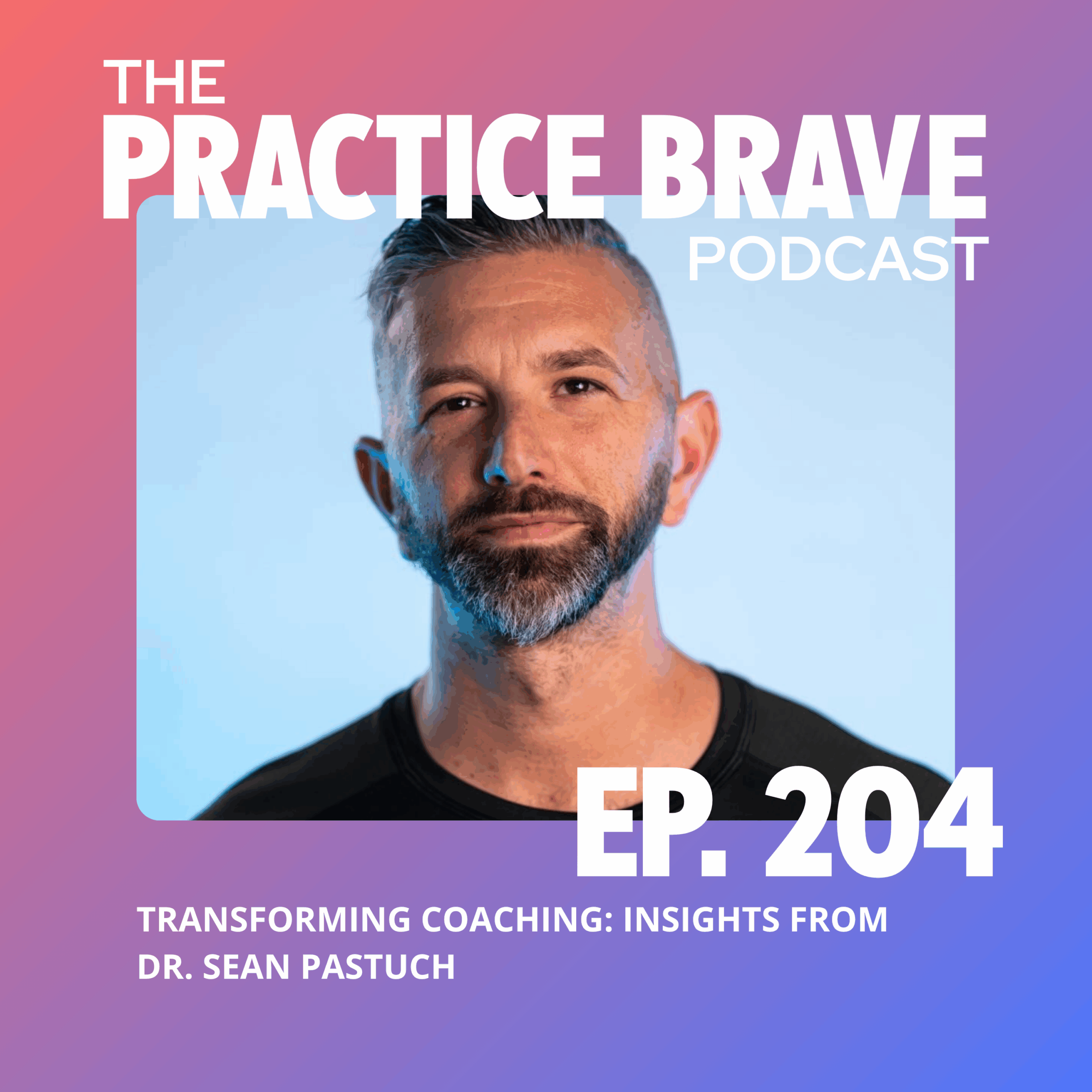
In this episode, I talk with Dr. Sean Pastuch, founder of Active Life, about rethinking fitness, coaching, and business in ways that actually support people for the long run. He shares his journey from being a personal trainer who took on clients others overlooked, to becoming a chiropractor, gym owner, and eventually the visionary behind a company that helps both clients in chronic pain and coaches who want to serve them better.
We dive into what it really takes to build a sustainable career in the fitness industry, from learning how to charge what your services are worth to creating meaningful influence beyond just working with pro athletes. This is a powerful conversation about coaching, leadership, and life—one that will challenge the way you think about money, influence, and what it means to truly help people.
Connect with Dr. Sean:
IG: @drseanpastuch
Websites:
Need workouts for your pregnancy or postpartum? Check out my programs (now with app access!):
The Pregnant Athlete Training Program: https://go.pregnancyandpostpartumathleticism.com/pregnancy
The 8-Week Postpartum Athlete Training Program: https://go.briannabattles.com/8-week-postpartum-athlete-training-program
Learn more about the Practice Brave Fitness Program: http://briannabattles.com/practicebrave
EXPAND FOR EPISODE TRANSCRIPT
AUTO-GENERATED TRANSCRIPT
Brianna Battles 00:01
Welcome to the practice brave podcast. I am the host Brianna battles, founder of pregnancy and postpartum athleticism, and CEO of everyday battles. I’m a career strength and conditioning coach, entrepreneur, mom of two wild little boys and a lifelong athlete. I believe that athleticism does not end when motherhood begins, and this podcast is dedicated to coaching you by providing meaningful conversations, insights and interview topics related to fitness, mindset, parenting and of course, all the nuances of pregnancy and postpartum, from expert interviews to engaging conversations and reflections. This podcast is your trustworthy, relatable resource for learning how to practice brave through every season in your life. Hey everyone, welcome back to the practice brave Podcast. Today. I’m here with Dr Sean pass such, and I’m really excited to talk to him about honestly, supporting coaches, athletes and just humans across the lifespan in terms of fitness and just like kind of myth, busting a lot of what we see on social media and providing, like, practical, direct and straightforward information. I feel like, Sean, you do such a great job of that on social media, and it’s just really great to meet you and talk with you. Thanks so much for being here. It’s my pleasure to be here like I
Dr. Sean Pastuch 01:16
was telling you before. You have such a phenomenal reputation, but just being able to put my face next to your face on the screen like this is this is we’ve already won.
Brianna Battles 01:25
Well, thanks for saying that. So tell us a little bit about your background and how your career and work has evolved over the past few years.
Dr. Sean Pastuch 01:32
I guess. Yeah, the 30,000 foot view is that I was a personal trainer back in 2005 and I became really successful financially with it really quickly, because I was working with all of the clients that nobody else wanted to work with. Most trainers are working with the hot chick, the jack dude, the person wants to be more athletic. They’re doing choreographed routines on the middle of the gym, and that’s their marketing. I was working with people who I had one in one case, the guy had ALS. I had a woman with frozen shoulder. I had my client, Josh, Whose glasses fogged up every time that we would get him sweaty. I worked with all kinds of people who were not the sexy, attractive client for the other trainers in the gym, and I just became really uninspired by the field because I didn’t really know what I was doing. I was 2122 and I would go upstairs to the physical therapy suite, and I would ask them, What do I do with this person? And the answers that they would give me, or if it hurts, just don’t do it. If it bothers them, work around it, find another exercise. And then I would go ask my personal training manager, and he would say, well, just regress the exercise to eliminate the pain, and then you’re good to go. But the clients I had didn’t want the exercises regressed. They didn’t want to work around it. They wanted their problem to be gone, and neither industry was providing solutions. So I went to chiropractic school, thinking I would learn how to save the world. There, came out, opened my own clinic. A few years after I was licensed, I practiced in my father’s practice for a while. That didn’t work out. Opened my own clinic and my own CrossFit gym, and over the years, of doing both of those things fairly poorly, I got really good, and I had patients and clients who were flying in from all over the world to see me. I helped an Olympian qualify for the games and be able to train without shoulder pain. He won bronze in the Olympics in Rio. I helped the baseball player who was in the pros get one more year out of his career instead of needing surgery to shave down his clavicle. And I was helping the best CrossFitters on the planet. You know, Games athletes, games champions, age group, all of it. And in 2018 I realized that I was, I was, uh, painting myself too small by staying in clinic and in the gym, because people wanted my help from all over the world. So I sold the gym, sold the clinic, and went online, and pretty soon that turned into coaches wanting to know what I was doing for their clients. Started training coaches. Pretty soon that turned into gym owners wanting to know what I did for their coaches, started training gym owners. Realized I was doing way too much, which was a theme of my life on the way up to that. And now I’ve scaled all the way back to I train one client in person. I have room for three clients online. Personally, we have a brick and mortar and active life develops coaches who wants to be able to help their clients effectively get out of chronic pain to reclaim an active life dependably, consistently and sustainably.
Brianna Battles 04:32
Yeah. Thanks so much for sharing that. And I love that you’ve kind of had, like, a common theme run through is that, like you started with, like, almost like the high maintenance clients that couldn’t get help, and you’ve helped others be able to help that demographic who needs more intelligent coaching and beyond, just like repeating what they see online, or kind of like the short sightedness of so many different personal training certifications, regardless of background of it and a lot. Not a lot of what we’re actually not taught in school either, that you can only really learn through reps of working with people in real life, and by like, sucking, like you said, right? Like we all sucked when we started out, and then you like, get good by sucking, and by getting these these reps and this feedback. But all that sort of translates, and I think it’s really relatable
Dr. Sean Pastuch 05:19
for people. Thank you. The thing for me is, everybody who’s a coach thinks that the top of the field is working with the pro athlete. You know, it’s, oh, you had an Olympic medalist reach out to you. That’s not the top of the field. And it’s not even that much fun to work with those people. It’s actually very difficult, a lot of maintenance, and it’s not about the physical, right? And it’s not even about them. It’s their agent, it’s their other coaches, it’s their travel, it’s their requirements for media and having to balance all of that that’s not fun. Fun and inspiring to me is working with the guy who’s advising the president on drug policy, who can’t walk up the stairs without running out of breath, who’s had knee and low back pain for 10 years and is 100 pounds overweight and wants to look and perform. The part fun for me is the the mom who is crushing it for her kids, crushing it in her marriage, maybe crushing it at work, but her body isn’t keeping up. And now I’m not a postnatal so I’m not talking about that mom. She needs someone like you. It’s the knee is hurting, the back is hurting, and that’s just slowing her down. I want to let that woman become the best mom she can possibly be to her kids and know it right? That’s exciting to me, but that doesn’t sell on Instagram the same way that Brooke Wells butt does when I used to work with her. That’s just the reality.
Brianna Battles 06:45
Yeah, no, but I think that’s really discouraging. And we have a lot of different people that that listen to this podcast that are maybe new to coaching, or they found coaching as like a second career, and they’re like, how do I stand out in a space online where it’s like, you know, people are using what they look like, or they’re using their body or their personal experience versus, you know, like more education, like, how do I stand out among that? So what do you tell the people that you work with, the coaches that you work with, the trainers,
Dr. Sean Pastuch 07:14
start with people, you know, I think one of the biggest mistakes this trainers make in trying to go online is they think that online businesses happen online, right? The way I grew my own business, online business wasn’t online. I and we’ve done over a million dollars a year working with people online. The best way to build an online business, if you don’t have a following or a desire to show your ass, is not to go try to build the following. It’s to work with people in person and to be so effective for them that they don’t need you in person anymore, and then to transition them from in person to online, even if they’re in your town. What happens then is that you make room for other people to work with you in person, and you are able to scale your time working with those people online. Now, when you work with the people online, they have friends who aren’t local to you, you can tell them that they can tell their friends who aren’t local to you, that you can also help them online, and you can build a multi six figure business online with 120 Instagram followers and a private account, because that’s not how you’re attracting or selling your clients, right?
Brianna Battles 08:19
Yeah, I tell people that all the time. I’m like, You got to get your coaching reps and experience and credibility in person first, so then that can act as your funnel to building out an online extension of your business. Like there’s a hybrid thing that happens before going fully online. But I think a lot of people like the online world has so much potential, but you got to start in person, in a coaching field first, to be good, incredible as a coach and to actually have effective results online. Because if you are not getting that in person first, it’s going to be really hard to deliver, like a sustainable online program or business to people and attract that Well,
Dr. Sean Pastuch 08:57
I think most coaches think that they get to scale their time and they can do it from anywhere I can travel and do anytime I want. That’s not how it works. It has the equal opposite effect. You end up feeling like a slave to your business, because you can always be working on it, and if you’re really great, your clients will still pay you when you travel, even if you work with them in person and you don’t work with them that week, because you’ll do a job that provides them a service while you’re gone, that they’re willing and happy to pay for to maintain the time slot when you get back in the service while you’re away, without you having to talk to them while you’re gone. And one of the questions I always like to ask coaches who have clients in person who think that the next step in their career is going online, is, why don’t you just double your price in person? And they’re like, Well, if I doubled my price in person, nobody would pay me. I’d lose all of my clients. And my answer to that is that, then you’re trying to solve a money problem with a service offer, when the reality is that the service you already have could be made more valuable to scale your time, but you have to look at what you’re doing and recognize it’s not good enough yet. Yeah, and that’s both a problem and a solution, because it feels like crap to look at what you’re doing and say, Well, I’m not good enough at this now I have imposter syndrome. You don’t have to have imposter syndrome. You can look at what you’re doing and say, It’s not good enough to serve this client at this price point. It’s perfect for this client at this price point. If I want that client at that price point, I have to change it to change it to be able to meet them where they want to be met. Yeah, and that’s a choice. Do you
Brianna Battles 10:25
have an example of that that maybe, like, someone can hear and be like, Okay, I could see, like, what my options are, or one thing that you recommend?
Dr. Sean Pastuch 10:32
Yes, let’s say that today you’re charging $80 for a personal training session, and the average client is training with you twice a week, and your thought process is I’m having to work 30 hours of training sessions to make the money I need to make, and then I’m having to program answer texts, all of that stuff in between. Forget about where you live. I don’t know your market, but you can charge more than you think that you can charge. Let’s just pretend that I told you go to 150 I want you to think of all of the things that pop up into your brain as the reasons why people wouldn’t pay that where you are. Then you start to think, Okay, well, would everybody where you live not pay that? Like nobody where you live would pay that? And typically people would say, Well, no, just almost nobody where I live would pay that. Well, what is almost, let me go into one to 3% of your market could pay it and would pay it. Okay, well, how many people are in your market? Then we go look at how many people live in your neighborhood. And even if you’re in a small town, there’s only 8000 people who live here. Well, great. What’s 3% of 8000 there’s that many people who could afford to and would be interested in working with you, based on the math that you just provided. If all three of those percent came and found you. You couldn’t even service all of them. So where are they? What do they want? What are you not providing that they need? What don’t you understand about them that you need to understand? What services do you need to be able to provide that you don’t know how to provide, what problems you need to solve, that you don’t know how to solve because they’re going to the doctor, they’re going out to dinner, they’re buying a car. And they’re not buying the car that just gets them from A to Z. They’re buying the car that gets them from A to Z that when they swing the door open and they step out, they feel like a boss because they got into that car and out of that car. So the tangible example is, if I came to your town today, I would make known that I am the person you need to talk to if you are dealing with aches and pains that nobody has been able to help you solve that are now in the way of you living the kind of life that you want to be able to live. And I will have a thorough consultation with you, then you will leave knowing exactly what you need to do, whether you decide to become a client of mine or not, or I just had to take you on as a client or not. And if you decide to work with me, you need to know that I am prohibitively expensive. And I’ll have a list of people who want to come and talk to me, and I’ll only take the ones who I’m hyper confident I’m going to be able to help, because when I help those people, they’re going to refer their friends. I’m not going to hide that I’m expensive, because I don’t want people to come to me who wouldn’t be able to pay when they found out. Yeah, what comes up for coaches when they hear that is often, well, I got into this to help people, and I don’t only people, and I don’t only want to help rich people. And then we have the conversation around that’s totally reasonable. I don’t only want to help rich people either. Put aside. I’ve we’ve had people take out home equity lines to work with us at active life here in Long Beach. Put that aside, because maybe you don’t want to do that either. How do you decide what’s the appropriate price. I want to make myself accessible to people, accessible to who, as many people as possible. Okay, so $60 that’s how you landed on 60 Why not 59 What if there’s someone who can only afford 59 Why not 58 and we keep going until it’s well, the homeless person on the corner can’t afford one, so you have to train them for free. And then it’s okay, fine. You’re free. There’s somebody who can’t afford the times that you train during because they’re working during those times. So now you need to be 24/7 and free. Am I? The thing I want the coach to think about is, if price was no object, if Jeff Bezos was coming to you to be a client, what would you do for him that you don’t do for the clients you’re already working with, because you can’t afford to do that for them, but no, it would benefit them. Just do all of that and then figure out what it needs to cost and charge clients afford accordingly.
Brianna Battles 14:44
Yeah, yeah. I mean, I think this is a very different way of thinking in a fitness industry that has been like we haven’t been taken seriously because we also haven’t taken ourselves seriously as business owners or as being like professionals who. Can charge this as a service that is very needed, that is preventative healthcare in so many ways, but it’s been almost like viewed as being a less than career, or you’re not supposed to make a lot of money, but there’s so much potential and so much value and so much need. And that’s we have our culture on our side now, like it’s in we know that exercise is beneficial. We know that it’s important to invest in your health. It’s just reflecting that in our business practices.
Dr. Sean Pastuch 15:27
What’s interesting about the perspective you just shared that fitness professionals aren’t supposed to make a lot of money is that that isn’t shared by people who have a lot of money and want to hire them. It’s only shared inside of the fitness community. Yeah. So let me be really clear about this. The second most expensive gym in our town, here in Long Beach, New York, is about $180 a month. The second most expensive personal training session here in our town is about $85 our location is $834 a month, and we are $150 a training session, and we have a wait list we cannot take new clients right now. The reason for that is because when the people who are looking for something of extreme value see a price point of 180 of 180 and a training session price of 85 they immediately disqualify it as a possible solution to their significant problem. And so you end up working with a group of people who have small problems, and amongst people who know how to solve small problems, and small problems don’t get paid a lot, so you and you live in this bubble of small problems, small solution, small price, and then you start to die on the sword of I didn’t get into this for the money. I got into this to help people. I didn’t get into this for the money either. In fact, in 2011 I took my wife to Hong Kong. When I say I took my wife, I was dead broke. We went to Hong Kong because my uncle was an investment banker who wanted someone to transport his 13 year old daughter on an airplane for 16 hours or 14 hours, whatever it was, and we were up. So we paid for our tickets, put us up in his apartment while he was living there. We transported his daughter out, and then he took care of everything while we were there, because I couldn’t afford to while we were there, his managing director said to me, don’t go back home. You’re a Jewish kid from Long Island. Your uncle is your uncle. It is your God given right to make millions of dollars in finance. I was 28 years old. He said, I have an apartment for you. It’s furnished. I have a job for you. You’ll be a millionaire before you’re 30. I didn’t take that job. I went home with my wife and slugged it out for nine years before I was making any money that I could put into a bank account. And now we charge more than anybody else, and we deliver a greater multiplier of what we charge than anybody else, and we have testimonials, referrals, gratitude, and I feel great about making money helping people like that.
Brianna Battles 18:29
Yeah. And I think what we’re not told is, like, the more money you make, the more you can do to further help people where you’re like, filling that side of your heart like it’s not a bad thing to want to be financially successful, because that allows you to be so much more successful in the work that you’re actually putting out there into the world. You have so much more freedom.
Dr. Sean Pastuch 18:47
There’s two things I tell coaches who struggle with that. One is, make if you really want to be able to help people who can’t afford you make so much money that you can afford to help them for free. One the other side of that is if you really believe that the way that you help people who can’t afford you is by helping people who can’t afford you, then you’re missing the opportunity to help people who influence people who can’t afford you. If you had the opportunity to work with either 100 people who are employees on the line at Amazon or Jeff Bezos, and you make the same amount of money in the same amount of time working with both audiences, I believe you have a greater opportunity to influence people’s lives by working with Jeff Bezos than you do by working with 100 people who work for him. Because if you can influence Jeff Bezos to treat his employees in a certain way because of the hard questions that you ask him, through the trust that you’ve acquired by working with and helping him, you can change the way that his company runs, which changes the way that the hundreds of 1000s of people who report to him through a chain get treated by their employer. Yeah, that’s that’s real influence. That’s real
Brianna Battles 19:52
change, right? Then you’re changing belief systems, and you’re kind of changing like these different cultural like. Expectations a lot of ways, like the top down effect, which I talk about a ton in my coaching. And I think if you’ve coached anyone, then you know, like, that’s how it works. But it is. It is sometimes hard to put into practice. And when I hear so much echoed throughout the way you speak and how you explain things, you have a really deep understanding of psychology and human behavior is that something that you feel like you’ve acquired over time, or you’ve always had a deep interest in and like how you’re able to communicate this to coaches, because you’re not just saying, like, do this or do that, like you’re hacking belief systems, you know, and that’s like a different form of coaching. That’s a different form of leadership in business. I appreciate
Dr. Sean Pastuch 20:39
you noticing and mentioning that I think it’s both my unique ability and my biggest weakness at the same time, because it’s not what people are looking for. They want the tactic today that helps them today, and they don’t want to believe that the tactic today is changing your belief set so that you can have the results you want forever. The answer to your question is, I was a liability in this department until 2016 an absolute abject disaster in terms of human psychology, empathy and communication. I was working 80 to 90 hour weeks any given week. I owned an event company, my chiropractic office and a CrossFit gym. And if one was successful, the other two were failing. And one night, my wife and I went for a walk, and she was pregnant with our first baby, and this was actually before 2016 so I’m mixing the timelines a little bit. And she told me, I don’t want to be a single mother. She was holding my hand, and we were walking northbound on Laurel, Temple of art. I’ll never forget where I was or what she said or what was around me, how it smelled or how it felt. I don’t want to be a single mother. And what she meant was, you’re not around, and when you are, you’re not present. So you would think that that would drive me to change, but it didn’t. It drove me to think about change. About two years later, my event company lost a significant amount of money in an event that we expected to make money on. My wife had put about $15,000 into a savings account for both of us. I was living off of her, her health insurance, her salary, my failure, despite 80 hours a week of work, and my event lost $27,000 and I owed 13 and a half of that. We had a bank account with 15 in it that she had put in. I remember practicing all day how I was going to break it to her, and then when I walked into the kitchen to tell her, I just broke down and cried and told her, I lost 13 and a half 1000 or $15,000 that you saved. You know, and I didn’t know what else to say. I was crying. I thought she was gonna leave me, and she hugged me, and she was like, You’re my penny stock. Because I told her when we got married and my vows, I would be her penny stock. That drove me to change. I hired a mentor, and the first day I worked with that mentor. He was like, Hey, you have everything that it takes to be great. I just want you to know that, but you have to stop treating people the way that you want to be treated. I said, What are you talking about? Like, that’s the golden rule. He’s like, Yeah, but Sean, you’re a fucking psychopath, and most people don’t want to be treated like one when they’re not. So I said, Well, how do I treat people? I said, you have to treat them the way that they want to be treated. And so, well, how do I know how they want to be treated? He’s like, we have to ask them. I said, How do I ask? And he said, that’s the best question you’ve ever asked. So that year was the first year I ever made $100,000 in my life. That year I started having Olympians fly out, I mean, fly out to see me. That year I had CrossFit game champions fly out to see me. That’s the year everything changed. Have nothing to do with gaining better skills in terms of my tactics or my business skills, I thought I was hiring this guy to help me build the business. He taught me how to be a person, and through my experience being a person, it’s been the thing I’ve over indexed on since, and it’s been the biggest return asset I’ve ever had.
Brianna Battles 24:19
Yeah, I really appreciate you saying that, because I can tell like, you’re a high achieving person, and I think that high achieving personalities tend to be like, really intense and like, you just do this, and you pour yourself into a lot of different directions. But it is funny, what happens when you a, like, narrow your focus and B, change your delivery, like, it becomes a lot more effective in creating those opportunities. And you know, just like kind of scaling what you were trying to like outwork. Well now you’re just being a little bit more efficient and smarter with your with your approach, or with your delivery, or whatever else it might be.
Dr. Sean Pastuch 24:52
Yeah, when I was working by myself in 2018 I was able to get the business to doing a. A million dollar a year alone, and it felt awesome. I was like, I am the man. Like, no one’s gonna tell me I’m not the man. That was the I’m amazing. I made a million. I generated a million dollars of income. I didn’t keep all of it. I made it. I generated it in 2018 alone. That felt incredible, but I was doing a bad job, and I didn’t know I was working with 84 clients by myself. And then ultimately, I hired some people and let them work for me part time, and it wasn’t like I It’s been every year I’ve had to learn lessons that I don’t want to learn but that I’m grateful to have. It’s like type two fun. Yeah, funny how that works. Yeah. But I mean by in 2022 I’ll never forget this. You know, 2020, to 2022, 2020, and 2021, were the golden years for my company in terms of our immediate growth, I’m the guy you want when the shit hits the fan so covid hits, I’m like, let’s go. I’m calm, Yeah, I’m ready. We started generating months where I had so much money coming in, I didn’t know what to do with it. By talking about in excess of $100,000 a month in profit. By 2022 we were down to $6,000 left in the bank account, and we were losing $35,000 a month, and I had 30 something employees, and I couldn’t sleep because I was worried I was going to lose the whole company, the the dream I had built for myself and my family, the respect of all the people who were depending on me. And that’s the year that I that’s the month that’s the day it was, it was July 4 weekend I was in Maryland, in my wife’s family’s house, and I had to call a team member who was in charge of running the company, but wasn’t afforded the authority to run the company. If that makes sense, I kept it too close to me. I said, Do you want it because I don’t. I obviously don’t have it. She’s like, yes, I want it badly. We never lost money in a month since then. And I think our team Morales as high as it’s ever been. And so it’s these lessons over and over and over again that, like the grass is greener, build a big team, generate a ton of income. Everything will be awesome. But then the dreams and the nightmares go from being, can I make enough money to afford to live in our house to can the 30 people who work for us make enough money to afford to live in their house? And so there are lessons all the way through, and learning how to do it and learning how to lead people to do it are very different
Brianna Battles 28:05
skill sets so hard because then there’s like coaching, like, there’s like leadership needed in your home, and like, providing the lifestyle that you’ve become accustomed to. Then there’s like, the leadership of the people that you employ or that you pay, and then there’s the leadership of like, making the right decisions for the business. And it’s just it’s so much pressure for any person when you’re feeling that responsibility from literally every angle,
Dr. Sean Pastuch 28:28
can I share the most valuable thing I did for myself so that other people who are listening can can decide if they want to employ It also, yes, absolutely. I set one sentence success criteria. So what that means is, everybody is chasing success, and few people actually can articulate what that would mean for them. How do you know if you’re successful? I know I’m successful if I am home by 6pm without my phone. Present for my family period. Now, what has to happen for that to happen is a mountain of things, but that’s how I know if I’m successful every day, I’m not successful every day. I’m successful most days, but boiling it down to something that simple. Now what happens is, well, why? Why can’t I be well? Because I’m still thinking about this. How long you’ve been thinking about that? A long time. Maybe it shouldn’t be you thinking about it. Yeah. And so it forces like, if I want to be successful, if I want to feel successful, it’s not the money, it’s the 6pm presence with my family. That means I need to pay other people to do things that I am not excellent at doing. Yeah, and it allowed me to much easier detach from the money that I’m not making, because it’s that’s not the only piece of success criteria.
Brianna Battles 29:56
You know, you said I You said something that I think is a lot. Of people who are entrepreneurial, like, their fear is like, when it’s good, it’s good, but then, like, slowly or quickly, things can turn and then you start like, feeling like you’re losing everything, or you live with that fear of losing everything, because you are the one that people are counting on for the company be successful. And obviously you were able to eventually see, like, it sounds like maybe you were getting in your own way, and it needed to be like, shift, shifted responsibilities as somebody who could give it what it needed or wanted. But what were some of those signs or like contributing factors to seeing that, that downward turn where you’re like, Okay, we went from being really good and safe, safe ish financially to this turn. Like, what was that?
Dr. Sean Pastuch 30:40
You look at a bank account that has $6,000 in it last month, you lost 35 you you can do the math, we’re out of business next month. Yeah, and we’re doing $3 million a year. How could we be out of business next month? Something’s wrong there. That was the obvious. Something significant has to change moment, and I have been trying to change it for a year, and don’t have the skills I haven’t done it. Be honest with yourself. You need this to be somebody else’s responsibility and authority. The other thing that really helped along the way. After that was my friend Mike Bledsoe, gave me the advice to put myself on salary. He’s like, pay yourself enough money that your needs are met, and then when the business has a good month, you still make your salary. And when the business has a bad month, you still make your salary. And when you get to a point that the business has accumulated enough money in the bank account that it doesn’t need all of that money in the bank account, you can make decisions about whether you want to invest that money back into the business, take some for yourself, a combination of both, or a third a fourth option that you weren’t thinking of, but create the stability so that you can make decisions from a stable platform. And that was huge for me, yeah? Well, doing that was, it was a big turning point for me also,
Brianna Battles 32:11
yeah, and, you know, I don’t know about you, but a lot of best business practices were never, ever taught to me in school, or, you know, we talked a little bit before this podcast, where it’s like, you and I both have had unconventional routes for the career paths that we initially chose and went to very entrepreneurial route and kind of creating something very different. But a lot of these, like business practices and how to run a business and what to look for, how to be financially savvy. Like, that’s not always intuitive, unless maybe you were lucky to have some sort of business minded person in your life. But like, I didn’t come from anyone who was entrepreneurial. Like, nobody in my family. Like, I’m like, first generation even go to college, nevertheless, like, be not reliant on a corporation to pay me, you know. And so like, what do you what do you say to people that kind of come into it like that?
Dr. Sean Pastuch 33:04
Well, Mark Bell has a great line that I resonate with. It’s that I had the performance enhancing drug that was parents who believed in me unconditionally when I was a kid, I never searched for approval from the most important people in my life or love from the most important people in my life. People in my life. That was a huge security blanket that I don’t think I ever realized I had until I realized I had it. My father was entrepreneurial. He owned a chiropractic office, and he was also, I think, the first college graduate in our family, if I’m not mistaken. But I have this rebellious streak in me where if my father did it, I can’t. Now you might say, Well, you said he was a chiropractor. You’re a chiropractor, but it’s I had to do it totally differently than he did it. You know what I mean? Like I couldn’t. It doesn’t matter if he was wildly successful at this. I can’t do that. Dad did that. I had to carve my own path. He gave me one piece of advice that I listened to, and I’m glad I did. It was it’s not what you make, it’s what you keep. No one cares how much money their business makes if they don’t get to keep it. And so that was a good lesson for me that I started to apply once I started to take that salary. But the advice to someone who has no entrepreneurial advice from family or friends or anyone around them. Get around people who have the experience you’re not hiring. You don’t have to hire them to coach you. I would argue you should, if you can afford it, but you don’t have to. And when I hired that guy, by the way, that mentor is $1,000 a month, and I had to fire people to do it, and then I had to do their jobs. So you can find a way. And that was when I wasn’t, you know, was just a clinic in a gym. So all that aside, if you don’t have any financial means to do it, you can’t find anybody around you who you can do it with. Find two. Two to three people on Instagram, YouTube, LinkedIn, Facebook, whatever platform you enjoy, and stop following everybody else. Only follow those two to three people. You don’t have the luxury of entertainment on that platform or diversity of opinion on those platforms. You’re building something and you need help for free. Yep, follow two to three people whose integrity you you appreciate, whose business acumen you want to learn from, and allow them to influence you until you could provide value to them, then open it up to another person, and you should find yourself experiencing more financial success through the influence of these people. When that happens, start taking that money and either use it to build a financially stable platform for yourself or to hire people who can collapse time and help you get there faster.
Brianna Battles 35:58
Now I really appreciate you saying all that it is. It’s so true. Like, being able to, like, leverage the rooms that you’re in, the conversations you have, like, that’s where some of the best continuing education comes from. And if you can’t physically be there, like, that’s what we can use social media for. That’s what podcasts are for. Like, there’s so much available now for learning and evolving and scaling any of your efforts that, just like, was not even available a decade ago. It’s so crazy, the access we have to being connected
Dr. Sean Pastuch 36:25
to people. There’s something I think it’s either Stephen Bartlett or Scott Galloway. I don’t remember who says it, but they say you actually haven’t learned anything until you’ve changed something. It’s just because you heard someone say something, or you can remember a formula or something, you haven’t learned it until you changed something as a result of it, because if you did, you would never allow something to stay the same that you know needs to change. So it’s not just about listening or watching or rating, it’s about applying and applying fast, and a lot really like that, and I also I want people to understand the thing I am most proud of in business, besides the results that I get for clients, is that I believe if you polled every single staff member who works for us, they would speak glowingly about the culture that we have at active life, the way that they’re treated, and the respect that I pay them and their job. And I think that our clients would say that they see it, and I think even people I’ve had to fire over the years would tell you that it was a high integrity firing with very few outliers, yeah,
Brianna Battles 37:42
and that’s why I think, like coaching, like being a good coach and being a good business owner are, they’re so interconnected, like, it’s the same conversation, like, I, we joke and say, like, I I never understood business, but I understand coaching. I understand, like, team dynamics. I understand like, there’s role players, there’s like, the head coach there’s the assistant. Like, you just plug in different players, and you create a culture that can then breed success, and then not just breed it, but then know how to sustain it, and then, like, make game time decisions. Like, there’s so much intertwined with like sports culture and coaching with business. But like, combining those worlds is, again, it’s not always intuitive for people, like they don’t see that connection, and then once they do see it, it starts to click, whether it’s, you know, especially when you go from like, Coach brain into business brain, you start to see how intertwined they really are,
Dr. Sean Pastuch 38:33
yeah, and I think that there’s a lot of pressure on people to feel like they’re really good business People. Yeah, I’m not a great business person, period. I have a great implementer who runs our company strategically. We have a great CFO now who keeps us accountable to the money that we need to make and the money that we’re able to spend. Yeah, I have a great acquisition team lead who only brings clients on with a very high level of integrity. We have great sales people who only, only sell to people who we genuinely believe are going to be successful. And that’s why the coaches who come and work with us are making like the cost of our education is $0 to them by month three, because they’re making more than we charge them, and the average coach triples their income over the course of a year. We say no to people all the time because we don’t think that we’re right for them. That’s the stuff that I’m proud of. And I’m not the business person. I’m the visionary. So people will ask that, what does it mean to be the visionary? At this point in my career, I get to say, I want the world to know that living with chronic pain and compromising on the activity of your life is a choice. And then they’re like, how are you going to get there? And I say, I have no idea, Mary, can you explain it? Yeah, that’s that’s all I have to do. And then I have to create a safe, psychologically safe and emotionally inspiring environment where our staff and our clients pursue a mutually shared goal. That’s it. That’s my whole job.
Brianna Battles 40:17
But being a visionary is like high high end leadership, and with that comes putting in these role players and places to help like, bring that vision and those beliefs to life, and then seeing it actually like, and then delivering those results on the vision.
Dr. Sean Pastuch 40:31
Hire them, trust them. Get out of their way. Mentor them when they ask for it, and provide them with the resources that they need to be successful without telling them to be successful without them, yeah, but make them, but make them earn it. Make them like when we opened our brick and mortar, I like I had. I told our team it needs to be approachable, practical, understandable and distinct the brick and mortar space and the service you guys figure out how that works. And then we litigated every single piece of equipment that they wanted to buy for the space. How does that fit into these four categories? Why do we need that? Why can’t we do that without this until we got to the equipment list that we currently have in the building, my job isn’t to tell them, No, you can’t have it. It’s to question them, to make sure that they actually believe that they need it.
Brianna Battles 41:21
Yeah, that’s that, like, you’re like, hacking their psychology and belief systems, again, common theme, yeah, but, I mean, I think that’s, that’s actually what works. I have to do that a lot, right? I should say, I, I get to do that a lot, and I realized that was what I needed to do. And working with, like, pregnant and postpartum athletes, because there’s so many very rigid belief systems and dogma attached to what women should or should not do during pregnancy and what their return looks like once becoming a mom. Or are you even an athlete once you become a mom? And I started to see like, there’s so much influence on how they’re approaching these these seasons, and like what they think about it, and it’s because of what their doctor said, it’s about what their friend said, it’s about what their moms it’s about what their mom said. It’s about what the other girl at CrossFit said. It’s about what that social media influencer said, instead of like, really understanding their own body and their own like, what this journey and process means for them, what their own individual circumstances are, because that’s a season where everything, psychologically, physiologically, everything changes, but yet, like, if you’re not hacking the psychology piece, none of the training or performance stuff matters, like, none
Dr. Sean Pastuch 42:28
of them, by the way, as a coach, I want to echo that. As a coach, hacking their psychology means sometimes doing something that you know is not good for them, physically, that they want to do, mentally and emotionally, so that you can earn enough trust over a long enough period of time to only do things for them that are good for them. I’ll give you an example. I had a client once who didn’t want to do any free weights. No free weights, they’re dangerous. Okay, we’ll only do machines then. Now I know that free weights are not dangerous. I know machines are probably more dangerous than free weights, but if I told that guy we’re only going to do free weights, you’re wrong. Let me explain to you why our relationship doesn’t work. So we use machine weights for months, until he asked me about an exercise somebody was doing, and I asked, you want to try that? He said, Sure, we try as sad as a feel. It was a shoulder press behind the neck with a barbell. Lightweight. He’s like, weird, but I think I like it. Like, do you want to try some other stuff that could benefit the same muscles? Yeah, what else you got? And about a month and a half after that day, we weren’t using machines anymore. But it wasn’t because I told him he was wrong or stupid for using machines. It was because I met him where he wanted to be met, and then progressed him in a way that was on his terms.
Brianna Battles 43:51
Yeah, that’s the hack to getting buy in and like, you know, you’ve that’s a, you know, that’s one like level of person. But I find that even like, working with my professional athletes, it’s the same thing. Like, sometimes they have to learn the hard way. They have to learn their own terms in order to, like, see the big picture and actually, like, trust you to guide that process. But it’s, I mean, I get a lot of people that come to me, like, for their second baby, or when they’re a year postpartum, and they’re like, injured now, because they’re like, damn it, I probably should have listened to what you said, when you said X, Y or Z, when I was pregnant, or when I, like, tried to get back and, you know, compete in the CrossFit open at seven weeks postpartum, like, May, I probably should have listened, but here I am, like, had a year postpartum, you know. But, like, right? Everyone is on their own journey of having to figure out, like, what they need. So then you can meet them where they are, and you just have to kind of support them through it. You can
Dr. Sean Pastuch 44:39
steal a line from me, because it sounds like you share the experience. You’re the LA, your ideas and your message is people’s last resort that they wish they tried first.
Brianna Battles 44:50
Yeah, yeah, it’s true. I mean, and that’s, I think that’s what has created sustainability in in my world, is because. We see that repeated process. So now people, because they see that, because that sentiment has been shared, their people are more they come to me that first time, or other people like, learn from those. So they’re like, I know now that, like, I want to be aware of X, Y and Z. I want to try to do this right, quote, unquote, right to the best of my ability, I’m interested in learning. And it’s like, there, there has to, there is a point that, you know, people battle their own egos. They battle their own belief systems. There’s a lot of like, self work that comes into, you know, like navigating these seasons that are challenging, whether that they’re of chronic illness and injuries, or it’s pregnancy, it’s postpartum, it’s it’s whatever, like, those are challenging seasons to work through, and sometimes they got to be it has to be on
Dr. Sean Pastuch 45:44
their own terms. Watching my wife go through postpartum was one of the most influential experiences of my coaching career. Say more four kids, 10, eight, six and one. No, 10, eight, six, and oops, we love them. Yeah, yeah. Fair. The first one, she had no epidural, stayed at home as long as she possibly could, got to the hospital and nine and a half centimeters baby was out an hour and a half later, and we had no idea what we were doing, and she ended up with some prolapse. She ended up with a diastasis. It affected her ability to do everything physical. But I didn’t know anything about why. I had never worked with a pregnant woman before, and I wasn’t about to start training my wife. But so that opened me up to there’s more going on than purely orthopedic issues. I don’t know what all of them are, but I need to go ahead and learn them. After our second, we thought we knew everything we’re like this is great. We’ve done this before. We’re doing it again. Your delivery will be better. Pelvic floor stuff is better, and everything for her was better, but our ability to function as a unit was worse, because we had never had two kids before, and so we were like, Okay, how do we need to communicate now? Taught me that as things change in people’s lives, the way they need to be communicated with needs to change. Third kid comes along. My wife has some fairly severe Postpartum Mood Disorder. I had never seen anything like it. She walked into the kitchen one day hysterical, crying because we had it so good, and she felt bad about people who didn’t have it as good as we have it, and there was nothing that she could do about that I’m like, am I supposed to just give you a hug? Am I supposed to go for a walk? Am I supposed to tell you? This is crazy. I didn’t know what to do, and that went on for like, eight months, until she finally realized she had an IUD and that she wanted to take out and see what that would do. Cleared a lot up, but she also worked with a mental performance coach to help her pull out of it, and I didn’t have the skills to help her that they had, my wife or not, I don’t have the skills to help a woman in that position out of it or through it. Then our fourth kid comes along, and, you know, we the pregnancy goes well, the delivery goes well. Everything about it is great. I lived in the nursery with him for four months so that she could get full night’s sleep. It was the best pregnancy post pregnancy experience that we had ever had, and about two months before he came, maybe it was even more. She asked me, Do you think I could work with staff over at active life one on one? Are you kidding me? Absolutely. So she worked with our team one on one before the delivery after delivery, and now she still does it three days a week, one on one, in person, and just watching all of it and learning how all of it’s going. Like I didn’t have the skills to meet her the first time. Then I thought I had all of the skills. I didn’t have the skills. Didn’t have the skills to meet her the second time that I thought I had all the skills, I didn’t have the skills to meet her the third time. And then I thought I had all the skills, and then I didn’t have the skills to meet her the fourth time, and I knew I didn’t have all the skills, and that’s the one that went the best. And it’s just, oh, it just opens me up to how much more there is that I just don’t know about and that we need that expertise on our team, or
Brianna Battles 49:25
a call away, yeah, yeah. And I think it’s, it’s fascinating, like, obviously, when it’s like, your spouse involved, it’s hard to be the person to like, solve the problems, even if like you could that just that dynamic is really hard. But then your education, your experience, your years of working with people, even same with mine, did not prepare me for what women’s bodies experienced during pregnancy and postpartum. Yet that’s 50% of the population. That’s you know, 85% of women will have children. Yet. As coaches, as practitioners, we are fully unprepared to support them through significant injuries, like prolapses, a significant injury, and this is, you know, you tagged me in something a while back, acknowledging that pregnancy is a big deal. Our bodies fundamentally change, and we question what is like. How do we define injury? Okay, does pregnancy fit into that definition? In a lot of ways, it does, and I think pregnancy is what gets so much attention. But postpartum is a shitstorm of like, like you said, like mental health struggles, your body has changed, is trying to recover, potentially injured, weaker, it needs to rehab, but we’ve totally overlooked that as a society and culture, and it’s just it’s hard to sit in
Dr. Sean Pastuch 50:47
well, I can tell you this for the ladies who are listening, who have husbands or boyfriends or whatever my perspective was, okay, so we have a baby, Doc, how soon can I have Sex with my wife again? It’s the only thing I cared about. How soon can we have sex again? Six weeks. That’s the medical answer. Six weeks until you can have sex again. That is not the psychological answer, and that psychological answer changes a lot based on how you interact in those six weeks, at least from from my experience, and that is because it’s not just a physical injury to birth a child. It’s also an emotional change. It’s a mental change. It’s a total responsibility, reordering in your entire life. My cousin just became a father for the first time about four weeks ago, and he asked me, he’s like, is there any, like, any advice that you would give me? I’m like, there’s a lot of advice that I would give you, but I don’t think it’s wise for me to give you a lot of advice, because your experience would be different than mine. You’re not married to my wife, you didn’t have my kids, you’re not living my life. I’ll give you the one piece of advice that I think is universal, don’t ask for sex. Earn it like you guys are back to dating for the first time ever, and you’re waiting until marriage. Like, treated that way, and he’s like, that’s actually really helpful. Because, like, I think it just I put a lot of pressure on my wife the first time through, like, you’re supposed to be ready, you’re supposed to be ready. She couldn’t articulate that she wasn’t she didn’t know why, and then it made her feel like crap. But if childbirth wasn’t an injury, none of that would be true.
Brianna Battles 52:37
That’s so true, yeah, because I feel like if there’s an expectation there, or the pressure, then that, like, mentally kind of shuts down any kind of, like physical interest. And when you’re already, like, sleep deprived, you feel like your body sucks or is injured, or you just, like, are just like gross feeling you don’t feel attractive. And then if you feel like that extra layer of pressure, or, well, I should do this. Technically, I medically cleared for that. But that’s not intimacy. That’s not
Dr. Sean Pastuch 53:06
no and listen, we ended up hiring a well, it was in 2020 we hired a sex and love coach, because, frankly, after our first two babies and we now had a third, we were in this phase of being roommates, and it was like, Oh, I My job is to bring the money, and her job is to take care of the kids. I’ll make dinner like, these are our jobs in the house. I didn’t want that, so we finally got ourselves out of the roommate phase. And I was like, I never want to go to the roommate phase again. Let’s hire someone to help us with this. And it’s just it’s fascinating to me how much there was that I didn’t know about how my wife was thinking, even though we were each other’s best friends, we’ve been together since 2005 she knows my deepest, darkest secrets, I know hers. And just going back to dating, yeah, so cool it is.
Brianna Battles 54:09
It’s funny when you, like, have been married for a long time, and then you get to a point where you’re like, do we like each other? Can we, like, remember how to date, and not just like, I know you love me and I love you, and I love our family, but like I need to feel like we’re dating again, like you like me, like you’re interested. Like that dynamic seems to disappear for periods of time throughout marriage, when you add kids and careers and career stress and like, different career trajectory changes that really influences a relationship and that dynamic? Well, yeah. And then
Dr. Sean Pastuch 54:43
there’s two things I want to say to that. One is Esther Perel is one of my favorite people to listen to speak, and she talks about, she says, I’ve been married to the same man. She said, I’ve been married three different times, each time to the same man.
Brianna Battles 54:54
Yep, one of my favorite quotes. I love that sentiment. It’s so good.
Dr. Sean Pastuch 54:59
Yeah. Yeah. And then the other thing is, if you’re a coach, listening to this, you’re a trainer listening to this, you might be working with the husband. You might be working with the wife, you might be working with both or not, right? Maybe you want to one day. The value, I hope that you’re able to get from this is that the priorities in people’s lives change as their lives change, and your job and your opportunity, if you accept it, is to always be learning what their priority is, and learning why that’s their priority, and learning what being successful in that priority would look like. And then instead of impressing upon them your priorities, your training methodology, what you think works, what you think is ideal, optimizing everything for them. If you can do that and put your ego aside and your experience aside and your preferences aside, you’re the most valuable coach that person’s ever going to work with.
Brianna Battles 56:00
Yeah, get the like, full scope of like, supporting somebody’s life and what actually matters.
Dr. Sean Pastuch 56:08
Yes, if a client tells me I really want to stretch a lot, that’s a waste of their time,
Dr. Sean Pastuch 56:15
but I’m gonna teach them how to stretch in ways that make them feel so good while they’re doing it, that they’re grateful for the stretches I give them, and they’re going to tell everybody that they know about how great their trainer is, because I help them with that. And if they get 90% what they want and 10% what I want, it’s 10% more than they were getting if they don’t work with me, and that 10% yields huge leverage on the other side.
Brianna Battles 56:45
Yeah, once again, just hacking the way people think, or like what they come in for, versus like what they are actually wanting, and then like finding that, helping them find that.
Dr. Sean Pastuch 56:54
Yeah, one of the great quotes that that first mentor I talked about gave me was, it’s not about you, and it’s always your responsibility.
Brianna Battles 57:02
Yeah, it’s like True, true ownership of it. So tell me more about active life and the resources for coaches, for different like people looking for support and interest. Like, what is that? What does that look like? What are your services look like?
Dr. Sean Pastuch 57:20
It’s comprehensive. We we are a personal coaching company. We have two arms of the business. One arm is that we help people get out of pain and get back to their active life when nobody else could help them. We do that in person, in Long Beach, through education, exercise and mentorship, they get all three of those things, people will come in for a training session. They might that day get 40 minutes of education and 20 minutes of training. It depends on what they need every day. The other side of our business is we develop and mentor the coach to be able to do that for their clients or for the clients that they want to be able to help. It’s a 13 month long mentorship that requires four to six hours of text learning per week. And I say text, it’s videos, it’s audio, it’s reading, it’s all of those things, so that we can meet the reader and the learner where they are. And then there’s go ahead and apply that in the real world with your clients. There are case studies, there are hypothetical case studies, and there are real life case studies. There is a Slack group where all of our clients live together so that they can support each other and our team can support them. There are, I want to say, 15, but I’m going to get slapped by somebody in the company. It’s more or slightly less, group calls every single week where our subject matter experts coach our clients, and then our clients who enroll with us get three months of one on one support to make sure that they get into the success zone, because that’s where we see people start to be successful. The education that we provide is everything from movement assessment to corrective exercise to mental gymnastics to help somebody start to think differently to personal development. And what we say is we don’t actually develop anybody. We reveal the exceptional and everyone that we come across, and then they develop themselves. Yeah, that’s what our 13 month long education is. It helps people to get people out of pain systemically or systematically, reliably and consistently. When they finish that, if they want, they can go into one of four different specialties, pelvic health, not pre and post partum, pelvic health, general pelvic understanding, specific pelvic restoration, return to sport, working with aging populations, people over the age of 55 and metabolic and inflammatory disease processes.
Brianna Battles 59:35
So this is all so interesting, because I feel like it is especially for like, new coaches, or people that are maybe like coming into the coaching space, practitioner space. This is what you are not taught in school. This is what you are not taught in your certifications on, like how to actually apply what you know in theory to, like real life coaching and like how to start up, and not just like start up a business, like how to start up your career. Or as a coach to be successful, so that you’re not you know, having to do the like crazy hustle, getting underpaid and undervalued and whatnot like this is 13 months is a lot, but it’s ultimately a significant shortcut to getting the kind of education and understanding that you need to be successful in this industry. Well, they start earning
Dr. Sean Pastuch 1:00:19
money in the first day. It’s not like they’re waiting 13 months to be able to start applying. Because start applying stuff. And they can take clients that they don’t know how to help, because they have us supporting them, providing even with program like write this for them instead of what you had written. And here’s why, right? Look this, when you train them, you’re saying you don’t have to know. Just tell them that you don’t, and then you have a team who does, who’s supporting you, so that you can, you know, with a high level of integrity, tell your clients the truth. Yeah. The other thing is that there’s two objections that people typically give us when they’re thinking about enrolling. One is, I don’t have enough experience, and the other is, I have a lot of experience. Yeah, that’s fair. The people who don’t have experience, great. We don’t have to break bad habits. And this is 13 months long. You’re going to get experience all along the way. Help the people you know how to help right now. How to help right now and then evolve who you can help over time, and evolve your price points over time, the person who has a ton of experience, a ton of continuing education, maybe they’ve been through your content before. Great. You have the educational background to have a faster ramp to financial success and skill success because of the education you’ve got before. It’s not so foreign to you. Studying learning is not so foreign to you. So we find that people on both ends of the spectrum are going to be successful provided that the thing that they’re looking for is to truly be able to help the client who is in pain today, who doesn’t want to be in pain, to get more than just physical support and how they live and change their life, no.
Brianna Battles 1:01:47
And what I like here is like, you know what the objections are, and as a somebody in a leadership space, like you have the answers, and I think that’s like a huge part of being successful in business and in coaching is like understanding who your avatar is, what their natural objections are going to be. And then, like, here’s how, like, I can hack that once again. Like, there, there is a counterpoint to this. And I think that’s a hugely valuable thing for coaches to learn and get insight on. And you just, like, did a great job of demonstrating that here.
Dr. Sean Pastuch 1:02:17
Well, thank you. It’s, you know what it is. It’s I told I was, I was working with a group last week of about 100 and 110 coaches, not our clients, prospects. We don’t do 110 on one. And I told them. I said, Look the RE I want you all to know before we start this, because it was a week long boot camp to help them improve their businesses and their skills as fast as possible, so that they could be in a position to work with us. I said, you have to understand where I’m coming. Before we start, I’m gonna put all my cards in the table. I believe that I have a moral obligation to enroll as many of you as I possibly can, because the problem that we solve is not going to be solved through us alone, and it’s effective. So I want you to know before you even start this call with me. Over the next five days, my goal is for you to have so much confidence in us and yourself that you have no choice but to enroll that’s my intention. So I need to deliver
Brianna Battles 1:03:17
I like that. I might have to steal that from you.
Dr. Sean Pastuch 1:03:22
I want you to pay me because it would be good for you to pay me, yeah? And it’d be good for your clients to pay me,
Brianna Battles 1:03:28
yeah, no. And, I mean, I think when, like, when you’re you have that conviction like that actually is the thing that sells. It’s like the energy, the conviction that you have where it’s like that. I believe this in my soul. I’ve seen it play out. I’ve seen it happen like, this is the next right step, and like, it’s just and it’s sharing that so people can feel that and experience themselves, and then know, like, that is also their next right?
Dr. Sean Pastuch 1:03:52
Yes, we had a guy sign up from Singapore about a year and a half ago, and we do a seminar once a quarter for our clients. They don’t have to come, but they’re encouraged to come. 27 person cap, the guy from Singapore, came. We’re in New York. I had our media guy at the time record all of the places that people are from, like, just have them tell you where they’re from. People who are already paying us to be clients are not going to fly across the ocean. And they were from all over. They’re not flying across oceans and the country, if they don’t get from us more than what we promised they’re going to get the day that they enroll, they’re just going to be like, it’s a sunk cost. I’m out. Fuck those guys. They flew across the ocean. Many of them, yeah, yeah.
Brianna Battles 1:04:40
And that’s like, when you know you’re onto something, I think that’s, like, the coolest part too. Like, I hosted my first in person certification, like, to actually do the certification, and I had somebody come from Bulgaria. I was like, what, God. Like, no pressure. I’d better freaking, like, lock in and really do a good job of this. And, like. You know, we had one of our pnpa coaches come in from Bermuda. I’m like, Bermuda to Idaho. What like this doesn’t even make sense. So it’s like, you start to see the impact that you have. And like, the results speak for themselves, because people see that even online, so much so that they are willing to invest, they are willing to invest time, money, etc, because they know they’re going to get an ROI when they take that back home, like they know that because of what you consistently share, having messaging that isn’t just like a sales pitch, it’s just like, This is what we do, this is the problem that we solve. This is who we show up for. And these are the results that we get. And we have sustained these results for people.
Dr. Sean Pastuch 1:05:40
Look if you’re great at what you do in this space, you have to earn a lot of money because the space needs you to stay in it, yeah, like the clients who need you need you to stay in, they need you to earn a lot of money so that you can stay in. Because if you’re not earning enough money to do this, they don’t get help, right? So our job as a company at active life is to make sure that you can do both help the client and make enough money to do it forever
Brianna Battles 1:06:09
on such a good point you shared so much knowledge, like both personally and professionally and just, I just really appreciate, like, your honesty and transparency here. And I think once again, like having an authentic voice and opinion and being able to share your opinion online, that is the thing that will make you successful, like you and I. We might not be for everybody, but who we’re for like we’re going to be like, we’re going to be in it with them. I really appreciate you sharing everything. Tell us where people could find you.
Dr. Sean Pastuch 1:06:41
Easiest place to find me is a DR Sean, best YouTube, on Instagram. All my other stuff is linked from there. I have a LinkedIn account, but I need to do a better job managing it.
Brianna Battles 1:06:49
Oh, don’t we all, it’s not that much, just not as fun.
Dr. Sean Pastuch 1:06:53
It’s not It’s I stepped into the elevator and I saw the numbers lit up and inspired me of a man was shut the Yeah.
Brianna Battles 1:07:02
Oh, thank you so much for sharing your time. This is super valuable. We’ll have all of your handles and everything linked in the show notes. Thanks for listening. Thank you so much for listening to this episode of the practice brave podcast. If you enjoyed the show, please leave a review and help us spread the work we are doing to improve the overall information and messaging in the fitness industry and beyond. Now, if you are pregnant and you are looking for a trustworthy exercise program to follow, I have you covered. The pregnant athlete training program is a well rounded program for pregnancy with workouts for each week that are appropriate for your changing body. That’s 36 weeks of workouts, three to four workouts each week, and tons of guidance on exercise strategy. We also have an at home version of that program if you are postpartum and you’re looking for an exercise program to follow. The eight week postpartum athlete training program would be a really great way to help bridge the gap between rehab and the fitness you actually want to do. From there, we have the practice brave fitness program, which is an ongoing strength conditioning program where you get new workouts each week and have a lot of guidance for myself and my co coach, Heather Osby, this is the only way that I’m really offering ongoing coaching at this point in time. If you have ever considered becoming a certified pregnancy and postpartum athleticism coach, I would love to have you join us. Pregnancy and postpartum athleticism is a self paced online certification course that will up level your coaching skills and help connect the dots between pelvic health and long term athletic performance, especially during pregnancy and postpartum, become who you needed and become who your online and local community needs by becoming a certified pregnancy and postpartum athleticism Coach, thank you again for listening to the practice brave podcast. I appreciate you, and please help me continue spreading this messaging, this information and this work.
MORE ABOUT THE SHOW:
The Practice Brave podcast brings you the relatable, trustworthy and transparent health & fitness information you’re looking for when it comes to coaching, being coached and transitioning through the variables of motherhood and womanhood.
You will learn from athletes and experts in the women’s health and coaching/performance realm as they share their knowledge and experience on all things Pregnancy & Postpartum Athleticism.
Whether you’re a newly pregnant athlete or postpartum athlete, knowing how to adjust your workouts, mental approach and coaching can be confusing.
Each week we’ll be tackling questions around adjusting your workouts and mindset, diastasis recti, pelvic health, mental health, identity, and beyond. Through compelling interviews and solo shows, Brianna speaks directly to where you’re at because she’s been there too!
Tune in every other week and share the show with your athlete friends!
This post may contain affiliate links, which means we receive a small commission from the seller if you decide to purchase (at no additional cost to you!) We only share products and services we have used, tested, and love ourselves!

