208: Adaptability, Motherhood, and Longevity in Sport with Michaela North
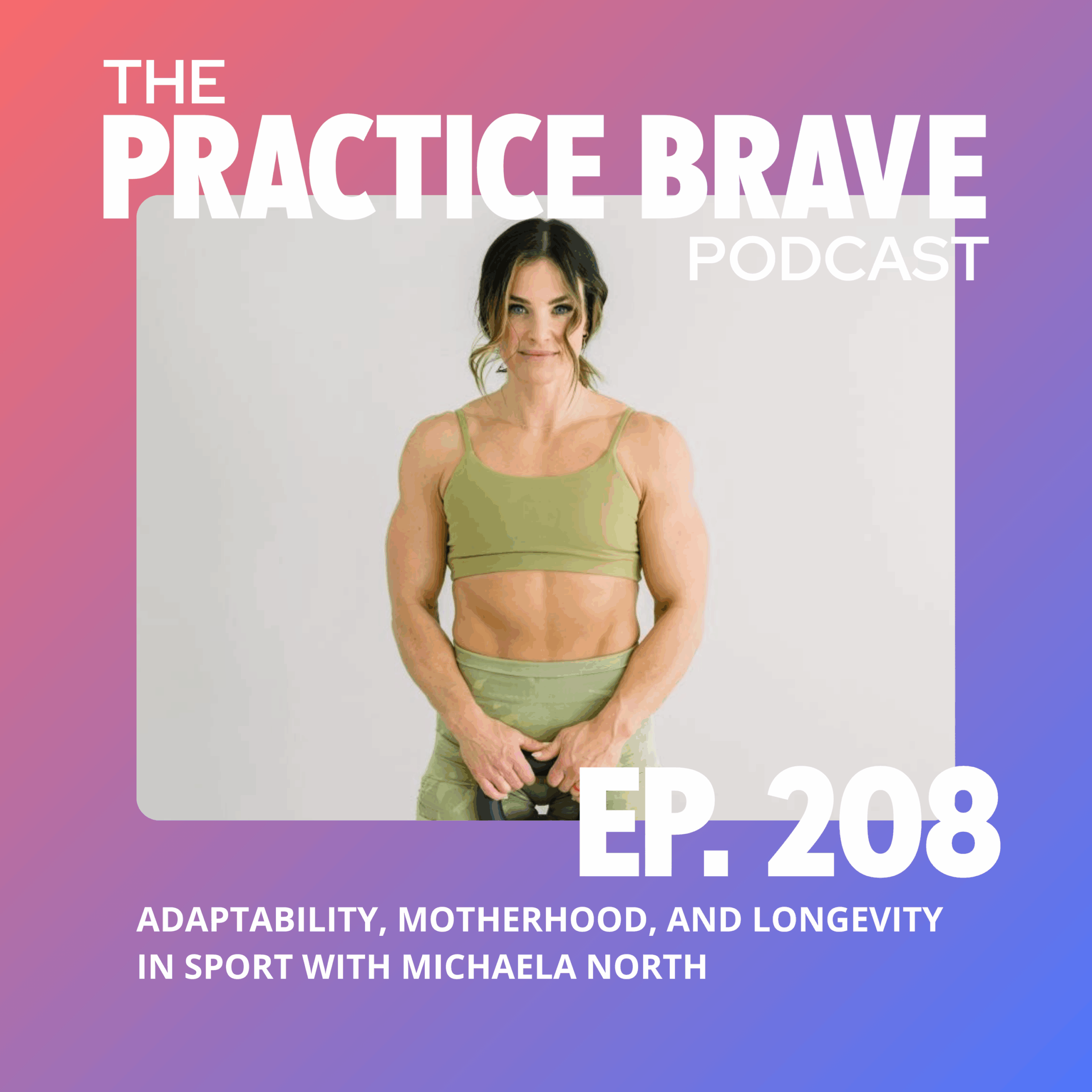
In this episode of the Practice Brave podcast, I catch up with my longtime friend and fellow athlete mom, Michaela North. Michaela is one of the OGs in the CrossFit space—an individual competitor, a CrossFit Games team champion, and now the founder of Hungry Fitness, where she leads a team of coaches supporting women through all stages of life with nutrition and training.
We reflect on more than a decade of pregnancies, postpartums, and athletic pursuits, sharing how much (and how little) has changed in the resources available to moms in sport. Together, we talk about the importance of adaptability, the myth of “all or nothing” in motherhood and fitness, and how these lessons set us up for long-term health, performance, and fulfillment.
This conversation is both nostalgic and forward-looking—celebrating how far we’ve come while recognizing the work that’s still needed to support women in every stage of motherhood and athleticism.
Connect with Michaela:
Instagram: @hungryfitness
Website: https://hungryfitness.co/
👉 Join Me Live!
What: The No-BS Guide to Coaching Pregnant & Postpartum Athletes: What Every Coach + Athlete Needs to Know
When: October 1 at 12PM & 8PM EDT
Register: https://join.pregnancyandpostpartumathleticism.com/ppa-masterclass
EXPAND FOR EPISODE TRANSCRIPT
AUTO-GENERATED TRANSCRIPT
Brianna Battles 00:01
Welcome to the practice brave podcast. I am the host Brianna battles, founder of pregnancy and postpartum athleticism, and CEO of everyday battles. I’m a career strength and conditioning coach, entrepreneur, mom of two wild little boys and a lifelong athlete. I believe that athleticism does not end when motherhood begins, and this podcast is dedicated to coaching you by providing meaningful conversations, insights and interview topics related to fitness, mindset, parenting and of course, all the nuances of pregnancy and postpartum, from expert interviews to engaging conversations and reflections. This podcast is your trustworthy, relatable resource for learning how to practice brave through every season in your life. Hey everyone. Welcome back to the practice brave podcast. I am excited to have Michaela North back. We have known each other for a very long time. She’s been on the podcast throughout multiple different seasons of life, from pregnancies and postpartums and just sort of like the mid or like early era of motherhood. And now we are both in what I like to call, like the mid era of motherhood, and being isn’t that I know so great, and it’s so sad. It’s all, yeah, it’s very bittersweet, but I’m excited to have this conversation with Michaela and just sort of like touch base on what it has been like the last 12 years, being an athlete, being a coach, being an entrepreneur in the online space. And again, I feel like we’ve just sort of grown up together in this capacity. And I’m excited to have a conversation today. I’m so excited.
Michaela North 01:43
I yeah, I can’t believe it was probably eight years ago, I think that we sat down at Starbucks and, like, talked through my was it was before I was pregnant. I want to say, Oh yeah, early pregnancy was right after the game. So it would have been, I would have been just barely pregnant, and I really wanted to be intentional with my third pregnancy, fourth baby, and was so excited to work with you. And then here we are. Now she’s seven, and I know we’re like, a lifetime away
Brianna Battles 02:10
from that. I know it is so crazy, and we both had kids. Like, when did you have your twin? You were you
Michaela North 02:19
were like, breastfeeding when we did a training at the CrossFit gym, yeah, yeah,
Brianna Battles 02:25
Chance was a baby because
Michaela North 02:26
he’s a little bit older than Scotty. I want to say,
Brianna Battles 02:28
is he eight? Yeah, he’s eight. Okay, yeah. So that was what we met in real life. But then, like, we were both pregnant with our first around the same time, right? Like, 2013
Michaela North 02:39
ish, yep, I had wins, and was competing kind of before and after that, which was, yeah, 12 and a half years ago, about now,
Brianna Battles 02:49
okay, and that feels shocking, and I think that this is it’s funny to witness, because obviously we’ve been in the game as athlete, coaches and being like on social media, entrepreneurial for a very long time now, and so much of what we felt and experienced in our first pregnancies 12 years ago, and our postpartum experiences, while we have a lot of improvement in the information out there, we still see a lot of the same stuff, the repeated belief systems training approach, whatever Like I would tell people, like, none of this is new. None of what we are seeing is new. This is the same stuff that, like, honestly, got both of us into, like, working with women in these seasons. Yeah, for a reason.
Michaela North 03:32
Yeah, definitely. I know. Well, nothing is new. And also, I feel so grateful for people like you, especially in that prenatal, postpartum space, there was, there was just nothing available to me in my first pregnancy and having twins, and having a huge diastasis due to those twins, and looking for solutions, and everything I came across was like, don’t do anything except for these really baby gentle movements. And I would here, I was training to compete at the CrossFit Games. So I was like, Okay, well, I guess I’m gonna scrap that, because I know I have competition goals, i and i, so I just kind of ignored it was like, all very all or nothing. And I think we still see that, whether it’s pre and post natal or whether it’s in terms of, you know, body composition goals or performance goals, people think it has to be all or nothing. And it’s that kind of gray area that’s in between that I think you and I both specialize in, and that’s life changing for people. And I think we’re both so passionate about it, because women need that. We have really full lives. We can’t do all or nothing
Brianna Battles 04:35
plans, right? And I think, like you know, we were both so impacted by the lack of information, the lack of resources, the lack of gray area that, I mean, that was such motivation for me to be like, Why is this not a thing like, why are Why do my doctors and physical therapists and other coaches and, frankly, other moms, like, they don’t get it, and why isn’t this information out there? And it just like it led to, like, a sick. Significant time, of like, hyper focus. Of like, I need to learn everything I can about this. And I think when you know, when we’ve each sort of struggled through different aspects of our life, like, it really becomes easy motivation to create and become who you needed Absolutely.
Michaela North 05:15
Yeah, and fast forward, I have a team of coaches, and multiple of them are certified through your program, and so I was just so cool to see where we’ve evolved to now, and what you were doing then has impacted so many so
Brianna Battles 05:31
I love it. Oh, well, thank you for that, and thank you to your coaches. And that’s like, I feel like that’s where we can make the biggest impact, honestly, is like the more coaches that have access to education and quality resources and things that don’t fit in these extremes of like, you know, you can basically go full send or like, do nothing. Like, not fragile, but also not invincible. Let’s like, teach women how to be really adaptable throughout their life, because that’s what gonna help them sustain their health, fitness, performance, nutrition is just finding out how to navigate different seasons. Because every season of motherhood, you know, I have both been in it for 12 years, presents its own unique challenges. Where you’re like, you cannot keep doing what you’ve always done that will never serve you long term, like, you have to change. You have to evolve. And sometimes pregnancy is like that first time, where you’re like, realizing, oh, like, this is no longer serving me in the same way. It’s no longer getting the same result, whether that’s mental, emotional, physical that it used to and I so I feel like that’s that’s really that first time where you get checked,
Michaela North 06:33
yeah, and it can’t, it’s not all about you anymore. So you need to be able to be flexible so that you can continue to have those habits serve you for life when your life is dictated by other people, like, just for instance, today, I’m like, Okay, I have, I have meetings, and then I have carpool pretty much from three till nine, but my daughter has an hour and a half practice, and I know my there’s a gym option nearby, so I’m gonna go get an hour workout at six. Would have loved to do it at nine, but, you know, so it’s like, that’s okay, and you just yapped, and you figure it out. And it doesn’t need to look perfect to have like that something over nothing approach. Yeah, no,
Brianna Battles 07:11
I love that. And you know what? I realized we started just like, yapping right away in this podcast. But I do want you, like, I just assume everybody knows who you are, but again, that’s because we are from the same era. But I want you to, like, rewind a little bit, give us some context on, like, who you are as an athlete, and who you’ve been and where it’s evolved to today. Your coaching, your business, just tell us a little bit about you.
Michaela North 07:32
So I am Michaela north. I have four kids, including twins that are my oldest, and I have always been a competitive athlete. I ran track and field division one in college, competed in the hurdles, long jump, and have tathlon That was like a lifetime ago, but definitely a big part of who I am. I’ve always loved to challenge myself physically, and I think college track especially taught me so much about doing hard things and having that translate to confidence in other areas of my life, and so that’s a really big value of mine, and something I’ve carried forward into competing in the CrossFit space. I competed individually and had just pregnancy competition, pregnancy competition for multiple years, but was able to compete as an individual in CrossFit, and then went on to compete at the CrossFit Games with the team, which was so much fun, seriously, one of the coolest experiences ever. And I think because of that team aspect, like it lives on forever, the success, we won the games, which was the ultimate success. But really, it was that year training for that that I think back on and remember, and then during the competition, let’s see, the week before, I knew I had missed my period, and so coming home, I did a pregnancy test, and was like, Oh, wow. Okay, we’re having our fourth baby. So that was in 2017 quickly shifted gears through that whole time. Let’s see. I got my I got my degree in college in business, marketing and psychology. I went right into an ad agency post college, and kind of thought it was my dream job. I didn’t. I never saw anyone working in the health and fitness space in like a way that made sense for me. And it wasn’t until maybe six months after college I was working that full time job, kind of trying to figure out fitness as a non athlete, like what that looked like for me, that I stumbled across CrossFit. I came upon CrossFit, and quickly was like, Oh my gosh, this could be a career for me, and something that’s flexible with motherhood. I knew that working at the ad agency like the further and I got there, just the more hours I was going to need to work, and the more demanding it would be. And it just didn’t really make sense for what I wanted long term. So I got my I got certified in CrossFit. I was really passionate about nutrition at the time, coming from. Being an athlete into not it was like a huge shift for me physically, and that was a challenge. And so at the time, I was reading everything I could get my hands on with nutrition. And so I quickly started doing like they had me kind of in charge of all things nutrition at the gym very quickly, because I was so passionate about it. And so within sort of that year after finding my dream job, I had quit my dream job and just went all in on CrossFit competing, coaching and taking on clients and and then that brought me up to the CrossFit Games, where I had the greatest experience ever. And shortly after, met you and had my fourth baby. And then, really, from 2720 18 on, I kind of took all of my focus and energy that I put into being a competitive athlete, into helping others. I just wanted, I kind of wanted a break from competing. We sort of had, like hit the peak, and CrossFit started to change a lot at that point too, so it was more difficult to go back to it as an individual with four little ones just required a lot more travel that I just wasn’t willing to do. And so I just decided to take on more clients and made hungry fitness, my coaching business, more official. And then from there, scaled up to a team. I have eight incredible nutrition coaches on my team, and we offer a pretty comprehensive training program that’s a subscription option that people can sign up for and do month to month, where we have, like, gym programming at home. Really the goal to serve women at whatever stage they’re in and kind of wherever they are so that they can build muscle and increase their strength and feel their best. So we have a few options with hungry fitness, but that’s what I spend most of my time doing now. I am dabbling. I’m training for my first high rocks competition right now, so that’s new, and definitely the most kind of intense thing physically I’ve done since CrossFit. I did do a little bodybuilding show there in the middle for fun. I like, you know, finding new ways to challenge myself. But I’m excited for that. I’m kind of going to do a doubles competition with someone that I used to compete against, actually, at the CrossFit Games, Molly Bulmer, so very excited about that. We’ve been like distance training together, little FaceTime sessions. It’s been good.
Michaela North 12:29
So we thought adjacent enough to CrossFit that we could probably have fun with it, other than the fact that it’s a lot of running, so we’ll see. Is a lot of running, not a distance runner, and it’s definitely a distance right?
Brianna Battles 12:42
No, it is, yes. Well, as you guys can hear, she is honestly like one of the OG athlete moms in the CrossFit space. So again, everything we’re seeing now, none of that is new. It has been done before, but I think just like the spotlight, and honestly, like more acknowledgement of moms being making a run for high levels of performance, whether it’s CrossFit or the Olympics or just like other different like, you know, pro athlete settings, we’re seeing a lot more moms in the space, and it is because of women like you who have shown what is possible and have started to pave that way, and obviously, like, trying to, like, provide more Education on my side of things, so that we’re navigating it and can stay in the game, so you can have longevity and do the High Rocks races and, like, have that, you know, that lifetime of athleticism, and I love that you and Molly are doing that together. Molly’s another one of the OG athletes. I helped coach her early on, too. Like, it’s just funny, there’s this whole era of like, moms and athletes who are so involved in coaching, and we’ve really all seen this space evolve so much, and I have a lot of gratitude for for all of you guys who kind of helped pave, pave this pathway.
Michaela North 13:55
Yeah, definitely kindred spirits. And just get things on a different level to having seen where it’s been and where it is now. Yeah, yeah.
Brianna Battles 14:05
Because, I mean, again, I think sometimes people lose sight of, like, just how little information there was for us, what might be common sense now was not even was nowhere to be found. I try to say that, but people, like, really, they don’t, damn it, like diastasis was not a known thing like prolapse, like no one talked about that at all,
Michaela North 14:27
no, nobody even Yeah, even physical therapist at the time, like it was just not Yeah, something that anyone was talking about or providing education on, especially education that helped you integrate into what You were doing that that just was not an option. So, yeah, it
Brianna Battles 14:45
was like, just push your abs together, just take them, like, yeah, binders, like, all of this stuff. Like, just do these gentle exercises.
Michaela North 14:53
And you can’t actually lift any weights, right, right?
Brianna Battles 14:56
And so, like, that is where a lot of this, like. Like, I guess, where we both realize, like, there’s got to be something more and better and different than that. And I really appreciated working with you through that process, because I think a lot of people, I think you can understand, some people think they have a diastasis, and other people actually have one. And you were somebody who, after twins and more pregnancies, you had a really significant diastasis.
Michaela North 15:22
Yeah, I think it was seven to eight centimeters, is what my surgeon eventually told me. And I was talking about that earlier on my stories, I think people could see like, oh, you worked on, you know, your diastasis and managing pressure, but then you still got surgery, right? That’s something that I think probably people think like, oh, but did you even need to do that? And I, I feel like the learning I had on how to manage pressure and like, be connected to my core and pelvic floor was something that is just so invaluable to me and I and we kind of got to the point where it’s like, I could lift heavy loads, and I could do all of these things, and felt really strong and secure, but when I relaxed, my abs were still six to eight centimeters separated. So it’s like, it felt so nice to get them all back together again. But those things I still use in my day to day, and it’s like lifelong skills that every woman, every like teen and men too, yeah, because
Brianna Battles 16:21
we’re, like, not taught any of that. And I feel like diastasis, for a lot of people, is sort of the gateway drug that gets the attention. Because you’re like, Oh, my God, my abs are ruined, yeah, or they’re broken, or they’re this, or they’re that, but really like, the connection between a diastasis and then the pelvic health, it’s all interrelated. And whether you’ve had babies or not. You know, as we age, like, pelvic health symptoms become a lot more prevalent, and we see that a lot with female athletes, even if they haven’t had babies, when they do double unders when they’re lifting heavy like, that’s a very common occurrence, and we just like, haven’t been given coaching strategies that better support the female anatomy under load, under high impact, especially if they’re symptomatic, or in a season where maybe they’re more vulnerable to having seasons like or having symptoms like pregnancy, postpartum, perimenopause, menopause, working with the elderly population like that’s where we’re headed. But the coaching industry hasn’t really matched that yet yeah as much over getting there
Michaela North 17:23
in all things, I think, like especially, yeah, different stages of of womanhood, I don’t think to require entirely new strategies, but small pivots can go such ways and and just having more education around different stages is everything women. Women are looking for that. And so, yeah, I think being able to provide it in terms of training or nutrition is so helpful.
Brianna Battles 17:50
So yeah, like, what’s going to keep women active across their lifespan? And sometimes you have to understand, like, what their bodies experience that maybe, like, wasn’t on our radar earlier, but has become, you know, like I say pregnancy and postpartum are, like these catalyst seasons for becoming so much more aware of your body, of your athlete brain, of like everything, because you have to learn to be really adaptable with your approach if you want to keep being an athlete across that lifespan.
Michaela North 18:19
Yeah, definitely. I think, just like, doctors weren’t talking about diastasis, they also weren’t talking about perimenopause. So it’s like, right? That’s another cat, like, the next kind of chapter that, hey, let’s get some education here. Like, what are my options? And same thing, being intentional can actually not be, like, it’s not, doesn’t require necessarily, a huge effort, if you just have the right information for what you
Brianna Battles 18:44
like, just a solid baseline. And it’s not having, like, overhaul everything, but it is saying, like, Okay, what is like, what serves me or what’s no longer serving me, and how can I make like, small changes to that in order to accommodate, like, whatever season I’m in right now? And I think, you know, that’s like on the horizon for us, which is shocking. It is shocking, yes, but you know, I think we’re just gonna go in feeling at least more informed than we did about going into pregnancy and postpartum.
Michaela North 19:15
Yes, 100% I think that is the goal. Like I really want to enter that chapter just feeling equipped and knowing what, what is, what are the main things that I need to prioritize and focus on. And I think you probably have already noticed that with your own training, right? Like, I know how I train now in my late 30s is different than how I trained in my late 20s. I was having a conversation with a friend about that the other day. Like I always thought, oh, as you get older, you’ll do less. Because I always would hear friends say like, oh, I can’t do the same intensity I used to do, or whatever. I need more rest and recovery, or I need to roll out before I live. And I always thought like, maybe their effort just went down with age, but I’m realizing my effort is the same, like I’m trying to maintain that high level. Level of effort as I age, but that just looks different as I age, just like during pregnancy or postpartum or, you know, I you can still give a high level of effort, and that feels really good, I think, for us to do, especially if we are lifelong athletes, like you want to feel like an athlete lifelong, like for your whole life and so but, but you do have different things that you need to pay attention to and be smart with so that you are able to do that long term, right?
Brianna Battles 20:27
And I think, like, overall, I’m like, you know, in our late 30s, like, I feel like I’m a better athlete, as a well rounded athlete, now than I was a decade ago, even before babies and be and I think it’s has a lot to do with just having so much more body awareness, and I’m so much more intentional with how I train. I’m not trying to prove anything like, I’m not trying to like, lift is like, and see like, how heavy I can lift. I actually don’t really care. I just want to keep lifting relatively heavy on any given day. I want to be able to run. I want to be able to do Jiu Jitsu. I want to be able to, like, tap into hikes, go whatever, yes, like, just do whatever I want. And I think, like, having that really well rounded approach has made me such a better athlete overall. My body composition is better, my mental health is better. Like, all of these, things have improved because I have changed my approach to training, even though I’ve gotten older, absolutely.
Michaela North 21:23
I think in my 20s, I was like, sick all the time because I was just running, training myself into the ground, like I didn’t, I didn’t know how to listen to that biofeedback and make adjustments,
Brianna Battles 21:33
right, right? That’s like, when your your brain wants to do like, one thing, and your body’s like, No, you know,
Michaela North 21:39
yeah, yeah. Like, okay, let’s dial down the intensity today. We’re not we’re a little like, under the weather. Let’s prioritize recovery, and we’re good. Just keep moving
Brianna Battles 21:47
forward, right? Or the other thing I was thinking about, I’m sure you can relate, is, like, you know, when our kids were really little and we’d have to, like, okay, maybe I can’t do that workout because in the morning, because I was up all night with a baby. So now I need to find another time in the day to work out, or your nap time workout just goes to crap because they didn’t nap. And I’m like, Oh my God. I feel like I’m sort of in that season again where my workout times are not predictable anymore, because there’s like, sports and like different school start times and all these things. And I’m like, oh wait, it never actually ends. You might have a season where you’re like, kind of steady, but then all of a sudden, you, like, get entered into a new season where you’re like, Okay, well, I don’t know.
Michaela North 22:26
I know a friend asked me today, she I have friends that will love to, like, come and lift with me. And I’m like, yeah, let me know when you want to. She’s like, when do you usually lift? I’m like, Well, yeah, Sunday. And I’ll kind of let you know, because it’s, I don’t have a regular time now, because it gets done, but it’s like, you’re just shuffling it around. I’m like, Okay, well, this kid has this here, I gotta go there. And it is, it is. It’s funny too, because I have friends or family, maybe in the baby stage, and I can tell that they envy where I’m at. Like, older kids, you don’t need to walk them constantly. You can just like, work out. In their minds, work out whenever you want. You work from home. And it’s like, I remember thinking that even, I even remember thinking when I was working full time, like, gosh, oh, that girl. She just gets to go to the gym with her baby, do the childcare thing. She can work out whenever she wants. I didn’t know she was like, juggling nap schedules, juggling sleep feeling so tired. And then fast forward to that time I realized it was actually very challenging to get a workout in because you’re just exhausted. And then fast forward to now I’m like, well, from two to nine, I’m doing carpool in the mornings for three hours. I want to be present with my kids, because then they are gone during the day, and then, oh, there’s, like, work, and, you know, all those things for like, the four hours that they are all gone at the same time. So it’s it’s just new challenges, all new challenges with each stage. And I think it is easy to think same thing all or nothing, like if I can’t do it perfectly, then it’s not worth it. It would be so easy to do that, but getting in a 20 minute workout feels really good if you can’t get in a 60 minute one. I actually had that yesterday. I had kids things all day, and then on top of that, just felt so depleted. And six o’clock came around, I had a window, and Craig offered to make dinner. And I was like, You know what? I can do my interval workout. I can slow down like I can just take it at whatever intensity. I don’t need to go full intensity. And I got on, I warmed up, and then actually felt great once I got started and was able to hit the paces I want to. And then I finished, and it was seven, not ideal for me. I hate working out late, yeah? Where I was like, Okay, that was 30 minutes, and I had a great workout, and now I feel so good. And I think flexibility is is the key for sure.
Brianna Battles 24:41
Yeah, and that’s like something that’s like you learn in the early seasons of motherhood, even though, like, you don’t want to learn that you know you want to have, like, your solid and consistent workout routine, you want it to look similar to what it used to. And I think for most of us it we just have to learn to be adaptable. But. That’s ultimately what makes you a better athlete. Yeah, long term where, like you and I are on the other side of those seasons, but competing in Jiu Jitsu, competing in High Rocks, or bodybuilding, whatever, like, the ability to stay in the game because of some of those tools that were learned in those early, early years of motherhood. Yeah? And I
Michaela North 25:19
think, too, as we, as we get older, there’s injuries that come up too, right? And it’s like, okay, you might have an injury where you could just not train. Or it’s like, All right, well, how do we what can, what can I train through this? Like, how can I adapt so I can keep showing up for myself? Because there’s the physical benefits of working out. Like, I love the body composition changes I’ve had as I’ve applied like intentional training and or performance wise, but for me, the mental health side of it is so big that to to just be so all or nothing would be so detrimental to my mental health that I think finding ways to apply that something over nothing mentality is just goes so far, especially as we are grown ups with, like in women with a lot on our plate and a heavy mental load and just so many things to worry about and think about. It’s nice to just have that intentional time where you can show up, even if it’s 15 minutes like it does a lot for your mental
Brianna Battles 26:19
well being. Yeah, it really goes a long way. And that kind of brings me to my next question, which is pretty similar sentiment. But you know, we’re seeing this wave of pregnant CrossFitters, pregnant athletes that are, you know, professional athletes competing in their different sports, and you know, they have goals to return to their sport, to return to certain high levels of performance postpartum. You’ve done that a couple times in a couple different ways. What advice would you have for these moms who are in those early, early seasons of motherhood?
Michaela North 26:50
Well, for one, you can’t do it alone, so having support, whether that’s through, having a partner that can be there for you so that you can get your training in, because you’re going to be one tired, and to try to do it without any support in terms of child care, I think is really hard. I think I was, I always made sure people knew that when they were like, how did you train for the CrossFit Games with, you know, three babies, essentially. And it was like, well, Craig was able to do the morning routine so I could get in my early morning workout, and then when I went to the gym later in the day, there was that hour of childcare, so like I was not watching kids for my training sessions, and that made a huge difference. And so that’s one. And then I think also too, knowing that it even the same as I just said, like being able to consistently show up is worth everything, and you can progress so so well, that way, it doesn’t need to be perfect training sessions, like before babies. You can hit those perfect training sessions exactly as their program. After, there’s going to be variables. Again, it might just be you’re checking that box and you’re not hitting the weights or the reps or the times that you’re supposed to quote, unquote, hit. But that doesn’t mean you can’t make amazing progress and be a better athlete than you were prior. Like I was so much stronger and more physically fit after having three babies, even managing a pretty severe diastasis than I was before. So I think don’t let and those four months postpartum, like, I feel like were a time where I was putting in the work and not seeing any validation. And it’s like that shift between four and six months, or even four to nine months, isn’t it’s just crazy. It’s like such a snowball effect. And I remember showing up to the gym daily with my, like, baggy shirt on, I just felt like, so not myself, and putting in the work. And then I hit somewhere in that four to six month range, and people were starting to comment like, dang, you’re looking really strong. Or like you, you’re you’re getting through that workout so fast, like you seem so fit. And it was like, I’m just doing the exact same thing as I’ve been doing, but now it’s starting effect, I think, and also too, so much advice. I know just that, like you are important too. I think I it’s almost, it’s such, so distant for me, because I’m not, you know, I haven’t had a baby for seven years, but it’s so especially if it’s your first baby or babies, in my case, like you have maybe a certain way you had planned on doing motherhood, whether that’s breastfeeding or maybe your schedule. And I think remembering that things don’t always go as planned, and that’s okay, but you really need to take care of you like that is just as important as taking care of your babies. And I will never forget, like, you know, I think I probably spent like, eight hours in the bed trying to breastfeed two babies during that postpartum period and going to the doctor, and she asked me I was going. And I was like, so worried, because I had planned on breastfeeding for 12 months. And she was like, Okay. You matter. Like, you need to eat, you need to you need to get out of the bed. And so I was like, Oh my gosh, yeah, things can change, and that’s okay, like, you might have a plan and you might need to adapt the plan, but that doesn’t mean and I went on to compete. My goal was to compete at regionals that year and nationals for weightlifting. And I went on to do that, like, but I would have never guessed that I would have done that that month postpartum when I was struggling. So just consider, you know, just like giving yourself grace and being willing to pivot, and those pivots might put you in a place you couldn’t even imagine, like, in a way better place than you had planned.
Brianna Battles 30:36
Yeah, no, I hear you, and I think that’s such great advice for moms, because I think it’s so easy to just be so like it’s motherhood is so all encompassing. And you know, in hearing that you still matter, and and I try to tell people too, and in the same breath, like it’s okay for your life to look different right now, like just because something might be on hold, or you’re not performing the way you want, or maybe you can’t at all, for whatever the reason might be, right, like that doesn’t mean that it is over. It just means that it’s paused or very different looking right now, and that you still have so much potential. There is no rush, like we see so many. Like, you’ve obviously been in the game a long time too, but like we see all of like, the highlight reels, and we see all the success stories. They made it back to the CrossFit Games. They ran this marathon, they competed in a high rocks at six months postpartum. They did all of these things, and there’s these highlight reels and comeback stories, but the majority of people do not need to operate on those timelines. The majority of people don’t need to, like, rush the process. The process will always wait for you when you’re truly ready. And that season of motherhood, while it’s so challenging and can be so much, it also is very temporary.
Michaela North 31:48
And also like, like you said, we see the highlight highlight reels. Like, maybe, maybe that was this just perfect scenario of like, present with their child and training for this big thing, or maybe it was a lot of sacrifice required and a lot of horrible days leading up to that, and a lot of pressure that someone put on themselves that they maybe didn’t need to put on like we never know, we just never know the back story. And I think too for me, having multiple pregnancies like my twin, after my twin pregnancy, I was just getting into CrossFit. I had just gone to regionals, like, I was so excited, and I was also I wanted to be a mother more than anything. I was willing to do that, and I wanted that more than competing in CrossFit, but also coming back and seeing all the women that, like I I was maybe beating before, and now I’m like, five steps behind them, and they have way more time under their belt. That was, that was something I had to reconcile. Like, okay, I made this sacrifice, and I am so glad I did, but that’s gonna mean that this next year looks different, or my career looks different. Like, I think, had I not had four babies while I was competing in CrossFit, my CrossFit career would have looked way different. But that’s that’s okay, like, I’m so glad I did it the way I did it. And so I think, I think just coming back to, like, what are my values and what are my priorities? And also, that first postpartum period is just so isolating, and it’s so hard to know who it’s kind of like a reevaluation of, like, who am I like? I don’t recognize myself. I feel different. I look different. Will I ever feel like myself again? And that can be really scary and and kind of hard to explain. And so I think there’s a lot of, like, a level of desperation that women feel like, wanting to just get back to not even performing or looking like themselves, but just like feeling like themselves again.
Brianna Battles 33:45
Yeah, no, I certainly relate to that. And I know you too, that was like, and that was what was sold to us also, right? Was like, yeah, if you have a fit pregnancy, oh, have this perfect delivery, and then you’re gonna bounce back. And then we were like, what the hell we’re so fit. But like, what’s wrong with our abs? What’s wrong with this? Why is that hard? Yeah, and it’s like that part wasn’t, and still isn’t, always
Michaela North 34:08
highlighted, no. And being in the for me, like being in the fitness space, being in the nutrition space, working so hard all the time, like I worked, you know, you work out through your pregnancy and then being postpartum, and yes, like, my abs looked nothing like they did before. And it was like, then you see all these other women saying, like, Well, yeah, I just had a fit pregnancy. That’s why I look the way I do postpartum. And it’s like, oh, okay, well, then in my failure, like, what did I do?
Brianna Battles 34:35
What did I do wrong? And yeah, especially because you didn’t see stomachs that looked like they had had babies on social media or in any athletic settings. You didn’t see the loose skin or the stretch marks or changes to the value button, like there wasn’t like, that wasn’t really represented. And so then it makes you feel like, well, why me? Why did that happen to my body?
Michaela North 34:56
Then Yep. And, and, I think with each pregnancy. See, I realized how short that, that, you know, newborn period was, and, like, how quickly my athleticism would come back if I just just keep doing all the same things that I’d been doing. And, but it was okay to take that time and, and I think that’s the one thing, like, if you are a first time mom, just know that some things maybe will never look the same, but also it might look better, you know, and there’s just so much ahead, and just focusing on what matters in this moment will yield so much happiness in the long run, and it is such a short period of time. I mean, we’re postpartum forever. But also, like, that tunnel, yeah, you pass through it and and the passing through it is where the growth happens too. Like, you learn so much,
Brianna Battles 35:53
so much growth happens there. And so like, being able to really leverage those seasons sets you up for, like, I think the really happy place you and I are both at right now, which is why, like, I thought it’d be so nice for us to come back together and have this conversation, because we are obviously on the other sides of that. We’re still doing athletic stuff, and I think in an even cooler capacity, we’re seeing our kids become little athletes, and we’re getting to be in a role of not the athlete, not the coach, but as the mom, is supporting our kids and becoming the best versions of themselves as an athlete who’s really healthy in their approach and like their participation, and that has been so cool for me, and I feel that for you
Michaela North 36:35
on the timeline 10 times over. Like, yeah, my husband has even said that, like he’s coaching our boys football right now, and he’s, he gets more nervous for those 12 year old football games that he did for his college football games. He’s like, and he’s so excited. He’s like, I would rather watch film of the 12 year olds and watch the NFL teams right now. Like, he’s just like, he just like, I’m like, did you ever think he would say that? And it’s so fun, and juggling it too. It’s like, how to show up for myself. But also they’re the priority. Supporting them is a priority. I had a our higher ox competition is in December, and I was like, Well, that’ll be fun. The kids haven’t really seen me compete since CrossFit, and they don’t even remember that. Maybe it’d be fun to just go for the weekend weekend and they could watch me suffer. And then I find out their lacrosse tournament is in California the week before, and I’m like, Oh, well, yeah, I’ll probably just go with myself. It’s fine, you know, I want to, I don’t know that we want to be in California for 10 days, but in December, but it’s, it’s funny, like managing their schedules now is the priority, yeah, and I love, I know
Brianna Battles 37:35
I do that too. I know I like, it’s so fun to be able to be in this role and to see them and support them and and just sort of like, give them, like, we have the perspective of being college athletes competing in different capacities and different different sports, different timelines in life. And I feel like we just have this insight that we didn’t really exist when we were coming up in sports. So we’re like, okay, from like, how they approach their training, to the coaching that they get, to the Preventing burnout, to having diversity in the sports that they’re playing and not just one sport. Yeah, again, like this, like sport IQ, that will hopefully keep our kids loving the sports that they have exposure to. It is
Michaela North 38:19
so fun. My husband and I talk a lot about that like, and just like, being able to give them, like, speed and agility training that maybe other kids aren’t getting, like we have that knowledge, or strength training to support their athleticism, or getting inadequate protein and, you know, just things that, and talking about the mental side, like this is we Have perspective that not everyone has the big, big picture too, like this, 12 year old sports are so fun, but also, like, what are we learning and developing through those sports? Because that’s what you carry through for the rest of your life. Like showing up, being a good teammate, being humble, doing hard things, taking feedback, those are all the things that I really and being passionate and working towards improving, like, those are all things that I would think we all want to work on. And so I think sports are such a great avenue for that, if used in a positive way.
Brianna Battles 39:11
Yeah, no, I definitely see that. And I feel like, man, we’re just like, we’re really in a great era of motherhood and like, and being an athlete, you know, like we’re in this sweet spot where, like, these are the days in a lot of ways. And I remind myself of that, because I’m like, Oh my God. Like the early part of motherhood felt like such survival for so long. Like you were just like, you know, trying to figure out your body, and then you’re trying to figure out your baby, and then you’re recovering from surgery, and then you’re you have other little kids and, like, pregnancies and postpartums and like, your body’s never yourself. You are needed constantly. So there’s just like, chunk of years that you’re just sort of like, you like, are blacked out and going through emotions, and then you get to the other side and you’re like, Oh my god. Suddenly it’s going by really fast, and I want to hit the slow. Down button and just be, like, grateful that we are here. And like, just appreciate motherhood more. And then I appreciate, like, what my body has gone through so much more.
Michaela North 40:11
And I think it’s fun, too. One aspect that I didn’t think about as being a mother that likes to train and be strong and be fit is that my kids see that and they think that’s so positive. And I remember, I’ll never forget going to, like, pick up my son at recess. I think he was in third grade, and we left. No big deal, you know? I think I just had, like, normal, I don’t know, tank top and shorts on or something, and we left. He’s like, Mom, all the kids, all the boys were saying, like, whoa, your mom’s so buff. And I was like, oh, did that embarrass you? Like, you know, no attention is good attention when you’re at some ages. And he’s like, No, I loved it. Like you’re everyone knows you as, like, this strong mom. And I’m like, that’s so cool, because when I grew up, I feel like muscle and strength, like, were not things that boys especially thought was cool for a woman to have. And so I was like, that’s so cool. We’re shifting that narrative for them too. Oh, big time that they’re seeing strong women as a really positive thing and and they’re like,
Brianna Battles 41:15
where it’s like, a norm, you know,
Michaela North 41:17
their mom for that, like, what not boys do that. And so I thought, I was like, that’s really cool. It’s and it is a norm. It’s like, a normal thing for them. Like, we’re gonna go train mom and dad.
Brianna Battles 41:26
Yep, exactly like being able to have the garage gym. And, like, you know, I have like, a flock of little boys on my street that are just, like, always around, but it’s, yeah, they see me pushing the sled, they’ll work out with me. And I’m like, this is, this is so subtle, but it is so special that, like, they’re seeing that this is normal, that this is how we can play, that we can move our bodies. And I’m doing this because I love it, and I’m not I’m, like, training, maybe I’m training for something with Jiu Jitsu, but I’m also just training to, like, move my body, and that feels good, and it’s fun. And I’ve never forced it on them. They just now they opt in. Yeah, you guys want to push the slide. Do you want to do this? You guys want to design your own workout? And like, they’ll just get in the garage and write on the whiteboard. And I’m like, this is, this is how we do it. We don’t force our kids. We’re not cramming it down their throat, but like, they see what we do, and then they automatically learn how to do it on their own terms.
Michaela North 42:19
Yeah. And I think that it’s so fun too when they’re young, because they’re growing. And then if they apply that stimulus of strength training or speed agility, or whatever it is, like their body responds so quick, and so they get that validation, and are like, Oh my gosh, I am now rebounding the basketball and I wasn’t last year, and we’re now, I’m beating kids to the ball and I wasn’t last year, and that’s because I put in that work, and that’s really cool to see. So we’re, we’re over here just trying to
Brianna Battles 42:44
maintain, yeah, yeah. There they have, like, nothing, nothing but upside, you know. And, yeah, it’s so fun. Oh, it’s so awesome. Well, Michaela, tell us where people can follow you, learn more about the coaching that you offer, and just follow along your journey. Yes, so
Michaela North 43:00
hungry Fitness on Instagram or hungry fitness team, and our website is just hungry fitness.co we offer one on one nutrition coaching and custom programming. So whether you’re postpartum or perimenopause or beyond, really, any stage of life you’re at as a woman, we want to be there to support you through nutrition and training and that one on one coaching is really our bread and butter, because we can offer a really individualized approach and give you systems that serve you in your busy, full life, but we also have muscle building and fat loss cohorts, more of a group coaching option and macro consultations and strategy calls, as Well as our subscription programming H at the Zeek. So lots of options, kind of depending on, like, what stage of life you’re in and what you’re looking for to support you with your health and fitness goals. And would love to have you follow along at Hungry fitness or hungry fitness team, which is where a lot of my team will post and share education and support
Brianna Battles 43:58
so awesome. I’m so proud of you. And I have loved like, coming up with you, you know, like that, we’re still in the game in similar capacities and practicing what we have been preaching for over a decade. Like, it’s rare to have, like, I don’t know it’s rare to find that, and I’m I just love that for both of us, honestly,
Michaela North 44:20
agreed, love following along with everything you’re doing as well. So thank you for having me so fun.
Brianna Battles 44:27
I thank you girl. On October 1, I will be hosting a free workshop called the no BS guide to coaching pregnant and postpartum athletes. As usual. I will be really direct, but also really practical in ways that we can better support female athletes through pregnancy, postpartum and on behalf of their lifetime of athleticism. It’s so much more than exercise modifications. I will be talking about the three core truths of coaching part and postpartum athletes, practical coaching strategies in case study. Days, as well as how to actually apply it to your coaching. Today, I would love to have you join me. We will have two different teaching times, and you can make sure that you register in the show notes. So again, that’s happening on October 1. I would love to have you join thank you so much for listening to this episode of the practice brave podcast. If you enjoyed the show, please leave a review and help us spread the work we are doing to improve the overall information and messaging in the fitness industry and beyond. Now, if you are pregnant and you are looking for a trustworthy exercise program to follow, I have you covered. The pregnant athlete training program is a well rounded program for pregnancy with workouts for each week that are appropriate for your changing body. That’s 36 weeks of workouts, three to four workouts each week, and tons of guidance on exercise strategy. We also have an at home version of that program if you are postpartum and you’re looking for an exercise program to follow the eight week postpartum athlete training program would be a really great way to help bridge the gap between rehab and the fitness you actually want to do. From there, we have the practice brave fitness program, which is an ongoing strength conditioning program where you get new workouts each week and have a lot of guidance for myself and my co coach, Heather Osby, this is the only way that I’m really offering ongoing coaching at this point in time. If you have ever considered becoming a certified pregnancy and postpartum athleticism coach, I would love to have you join us. Pregnancy and postpartum athleticism is a self paced online certification course that will up level your coaching skills and help connect the dots between pelvic health and long term athletic performance, especially during pregnancy and postpartum, become who you needed and become who your online and local community needs by becoming a certified pregnancy and postpartum athleticism coach. Thank you again for listening to the practice brave podcast, I appreciate you, and please help me continue spreading this messaging, this information and this work.
MORE ABOUT THE SHOW:
The Practice Brave podcast brings you the relatable, trustworthy and transparent health & fitness information you’re looking for when it comes to coaching, being coached and transitioning through the variables of motherhood and womanhood.
You will learn from athletes and experts in the women’s health and coaching/performance realm as they share their knowledge and experience on all things Pregnancy & Postpartum Athleticism.
Whether you’re a newly pregnant athlete or postpartum athlete, knowing how to adjust your workouts, mental approach and coaching can be confusing.
Each week we’ll be tackling questions around adjusting your workouts and mindset, diastasis recti, pelvic health, mental health, identity, and beyond. Through compelling interviews and solo shows, Brianna speaks directly to where you’re at because she’s been there too!
Tune in every other week and share the show with your athlete friends!
This post may contain affiliate links, which means we receive a small commission from the seller if you decide to purchase (at no additional cost to you!) We only share products and services we have used, tested, and love ourselves!

