206: Pelvic Health, Healing, and Holistic Care with Dr. Kenael Segal, PT, DPT
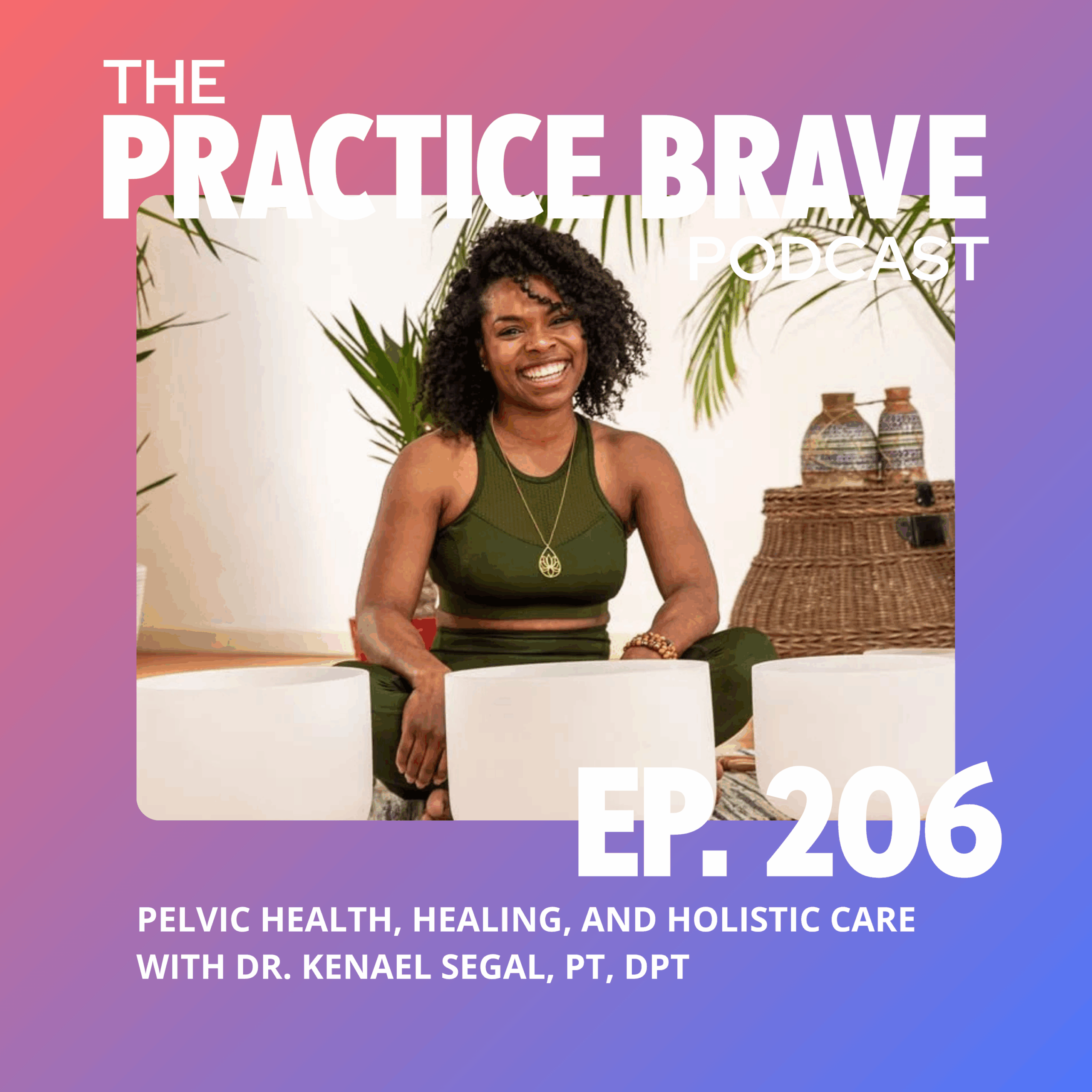
In this episode, I talk with Dr. Kenael Segal, PT, DPT, who works in alternative and holistic health services, about the importance of pelvic health from a holistic perspective. Dr. Kenael shares her journey from teaching to becoming a pelvic floor physical therapist, shaped by her own experiences with pelvic health challenges. We dive into how awareness of women’s health has evolved, the realities of postpartum recovery, and why individualized care is so essential.
We also discuss the emotional weight that comes with pelvic health struggles, the power of community support, and the value of ancestral knowledge and holistic practices in healing. Dr. Kenael brings such a unique perspective on balancing logic with spirituality in recovery, and she reminds us that motherhood is never a finished chapter—it’s an ongoing journey of learning, adapting, and growing.
Connect with Dr. Kenael:
Website: https://drkenaelsegal.com/
IG: @lotuspelvicpt
FB: https://facebook.com/LotusPTandWellness
Want to elevate your coaching skills? Join the waitlist for the Pregnancy & Postpartum Athleticism Coaching Certification Course and be the first to hear when enrollment opens! 👉 Sign up now: https://join.pregnancyandpostpartumathleticism.com/ppa-waitlist
Need workouts for your pregnancy or postpartum? Check out my programs (now with app access!):
The Pregnant Athlete Training Program: https://go.pregnancyandpostpartumathleticism.com/pregnancy
The 8-Week Postpartum Athlete Training Program: https://go.briannabattles.com/8-week-postpartum-athlete-training-program
EXPAND FOR EPISODE TRANSCRIPT
AUTO-GENERATED TRANSCRIPT
Brianna Battles 00:01
Welcome to the practice brave podcast. I am the host Brianna battles, founder of pregnancy and postpartum athleticism, and CEO of everyday battles. I’m a career strength and conditioning coach, entrepreneur, mom of two wild little boys and a lifelong athlete. I believe that athleticism does not end when motherhood begins, and this podcast is dedicated to coaching you by providing meaningful conversations, insights and interview topics related to fitness, mindset, parenting and of course, all the nuances of pregnancy and postpartum, from expert interviews to engaging conversations and reflections. This podcast is your trustworthy, relatable resource for learning how to practice brave through every season in your life. Hey everyone, welcome back to the practice brave Podcast. Today, I am here with kenil Siegel, and we’re going to be talking all about her practice as a pelvic floor physical therapist really from, like, a holistic side of things. She just released a self published ebook on pelvic organ prolapse, and we share some different clients through the years, and so she really understands working with athlete brains and a variety of pelvic health experiences, whether it’s attached to pregnancy, postpartum or not. And I’m really excited to have this conversation. So thank you so much for
Dr. Kenael Segal 01:23
being here. Thank you for having me.
Brianna Battles 01:25
Yeah, so tell us a little bit about yourself and your background, right?
Dr. Kenael Segal 01:30
So I am a pelvic floor PT, I sort of got into pelvic health as a PT, right from the beginning. Physical therapy is the second career for me. I always worked with kids. I was a teacher. I taught science. I was always very much into the body and healing. And growing up in Jamaica, just like natural healing and holistic living has sort of just been something that I’ve always embraced. It’s sort of just how we live. So when I became a pelvic floor, PT, it just became a natural way to treat in a holistic way, because I just sort of had all these experiences in the past where that’s just sort of how I lived. And also, you know, my interest in science and the body and exercise and healing sort of fit in very nicely with pelvic floor. PT, and I got into it initially after having my first who is 12. So about 13 years ago, I developed pelvic floor issues as well, pelvic and abdominal issues, and I have since been in this space helping other women overcome their dysfunction. So it’s like when someone explains what they’re going through, and I say, like, oh yeah, I know what you mean. I kind of do been there myself, yeah?
Dr. Kenael Segal 02:47
So first of all, I did not realize that this was like a whole second career for you, and that it was spurred from your
Brianna Battles 02:52
own personal experience. So I love that you are a fellow full send human when you’re like, what has happened to me? And I’m not just going to figure it out. I’m actually going to change the whole trajectory. Change the whole trajectory of my life in order to figure it out and help others. So we’re like kindred spirits, and I did not know that. Yeah, yeah, that’s a really big pivot from teaching to pelvic floor physical therapy. Like, did you ever think about physical therapy? Was that ever on the radar, or was it truly just like a left turn there.
Dr. Kenael Segal 03:22
It was a left turn. It was It wasn’t something that was even on my radar. I remember even being in school when I was pre med, because I was pre med before I went into teaching, and even when I was pre med and other students were applying to PT school, I was like, I don’t even know what that is, and I had no interest at all. And I was like, I’m just gonna go straight medical. I thought I was going to either be a pediatrician or a dermatologist, and then when I decided to not do that anymore, I went into teaching until I figured out what I wanted to do, and then it was just like, Ah, I think I’ll try physical therapy. So I went to PT school. By the time I started PT school, I was four months postpartum, so I was already experiencing my own
Brianna Battles 04:02
you immediately knew that that was I needed to find a solution, right? I was like,
Dr. Kenael Segal 04:09
something’s not going well. And it was a year later, I was like, things just aren’t, still aren’t going great. And that’s when I was like, All right, let’s get to the bottom of it. And then I sought physical therapy, treatment for my physical my pelvic floor issues. And I was like, that, this is what I needed the whole time. And since then, I was like, I see what’s happening here. There’s not a lot of education, even from the doctors, like I had to persuade my doctor why they needed to give me a prescription at the time that was, those were the rules. So yeah, me having to go through that process. I was like, Well, other people aren’t going to be able to have that education to advocate for themselves, because I happen to know because I am a physical therapist. So yeah, it was like, Okay, I think I need to change some things here, and I’ve been in this space ever since. Love that. I mean,
Brianna Battles 04:59
I think there’s so much. To be said for when you become who you needed, it makes art, like the work that you do. It just makes it land so much more impactfully, because, like, you’ve been there, you’ve experienced that. And more importantly, like, you know what it feels like to not have answers and to have to advocate so hard just to get what is now like in 2025 just a scroll away. Like, people don’t get that. Like, I feel like we’re like, same, same era of timeline of kind of coming up in this space. Cade will be 12 at the end of this month, and that’s when I, like, started my hyper fixation on everything, you know. But back then, like, there just it. There wasn’t access to information. Like, it wasn’t like we knew what diastasis was. It wasn’t like we knew what pelvic organ prolapse was even coming from a science background, coming from a coaching background. I had all of the like, credentials and knowledge that, I, quote, should have in order to understand this stuff. But, like, I don’t think people understand just how inaccessible understanding anything about women’s health was even in just a decade ago. We have time so far, and yet it’s still like a hot mess out there. Yeah, yeah, pendulum swing, you know, right?
Dr. Kenael Segal 06:12
Yeah, yeah. I have said recently that, like, I feel like more people are aware of, like, pelvic floor. PT, and I’m just like, Yes, I’m glad we’re finally having a conversation. I’m glad we’re finally talking about perimenopause. I’m glad we’re finally talking openly about pelvic organ prolapse and what that means. And I’m glad we’re finally talking about, like, vaginal dryness and, like, all of these things that happen so commonly, and it’s just so out in the open, and people are just more aware of it, but it’s still kind of a hot mess, because it’s like, we’re aware of it, but then it’s also like, but what do we do at the same time?
Brianna Battles 06:45
Yeah, and it’s like the watered down, like, whatever version of like mansplaining built by like influencers. So like influencer splaining, of these things, and that’s like, not a phrase yet, but I think we got it. We got to come up with something like that. Because you see, like, I think the intention is good, but there’s still so much that is dismissed and overlooked. And it’s like, that’s not exactly like, that’s we’ve oversimplified it, or we’ve totally over complicated it. It’s like there’s not a lot of nuance. And I think it drives us a little crazy. Ultimately, there’s a whole lot we can do except create our own work, which I know is exactly what you’re doing, both in practice and in you know, writing your your ebook so that it can be more accessible. I think that is a solution to to a lot of the chaos and confusion out there. But, yeah, it is, is hard. I mean, talk to me a little bit about your early days of like you’re in PT school, you have a baby, you’re trying to learn about your own body that is a very difficult season of life and also a very relatable one. So talk to me a little bit
Dr. Kenael Segal 07:46
about that. Yeah, you know, I don’t know what I was thinking to be honest. Like I’m gonna go, literally, I do physical therapy while I’m postpartum. The first year, I remember nothing, absolutely nothing. And it was like, I woke up one day and the second year, like, Oh, I’m in grad school. What’s going on? I got through the first year, yeah, it was a struggle, right? And having, like, a, not the easiest baby, like, it was just really, really challenging. Was really stressful. We know that the hormones completely change and shift during that time, and I was going through it. Somehow, I did get through it so, but it was like mental changes, which we don’t I mean, I think that people openly talk about, like, postpartum anxiety, postpartum depression. So there’s like hormonal changes that affects your mental health, and then there’s like the physical changes, which I think isn’t even talked about as much, like everyone understands that, like mentally you may be going through some stuff, but then there’s a physical component to it as well that isn’t talked about as much, which can even affect the mental health. Because for me personally, I had diastasis and developed a hernia, which I know was your story as well, and and I was at the point where I couldn’t even hold my baby standing up, because I was just so weak in my core. And then I developed back pain that like, Okay, let me sit down while you hand me the baby so I can feed the baby. Okay, the baby needs to be put into the crib. Somebody come get this baby and put the baby in the crib, because I can’t do it. And of course, as a mother, you feel like I can’t even be a human. I can’t be a person. And then walking around PT school wearing like a like every brace underneath your clothing, because that’s the only way you can function and walk around and do these, like manual and heavy lifting. It was a challenge. It was a struggle, right?
Brianna Battles 09:40
And especially again, back then, it’s not like we were seeing abdomens that, like, looked like that on social media, like there was not representation of the change, like the physical changes of motherhood, like you said, maybe, like there was talk about postpartum depression, but even that, I felt like it’s like, well, it’s only like, at the very small percentage, and I’m like, Oh, please. Like, I literally don’t know, a single. Woman who has not struggled with her mental health at some point in motherhood. Like, no, but that’s besides the point. Like, we didn’t have that sort of representation of what happens to bodies. And now I’m on social media, and I’m like, man, like, if I would have seen, yeah, this and, like, seeing more variations of like, normal, it would have saved me such a spiral. But like, you know, in one way, is it never like. It is what it is, but it is, it is interesting thinking back on like, that era where we didn’t see people like ourselves, we didn’t hear stories, and then we’re just left going, Well, what do we do about this? And why like? Why me kind of, like, why? Like, what did I do and why I thought I was healthy and fit and knowledgeable? Like, why did what is Hap? What happened here? It was, like, so confusing, right, right?
Dr. Kenael Segal 10:53
What did I do wrong? And I actually remember when I started Instagram, I was very resistant to Instagram, and I when I finally got on Instagram, I don’t even remember what year that was, but when I that was, but when I finally got on Instagram, the first pictures that I posted was my belly. Like, this is the coning. This is the domain. Like, this is what it this is what my belly looks like. And I know I’m not the only one, right, right? I see, I saw it in practice, where my patients would come and that’s what they look like, and they’d feel horrible, like, This doesn’t look good. And I’m like, you ain’t the only one, right? And there’s also, there’s also this, like, expectation of of the body to just bounce back and look as it did pre baby. And that doesn’t happen for most people, and it depends on the kind of birth that you had, and I had a C section, so mine was not going to look the same, and no one explained that to me. No one talked to me about the scar tissue that would develop. No one talked to me about mobilizing. No one talked to me that my abs would potentially separate, no one talked to me about the hernia that I developed. It was just I had to figure it all out on my own. And it did, left me feeling like I was broken, right? I did something
Brianna Battles 12:09
wrong, yeah? And I think back then our practitioners that we saw kind of said the same, like, you are broken. Feel that way. Surgery is the only thing that can fix this. Or like, don’t do X, Y or Z again. Like, don’t do sit ups and don’t do this. And you’re just like, okay, and like, I mean, for me, that was when I was like, This doesn’t make sense. Like, we don’t say this. Like, I knew enough to know that that was, like, bullshit, right? But then you don’t know what the solution is, either, like, that was the confusing thing. You’re sitting there going, This is wrong. I know this is fundamentally wrong. This does not make sense. It’s not how any other thing with the body is talking about. But like, ooh, motherhood and like, women’s health, like, you know, weird, like strict regulations and opinions and dismisses, like being dismissed. But then so you know that, but you don’t know exactly what to do about it, either. And then it’s just like, piecing together information from different sources, and even, like, just, like different, like, the different evidence that we did have back then, which was very limited, as
Dr. Kenael Segal 13:12
you know, so limited, yeah? And it also goes back to what you were saying with the influencer, yeah, you know, we need to come up with the word for that, but yeah, it’s like, none of that existed. So it was like piecing things together and trying to figure it out, and dealing with my own personal things, and seeing what was happening with my patients, and, yeah, looking at the evidence that was available. Like, I felt like I went hardcore, deep dive into, like, all the research, because it’s like, this can’t be This can’t be it, right? There has to be more. And, yeah, that sort of helped me to develop the way that I treat people now, and I recognize that a lot more people are talking about it. So there are a lot of influencers who are, who are trying to do the good thing by sharing and and and exposing and talking about these kind of things, but it’s also so limited. And if that’s your only exposure to it, it’s like, there’s so much more to it. Like you said, they over complicate. And it’s like, oh, it’s actually not that complicated. It’s like, you know, I’m always, always encouraging. Like, yes, it’s great to have the knowledge and the information out there, but go talk to someone for you specifically, right? Because being told never to do planks like maybe for this person or for the general population. But are you the general population, exactly?
Brianna Battles 14:36
And I know, I think the hard part is a lot of people are coming at this from a personal experience scope only. Instead of like you have had eyes and hands on hundreds, if not 1000s of bodies, I have had eyes and hands on 1000s of bodies of all different athletic backgrounds and abilities and everything like I have seen. I feel like, truly I’ve seen it all. I always love when, like. That gets proven wrong, you know, but I really feel like I have, I’ve seen it all, and I’m like, until you have had reps outside of your own personal experience, you cannot be teaching like. You cannot be like teaching and guiding and coaching others online, because there’s so much nuance, especially when it comes to women’s bodies, and not because we’re fragile. It’s just, there’s just different considerations, like we have pregnancy and postpartum and a variety of like, different considerations that happen during those seasons. And we just, there’s not a lot of information about that. Yeah, there’s not, there’s that’s not in our education. We didn’t learn that in PT school or in exercise, Fizz, we didn’t learn that in our master’s degree. We did not learn that in our certifications. It just wasn’t there. So you’re not going to learn it by repeating what somebody else on social media said. And I think that’s what we see, is just this, like watered down version of what somebody else said, put out to hundreds of 1000s of followers.
Dr. Kenael Segal 15:59
Yes, and it’s like there’s so much nuance to it, and it’s like you really have to have that experience. And like, I do think it’s great that the information and the knowledge is out there and people are teaching these things, and some people will get better, but then it’s the folks that don’t get better who feel like I did the thing and I’m still not better. There was something so wrong with me, if I went through this and I’m not getting better, where it’s like, no, it’s not you. It was the program, it was how you did the exercise, or whatever it is. But it’s hard to not feel it’s hard to not feel that way. And I think if we address that, or made that just be honest about it. Like, I don’t know, maybe more influencers and trainers need to just be on and even PTS need to be honest about that. Like, hey, if this didn’t work for you, it’s not you. It maybe I wasn’t the right fit for you. Maybe this program wasn’t the right fit for you. Like, don’t give up. Try this one and see. You know that might be exactly what it is that you need? Yeah, we’re all trying to figure it out. We’re all just trying to, like, this
Brianna Battles 17:04
thing, like, there’s just so many variables and so, like, then these blanket statements of women can do all this stuff during pregnancy, or women shouldn’t do anything like that during pregnancy or postpartum timeline is BS, or, like, No, we need about, like, there people are like, trying to, like, pick apart stuff, and it’s like, no, like, there’s no, there’s no set formula. I would love it if there was, and you and I would be killing it crushing if there was a formula, you know, like, there’s just not, like, there everyone. There’s so many variables that influence our health in general. And then you add the athletic background and interests and the psychology, like their belief systems, and that influences how they train. That influences how they rehab or don’t rehab, like all of it is interconnected, and there’s just so many variables that we could not put together a framework, even if we tried, because every single body and birth experience and pregnancy and a postpartum symptom is all very, very, very different, and until, I mean, that’s why you and I collaborate, right? Like, we’ve recently worked with somebody where it’s like, I know this woman very well. I’ve coached her. She gets it, she understands what I’m saying. She’s now thankfully, like following the program and like doing the thing after the second pregnancy, but she still needs to see you so that you have eyes and hands on her and can dial in the things that like I can’t because I don’t have eyes and hands on her in real life. And I think that’s like such a beautiful testament to how we can actually all collectively work together and do better. Whether we’re in the online space or the in person space, we can create access and resources for people to get the information that they need on their bodies. Because if you just follow what somebody says on social media or a generic program, you’re going to be like, you’re going to be missing the individualized care that you really need, right?
Dr. Kenael Segal 18:59
And that’s so important. That’s why I always, yeah, like, I do talk about that quite a bit. Like that personalized care, that individualized care, like it’s necessary, and it doesn’t have to be with one person, like a team, right? Like a professional athlete doesn’t work with one person. They have multiple coaches, and they have multiple people that they work this person’s doing that part of the activity, this person’s helping with the mindset, this person’s helping with the recovery, this person’s helping with, oh, there’s so many different pieces. And it’s like, we deserve that as well. We deserve that. I think it’s just
Brianna Battles 19:35
like, well, your mom now, so like, just focus on being a mom. Just go to your lactation consultants, and go to your play date, mommy groups, and it’s like, that’s almost like the quote team that you’re told to have after you have a baby. It’s like, well, you have your pediatrician, you have your OB GYN, you have your lactation consultant, you do all of these follow up appointments for the baby, and mom gets, like, maybe one, yeah. Right? You know, like, so I you may, it’s just, it’s wild, right? And so there’s not our culture and our even, like our belief systems, is like, Well, I was made for this. I was, like, made to have a baby. My body knows what to do. And maybe there’s truth to that to some degree. But at the same time, I don’t know, we get rocked and like, I did not feel like I did not feel like I was made for this. I felt like I was actually, in fact, not made for this. And my body was like we were real confused, and my brain not healthy, not good. And so it was like I actually felt whatever the opposite of like a maternal instinct was, I was like, I failed. My body does not feel like it’s made for this, and my personality has been forever altered, and like my brain is not functioning. I am not made for this, and then you just feel like a failure during one of the most vulnerable seasons of your life, and you’re looking around going, well, at least my baby is getting a weight check every week, I guess. Like, okay, you know? But like, nobody is checking on mom, so back then, and still, there’s not like a common knowledge of, okay, after I have my baby, yes, I’m going to see my doctor, or I’m going to talk to my midwife or doula, but then I’m going to go see, yes, a lactation consultant and a pelvic floor physical therapist, and then I’m going to start these rehab exercises so that my body starts to get connected again. Feel like actually rehab. Because if I would have busted my knee, I would probably start some rehab exercises and not just go to the gym and try to, like, deadlift really heavy or whatever it might be, or start out with, like a five mile run. But I think we dismiss the significance of pregnancy and postpartum because we’re just desperate to feel like ourselves again. And so you see that, like, full send into the activities that they want to do, or like to do, because they don’t even, they don’t even know, and even if they do know, they’re like, Well, I don’t, I don’t want to, you know, or I don’t have time to, I don’t, I don’t, I don’t, maybe I
Dr. Kenael Segal 21:56
don’t need to. Yeah, it’s this, like, under serviced care that we receive, you know, like, birth and pregnancy is an injury to the body. Right? As natural as it is, my body’s made for this, yeah, but it’s gonna need some help and assistance, right? Like plenty of our ancestors did this, yeah, but also with help, right? Like, nobody help and like, they also,
Brianna Battles 22:25
like, we don’t know what their body felt like after like, it’s not like, prolapse is a new thing.
Dr. Kenael Segal 22:31
No, it sure ain’t. It’s not
Brianna Battles 22:33
like, like, you know what I mean? And I think that’s the thing, if you like, well, people have been given birth under all these circumstances for years. Like, Yeah, but what was their quality of life like? And then were they trying to do all the things that a woman in 2025 is exactly No.
Dr. Kenael Segal 22:46
They weren’t to do all of the things. So maybe they didn’t have as many occurrences of pelvic organ prolapse. But even if they did, they had solutions to it, or they were already doing things ahead of time or during pregnancy to make sure that that didn’t happen, or they were given, like herbal support to make sure that there was healing or or restrictions. I mean, I think that’s where a lot of these, like postpartum ceremonies or rituals come from in many different countries, like that rest period, like, who knows, maybe it was because they didn’t want the women developing pelvic organ prolapse. We have no idea.
Brianna Battles 23:24
I mean, I think that there’s so much like wisdom there that we’ve just dismissed in a really modern society. And I say that as like, probably the most type a like, I can do it, you know, kind of like person. But I think like in like, when I have hindsight now, like, how I would approach being postpartum now is so different than what I did the first and even the second time. Like, the second time I was a lot, I was a lot more strategic. But still, you’re just, we’re surrounded by a culture that’s just like, you know, you still got to get back to take care of the baby and like, if you don’t have like, support around you that’s like, built in. Then, what are your choices? It’s not like, you can’t I mean, you got to go back to work or you, you know? And then I think even, like the exercise cultures we see, like this eagerness to just get back to like, we overlooked, like the rest in the healing period, because it’s like, well, I want to be a fit mom. And then we like dismiss all of that. And you know, when we think back like people weren’t trying to deadlift 300 pounds 100 years ago, like they just weren’t trying to do that as moms, like even my mom’s, my mom’s generation, she wasn’t working out when I was when she was pregnant with me, or when she was postpartum, or even growing up like this is still what we are seeing women do. And therefore, what we are seeing women experience is very different than even like the last 20
Dr. Kenael Segal 24:51
years, absolutely. I mean, our ancestors were not going to the gym. They were just physically active. So we put so much pressure on ourselves to be able. To do this, you know? And it’s because we see it. It’s part of that influence or culture we see that, and then you’re made to feel bad about your ability to not do that right. Or it’s like, I should be able to do that. And then you feel bad when you can. It’s like you don’t know what that person you don’t know what kind of support that person has, you don’t know what kind of body type they have, you don’t know what’s actually even going on. Like, they may be experiencing symptoms. They’re just not talking about it or sharing it online. Like, percent, I try to
Brianna Battles 25:28
say that to people all the time. I’m like, Look, I’m the one who gets the messages from those when those high level athletes, a year later, they’re in my DMs. I promise you you are only seeing like the highlight reel, and I will, of course, never, like, you know, disclose anything, but like, of course, right, the people that we have put on a pedestal about how they have bounced back, or they went to and did X, Y or Z at how many weeks postpartum, or months postpartum, or whatever, like, yes, they did. And there’s a story that you are not being told for a
Dr. Kenael Segal 26:02
reason Exactly. And I get the same thing too. You know? I do get the messages as well, and I do get them as patients and as clients like and I look at their Instagram, I’m like, wow, they doing a lot, and none of these people know what they’re actually experiencing yet. They’re having pelvic shoes or abdominal issues, and they’re not sharing, they’re choosing not to share that.
Brianna Battles 26:23
And, yeah, there’s so much I get it like, I mean, it’s tough because it’s just, like, it’s, you know, in this we can talk about this part too, is that it’s just it is, like, super taboo in our culture to talk about, like, we it’s really easy to talk about, like, being a fit mom and the benefits of being healthy and, like, of the benefits of working out during pregnancy and of having a healthy and active lifestyle. But then I think when there are changes to our body, yeah, and because they’re really vulnerable, oftentimes, like we have so much we’re so hyper aware of what our stomachs look like as a culture. Like we are scared of like, having more fat on our stomach. We are scared of stretch marks. We are scared of changes, like the esthetic changes to our stomach and then, like that is so distracting that people don’t even understand or even know that. Like, well, your pelvic floor can kind of take a beating throughout different points in your life too. Like, they can be symptomatic. And then that’s less easy to talk about, because at least abs, or it’s like, a little bit more, like, superficial, like, right, literally and figuratively, but like, the pelvic floor. I’m like, that’s where y’all should really be, kind of, like, putting your focus, especially during pregnancy. You’re, you’re freaked out about your abs, but like, let’s be a little more freaked out about your pelvic floor, because, right, you only get one of those, and is a lot harder to navigate healing and symptoms there, especially because there’s that layer of it being taboo. So it’s hard to talk about it’s hard to bring that information to your provider. It’s even hard to share that with your spouse like or your partner like it. There’s so many layers of feeling like, Oh my God, my vagina is broken, or there’s something I’m peeing all the time now, or I feel something like, what is that they’re looking down there. And, like most people don’t even know anything about their vagina until after they have babies, or until they have to learn because something’s wrong,
Dr. Kenael Segal 28:08
and it just feels so private, because people aren’t openly talking about these things. Like, you don’t have influencers being like, Hey, I’m so fit. But guess what? I have a grade two prolapse. I have a grade three laps. Because then they’re gonna be like, what’s that? And then they have to explain, Oh, it feels like my organs my pelvis are falling through my vagina. That just sounds too vulnerable. And like you were like, TMI, TMI. Like they don’t even want to know or hear that information. So it’s like they’re embarrassed to share that. And then, unfortunately, some people would shame them for even sharing that information. So it ends up being that people just don’t talk about it. But it happens. I mean, I It’s all over my social media, on Instagram, I wrote about it in in in my new ebook about pelvic organ prolapse, that half of all women who’ve ever been pregnant or have had children have some degree of pelvic organ prolapse. 50% that’s half of us. If you and your girlfriend go out to dinner and you’ve both had kids, one of you got organ pelvic organ prolapse, yeah.
Brianna Battles 29:13
So for those who are listening that are like, okay, but like, WTF is pelvic organ prolapse? Like, what do you say to somebody when they’re like, wait, what can happen? Because I remember when I found out that that was like a thing, I was like, wait, what? I didn’t know that that could happen to our I didn’t know vaginas. Like, what the heck, you know? Like, yeah, I had no idea that that was even a thing, until I started working in this space and started hearing from people, and I was like, Oh, my God, I don’t know. Let me go learn real quick, you know? So, yeah, enlighten us, my friend, right? So pelvic
Dr. Kenael Segal 29:45
organ prolapse is when one of the pelvic organs, the bladder, the urethra, the uterus, the vagina itself, or the rectum or the intestines can fall through the wall of the vagina, and some people either feel. Like something is pressing or pushing down there, or they can see something coming out of the vagina, but nothing is literally going to come out of the vagina. It just feels and looks that way. So I have to always encourage people that like nothing’s going to fall out. It just feels and looks that way, but it’s just the movement of the organs, right? And it’s not just women who’ve had babies that can experience that, like someone could experience that, because they have, like, connective tissue disease or disorders, I should say, so they have laxity of their ligaments. They’re hyper flexible, right? So they may experience more movement of the organs. Someone who has conditions like even diabetes, can experience this as well. So there’s, like, there’s different things that can contribute to it. Menopause can bring that on, but I feel like if that happens during menopause, it’s likely they experience that postpartum, and they just weren’t even aware I see so I always tell people to, like, whatever you experience postpartum, if you don’t address it, and it goes away on its own, or you just don’t even notice it anymore, or just becomes your new normal, it becomes exacerbated again, menopause,
Brianna Battles 31:18
yeah, because, like, our hormones affect, Like, the elasticity of, like the tissues, and so that just sort of changes the structural support of the pelvic organs, and then they just collapse onto that vaginal wall. So like you said, they’re all actually coming out of the body, but it’s pushing so much against the the vaginal walls that it feels like there’s something like in the way falling out. And, I mean, that is a mind fuck for so many women, I have
Dr. Kenael Segal 31:47
not treated any other condition that has been more emotional than that, because, yeah, it, I don’t know why. I don’t know why. Maybe it has something to do with we tend to hold a lot of emotions and our sense of safety. And I do write about this in my book as well, our sense of safety is down there, not just for for us women, but for men as well. Like we just tend to hold a lot down here, and then when something is literally falling like, you feel like your body is literally falling apart, it can feel so discouraging. Like, I don’t think I’ve had one patient who did not cry when I told them that, yeah, it this is pelvic organ prolapse, or when I explained to them that, yes, you do have some weakness there, and they weren’t even aware of it, and they’re just like, why am I peeing? It’s like, Oh, you do have some laxity and some movement of the org. I have not had one patient who did not cry, and if they didn’t cry in the office, they told me they cried in the car, or they cried when they went home, or they cried when their their partner tried to be intimate with them the next time.
Brianna Battles 32:54
Because it’s just, there’s like, it’s again, it’s like, there’s shame, there’s embarrassment, there’s just like it’s, rooted, like, the psychological side effect of pelvic floor symptoms has been the most as a coach, that has been the most like challenging thing to navigate. I think because we can sort of try to troubleshoot this breathing strategy, that positional thing, tension and, like, talk about all, like, pressure management. Yes, all of those things are super effective for managing pelvic organ prolapse and pelvic health symptoms in general. But it’s this psychological like, that’s like the weight, literally, the mental load of feeling like you are broken, that, like now you are unattractive, that, like your vagina, there’s something wrong with you, like the level of shame and embarrassment and fear that this, like holds on women, is debilitating.
Dr. Kenael Segal 33:52
It is, it is. And I, I think that’s where I am the most sensitive, and I where I spend most of my time when I am working with someone with specifically pelvic organ prolapse, but even, like other conditions as well. Because yeah, we can talk about the exercise, yes, we can talk about the pressure management. Yes, we can focus on those things. But it’s really like you said, the psychology, the mindset, that’s gonna make the most difference, to be honest, because you can fix the physical issue, right? You can, you can fix the pressure, you you can even reverse the prolapse. But I’m telling you, I’ve still had women who it’s better, it’s improved, and they’re still like, I’m not having sex because I it doesn’t feel comfortable, my husband is gonna complain, you know, like there’s just, I’m gonna get broken emotions around it. And it’s like they can’t drop the anxiety. But you have to address the anxiety. You have to address the depression, whatever it is surrounds it. Mental aspect of it, you have to address that part. And I tend to spend a lot more time on that than probably most other pelvic floor pts. I don’t know. I just, I think I should have become, actually, did start out in psychology. When I went to college, I started
Brianna Battles 35:15
any kind of coaching you’re treating just automatically involves a lot of, like, psychology, you know, because, like, that’s the root of it. Like, yeah, if we don’t address that’s why I talk about, like, athlete brain all the time. It’s like, it doesn’t matter, like, what exercises I tell you to do, or training approach, or whatever it’s like, if it’s your belief system that’s going to influence your physical outcomes the most you know, because you have to be bought in. You have to be like, working towards that. And it’s not going to be perfect, but it has to be like this choice that you make of like this is how I’m going to approach whatever the variable might be, whether it’s, you know, like trying to rehab pro labs or trying to navigate training through your pregnancy, trying to come, come back postpartum, to a specific goal. You know, it’s like how you mentally wrap your head around that is going to determine, like, your next physical steps
Dr. Kenael Segal 36:03
there exactly. And I talk about that at the very beginning in my book. Let’s listen. Yeah, this is a piece that’s often not addressed. And when you go to, like, normal, I’m saying normal, traditional, even traditional pelvic floor. PT, you’re not always going to address the psychology, the mindset part of it, or the emotions that you have around it. Some of them just go in and they’re like, Okay, there’s laxity. Let’s strengthen the pelvic floor and do these pelvic floor exercises. Look, we’re talking about that in the very beginning. Because I’m like, if you don’t buy into this, and if you don’t have this healthy mindset, and yes, there’s going to be moments where you have these thoughts, but you have to be able to recognize that and then have a conversation with yourself and be like, is this true?
Brianna Battles 36:50
Yeah, no, totally. And it’s like, the, I feel like there has to be a place too, because, like, it took a long time for my athlete brain to also, like, welcome the woo, woo side of things. And for me, like, the the like, psychological and like more like, like, I don’t know, just coming down, coming down from my intensity and sort of embracing like that there’s, there’s a, there’s a spiritual Yes, aspect of what changes when you become a mother, absolutely
Dr. Kenael Segal 37:17
full stop to agree with it,
Brianna Battles 37:19
but Right, that’s But like, there, there is like, there’s just like, you are mentally, physically, emotionally and spiritually altered when you become a mom in honestly, like, really powerful ways. And I think we are so programmed as a culture and as being like, I’m a strong, independent woman like me, like, really high achieving that I’m just gonna like, I’m gonna outwork this season, I’m going to outwork and out hack or just ignore, like, push through the pain or this comfort or the whatever the discomfort of this season, even like the mental and emotional discomfort, and like, I certainly did die, I threw myself into an entire business instead of, like, dealing with my shit, you know what I mean? So like, I own all of that, and then I think eventually, like, the more maturity you have in motherhood, the more maturity you have, just as a person, athletic maturity, even more you’re able to welcome that, like, spiritual and more like, woo, woo. Side of it where you’re like, Okay, this is a huge part this. And if I would have been willing to, like, open myself to that earlier on, in whatever form that may be it, probably it would have saved me a lot of, like, mental struggles, for sure.
Dr. Kenael Segal 38:24
Yeah, I believe it. But I also do believe that everyone comes to that realization in their own time when they do. Because even if someone came to you with that and explained that to you, you might have been like, Girl, what are you talking about?
Brianna Battles 38:37
Like, that is that, yeah, that was me. I was
Dr. Kenael Segal 38:39
like, Um, no, right? And you push it off to the side, and you keep going right. It’s like, you have to get to the point. And this comes up so often when I see my patients, especially after they’ve had one, they’ve had the second or whatever. So when I see them the second time around, they’re like, oh my god, I can’t believe that. I used to think that, or believe that, or it did that. And I’m just like, yeah, and there’s all, there’s almost this like, sense of like, I wish I had done this better, and I should have known. And I’m just like, hey, we all come to the realization when we need to in the right time, when it happens is the perfect time. So don’t even beat yourself up, because you probably have received it ready for it. It didn’t matter.
Brianna Battles 39:17
Sometimes I’m like, I wish I would have known. I’m like, I wouldn’t have frickin listen. Anyway, you wouldn’t like, if I had me talking to me, I would have been like, you I am chronically somebody who has to learn the hard way. I wish I was coachable. And it’s ironic, since I’m a coach, you know, like, I love when people are coachable, but like, I’m just not, like, I learned everything, yeah, the hard way. And then I’m like, Oh, I get it now. Like, and that’s that is just, that’s how I operate, unfortunately. But yeah, you have to be ready on your own terms, and it does just influence so much of that motherhood experience, because again, you’re already so vulnerable, like you’re already in a season of life where you’re like, I have a whole new human to get used to, and a whole new routine and aspects of my relationship, my career, my body, all of the. Things have changed, and now there’s something quote wrong with me, right? And then you look for a solution, you’re like, Well, how can I outwork this? How can I make it go away? How can I make it better? I see all these people on social media that are doing this, this and this, and if I just do that, then, well, they seem fine, they look good. I’m just gonna do what they’re doing, right? I think that just creates such a spiral of like, of you’re just they’re just lost, they’re lost and they’re confused, and
Dr. Kenael Segal 40:24
it’s really depressing, yeah, and that’s why motherhood is a journey, you know? And I don’t think this journey ends, being honest with you, I don’t think there’s an end. You keep going. There’s always more to do, more to learn, more to experience, more to troubleshoot what was working no longer works. You got to figure it out all over again. There’s just
Brianna Battles 40:46
so much to it. Yeah, I know. Like, we laugh because it’s like, you know, we sort of, like, get through the seasons of, like, pregnancy and postpartum, then you, like, have a few years, you’re like, all right, and then you’re like, wait, perimenopause is like, creeping around the corner, and then, like, menopause, and then you’re like, aging, and you’re like, so we, like, literally never catch a break. Cool, cool, cool. Like, that’s that’s exciting, you know? And and then my mom likes to remind my sister and I both at it. She’s like, you guys are in your 30s and you’re still, like, my job has just never ended. Like, it will never end, you know, you guys are still right. You guys still cause me drama and issues, you know, I still worried about you guys, and you’re right. It is a journey, and it never stops. And like, that’s the blessing, that’s also the struggle, right? So, you know, you work with a lot of people who have these symptoms, and you know you’ve talked about this holistic way. We’ve talked about, like, the psychology part, even the spirituality part. What are some other things that you do in your practice that you feel kind of differentiate your work as a pelvic floor? PT, in this space with helping women sort of navigate this, this whole picture of healing and of improvement of their with their bodies. I mean,
Dr. Kenael Segal 41:55
it’s really just expanding on the things that we’ve talked about already, like the spirituality, like I do bring spirituality into it, and then people, and I may not say, like, Hey, we’re gonna talk about spirituality now, or like, what is your spiritual practice? But it does get worked into there. And it may be even, hey, I noticed that you’re having these thoughts and these beliefs. Let’s talk about that. And I want you to journal, and I want you to notice when you have that. And this is a conversation I want you to have with yourself. And hey, I have this meditation that I’m going to send you, and I want you to listen to this at this time of the day, and I want you to journal after that, you know. And all of that, to me, is a spiritual practice, because to me, it’s just any ritual, is, is, is considered spiritual, right? Or any mindfulness is considered spiritual. So really, just like teaching my patients and clients to just like, tune in to like, what thoughts are you saying to yourself, or what thoughts are you hearing, and then being able to separate yourself from those thoughts and really observe them from a different viewpoint, a different angle, and journal them if you need to, you know, or just like, go for a walk and see what comes to you kind of thing. Or, yeah, what if you just put down these worries for just five minutes? Right? Can you give yourself that space of not having to worry? Right? These are all things that I consider spiritual, and I may not even say like, Hey, we’re going to develop the spiritual routine for you. It’s it’s just we’re having the conversations, and I’m sort of inter weaving these into how I work with my patients and my clients. I do actively do things with my patients and clients as well. Like we go meditate, meditate together. And I, like I said, I’ll send them meditations as well. And it’s like, yeah, I want you to know who you are. I really think that’s so important when it comes to recovery and healing, not just to physically know your body, but to know your body in all the ways, like know who you are, mentally, know who you are, spiritually, know who you are, emotionally, know who you are, physically, like in all the ways, know your body and know who you are, because no one’s going to know you as good as you are going to know yourself, and you don’t want someone else telling you how you feel. Only you can tell someone how you feel, right, right. So when you know yourself well enough, you can then go to the doctor and be like, Hey, this is what I’m feeling right. And if they’re like, is it pressure, or is it pain, you can say, actually it feels like tingling, right? You only know that if you really sit and know yourself and get to know yourself. So I really do encourage my patients and clients to get to know themselves in all the ways, because it really does help. And I mean, it starts to help with things you don’t even think it would help with. And they’re like, oh, just this alone has. Helped me with my nutrition, because I realized I’m eating and I’m not hungry.
Brianna Battles 45:06
Yeah, you know, it’s funny. It’s just like, I think we now have, like, a generation of like, so much more interest in self awareness, whether it’s because we’re going to therapy, because we’re, like, trying to break some generational curses, you know, like we’re doing the things. But I think motherhood, just like cracks you wide open, because you realize there’s just so many things you can’t control, and it’s very easy to lose yourself and enter, like a significant identity crisis. And you know, and to be able to calm your brain is so hard, you know, for me, it’s very hard for me to sit still and, like, meditate. I got the ADHD for real, so it’s very hard to do that. But I will take myself out on a walk. I make myself go walk, and I then, then I write down the things that are like in my brain, that it’s like, whether it’s a conversation I need to had, or how do I actually feel about this thing, I’m going to write it down. And for me, like moving my body in a way that’s like not working out, but just like, just walking, literally just moving, especially if I can go out in nature, that’s that’s even better, you know? It’s just like little things where we are so constantly stimulated in motherhood, you know, and then when you’re in the early seasons, I just remember feeling like it’s so hard to be needed to that level, like I had never I never knew that, like no one told me you’re gonna be needed. The hardest part of mother is 24/7 you are needed. You’re like your body is different and it’s still needed, like they are just dependent on you to calm them, to nurse them, to do this, to do that, like you are constantly on duty, even if you have a supportive partner, you are still, like, the one. You are the one. And that was like, that took such a mental toll on me, and I had no one could have prepared me for that part of, like, just how exhausting it is to be needed to that degree. Yeah, yeah, absolutely. You’re like, independent, you know you’re like, you’re used to just being like, having more freedom, and that freedom gets significantly put on hold in the early years of motherhood, yeah,
Dr. Kenael Segal 47:10
yeah, yeah. And developing that practice of getting to know yourself and knowing what you and your nervous system needs is is especially important during that time is especially as a first time mother, because, yeah, it’s like freedom, and then immediately no freedom. And like you said, even if you have a supportive partner, unfortunately, we just don’t live in a culture anymore where we have the village and the community helps to raise the child, right? It takes a village to raise a kid like, right?
Brianna Battles 47:39
And that’s why we see so many women, like, they seek outlets. Sometimes those are positive outlets, but other times, like they’re they’re really negative outlets. And I know, I mean, I struggled in a variety of ways, and there’s so many things I wish I could go back and just get a do over now that I understand, like, what I was experiencing, what I was like, seeking and needing. Yeah, other ways to fill that that weren’t like, so self deprecating, you know?
Dr. Kenael Segal 48:04
Yeah, yeah. And we all go through that. It’s like, we’re all trying to figure it out at the same we’re all trying to figure it out because we’re not given the tools, the tips and techniques in order to do that. And it’s like, it’s so easy to think that it’s like, it’s you, that’s the problem, but it wasn’t you, it wasn’t you, it wasn’t me, it wasn’t this mother, it wasn’t that mother, like we all experienced that, and that’s that was our response to our the lack of care from society, really, right? It was like done to us, right? Like the village was taken away from us. We became so individualized. And even the whole like postpartum depression, it’s like, Oh, it’s you are experiencing postpartum depression. It’s like, to me, all of that is a symptom of what’s wrong with the society, like society is not supporting you, and, no, society isn’t just going to turn around and support you tomorrow, because we told them that, hey, society, you’re failing mothers, you’re failing women. Yeah, it’s like we are trying to figure it out. We are responding to our environment and trying to figure it, figure it out. And sometimes we do that in healthy ways, and sometimes we do that and not so healthy ways, but all the more reason to keep figuring it out, right? Like, keep at it, even if it happens to be in that negative way, you get through that somehow, right you get through it at some point. And you look back and you realize, damn, I did that thing that wasn’t healthy, but it got you to where you are today right now, and where you are today right now is going to get you to the next step and the next step and the next step, and you just keep going. And that’s why motherhood is a journey,
Brianna Battles 49:43
yeah, oh, it’s so beautifully said, you know, and like earlier in the episode, you mentioned in Jamaica, like there’s just more holistic practices and belief systems and ways to support mothers, and I think in a way that facilitates that village, like desire that we have. I. What are some ways that you can suggest, you know, like that, we can take some of those practices that you that you grew up knowing and understanding and recognizing but then not seeing practiced here in the US.
Dr. Kenael Segal 50:11
Yeah, definitely the village, the whole village mentality. And that’s not even to say that that’s how everyone lives in Jamaica right now, because also become more westernized, right? Was in the past, so, but that village mentality, you know, of like Grandma is going to come over and help, or your mom is going to come over and help, and there’s going to be healing herbs that you drink, like postpartum, even even during pregnancy, like I had a friend remind me the other day, okra, which is like a vegetable that that was given to women in pregnancy towards the end of their pregnancy. It helps with the hormonal balance. And I’m sort of doing like personal research right now, because I do think it helps with balancing hormones during that perimenopause stage, or during, like someone who’s even still experiencing their periods, right? Like, yeah, we all experience, or not all, but some of us do experience hormonal, significant hormonal changes, right? And I don’t think it’s supposed to be that significant. The fact that many of us are experiencing perimenopausal symptoms in our 30s and 40s, I don’t think that’s normal, right? I think we’re just experiencing it earlier, just like our little girls are getting their periods earlier because the hormones are off, there’s so much hormone disruption, so it’s like using herbs, using food, that’s going to help to balance our hormones, so we don’t experience all of these significant fluctuations, in addition to having things like the village or the aunties or the cousins or whoever that’s going to help, just to help to be there for the mother, and not even just the mother, but for the mother and the father to be there for the family, to help with that assistance, but it’s mostly those two things, the village and and herbal support. I’m all about. There’s like, a joke where it’s like, there’s a herb for everything, like, there’s a herb for that, and most of the time is ginger.
Brianna Battles 52:14
No. I mean, I love that. And I think that, just like, it highlights, just like some themes that we are seeing. And, you know, like you said, like with the young generation of girls, and what we’re seeing with pregnant and postpartum, with like mothers, and then what we’re seeing, as, you know, we start, like, treating and even becoming that perimenopausal or menopausal population, like, we’re going to start to see just more of these symptoms and experiences, and we’re going to have voices to that we have access to information, and we want better. We want different. And I think it’s just, it’s an interesting evolution to kind of sit here and, like, observe what we’re seeing happen, and like being able to contrast it with, like, you know what our mothers experienced and what it was like even 10 years ago. Like, I feel like we’re truly it’s so different in a in a really powerful position in a lot of ways, where like we are, we have knowledge, we have insight, but more importantly, we have curiosity and advocacy. And I think that’s going to be the thing that that drives the future of like, women’s health care and just more support throughout what I refer to as like, this lifetime of athleticism.
Dr. Kenael Segal 53:17
One other thing that I wanted to add to is like, you know, some people look at like herbal support, like, Oh, that’s not as good. And people, some people, especially in this culture, would want to turn to like prescriptions or surgery, right? Like, they go to the extreme, and they see like herbal support as not being good enough. And it’s like, let’s think back for a second where all of these medicines came from. They all have the active ingredient that is isolated from a plant. Yeah. Only difference is, now you’re going to get side effects because there’s a whole bunch of other things in there to keep it stable, because that’s the science part of it. But when you actually use the plant itself, there’s like the plant nature knows what it’s doing. It has all of these things built into it, where you may experience this as a side effect, but there’s also this compound in there, in the plant itself, that’s gonna make sure that that doesn’t happen, or that’s not so extreme, or you mix this herb with that herb, because, you know, it’s like a whole, it’s all it’s alchemy, like there is something to it. And a lot of these practices, these like traditional practices, like the rest postpartum period, like people think, Oh, we’re too modern for that. We’re past that. We’re beyond that now, because we have technology and it’s like, but when we move past that, we see that we still have problems. And we have to remember that these things that were done in the past are not supported right now because a group of men decided we don’t want this. They decided that we’re going to demonize women and their practices. We’re going to demonize indigenous. And brown, black cultures for these practices, we’re going to demonize these things that aren’t medical, because we can’t do them, we can’t prescribe the drugs, and we cannot do the surgery. So we’re going to demonize all of that. So we get all the business and guess what? We control everything, like the laws. So we get to decide what happens, and we get to push culture. So it’s like, when you stop and you think about these postpartum practices and the things that we do or don’t do that they’ve been it’s, it’s like we’ve sort of been trained into moving in that direction. And when you think of the origins of that as being patriarchal, it kind of makes you wonder, why are we doing this?
Brianna Battles 55:41
Yeah, no, absolutely. And why? Like, it’s so important to keep an open mind to like what you do, why you do it? Like, where you’re getting your information from, and just like, other ways, like, we can think outside of the box as ways to, like, support and learn from you know, like, something I tell my clients all the time is, like, listen and learn from the women ahead of you. Like, there is a lot of wisdom there. There’s a lot of value there. And, like, there is, there’s room for it all, even if this isn’t something that you’ve considered, like, maybe it’s eye opening of like, okay, this is another approach to my healing. This is another avenue to explore in my journey as a woman.
Dr. Kenael Segal 56:16
Yeah, absolutely, I do love that. I do think it’s so important to like, go talk to your mother, go talk to your grandmother, go talk to your aunties, go talk to your elders, because they hold wisdom, and you don’t want them leaving and that information not being passed down to you. And then you know what you’re going to be the one who holds that information. And then the your descendants are going to be the ones coming to you for that information, because right things may get lost along the way, and you might be the one to have that, and you’re gonna, you know, sometimes we we get hold of this knowledge, and we’re like, oh my God, I am so grateful to even have that knowledge, right? You just feel so much more connected to all the women ahead of you. Like, just the other day, I was explaining to my daughter that, like, mitochondrial DNA was like, you only get that from your mother. Like you got it from me, I got it from mine. She got it from hers. And they’re like, we’re going back and we’re going back and we’re going back and we’re going back. And it’s like, that is amazing. And you just feel so connected knowing that. But you could also feel connected when you actually talk to your elders and you get that, like the educational knowledge that like ancestral knowledge, it’s in our DNA, but sometimes it needs to be activated by just talking to them and finding out information, yeah, like, and it’s
Brianna Battles 57:26
crazy when you start to see, like, general themes, you’re like, wait a minute, yeah? Like, you had that and then you had that experience, yeah, I did. And you’re like, What the heck you know? So like, it is again, why there’s room to like, even if you are listening to this as like, the default, like, athlete, brain person, again, myself, perfect avatar. There is room for the Woo. Woo. There is room for the spirituality. There is room to expand your belief systems and your knowledge base in a variety of directions. And like, that’s going to be the thing that gives you the highest levels of self awareness and the ability to like, become the better version of yourself, like when you you aren’t just rigid in what you think, rigid in what you believe, like you really have to open your mind, and that’s going to unlock, honestly, probably a lot more happiness, a lot more healing, and just all of
Dr. Kenael Segal 58:18
your potential. Yeah, and even to put it in a type a way, like, there’s left brain, there’s right brain, right and it’s known fact, left brain is more rigid. It tends to be more prone to anxiety. It’s a type A personality. It’s the like, not open to anything. And then there’s the right brain that can be, like, out there and in the clouds and and like problem solving, like, there’s, there’s, it’s like the opposite, more artsy and creative. And it’s not that one is right and one is wrong. It’s about balance, right? It’s like ancient or ancestral versus modern, right? Like, neither is good, neither is bad. They just are and they can work together, and the left brain and the right brain can work together, and the woo, woo and the logical can work together, and it
Brianna Battles 59:06
all coexists. And I feel like that’s where you like, that’s when you get to a really good place in your experience as a mother, in your experience as an athlete, in your experience as professionals, like when, when, like, your brains and your worlds can sort of coexist and right, not just one way. You’re not just rigid. And I think, you know, we have the blessing of being able to work with a lot of people. And so for me, having conversations with so many people, yeah, that’s where I have learned that’s like, those people are the ones that like unlocked new ways of thinking and believing in me, because it’s like I’m learning from different places. Yes, I have my own experiences. Yes, I have like, what I’ve learned and what I think. But then the more people you talk to, the more you’re just you’re gaining this insight, and that is the thing that I really think, you know supports your evolution. And as a coach, as a practitioner, we get to experience so many. From people’s stories, and that helps, you know, elevate it in some ways, the teacher is the student
Dr. Kenael Segal 1:00:05
and the student is a teacher.
Brianna Battles 1:00:07
Yes, yes, yes. Well, oh my gosh, this was a really great conversation. Tell us where people can get your ebook, and just follow you and learn more about the work that you do.
Dr. Kenael Segal 1:00:17
Yes, absolutely. So I am most active on Instagram, and my handle is Lotus pelvic. PT, I’m also active on sub stack as well. I have two publications there, so I have one that’s more personal, called Soul Rebel, and I have one that is pelvic health related, called pressure down there, which is the same title of my book, pressure down there, and that is available on my website. It’s Dr kenil siegel.com, perfect.
Brianna Battles 1:00:45
Well, thank you so much for sharing your time and your wisdom. This is really insightful, and I know for a fact that people benefited from from your voice and your work. So thank you so much for sharing. We’ll have all that linked. Thank you. Thank you so much for listening to this episode of the practice brave podcast. If you enjoyed the show, please leave a review and help us spread the work we are doing to improve the overall information and messaging in the fitness industry and beyond. Now, if you are pregnant and you are looking for a trustworthy exercise program to follow, I have you covered. The pregnant athlete training program is a well rounded program for pregnancy with workouts for each week that are appropriate for your changing body. That’s 36 weeks of workouts, three to four workouts each week and tons of guidance on exercise strategy. We also have an at home version of that program if you are postpartum and you’re looking for an exercise program to follow the eight week postpartum athlete training program would be a really great way to help bridge the gap between rehab and the fitness you actually want to do. From there, we have the practice brave fitness program, which is an ongoing strength conditioning program where you get new workouts each week and have a lot of guidance for myself and my co coach, Heather Osby, this is the only way that I’m really offering ongoing coaching at this point in time. If you have ever considered becoming a certified pregnancy and postpartum athleticism coach, I would love to have you join us. Pregnancy and postpartum athleticism is a self paced online certification course that will up level your coaching skills and help connect the dots between pelvic health and long term athletic performance, especially during pregnancy and postpartum, become who you needed and become who your online and local community needs by becoming a certified pregnancy and postpartum athleticism coach. Thank you again for listening to the practice brave podcast. I appreciate you, and please help me continue spreading this messaging, this information and this work.
MORE ABOUT THE SHOW:
The Practice Brave podcast brings you the relatable, trustworthy and transparent health & fitness information you’re looking for when it comes to coaching, being coached and transitioning through the variables of motherhood and womanhood.
You will learn from athletes and experts in the women’s health and coaching/performance realm as they share their knowledge and experience on all things Pregnancy & Postpartum Athleticism.
Whether you’re a newly pregnant athlete or postpartum athlete, knowing how to adjust your workouts, mental approach and coaching can be confusing.
Each week we’ll be tackling questions around adjusting your workouts and mindset, diastasis recti, pelvic health, mental health, identity, and beyond. Through compelling interviews and solo shows, Brianna speaks directly to where you’re at because she’s been there too!
Tune in every other week and share the show with your athlete friends!
This post may contain affiliate links, which means we receive a small commission from the seller if you decide to purchase (at no additional cost to you!) We only share products and services we have used, tested, and love ourselves!

