239: Rebuilding Athleticism Postpartum: A Systemic Perspective with Lara Morgan Lee, MD
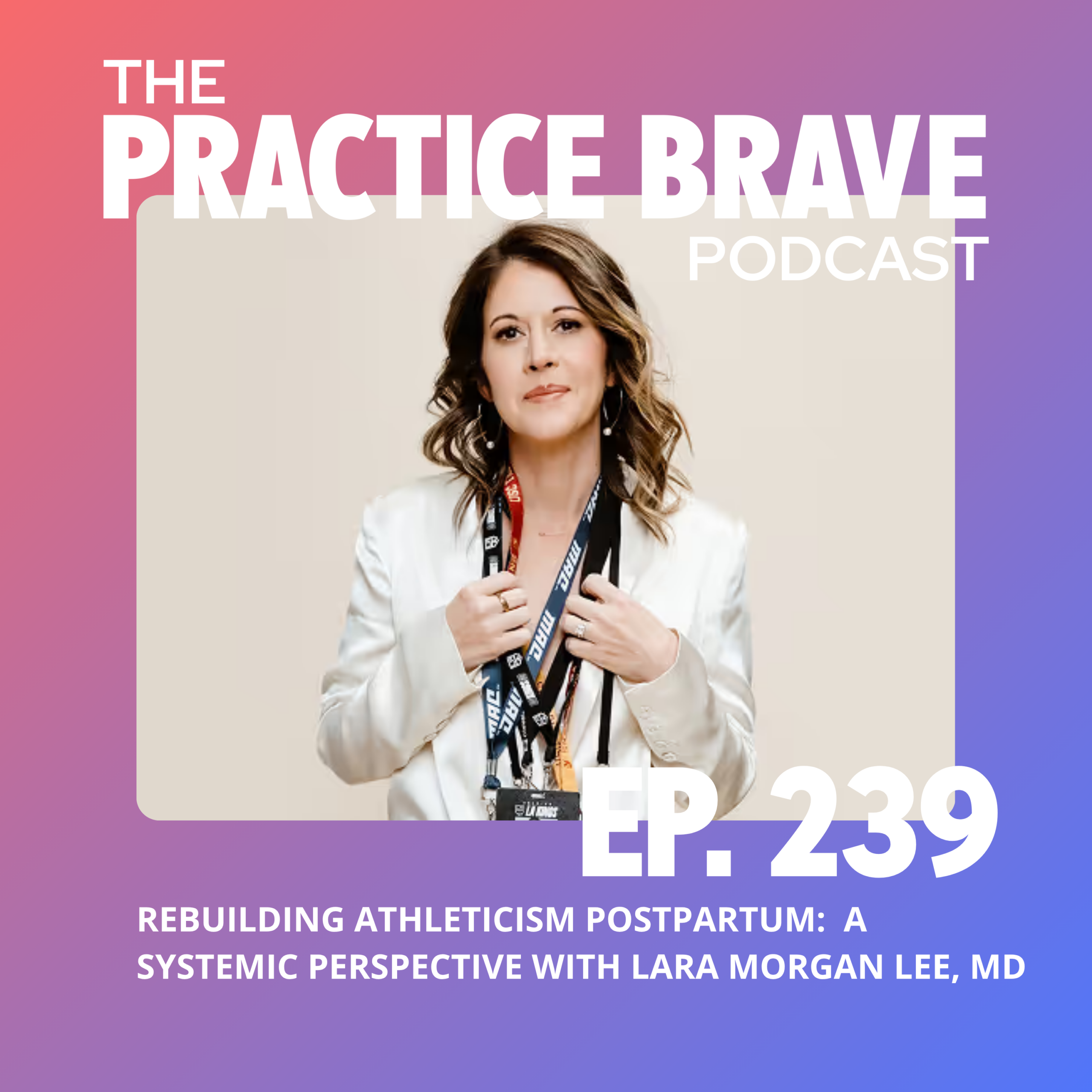
In today’s episode, I sat down with Lara Morgan Lee, MD, a board-certified sports medicine physician and former team doctor for elite professional and collegiate athletes, to talk about what happens when we apply a sports medicine approach to motherhood.
We dive into the gaps that still exist in postpartum healthcare and why returning to function requires more than a six-week clearance. Dr. Morgan shares why the same principles we use to rehabilitate and support athletes—structured progressions, coaching, and multidisciplinary care—need to be part of the conversation for moms, too.
This conversation is a reminder that supporting mothers can’t fall on one coach, clinician, or provider. It takes collaboration and a willingness to rethink the way we approach maternal health and athletic performance.
Connect with Dr. Morgan
- Instagram: @sportsdrmorgan
- Website: sportsdrmorgan.com
Need workouts for your pregnancy or postpartum? Check out my programs (now with app access!):
The Pregnant Athlete Training Program: https://go.pregnancyandpostpartumathleticism.com/the-pregnant-athlete-program
The 8-Week Postpartum Athlete Training Program: https://go.ppaprograms.com/pp-program
Training Jiu-Jitsu during pregnancy or postpartum?
I’ve created a FREE guide to help you train with confidence, understand key considerations, and navigate this season as a combat athlete.
👉 Download it here: https://go.briannabattles.com/bjj-freeguide
EXPAND FOR EPISODE TRANSCRIPT
AUTO-GENERATED TRANSCRIPT
Brianna Battles 00:01
Welcome to the Practice Brave podcast. I am the host, Brianna Battles, founder of Pregnancy and Postpartum Athleticism, and CEO of Everyday Battles. I’m a career strength and conditioning coach, entrepreneur, mom of two wild little boys, and a lifelong athlete. I believe that athleticism does not end when motherhood begins, and this podcast is dedicated to coaching you by providing meaningful conversations, insights, and interview topics related to fitness, mindset, parenting, and of course, all the nuances of pregnancy and postpartum. From expert interviews to engaging conversations and reflections, this podcast is your trustworthy, relatable resource for learning how to practice brave through every season in your life. Everyone, welcome back to the Practice Brave podcast. Today, I’m very excited to connect with Doctor Morgan, also known as Sports Doctor Morgan, on Instagram, and we have finally connected after sort of coexisting in the same realm and same area of interest for a long time now. And I’m really excited to have a conversation about her perspective, coming from a sports and medical background, into what we are seeing with pregnant and postpartum athletes, but honestly, just moms at our current fitness culture in general. So, Dr. Morgan, thanks for being here.
Lara Morgan Lee 01:25
I am thrilled to be here. Like you said, it’s been a back and forth for a while, and I’m so excited. I’ve been a follower for years. I love your work, obviously, and I’m just really proud to talk and to share kind of our experiences with your audience. And hopefully, they can learn more about me and my perspectives, and it gives them some tools that they really like,
Brianna Battles 01:41
yeah, absolutely. I think you know, in right now, it is so important that so many of us who are doing complementary work in the medical, in the research, in the coaching, in the practitioner realm, link arms so that experiences and outcomes are improved for women, and more specifically, our pregnant and postpartum athletes who are really getting fed so much confusing information. There’s more info than ever before. It is in your face, and it is so easy to compare or to only take like one element of what’s put out there and then hold on to that. And so I think it’s up to all of us to join arms and say, actually, like all of us can help improve the conversation, and you’re certainly doing that. So thank you. Absolutely, there’s
Lara Morgan Lee 02:24
two points from that that are really important. And one is that if I get confused on social media right now when I’m swiping through, even like sometimes I swipe and I’m like, “Wait, is that true? And I’m like, “Wait, no, no, no, hold on. This is like, it’s this big. It’s marketing. And Sue is like, “This is a multidisciplinary approach. And when we get into more of my origin story and kind of what I do and why I do it, I’m a sports medicine doctor at heart. I worked with the King Cavaliers. I worked with LA Kings. I worked with big elite level teams, and there’s a reason why they have a coaching staff. There’s a reason why they have athletic trainers and rehab doctors and sports medicine physicians, and there’s a reason why they all work together. It’s because it works really, really well, and so that speaks to what you’re saying. We need to kind of link arms and use all the tools and resources we have because there’s a population here, moms, pregnancy, postpartum, that need us. They need us so bad with the amount of information we have and also the limits in the information we have.
Brianna Battles 03:13
Yes, so much that I say. Like, coaching has been the thing that has been left out of the conversation surrounding our athletes. There’s a lot of do this, don’t do that. This is safe. This is unsafe. You can just listen to your body, do whatever. And I’m like, we don’t like you say, like we don’t say that to athletes. We don’t say that to anyone under any other circumstance when they tear their ACL or they’re recovering from a hip surgery. Like they have a protocol. They have a process. They know when they see their doctor. They know when they’re then going to physical therapy. Then they know when they’re returning to exercise, and then they know when they’re going back to their sport. There is a process, a protocol. There are guidelines, timelines, frameworks. All of this for every other sports med consideration. And yet, motherhood is like just vibes. Listen to your body. Vibes and date on the calendar. Like, look at what this girl. She she also does triathlons. Well, what did she do? And it’s like, God, that doesn’t. We don’t do that in any other capacity. No. Yet this industry, pregnancy and postpartum fitness, is kind of a shit show.
Lara Morgan Lee 04:11
If I did that in my job, it’s a liability, right? I would never take a high level athlete and say, “Here’s the date on the calendar. Listen to your body, and I’ll see you back. Right? No, or I’ll see you never. Like we wouldn’t do that. Like you said, it’s it’s not vibes. There is science behind this. The science behind the recovery process in sports medicine is clear. It involves coaches. It involves rehab. It involves a return to play that you just described, and it works. Why have we never applied that to motherhood to one of the most physiologically, anatomically, structural changing systems. We know this is like the biggest thing your body physically goes through, and that whether you’re an athlete mom or a regular mom that just wants to live your physical life, because motherhood by a definition is very physical. Like, why do we just say, okay, you’re good to go, and give no assessment, no framework? You know, I could get on a soapbox and speak for an hour about how frustration. That is in the system that we have, but it is important to think about the tools that we do have within this broken system. How do we utilize them? How do we work together as a team, as you just said, so that way we give information that is supported the best we can, and the people touching the moms, the people that are out there in the community, whether that be coaches, physical therapists, whoever it is, like they’re the boots on the ground. You’re the resources. You’re the ones that are out there seeing the mom. And you know, unfortunately, we haven’t built the clinical infrastructure. And I’ll say yet because guess what I’m doing right now? Like we haven’t built that clinical infrastructure yet to define what true clearance is and to build it out. We have the science, but we don’t have the clinician side yet. Imagine if we did
Brianna Battles 05:41
actually implement.
Lara Morgan Lee 05:43
Yeah, imagine if we had that for your coaches, right? So, like, because things, as a mom, we know this as well, right? Things don’t go to plan. You know, you have an athlete. You know, you’re building them back. They want to go back to jujitsu. They want to go back to CrossFit. They want to go back to running. There’s going to be setbacks. There’s going to be injuries, and unfortunately, in our current healthcare model, even if we get them that far, they go back and see, you know, orthopedist like you know a surgeon or whatever in the clinic, and they’re going to say a specific thing related to that injury pattern, but they forget all the mom parts, the pregnancy parts, the postpartum changes. There’s the link there is also missing. There’s so many missing pieces,
Brianna Battles 06:20
so many, and I love that you and I. I can already tell we’re just gonna feed off of each other’s energy with this and get all fired up. But I want to know what your background is that has got to need at this point of being so fired up about better supporting moms and treating motherhood in the way that it is, which is athletic. So, what is your background and how did you get here?
Lara Morgan Lee 06:41
So, as she said, my name is Dr. Morgan. Let’s start at the beginning. I am a sports medicine physician. I’m board certified, and I’m also the former team doctor for the Cleveland Cavaliers. I always say that funny. Cleveland Cavaliers. There we go. The L.A. Kings and the USC Trojans, as well as many others. I worked with Olympic level athletes, world triathletes, you name it. This was my career. I loved it, and there is this expert model in place that works. I I think the complexity associated with high level athleticism is amazing, and I truly enjoyed it. I became a mom. I had my own daughter. She’s now five. Her birthday was just this week, and I realized immediately the gap in care for motherhood. You know, even as a sports medicine physician, even as someone who has worked at this extreme high level, I should have never been potentially falling through the cracks, right? You know, I’m laying there post C-section because my daughter was breech. I had a wound to his sense, so my wound had popped open. I had made it through my pregnancy and maintained my activity. I was, you know, I I did that. I have a lot of I have a lot of knowledge in this area, and that was great. But then postpartum, it was like that’s it. Care’s done. Good, good luck. And I’m crying on the bathroom floor, ashamed, feeling alone, wondering why, what happened to me, what am I doing wrong. And then it clicked. Apply the principles that you know. You’re a sports medicine doctor. Apply my own principles that I use to take care of high level athletes to myself, and that’s the model that I now function in. And when you have an idea like that, that is not only a systemic flaw that you’re saving, but also is structurally sound based off the science. You have to do it. So as I’m lying there on the bathroom floor, I’m thinking about that ACL tear. I’m thinking about the protocols and why we would just never do that. Why do we take care of such high level athletes and say, “Here is your structured plan, as you already had alluded to, and for a mom we say nothing. We say nothing. Why are we doing that to moms? Moms get less care after growing and birthing an entire human being than we do for an athlete with an ankle sprain.
Brianna Battles 08:34
Yep, I know. And then
Lara Morgan Lee 08:36
I had twins. That’s still there. I know, right? So I had her. I had the plan. I started building the processes, and I’m like, okay, this is going to work. And then I got pregnant with twins, and I thought, excuse my language, holy crap,
Brianna Battles 08:47
yeah,
Lara Morgan Lee 08:47
does it work? Can I do it? This is a whole new ball game now, physiologically, functionally. Is am I done for? Like, can I? Does does my protocol that I’ve built my career and kind of based everything on? Does it work? And I had twins, and I’m back to doing everything I want to do. I structured the plan. I’ve helped 1000s of moms now since then, and it just it works because it’s rooted in sports medicine,
Brianna Battles 09:09
right? Yeah, I think that’s that’s an angle that I try to lean into a lot. Is like we need to bring coaching, basic coaching, progressive overload, needs analysis, some of these fundamental principles that are getting left out of really significant conversations when we’re talking about supporting pregnant postpartum alleys. You have to treat it from that strength conditioning slash sports med perspective because there are structural changes, hormonal changes, muscular changes. There’s just overall performance changes, injury considerations. So much going on: tissue healing and remodeling, and just ultimate changes during pregnancy. There’s so many layers to this, and you know, if you felt like, why didn’t I know? And that was five years ago. What’s crazy is that’s how I felt 12 years ago. Was like, wait, why am I a coach? And I have pretty extensive coaching background and experiences. I’ve done all this and that. Why did I not know any of this? Why was none of this ever mentioned anywhere by any coach in any textbook in any course in anything? And why am I left figuring it out? And when I go to my doctor, I’m given nothing. And when I go to my physical therapist, which I was kind of guessing on, it’s given nothing. When I go to the chiropractor, they just tell me to push my abs back together, and I was like, I know from a coaching perspective that is not how muscles work, that is not how tissue works. So then it’s like you’re sitting there going, like, what has happened, and why isn’t this more common knowledge, and then we can fast forward all of these years later to today in 2026. There are still women on the bathroom floor crying. There are still women going to practitioners who are being told some outdated crap, and they’re going like, “This doesn’t totally make sense. But then I only see others who seemingly have no issue training through their pregnancy and look pretty much like themselves again postpartum, and what are we left with? And then we we see some breathing exercises of that that I can talk about.
Lara Morgan Lee 11:10
Yeah, there’s so many pieces of that,
Brianna Battles 11:12
and it’s overwhelming. So it’s like while we’ve made a lot of progress, it’s still a chaotic mess for the majority. It’s a
Lara Morgan Lee 11:19
systemic problem. I mean, that’s the summary of what you said. So it’s it. I love my OB/GYN. He is amazing. I love the physical therapist I worked with, but they’re stuck in the container in which they’re functioning in the healthcare system. It’s not your OB/GYN’s fault. It was never their job to prepare you to return to function because that’s they. That’s not what they do. They are healing. So the six week check, and I argue it’s all the time. That’s healing. We forget birth and pregnancy are traumatic events to our bodies. Even if you have the most blissful birth ever, it’s a trauma. It’s a physical insult and injury. Pregnancy is high risk. There are dangerous, scary, bad things that can happen when you’re pregnant and give birth. Your OB/GYNs are amazing. That’s what they do. They get you to the six-week point, which is when your risk of all of that badness goes down, you are not going to die if you go for a run. You’re not going to have a stroke if you pick up a barbell. But what it doesn’t say is that your body is physically ready, and I would argue it almost never is because you’ve spent the last nine to 10 months adapting to pregnancy and postpartum, and then boom, it happens. And if you do nothing, nothing changes. Nothing like the core. You can’t push it back together, as you were just saying with your chiropractor friend. You can’t, you can’t physically push them back together. And the fact that we are still having this conversation this many years later, it’s it just means that. Well, I hope it means that people are starting to listen. The people are starting to realize that that’s not okay, and the other point of what you said, which I think we can’t go past, is that moms assume because they see it on social media, someone looks great, pregnant, they’re exercising, and they’re still running their 10 miles, and they pop out a baby, and they have the perfect abs after. That they must be missing something, and there is there’s quietness here. There is shame. There is fear. There is unknown, and the mom that is alone in her bathroom crying, without the resources and the support that we were lucky enough to have and to find, it’s not her fault. It’s because no one talks about it. Yeah. If you call your mom friend and you’re like, she just had a baby, and you know, I have clients that say this all the time, and I’m like, how are things going? They’re like, it’s great. Yeah, I’m doing well. Babies, you know, sleep is tough, but it’s okay. And I’m like, really? How did your body feel? You know, are you know, like it’s it’s we underplay it because society has these unrealistic expectations of this period of time to such a high degree that we just assume everybody else has it figured out. When you and I both know that’s not the case.
Brianna Battles 13:37
Yeah, and that’s like that athlete brain culture and our athlete mom culture right now we have seen like I think we said we’re saying this before we actually started recording is like this arc where we went from no information how I felt when I first had Cade and just being like why didn’t I know any better and then slowly like more people started sharing like oh I too got my ass kicked during pregnancy or postpartum like I did all these things. Now I’m managing some injuries. My mental health is trash. Like I’m trying to like go through this like evolution of my identity. We started getting more information on pelvic health, on diastasis, and then that became like very trendy. And then we started seeing all of these rules and fear mongering, and then that created this pendulum swing back to be a badass. You’re not fragile. You don’t need to worry about all these things. And now we’re going to be seeing shortly more people going. Wait, that’s not what I thought I was going to experience on the other side. And now I need help again. And it’s not popular to hold the middle ground of like not fragile, not invincible. Be adaptable because that’s what it means to prioritize longevity in performance. But like that literally dies on social media if you say that. It’s only trendy if you show the highlight reel and the comeback story and all of that. And if you do share the “Why didn’t anyone tell me? piece. Almost like well, you’re fear mongering, or that’s a buzzkill, and people don’t want to hear it. But then there’s there the crowd, which is actually the majority, that feels really validated by like, okay, it’s not always this straightforward, yeah, experience. And even those that look like they’re seemingly crushing it, you and I both know behind the scenes when we talk to those women, they are trying to outrun their postpartum anxiety and depression. They are trying to battle their lifelong eating disorder and body dysmorphia that is now trolling them postpartum. And they’re so uncomfortable in their own body and even in their own mind that that feels like the only thing that they have. They’re so rocked. Like we use exercise as our saving grace because it is and it should be, but also there’s so much that goes into navigating these seasons, and we want to keep women in it for the long run, not just that temporary fix, that temporary dopamine hit.
Lara Morgan Lee 15:53
We totally agree on that because the middle ground is not sexy, but it’s the reality for most people. And the extremes, you know, as women going through this phase, as you just alluded to, it’s not just physical; it’s also the emotional impact that has on us as high-level athletic people. And there are extremes that are dangerous. There’s also the norm that is kind of mystified, and so moms are kind of stuck with this: Am I normal? Am I pushing too hard? Am I not? And then if someone does have body image issues, mental health issues, or you know, just the major sense of association with this peripartum transition, we know is a mental component, right? And you know, I have clients all the time that are runners, and they’re like, you know, I need to run five miles tomorrow, and I’m like, okay, do we, or do you want to run five miles for the rest of your life? Yep. You know, and I know you say this about lifelong athleticism. This is really the goal here: lifelong athleticism, and that you know you don’t have to stop being an athlete just because you’re a mom. But the more strategic you are about how you focus on this phase, the key. You know, this is a similar. If I take an athlete analogy, if I have an athlete that comes in with a shoulder injury, I don’t tell them to stop exercising. Right. I don’t tell them your athletic career is done. I say, okay, we’re going to use this time. We’re going to focus on what we can improve: your core, your legs, your balance, your agility. When your shoulder gets better, you’re going to be a better athlete for it. And I think that’s something that you and I agree on, and what we do with moms all the time is, you know, we’re going to assess where you are. It’s going to change throughout your pregnancy. It’s going to change throughout your postpartum. We don’t want you to go too hard too fast. We don’t want you to go too slow either. Like, there’s no, there’s no magic word, and that’s why social media is so funny. You know, like go low, go slow. Like, slow is not bad. Fast isn’t wrong. It just depends, and so much of it is in this gray area. And we do need to consider things like your mental health and your desire of athleticism because people will, you know, push because of what it feels like, or they’ll hold back, you know. Are you the opposite because they’re so scared? You know, like I don’t want to do planks because I saw on the internet that planks are bad for your core when you’re pregnant or postpartum, and I want to shake them and say, “Show me the data. They’re not. They’re not. Now, if you don’t do them well, if you’re having issues, you’re having symptoms. Okay, we need to adjust, and that’s what your coaches, you know, are looking at. Right? They’re looking at what’s actually happening, and moms need that. They need that tool because every day of pregnancy and postpartum is going to be different. It’s not like I could just say flanks are bad all of pregnancy,
Brianna Battles 18:11
right?
Lara Morgan Lee 18:12
That just doesn’t make sense. Your body’s changing too rapidly,
Brianna Battles 18:14
exactly. And you know, again, we we see this in your world of sports med, in my world of strength conditioning, where it’s like, well, if there’s like mechanical struggles in how they’re moving, we’re going to make some adjustments there. Why not to make that like this perfect and safe form? It’s like, well, that will probably give you more longevity in your movement pattern. That’s going to give you more longevity in your sport. So we’re going to make some of these strategic changes in your approach to your training or in your approach to your mechanics that are gonna that’s gonna improve you on an individual level. But what my body needs is mechanically going to be different than what your body needs because I’m five three. I don’t know how tall you are. This is my structure. This is my position. This is what I want to do. This is a sport I like. And so to to have these like really weird and rigid rules. Instead of having that coaching conversation, is where I think we’re doing a really big disservice. It’s like in an effort to create more more information and more help. It’s also this dichotomy of showing either we’re fragile and creating fear, or we’re invincible and we can kind of ignore. Then none of that applies to me, kind of mindset.
Lara Morgan Lee 19:23
Yeah, and I think that’s where the sports model, sports medicine model, is really the answer. It’s the you know we have strength and conditioning, we have coaches, we have you know rehab components, we have oversight you know from physicians because you know you need appropriate awareness of what’s happening at all of those levels to be successful as an athlete. That’s why we do it for athletes. That’s why we do it in the Cavs locker room. It’s not because it’s fun and it’s like like it’s it’s logistically what is best for the athletes, you know. And that goes into what things like rest and recovery those are important too in pregnancy and postpartum. You know, the mental game I always call it, but like the mental health component we were just talking about that’s important in pregnancy and postpartum. The nutrition, the fuel, you know these. Are all a part of a sports medicine model for a reason, and it applies to motherhood. It really, really does. Yeah,
Brianna Battles 20:05
and and the same. I like that you brought up like the fuel piece because what we look at a season like postpartum where you physically look very different, you mentally are different, and you see I’m in a bigger body. I weigh more. I have more fat. My my boobs are so much bigger now, like you’re just like so. Then they ultimately a lot of times, even if they don’t mean to, end up going into a lot more restriction. But then they’re trying to turn up the volume or the intensity and progress their exercise, and it almost creates this recipe for yeah, you’re gonna get injured because we see that that’s how injuries happen in the sports med realm, and now we’re seeing that when you’re sort of extra vulnerable because of postpartum, and it’s not just because a baby exited your body; it’s because you’re in a different body right now. You have some vulnerabilities, and then you’re not eating, you’re not sleeping. You’re like there’s all these other cofactors that we know from like the real world of sports performance that just again are getting very overlooked in the pregnancy and more particularly the postpartum season.
Lara Morgan Lee 21:06
If you take the mom out of it, all of those things exist. Now you put the motherhood, the postpartum component in, and it’s amplified. It’s not gone. It’s amplified, and we have no structure for it. You know, the I always tell my clients when they’re pregnant, decide before you have the baby what your relationship is going to be with the mirror and the scale. You need to decide before you give birth. And if you are someone that we know has body image, you know realization issues, or that has had an eating disorder, or that knows that that’s a trigger for them because it is for a lot of us. Let’s make that decision before you give birth, and then we’ll integrate it when we can later, but the last thing I want my my moms to hear is that they give birth. They want to like amp their training up. They want to cut their calories. They’re looking at their body. They’re looking at the scale. They see this baby that you know they’re breastfeeding. Even maybe that’s a lot, and we’re not giving them structural support to do it in. As you said, if this was a non mother, if this was just an athlete that was training for a competition, we would never do that, right? We would never love it. Like makes me
Brianna Battles 22:03
think of like your hockey players that you’re talking about. If you had a hockey player come to you with like this list of like this is my lifestyle right now, you’d be like, you’re not ready for practice,
Lara Morgan Lee 22:11
bro. What? Yeah, I would never clear them. That’s right, exactly. Yes, I would never clear them. I would be like, you are not ready to play hockey yet, but yet we send moms onto the court all the time. We send them onto the ice. We say, “Go, let me know what happens. And we wonder what’s wrong. And what happens is, you know, we know relative energy deficiency syndrome. We know these things happen. We know injuries happen. We know bony stresses happen. They come back with problems, and we’re still talking about the acute phase, which is extremely important. I would never clear someone to go back on the ice like this, but what happens when they do? And I see them five to 10 years later with chronic knee pain, back pain, hip pain, weakness, you know, imbalances because they never fixed it when they could because we don’t have a system for them. You know, you want to get me more fired up? Not that I’m already like yelling at my screen, but you know, yes, peripartum is important. But what about the mom five years later? I know of those moms too in your practice. Five to 10 years later, they’re you’re they’re pushing their bodies. They’re trying. They come see me in the office with chronic knee pain. They have no glute strength. Their core is challenged. They can’t control a squat, and yet they’re loading a barbell and throwing it around because that’s what they need to do. Like we’re missing, we’re missing it. We are missing it as the healthcare system.
Brianna Battles 23:17
Yeah, and I say like you know it’s not like I care about pregnancy and postpartum, yes, but I’m like no. I look at like the lifetime of athleticism. I care about my son’s peers, those little girls that I’m getting to coach in jujitsu. I care about the information they’re being fed as they grow up as young female athletes in this sport. And yes, I care about our professional athletes that are making this huge run throughout their 20s and seeing what their body is capable of. We care about our pregnancy and postpartum because these are catalyst seasons. These are incredibly transformative, mentally, emotionally, physically, like hormonally, all of it transformational seasons. And then what’s left? It’s this lifetime of athletics. But ultimately, you know, we’re heading into perimenopause, menopause, aging, and we’re seeing are the cultural influences of fitness, which is look how amazing women are. Look what they’re able to do once they become mothers. Look how long they’re being able to perform at a really high level. Look at what our ultra marathon ladies are doing. They’re mothers. They’re into their 40s. They’re into their 50s. We have an 80 year old completing an Ironman, like we are seeing women push their bodies throughout their lifetime, and if we want that to be the cultural norm and to continue, how do we keep women in the game? How do we keep their bodies working with them within the ways that we can control so that they’re not peeing themselves when they’re at a powerlifting meet at 40-three years old? How are they competing in these Ironmans and not having to manage their prolapse symptoms? You know, like how what are we doing to mitigate some of these symptoms that they might be experiencing or ultimately might be on the horizon just as their body continues to change anyway? Because we’re pushing it down. That
Lara Morgan Lee 24:56
is an amazing question because it hits at the big point of this is lifelong. This isn’t like yes, we love pregnancy and postpartum. The reason why we talk about it, and the reason why I’m so passionate about it, is it is one of the highest change periods in the shortest amount of time, right? So you know, puberty is a big one, and we talk about you know relative energy deficiency syndrome and young athlete issues and mental health and weight and a lot of that with our young female athletes, especially. And I’m sure you run into that as well. Then it’s the pregnancy and postpartum phase, and then it’s the menopause, perimenopause phase, and there’s a big push on that right now, which I’m really happy about and I’m really proud of because there’s a lot of really good physicians in that space that are leaders and really driving change in how we think about exercise as adult women. And again, before the show, I told you I was 43, so I’m I’m kind of right at that cusp. I had my kids later in life, but when you think about that, I had my kids later at life. You know, I had twins just shy of 40-one. So now the space between where I am in postpartum and perimenopause and menopause-that’s that’s getting pretty close together. And gotta rally, girl. You know, like we’re gonna rally, and we gotta go. And I think that exactly yes, because if I don’t do it now, if I don’t take the opportunity to optimize this phase, and that doesn’t mean like go to the wall and push myself. That means build back appropriately and structurally soundly, so that my life now represents lifelong athleticism. I’m missing the boat because I’m going to show up at the door of perimenopause and menopause, and I’m going to look back and say, “Wow, when I had my kids five to 10 years ago, and I didn’t focus on strength, coordination, adaptations, all of the changes that happened. I missed out on a window when I could have gotten strong again. You know, so many of my clients come to me after they have their kids and they, you know, have that gap of a few years, and suddenly they’re like, “Well, I’m, I’m weak, I’m overweight, I’m imbalanced, I feel pain, I’m like, it’s like the wheels are off the bus because, and it’s not they can’t put them back on. It’s just the wheels are off the bus because there’s a structural change that happens around this pregnancy and postpartum period that you and I both know, and it is it’s about lifelong. It’s about what happens before and after. Am I better off if I go into a pregnancy already fit and active and strong? Of course. And am I better off if I go into menopause and perimenopause already fit and active and strong and knowing? Yes, of course. Like this is this is the whole arc.
Brianna Battles 27:02
It’s like this is not shocking to us, but I think sometimes apparently it is. And what I also find is an interesting space to sit in is our Gen Pop. Like they might need more encouragement of like, hey, you can and should be lifting through pregnancy. And you know what? It is not over when you become a mom, like you can keep doing these things and encouraging them because as they get towards perimenopause or if they’re having babies about their 30s and maybe pushing 40s, like then we’re wanting them to really maintain their bone strength and build that and get stronger and and set themselves up later. On the other side of things, we have athletes that are like, I’ve been bought in. You don’t have to tell me to work out. I’m gonna do that. I know it’s safe. I know it’s beneficial, and I want to actually get back to it as soon as possible. And I want to maintain every element of my training to the most of my ability during pregnancy, and then already have this lifestyle of like being an athlete and not having that come to an end as a mother. But how we approach both of those things and the angle has to be different. Some so different, more of a push. Some need more of a slight pull back to then ultimately catapult them forward. And that’s the one of the area that I find myself in quite often in how we’re communicating this.
Lara Morgan Lee 28:17
Yes, the athlete community, the athlete community that we’re speaking to, already knows you should exercise in pregnancy. They’re not buying into the don’t lift over 10 pound. You know they’re not buying into that. It’s a different conversation. It’s in the same base, and I think often, you know, I kind of more often than I see the same problems, right? So I’m still seeing the same issues, and it is maybe a dial back of exercise or an adjustment of intensity depending on where they are, based off their training goals, short and long term. You know, for my runners, it’s usually that conversation of is there data that says you can’t run in pregnancy? Absolutely not. But I want to know what you specifically are feeling when we talked about the individuality of this before, because I want to be sure that after you have the baby, we talk about things like your pelvic floor health, because I don’t want you’re peeing yourself when you run your ultra marathon, and the conversation isn’t so much yes you need to exercise yes it is not necessarily yes you need to dial back. It’s more just a fine tuning and a way of saying things so they know pregnancy is going to change your body, postpartum changes your body. How do we optimize you throughout this whole phase? And it may be adjustments. It may be dialing back. It may be dialing forward. It may giving the green light that you look great. You have no reason to slow down, and there’s no data that says you can’t do X, Y, or Z at a certain phase. And you know, athletes are fun to work with because of that. Because it’s about you know encouragement and using your expertise and the limited data that we have to really treat them like the athlete they are, and build that whole protocol under the guidance of a sports medicine principle.
Brianna Battles 29:45
Yeah, and even like from a performance standpoint, and even from a like symptom and like pelvic health symptom standpoint, and like all of this comes down to athletic readiness and capacity, and both of those things, we have a lot of strategies. Around and it’s not, um, it’s not a list of exercises. It is not a rigid timeline. It’s not this rigid protocol. It is really individualized. And then when we’re communicating that across the mass, is people are going to interpret it the way they want to interpret that. And I think that’s like the hard part because we always athletes anyway will assume the best of themselves, and Gen Pop often assumes less of them. The worst, true. And so, okay, how do we again like find this balance of like if we were not in a mom bod right now, how would we approach our return to whatever sport if I knew I just had a major ACL tear, or if I like really did something weird to my knee, I’m not sure if it’s totally torn, but something doesn’t feel right. I’m probably not going to go out on a five mile run because I know that that volume and repetitive force on my knee and the current structure and symptoms it’s giving me right now isn’t going to help it a whole lot. It’s not quite ready for that, and it’s like we have to sort of shift our, our, in like the almost like the intuition that we have in our body. When people say “listen to your body, no one knows actually what they’re listening for because they can override that. Any app they realize
Lara Morgan Lee 31:13
at that term every time you say it, not at you, at the term. I hate that term. You cannot expect someone to listen to their body if you never tell them what to do with the signals, what those signals are, and what they mean for their athletic body, like you know you you can’t explain listen to your body without explaining what okay you need to listen for your pelvic floor. This is what pelvic floor symptoms feel like. Here’s how they might present. Here’s when they could occur. Here’s how you can make them better and worse. And here’s what we’re going to do about it if you have them, like that’s just one component, right? And so, selling someone to listen to their body, especially an athlete who we know from taking care of non-pregnant and postpartum individuals, like we turn the dial on the listening ears pretty fast, just like my two-year-olds do. You know, are your listening ears on? Are you really listening, or do you really just want to run? Right. And you know, you know, I keep in the running population, but these are lifters or whatever. You know, like my my high level athletes, you know, they want to be athletes. Like that’s, and I love that about what they do. And if you are 100% correct, if we treated this phase like we would any other injury,
Brianna Battles 32:13
yeah, it
Lara Morgan Lee 32:13
would involve proper training. It would involve the strength and conditioning mindset that you’re giving, rest, rehab, return, nutrition, like literally all the, and a little spoiler alert for anybody listening. This is what I’m working on, and there is a framework that I’m kind of leaning towards. That is essentially we apply sports medicine framework to motherhood. There is a framework that exists. It’s it’s doable and it’s buildable for moms, and I don’t know why we don’t do it. We need
Brianna Battles 32:38
to do it. Yeah, I mean, I think we’re doing it, but in such small capacities that it’s not standardized, right? It is not something that we just like intuitively know in the medical communities and the practitioner communities, etc. And I think a lot of like who that affects is the women in those seasons. You know, like maybe we we know this, and if we come in contact with them, great. But it really has to just be a little bit more standardized. Yeah, you know,
Lara Morgan Lee 33:02
obviously that wasn’t meant to discount anything because there are people in this space that are doing amazing work. There are amazing researchers. There are amazing physical therapists. There are people like you that are hands-on with athletes and coaches. You know, dealing with this day to day. Is that the healthcare system doesn’t have a lane for this?
Brianna Battles 33:17
Yeah, and you’re not looking at it even remotely close to this either. No, no. One
Lara Morgan Lee 33:21
of your coaches sees an athlete who has, you know, or they’re having issues. They’re they’re training them appropriately. They’re making adjustments. Things aren’t happening, and the this is the problem now. And you can tell me if I’m wrong, but I don’t think I’m going to be. They go see their OB/GYN, and their OB/GYN says, “Okay, cool. Dial it back or dial it up or whatever. You know, listen to your body, like we just said. And that’s not the OB/GYN’s fault. That’s because that’s not their area of expertise. They go see the knee surgeon. The knee surgeon says, “Okay, well, you don’t have a intrinsic problem. You don’t need knee surgery. Come back if anything changes. There’s and that’s that’s what do they do? What’s the true clearance? What’s the what’s the true evaluation that’s happening for those people? And it doesn’t exist.
Brianna Battles 33:58
Yeah, and then we look at like your average mom, and then you’re like, I don’t have the time, the energy, maybe even the the money and the resources to jump from doctor to doctor to appointment to appointment. Like, I just freaking someone give me a straight answer on like why I’m struggling now, and then they stop exercising because they’re like, well, it just I just hurt. I every time I jump or I run, I’m peeing myself or my knee hurts or it’s like aggravating all of this. So I’m not going to do that anymore. Besides, I googled and it said I can’t lift over 20 pounds if I have prolapse. And then my doctor told me I should just stop doing CrossFit because that’s dangerous. And now, like, I don’t know what I’m going to do. So I guess I’ll figure out. I end
Lara Morgan Lee 34:32
up doing nothing, or they scale it back, or they get hurt worse because they don’t have the appropriate education. And you know, we talked about the athletic mind. You know, more often than not, it doesn’t go to. I’ll just do nothing. You know, maybe the general pop that you talked about earlier, they’re just going to do nothing, and that’s going to be a problem. But the people that are high level athleticism, they’re going to push because that’s what athletes do, right? And you know, are we going to get hurt? Are we going to make the problem that they have worse to a point where it does need intervention when it could have been helped sooner? That’s yes, 100% spot on.
Brianna Battles 34:58
So you like to. Bring this into like a more personal scope. You had you had your daughter, and then you had twins, and then you were like, okay, my work in sports med has now been like my eyes have been fully fully open to what is lacking. So then, what has that actually created for you professionally? Like, where are you at? Like, how did it go from like getting locked in motherhood into your professional expert,
Lara Morgan Lee 35:23
you know, I would have never expected to be talking about this on the internet. I’ll tell you that I would never been expected to be doing this, right? Like this is not where I thought my life was going. I arguably, and this is not just shooting, you know, twigging my own horn. I was at the height of my career, right? I, you know, was in Cleveland. I was with the Cavs. I was recruited to go to LA to help build this facility inside hockey, you know, in El Segundo in their breakfast facility. You know, we’re building this big thing. You know, COVID hits, things, the architecture of you know sports changes. I get married, I have my first baby, and I’m lying there thinking this can’t be how we treat moms. So that’s where it started, right? And in that moment, I realized that I unfortunately, I don’t like laugh at that, but fortunately, I had to be the person to fix it. Right? You know, there are many of us out there that are fighting this fight, but I knew that it was a systemic level problem, and the answer was in sports medicine. And so suddenly, I have not only a responsibility to the community, but also you know a business that I need to create to be able to help moms and also to help the system. So, my current level ready to are now starting then. So this has been a few years in the making. I built out a telemedicine practice where I do one-on-one telemedicine with moms. This is full-on medical care, right? Diagnosis, treatment, whatever, and that happens in the states that I have medical licensure because that is limited and is all remote. But is it’s amazing to see what we can do when we have these conversations with moms, right? Because of the limitations of telemedicine, I also opened up group coaching program, which is essentially me having conversations, education, support frameworks, and what’s really fun about this is since it’s small group, it’s mom to mom, and we find a lot of these conversations end up being shared, right? So moms have similar experiences or can learn from each other’s, and it’s this really beautiful dynamic. Since that is coaching, and I am not your doctor, it is education and life coaching essentially only. I can do that to anyone, anywhere. And so it’s been this really wonderful thing because at the end of the day, a lot of people are getting their diagnosis and their treatment, and then they’re showing up to you know your gyms and they’re saying okay help me coach but they’re not like they they’re so limited in what they have and they may not be able to afford to travel to all these doctor visits like you said and to go and do all these things so having a resource of shared community has been really really valuable. In addition to that, of course I’m on social media you know fighting the good fight there trying to make sure that people understand that this is a healthcare issue and not just a mom issue, it’s not a women’s issue. This is a big, big thing. I have my first digital guide that’s coming out. I just got the draft on my desk right before I hopped on this call, and it is beautiful. And it’s providing a ton of education. It’s free. It’ll be on my website soon. And then the other thing that I’m doing that’s really exciting is I’m in pre-production for some media that will be launching very soon, and you’ll get to hear more of my voice, real mom’s experiences, things like that. So that way, it’s not just about the athlete. It is, but at the end of the day, this is bigger than me. This is bigger than the one mom or the one athlete that I’m working with. It’s a healthcare lane. It’s an advocacy lane. It’s a systemic problem that sports medicine is the answer for. And from lying on the floor after I had that C-section, going “What the heck? I knew in that moment that I could fix it.
Brianna Battles 38:31
Yeah. And from your scope, being in the medical field, how do you think? Like, what do you think it looks like to change it at like a systemic level, you know, it’s like it’s different than like the fitness industry is its own little world. But when we zoom out of that, like we can control aspects of that, but really to create like an overall change within women’s healthcare, I mean that’s it’s a big beast, especially in the U.S. Yeah, what are you seeing like from that medical perspective, that maybe the rest of us don’t totally grasp.
Lara Morgan Lee 39:04
So I think we’ve hit on it a little bit already, and that this has to be a teamwork. This has to be a multidisciplinary approach. This is never going to be one doctor’s fight. This is never going to be one even fields fight. This is going to be a group effort with you know the amazing physical therapists that are pushing the pelvic floor and the rhetoric around that, both you know, locally and globally. This is, you know, trainers and coaches and nutrition staff someday and lactation consultants. And in my you know dream, my little corner of the world and my internet becomes this global site where people can go and access from the comfort of their own homes. As you just said, they’re not leaving to do all of these things, and they’re getting this multidisciplinary resource to support them through it. It’s never one one person’s answer, and then within that, hospital systems take note. They see what’s happening, and they realize that if they actually pour into this phase, peripartum, they get their moms back stronger, faster, healthier, with less. Applications, you know, maybe a workforce like Google or Amazon sees this and thinks, “Oh, this is the why our women are having such issues in this phase. Like, we want healthy employees. Like, this is how we take this on. And you know, the people that are going to come around last are the ones that are probably most valuable, which is insurance companies, right? So, getting reimbursement for these sort of things is going to be a challenge. But I have no doubt that if we don’t say it, it won’t happen. And continuing to work together to say it at a high level means that you know scale is possible. I was just talking to you know last summer someone out of Nashville, out of Vanderbilt, that was like, this is good. You know, I was talking to someone in Florida the other day that was like, oh, this is we’re onto something here, and this is a big institute level person. Like this is this could affect change, and it’s it’s not just me. It’s not just it’s it’s huge. This is like a big thing. It’s hard to do, but it’s it’s it’s valuable. It means a lot of conversations.
Brianna Battles 40:50
I know it’s funny because you know I feel like in our it’s very easy to be in our own little echo chamber. We’re like, oh yeah, like all of this this is so exciting, or this is becoming a lot more common knowledge. And then sometimes you put yourself in like regular regular quotes for those of you um like just listening. Like you go in like regular communities. Like I spoke at the NSCA conference last summer, and they were like, “Oh, this is like it was like groundbreaking. It was like pregnant athlete, postpartum athlete. I’m like, “Oh wow! Like I’ve literally been doing this 13 years. Saying sometimes
Lara Morgan Lee 41:22
we are yeah we’re and I’m
Brianna Battles 41:23
like man like what is common knowledge to me or a very common population I say all the time like it’s not a special population this is a common population of women in most gyms are pregnant athletes are postpartum athletes or are athlete moms that it is not a special population conversation, but then when we get out of our echo chamber, you realize, oh yeah, no, this is very, very, very, very niche still, and people think that this is almost a a cute thing that you feel so passionate about,
Lara Morgan Lee 41:53
right? So the number of times I say this, and people are like, oh, that’s a thing. Wait, oh gosh, that is a thing. Like it takes us just a second because yeah, we get we get in our little conversations, and we’re in that our algorithms. I’m sure yours is very similar to mine. It’s like post, post, post, post, post about this. But then you step out of that, and you know I have conversations with amazing OB/GYNs that are like you know still doing heart rate guidelines. This has literally happened within the last year for exercise, and I’m like, that’s not even what your governing body says anymore. That’s that’s not a part of
Brianna Battles 42:18
- And having said in like over 30 years, like it’s wild,
Lara Morgan Lee 42:22
and so remembering, yeah, that we are and like still having these conversations, and remembering that we are very lucky that we have the knowledge and access that we do because there are a lot of people that don’t, and that just gives more fuel to the fire, right? So more reason to keep saying it in different rooms, and you know, as you said, this is not like a small population we’re dealing with. And I want to be clear with what we talked about earlier. It’s not just pregnancy and postpartum. Postpartum is forever. Motherhood is forever. And a mom that is five or 10 years later that is still trying to figure out how to fit in her athletic identity into her motherhood is also in our and it’s in our wheelhouse here because it doesn’t just stop. You know, my kids are five and two, and yours are older. You said like it’s you’re still integrating that, right? And you’re still wanting to model it for your children, and you know, knowing what going in your body as you kind of age. Like these are still conversations that need to happen. This is just an entry point. Postpartum is an entry point.
Brianna Battles 43:14
You don’t stop being an athlete. I think that’s like the narrative that I’ve really tried to change that. I model myself. It’s like at 40, I’m a much better athlete than I was at 30, and better than I was at even 20. Like, yeah. Oh, me too. Not like the narrative around that is changing. We are extending what it means to perform at a really high level as women and as mothers, and yet, like to reach the fullest, like our own individual fullest potential, whatever that looks like, even if it’s different, that doesn’t die. It’s not over. And especially for somebody who like identifies as being an athlete, they’re gonna want to keep seeing what that looks like as your life evolves, as you get older. What I’m doing now is very different than what I was doing at 20 or even 30, but God, like it’s a great thing. I’m like so happy. Should be
Lara Morgan Lee 44:07
right. It should be your body and life should evolve. We shouldn’t expect to be the same at 40 as we are at 20 or that we are at 12. We would never say a 12 year and a 20 year old the same. Why are we saying you’re the same at 20 and 40? Like, and your goals change and your desires change. But if you want to be athletic, that doesn’t end just because you’re a mom, and I know you say that all the time, and I feel that very strongly as well. You know, like will it adapt and alter? Of course, but that’s life. It should adapt and alter. You know, that’s what what athleticism and lifelong athleticism will be as you learn about your body and what you enjoy and what you can do. But I agree. I’m more, you know, in shape to lack terrible way of saying it, but I’m more functionally, you know, fit now than I was then, and I know where my body. Maybe you know, I should stop saying postpartum is a bad thing and start thinking it is like the fuel that set me up for success, right? Yeah, you know, it really can be the fuel that sets up an athlete, an athletic mother, to really function in her body at a high level because it also because things are changing so rapidly. You gotta tune in, and that doesn’t mean listen to your body. That means we have to be able to be structurally aware of the changes that are happening, both anatomically and physiologically. Heart, lungs, all of that changes too, right? Because that is how you’re going to tune into it to be the best athlete you can for your life. You really can’t.
Brianna Battles 45:15
I always say like these are catalyst seasons, and we can learn to leverage them. Absolutely, it’s not about just maintaining and getting back as fast as you can, because that’s a very strong narrative that we’re seeing right now. Is just like, you know, push the boundaries or keep doing all the things. But really, it’s more of like if you are able to make the needed adjustments that you need to accommodate this longevity in your sport or in your body, like that’s going to be the hack. Like these will be the catalyst seasons because for the first time you have this opportunity to be more aware of your body to do things that are different. Like sometimes it’s a good reset era, you know. And like you know from working with a lot of professional athletes, sometimes they come out of being like getting injured ends up being like the best thing that happens to them, right? Because then they’re forced to be like, “Who am I without being a hockey player? And what else can I focus on to get stronger and like improve my strength conditioning, or improve my running, or improve this, yeah, or do that? And so, like they start like working all of these complementary elements of who they are as a person, so then when they are back into season or when they’re like ready to go back on the ice or whatever sport it might be, they’ve done all of this complementary work where it’s not just that like grind era that so many athletes live in, which is like I’m going to keep dieting and eating these macros, I’m going to keep signing up for these competitions, I’m going to keep push, push,
Lara Morgan Lee 46:40
push, push, push, push, push. Right? Yeah.
Brianna Battles 46:42
Always pushing. Always in a cut. Always into like the next thing. It very, it’s very much a manic lifestyle. We’ve all been there. Sometimes it’s that setback. Sometimes it’s the the the injury. Sometimes it is off steady. Right. We have to have an off season high level for a reason. Yeah. Like those different eras end up setting you up so well when you allow yourself to experience that change.
Lara Morgan Lee 47:08
100% We know we have an off season. The first thing we do is we have a meeting with the athlete and say, okay, what happened this season? What are injuries? Where are we at? What do we do in the off season to build ourselves to be strong? And that doesn’t mean that like you know we have to treat this as an off season because it’s not. It means that it’s a season when you tune in to specific things that you need to do to adapt and grow and change and learn and be a better athlete, and that happens often as an injury in an athlete, but not always. Sometimes it’s just the season, and you know, and this doesn’t mean that in your pregnancy you can’t get stronger. You can. Dad doesn’t say you can’t get stronger. It just means that we weren’t going to do it thoughtfully, so that way you come out and be strong as ever to live the life that you want to live forever, not just for tomorrow.
Brianna Battles 47:43
Yeah, and I’m just like trying to get back as soon as you can postpartum. It’s like, well, no, like it’s
Lara Morgan Lee 47:47
let’s build it structurally.
Brianna Battles 47:49
Let’s game plan based on how you want to feel at a year postpartum. Because in sports, we know if I need to peak for this NCAA competition here, or if I’m trying to peak and be backed in the octagon in you know one year ish postpartum, like then we’re going to reverse engineer that process to make sure that you’re peaking at the right time.
Lara Morgan Lee 48:10
So you’re saying sports medicine’s the answer? Oh yeah, it
Brianna Battles 48:13
- I’ve been saying this. I am like been in strength conditioning for 20
Lara Morgan Lee 48:18
years. It is the answer, right? That’s how you work. This is how your brain does it for a reason. It works for a reason. Whether the athlete has a knee injury, whether they’re pregnant or postpartum, you look at where they’re at. You look at what their goals are. Do they have an ultra marathon coming up? If they do, and you can reverse engineer it as quickly as possible, as safely as possible, great. Like there are ways to do it, but you need to know what the what the insult is, what the goals are, and make a plan that fills the gap. And it involves all of those components. It involves rest. It involves a rehab phase. It involves a rebuild phase. It return to impact. You’re not going to just say, “Okay, go run. You’re going to say, “Here’s how we return you to impact safely. You’re not going to say, “Go back in the octagon, without practicing doing that. Like that’s that’s what we do.
Brianna Battles 48:56
Yeah, and that’s the role that like yes, we need the medical providers and practitioners, and to say like coaches are that first line of defense, though because athletes are just going to send it. They’re going to be like, you know, I just need to feel like myself. Yeah, want to do this? It’s not always intuitive. You’re in a different body, so we really need those coaches who are like, okay, let me help here. This is what we can do from an exercise and progression standpoint. These are the practitioners we’re referring to. This is the doctor who can advise some care, and when we have orthopedic injuries or pelvic health symptoms, like it’s this really collaborative group within
Lara Morgan Lee 49:28
the structural framework that pregnancy and postpartum is. Sorry to interrupt you there, but like you need the physicians that understand that because it’s not the same outside of it. Yeah, but it is that important to have that structurally in there. And you’re right, your coaches they’re the they’re the fingers. They’re the the people touching the patients, the athletes. They’re is so valuable because they’re the ones that are going to see it, and more importantly, they know them.
Brianna Battles 49:49
Yeah,
Lara Morgan Lee 49:49
you know this is like you me in the locker room, that athletic trainer that’s working with my athletes. They know that person. They know their strengths and their weaknesses. They know their mind. They know when they’re going to push. They know when they’re going to fail. They can. Tell me before they get hurt most of the time, and that’s how your coaches are with athletes. They’re spending this much time with, right? They’re the they’re the boots on the ground, and they’re the they’re the ones there managing it because they’re seeing it in real time,
Brianna Battles 50:11
right? And it’s you know getting. I think you know coaches do such a great job of being like, hey, like this is what we’re seeing 10 years ahead of what the research is going to reflect. This is what we’re seeing proactively before there’s symptoms. We are mitigating those symptoms in how we’re approaching volume, intensity, load, all these things. And it’s not. We might not always have data to support that, but coaches do your best. We have like pattern recognition. That’s freaking coaching. Is like we see something, we’re like, you know what? I understand physics enough. I understand force and biomechanics and load. Like we understand these elements enough. Where when you connect that to an athlete’s physical readiness or their needs at that point in time, it’s not that hard to figure out process. It’s just the the willingness and the cooperation of, like you said every every player and like how they’re able to to work together to improve these experiences and outcomes,
Lara Morgan Lee 51:08
yeah, yeah. And again, this is that special population that have this understanding, and we have to talk to two worlds here. We talk to that person, and then we talk to the person that doesn’t hear these conversations, and you know is is kind of I don’t know. It’s like there’s. It’s just such a difficult area to to kind of generalize, right? Like we both we both come from a very lucky position of understanding, and we do need to remember that because we do get it. And sharing it in a way that people relate to is something that I will forever, you know, work on.
Brianna Battles 51:36
Yeah, and and it’s that bridge between like, okay, we, you and I both like will default more to that athlete population and the language that we’re using and the approach that we’re using, but we know that if you can coach and deliver information and feedback and strategy to your high level athlete, it is all transferable down the line to your Gen Pop person who just needs to squat and do her activities of daily living as a mom, but we can apply a lot of the same considerations and and perhaps to
Lara Morgan Lee 52:06
motherhood is so physical. Yeah, it is so physical, as you just said. You know, she’s squatting, she’s lifting, she’s moving. If you can’t move through your daily function and your daily life in those manners, you know, you’re not going to lift a barbell that way. You’re not going to be able to function in the gym that way. So, like, this is the foundation. We, I, I work with women, and I, you know, I work with a lot of athletes. But I, I’m also really big in the like. Let’s get you ready to live. Let’s get you, especially you know, early postpartum. Let’s get you ready to live in the life that you got to live. And then we talk athleticism and rebuild and doing all those things because our bodies, you know, they move through our day as moms in really high level ways. Even if you know you’re listening to this conversation right now, and you’re like, “Oh, this is cool. You know, I follow these guys, and they’re great, but like, I’m not. I’m not like you know a high level athlete. That’s fine.
Brianna Battles 52:47
Yeah, yeah. It
Lara Morgan Lee 52:48
doesn’t matter. Like, your body needs to be taken care of like this too.
Brianna Battles 52:51
Yeah, because again, it’s not just you know motherhood. It is well, what happens after that? It’s how it’s like what your aging process looks like. It’s what you’re doing at 65. You know, I see my mom. She’s 60-seven, and she’s she’s crushing it. Like she’s she’s doing CrossFit. She actually started jujitsu, which is hilarious. You know, like she’s do she’s living the most active lifestyle. She’s very present with my kids, and I looked at my my grandma. She was able to live independently until she was 93 and even in her assisted living home, like they would remark, like, “Wow, she’s one of the only 90-six year olds that can still like take care of herself for the most part. Like
Lara Morgan Lee 53:27
your strength is longevity. It’s zooming
Brianna Battles 53:30
out of just athletic ability. It is about your quality of life long term and knowing like how can we help women achieve that. We can’t control every variable. There’s just too many life variables, but we can control the support and the structure and the progression and the messaging and the the information that we you know that we’re we’re given during these seasons.
Lara Morgan Lee 53:51
Yeah, you know the science is very clear in what you just said. Muscle is productive. Muscle is longevity. Strength matters. And you know, and you know this is a personal little anecdote. My dad passed away last year, and to see him at the end of his life, he was 80-six. Muscle matters, right? So he, you know, like I got to see the decline and see what happens firsthand, real life to the man that is, you know, whatever. And to see the the end personally, and then reflect as a physician, you know, I’m internal medicine trained, so being in the hospital, seeing you know all levels of society, if you will, all levels of function and like muscle strength, your balance, your taking care of your body like this is the only thing that matters in the end. It really, really is.
Brianna Battles 54:37
No, I’m. I absolutely agree, and I think that’s like that’s kind of the heart of all of this, right? It’s like it’s easy to lean into the pregnancy and postpartum side, but I think when you do have that coaching or sports matter performance bias, we see like this is not just about your lifting. It’s not just about your running. It’s not just about what you’re doing during pregnancy. It’s not just about you know your diastasis or your pelvic floor. It is about how do you want to feel and how do you want to live, not just right now, but forever 3050 years. Yeah,
Lara Morgan Lee 55:13
yeah, yeah. Like I was talking to a client the other day, and she said, “What do people do before you guys did this? Before me? Before I did this? She was like, “You know, you know my mom’s era. She’s like, you know, you get pregnant, you give birth, hope for the best, and then you compensate for the rest of your life. You just like white knuckle life until the end. And I was like, yeah, that’s what people have been doing this whole time. Yeah, and it’s it’s wow, yeah, wow. You know, like these these conversations are not small ones when we think about this. Is 30 to 50 years of someone’s life, and how how they live, how they function in their communities with their families and their jobs. Like these, this is why I do think that this will scale. Yeah, and this is a big conversation at a big level because someone’s gonna know, someone’s gonna listen to this conversation and be like, “Wow, yes, like why aren’t we doing better job?
Brianna Battles 56:00
Yeah, and we and we see it like you know. I think we’re we’re both on the other side of the pregnancy and postpartum seasons, and it’s great here. Like this athlete mom era, and how like the lifestyle I get to live with my boys, and now like raising them in this next like raising this next generation of little athletes. I’m like this is this is why all of it matters. Like I don’t give a shit how much I can deadlift anymore. Like I’m able to lift really heavy, so that I’m strong, so that I’m I’m able to participate in life and relate to my kids on such a unique level. Like it’s so special.
Lara Morgan Lee 56:33
Yeah, it’s really cute when my two year old’s like, “Mommy, go exercise. Mommy go exercise, and I’m like, “Yeah, buddy, mommy’s gonna go exercise because mommy wants to be strong and healthy. You know, my five-year-old, you know, she’s a girl. She’s starting to hear these conversations and kind of interpret and internalize. It’s isn’t that wild at five. She’s already doing that. And as a girl, you know, those conversations are so important. How you how you say them, and this is outside of my scope, you know, of of expertise, if you will. But you know, how I say it is, you know, I want to be strong for you. I want to be healthy. I want to be able to run with you. Isn’t it fun when mom is strong and healthy, and I eat healthy because I want to fuel my body? Then we talk about vegetables. Like these are conversations that start very young, and they’re conversations that happen in pregnancy and postpartum, and these these catapult phases that you talked about, and they’re ones that affect your whole life. Your whole life.
Brianna Battles 57:17
Yeah, we have a lot of influence. You know, as mothers, we have a lot of influence on our family and what our kids are going to experience and what they view as normal and what they view as healthy and how they model that. And professionally, we have a lot of influence on like how can we use our unique scopes and backgrounds and experiences to improve everyone and everything around us. Again, back
Lara Morgan Lee 57:36
to that. If you knew like years ago where I was, where I am now, like would I be the one talking on the internet about these things and sharing my birth story and about you know talking about you know private pelvic things or talking to moms in this level. You’re like, yeah, in my office, sure, but like on the internet, someone once told me this is like never say anything on the internet that you don’t want on a billboard. And I have my own video and my C-section scar massage on the internet, and I always think to myself like a little billboard, whatever. No, it’s fine. But if it helps another mom, if it helps someone else feel less shame around a C-section scar, or know how to take care of it, feel comfortable touching theirs, I people come to me like I couldn’t imagine touching mine. I’m like, watch my video. Here’s what you do. Here’s you know, understand that this is how this happens. And once you give them the education and the support through it, it’s magic. It’s magic. They’re like, oh, okay, it’s not scary anymore, and that’s the you know that’s motherhood. Like we don’t want it to be in the shame anymore. We don’t want it to be scary. You don’t want to be alone, trying to figure out how to exercise postpartum or as a mom or as a you know a 50 year old transitioning into menopause. Like you want support and education from people that have the science, the education, and the support and the knowledge to be able to give it to you to give you the tools.
Brianna Battles 58:39
Yeah, well, I’m so grateful for what you’re contributing to that conversation, and that we know we’re elevating all fields. You know, like one one person at a time. You know, and our little echo chamber starts to become more common knowledge, and all of that’s a really good thing. So, where do people follow you and learn more about what you’re doing?
Lara Morgan Lee 58:57
Yeah. So on social media, I am Sports Dr. Morgan Sports Dr. Morgan website is also www.sportsdrmorgan.com and that’s where you’ll find out about all the things that I’m having coming down the pipe as I was talking about earlier. My newsletter goes out every Tuesday. You can sign up there at the link in bio. I have a brand new guide that is going to be free that you absolutely are going to want if you are an athlete or anybody who’s ever been pregnant or postpartum. And then, like I said, I’m working on things with a producer that is going to be launching soon too on a lot of different platforms. I’m going to leave it vague on purpose, but again, www.sportsdrmorgan.com. You will sign up for that newsletter. You’ll be the first one to find out about all of the things. It’s so fun. We’re at a cusp here in my little world, and I’m really excited to be on this podcast. Thank you for having me because it just it’s one step in sharing this information, which is so valuable, as you said, absolutely. Well, thank you so much for sharing, and I appreciate you. Yeah, bye bye.
Brianna Battles 59:49
Thank you so much for listening to this episode of the Practice Brave podcast. If you enjoy the show, please leave a review and help us spread the work we are doing to improve the overall information and message. In the fitness industry and beyond. Now, if you are pregnant and you are looking for a trustworthy exercise program to follow, I have you covered. The Pregnant Athlete Training Program is a well-rounded program for pregnancy with workouts for each week that are appropriate for your changing body. That’s 36 weeks of workouts, three to four workouts each week, and tons of guidance on exercise strategy. We also have an at-home version of that program. If you are postpartum and you’re looking for an exercise program to follow, the eight-week postpartum athlete training program would be a really great way to help bridge the gap between rehab and the fitness you actually want to do? From there, we have the Practice Brave Fitness program, which is an ongoing strength conditioning program where you get new workouts each week and have a lot of guidance from myself and my co-coach Heather Osby. This is the only way that I’m really offering ongoing coaching at this point in time. If you have ever considered becoming a certified pregnancy and postpartum athleticism coach. I would love to have you join us. Pregnancy and postpartum athleticism is a self-paced online certification course that will uplevel your coaching skills and help connect the dots between pelvic health and long-term athletic performance, especially during pregnancy and postpartum. Become who you needed, and become who your online and local community needs by becoming a certified pregnancy and postpartum athleticism coach. Thank you again for listening to the Practice Brave podcast. I appreciate you, and please help me continue spreading this messaging, this information, and this work.
MORE ABOUT THE SHOW:
The Practice Brave podcast brings you the relatable, trustworthy and transparent health & fitness information you’re looking for when it comes to coaching, being coached and transitioning through the variables of motherhood and womanhood.
You will learn from athletes and experts in the women’s health and coaching/performance realm as they share their knowledge and experience on all things Pregnancy & Postpartum Athleticism.
Whether you’re a newly pregnant athlete or postpartum athlete, knowing how to adjust your workouts, mental approach and coaching can be confusing.
Each week we’ll be tackling questions around adjusting your workouts and mindset, diastasis recti, pelvic health, mental health, identity, and beyond. Through compelling interviews and solo shows, Brianna speaks directly to where you’re at because she’s been there too!
Tune in every other week and share the show with your athlete friends!
This post may contain affiliate links, which means we receive a small commission from the seller if you decide to purchase (at no additional cost to you!) We only share products and services we have used, tested, and love ourselves!

